

Heating Valve Rating Details That Prevent Wrong Fitting Buys
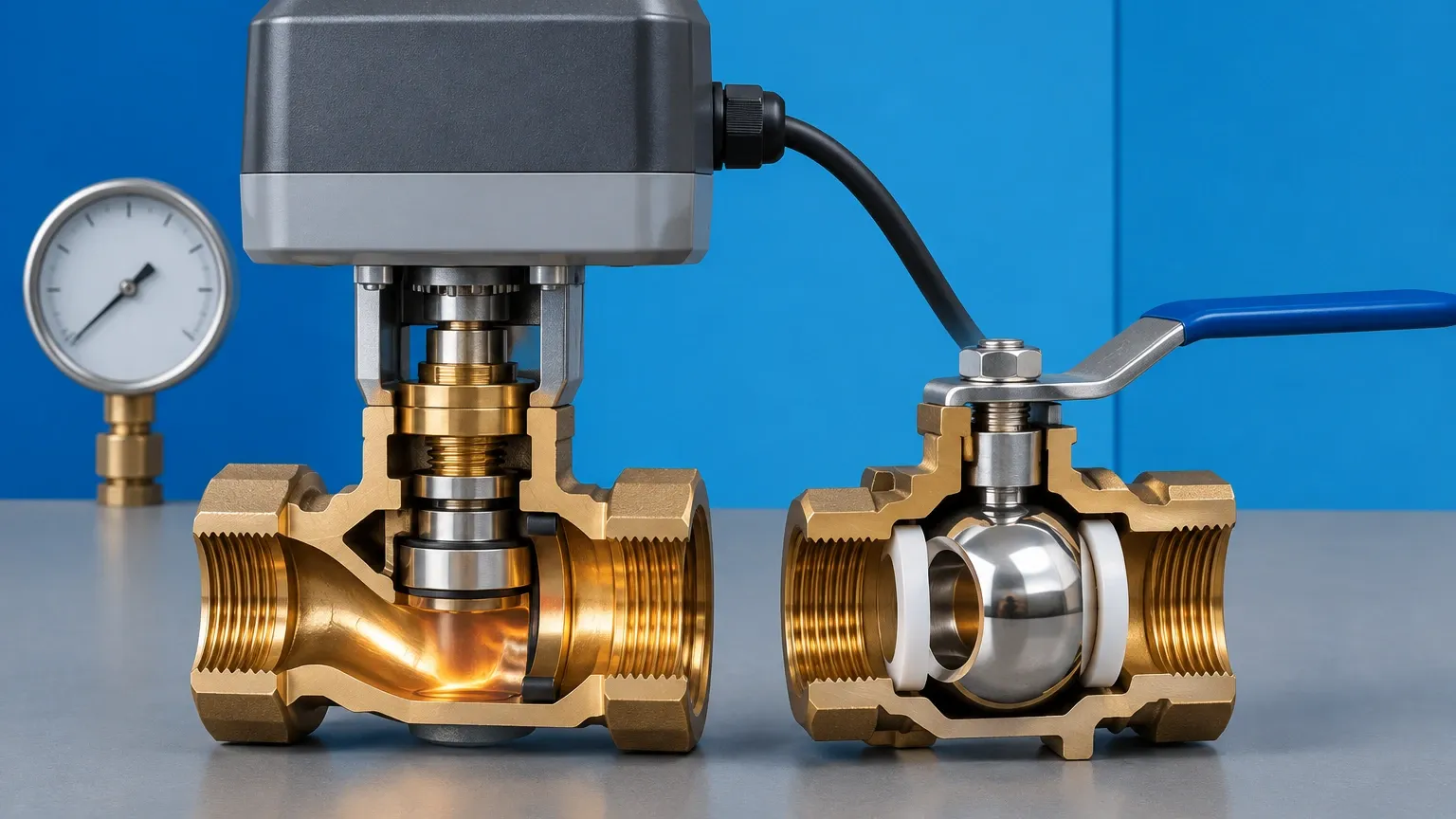
A heating valve can fit the pipe and still be wrong for the system. Its connections establish whether it can join the pipework; its ratings establish the conditions it can withstand and work under. Pressure, temperature, flow, electrical supply and the materials touching the water must suit the same application. Passing one check does not cancel a failure elsewhere.
Before buying, have a competent person establish the current system requirements. An old valve provides clues, not an approved replacement specification: it may have been unsuitable originally, or the system may have changed. The aim is to compare the proposed valve with the duty it must perform, rather than simply buy another body with matching ends.
Establish What the Valve Must Do
Start with the valve’s function. A manual isolation valve allows a section to be shut off, while a motorised zone valve controls water flow in response to heating controls. They may share a pipe size without doing the same job. A seized handle or a leak does not establish that changing between these functions is appropriate.
For buyers comparing motorised zone valves, the required operating arrangement matters alongside the connection size. Normally closed means the valve closes when unpowered; it is not a pressure classification. The control system must be compatible with the selected arrangement, which a competent person should confirm before purchase.
Keep physical fit as a separate requirement. Size, end connections and available space still matter, but this is not a choice between fit and ratings. Both must be satisfied. A valve with a higher pressure classification is no improvement if it cannot perform the required control function.
You can gather existing system documents and photographs of safely visible labels without disturbing anything. Do not remove covers, loosen joints, operate unfamiliar levers or scrape markings to complete a shopping comparison. Where a stamp is unreadable, leave the detail unconfirmed and seek the specification through records or competent assessment.
Separate Pressure Containment From Pressure Difference
A pressure limit may describe the pressure a valve body can contain, or the pressure difference against which the valve can operate. These answer different questions. Static pressure concerns the pressure within the system; differential pressure is the difference between the valve’s two sides. A body may withstand the system pressure while its mechanism cannot close against the pressure difference imposed across it.
The Resideo V4043H1056/U is a useful example: it is a normally closed, two-port zone valve with 22 mm compression connections. The V4043H1056 has a maximum differential pressure of 0.55 bar, distinct from the family’s maximum static pressure of 8.6 bar. Those figures are not interchangeable allowances.
The buying consequence is that a system pressure figure alone cannot settle suitability. The person assessing the heating circuit must also establish the differential pressure the valve will face. Reading the larger number and overlooking the smaller one could leave you with a valve whose body rating looks adequate but whose operating limit is exceeded.
Neither figure is a recommended system operating setting, and neither is a pressure-relief valve setpoint. Do not adjust the system towards a valve’s maximum because the product information says it can withstand that pressure. Component limits constrain selection; system design determines operating conditions and protection.
Read Pressure and Temperature Together
PN means nominal pressure, a pressure-class designation comprising the letters PN followed by a number without a unit of measurement. Allowable pressure depends on the classification, material, component design and temperature; PN is not a complete statement of allowable pressure under every temperature and service condition. Read it with the manufacturer’s operating information for the particular product, including any pressure-temperature restrictions.
A heating valve experiences pressure and temperature together. Separate maximum figures in a valve’s specification should not be combined into a new claim that the valve can operate at both extremes simultaneously. If the expected duty is close to a limit, obtain the applicable operating information rather than assume that remaining below each headline maximum is sufficient.
Temperature descriptions also need careful reading. Fluid or medium temperature means the temperature of the substance passing through the valve. Ambient temperature means the surrounding air temperature. An actuator is the powered mechanism that operates the valve. It can have an ambient limit distinct from the valve’s fluid-temperature range because its electrical parts occupy a different environment from the water passage. In electrical supply descriptions, AC means alternating current, while DC means direct current.
The V4043H family has a 230–240 V AC, 50 Hz supply and 6 W consumption, an operating fluid-temperature range of +5 to +88°C, and a maximum ambient temperature of +52°C. The +52°C figure is not the permitted water temperature. These are selection limits, not instructions to run the water or surrounding air at the maximum.
Check Flow Performance, Not Just Pipe Size
Connection size tells you what the valve joins; it does not tell you how much water will pass through it under the available pressure difference. Internal passages and valve mechanisms affect resistance. Two valves with the same pipe connections can therefore produce different flow performance in a heating circuit.
The required flow must be assessed with the pressure lost through the valve. Too much resistance can prevent the circuit receiving its intended flow even where the valve fits and its containment rating is adequate. This is why a flow characteristic belongs in the selection discussion rather than being treated as an optional catalogue detail.
A flow coefficient describes flow performance under defined conditions. It is not an electrical supply voltage or a substitute for maximum static pressure. Where abbreviations or typography are unclear, use the manufacturer’s defined specification rather than interpreting a nearby number by appearance.
A manual full bore valve is a relevant option when the assessed job calls for manual isolation. Full bore describes a flow passage without the narrowed internal opening of a reduced-bore design; it does not establish every pressure, temperature or material requirement. It also does not make a manual valve interchangeable with a motorised control. Compare the particular product’s own data, not ratings taken from another valve that looks similar.
Treat Electrical Compatibility as Its Own Requirement
For a motorised valve, matching the plumbing connections leaves an electrical selection question unresolved. Supply voltage, AC or DC operation, frequency where specified, and the required control arrangement must agree with the installation. Power consumption in watts describes a different property from supply voltage; one cannot be used to infer the other.
The V4043H figures above illustrate this distinction: 230–240 V AC identifies the stated supply, while 6 W identifies consumption. A similar-looking actuator with a different electrical specification is not an equivalent merely because its casing and pipe connections resemble the existing valve.
Compatibility also includes what the controls require the valve to do, not just whether a motor can receive power. Leave that assessment, installation and all wiring work to a competent person. For buying purposes, provide existing model information or the established electrical requirement; do not energise a loose actuator, expose terminals or test wiring to discover which version to order.
Look Beyond the Body’s Finish
Material suitability includes the body and the seals—the parts that prevent leakage—in contact with the fluid. A polished surface does not identify the underlying alloy, or metal mixture, and a brass-looking body does not establish a particular corrosion-resistance property. Dezincification is a form of corrosion in which brass loses zinc. Dezincification-resistant brass, often abbreviated to DZR, cannot be identified reliably from appearance alone. Use the documented material specification.
The Aalberts PB300 is a PN16 full-bore compression ball valve with a chromed CW617N brass body and PTFE/FPM sealing: CW617N is the brass grade code, while PTFE is the plastic ball-seal material and FPM is the rubber spindle-seal material. Its maximum liquid operating pressure is 16 bar, and its medium-temperature range is −10 to +110°C. These are separate limits and do not establish permission to operate at 16 bar and 110°C together.
Handle colour alone is not the pressure, material or approval specification. The PB300 range includes red and blue handle variants within the same PN16 group, with material information documented separately. That makes colour an inadequate shortcut for this buying decision: read the product information and applicable approval evidence instead.
For the valve you intend to buy, check the documented body material and seal specification alongside its operating limits. If those details are missing, ask for that valve’s own technical data before ordering. A matching handle or the description “brass valve” does not provide the material and sealing information needed for the comparison.
The system fluid matters too. Glycol is used in antifreeze fluid mixtures, including mixtures with water in heating circuits. Where a heating circuit contains a water-glycol mixture, ask: are the proposed valve’s body and seal materials compatible with the fluid actually in use? Compare the chemical resistance of elastomers, plastics and metals against that fluid; elastomers are rubber-like materials used in parts such as seals. A temperature limit alone does not answer that question. Check the proposed valve’s documentation for compatibility with the actual mixture.
Check Drinking-Water Evidence for the Actual Use
Heating-water service and drinking-water service are not interchangeable descriptions. A valve’s ability to withstand hot water does not itself establish suitability for contact with drinking water. Equally, evidence relating to drinking-water use does not replace the heating circuit’s pressure, temperature, flow or electrical requirements.
Where a product is described as WRAS approved, check the relevant approval evidence and its scope and conditions against the proposed use. Match the product covered rather than treating a general manufacturer name or a familiar approval symbol as sufficient evidence. A material approval and approval of a complete fitting are not the same claim; check which category the evidence covers.
WRAS approval is not mandatory, and other approval schemes are available. Displaying the WRAS approved logo on packaging is not mandatory either. A missing mark in a listing photograph is therefore a reason to clarify the applicable evidence, not proof that the valve is automatically unsuitable for drinking water. Approval can carry restrictions on installation and use, so check the conditions for the proposed application.
Conclusion
A sound purchase brings the requirements together. Have the competent person establish the valve’s function, expected fluid and surrounding temperatures, system pressure, pressure difference, flow needs and any electrical requirements. Then compare one proposed product against that whole duty, including its materials and relevant approval conditions. Size and ends must still match, but physical fit is only one part of acceptance.
If one requirement remains unknown, resolve that uncertainty before ordering rather than compensate with a higher PN number or a familiar brand. The old stamp can help identify what was fitted; it cannot prove what should be fitted now. We can answer stock enquiries about an identified product, but assessment of the system and any changes belong with the competent person. Buy when the product specification supports the intended service, not when its photograph merely resembles the old valve.