

How Air Source Heat Pumps Work in the UK Climate
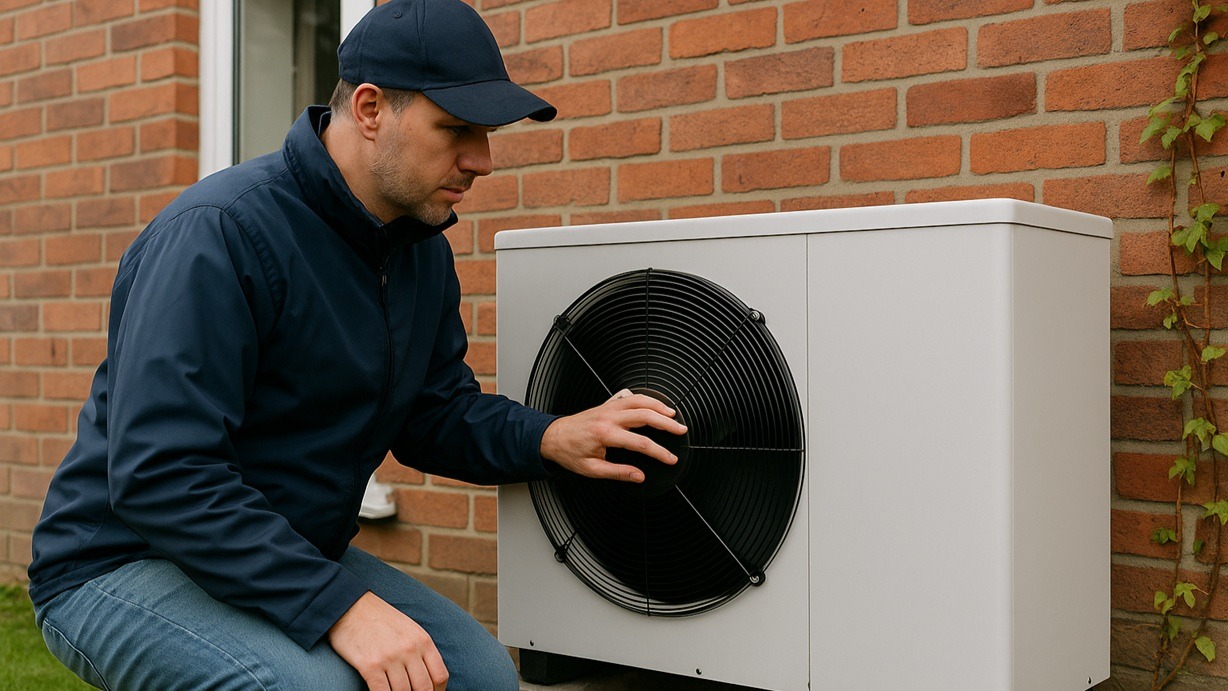
You can tell a good bit of kit when it works with the weather rather than against it. That’s exactly what air source heat pumps do. They don’t rely on fire, fumes, or magic, just a bit of clever engineering and the heat that’s already floating around outside. Even on a frosty morning, there’s warmth in the air if you know how to grab it.
For years, the big question’s been whether they really hold their own in Britain’s unpredictable mix of drizzle, mild spells, and cold snaps. The short answer: yes, they do, and quite comfortably. The long answer is what follows.
Because if you understand how air source heat pumps UK installations actually work, how they respond to our damp winters, and what drives UK climate heat pump efficiency, you’ll see why they’re slowly replacing gas and oil boilers up and down the country.
Moving Heat Instead of Making It
The first thing to know is that a heat pump doesn’t create heat; it moves it. That’s why it’s so efficient.
Inside the outdoor unit is a loop of refrigerant. This fluid absorbs heat from the air, gets compressed, and releases that heat indoors. Then it starts again, no fuel burning, no chimneys, just steady transfer.
It’s a bit like a fridge, only the other way around. A fridge dumps heat out of its back panel. A heat pump drags it in from outside. Same physics, different direction.
The Basic Steps
- Draw in the air. A fan pulls outside air over a coil full of refrigerant.
- Capture the warmth. The refrigerant evaporates, turning to gas.
- Crank up the pressure. A compressor squeezes the gas, raising its temperature.
- Send the heat indoors. The hot gas runs through a condenser, transferring warmth into your heating water.
- Start over. The refrigerant cools, turns back to liquid, and the cycle repeats.
Simple enough, but the engineering behind it is finely balanced. That’s why professional installers rely on parts that don’t give trouble, quality valves from Altecnic Ltd, solid circulation pumps like Grundfos or Lowara, and proper pipework from Polypipe.
Why They Work So Well in the UK
Britain’s not as cold as we think. It’s damp, yes, and sometimes bone-chilling with the wind, but the temperature rarely drops below what heat pumps can handle.
Modern systems keep working efficiently down to around -15°C. Given that most British winters hover between zero and seven degrees, we’re perfectly within range.
Understanding UK Climate Heat Pump Efficiency
Efficiency is measured as a Coefficient of Performance (COP), which is how much heat you get for each unit of electricity used.
- Around 10°C outside, you might see a COP of 4: four units of heat for one unit of electricity.
- Drop it to freezing, and you’re still likely to see 2.5–3.
That’s the beauty of air source heat pumps UK homeowners are installing now, they don’t panic when it’s cold. They just keep ticking along, steadily transferring heat without fuss.
To keep that performance stable, installers match them with dependable components, Stuart Turner pumps, Myson radiators, and Kingspan cylinders, all of which help keep things balanced.
The Two Main Types
Air-to-Water
This is what most UK homes use. It ties into a wet central heating system, radiators or underfloor pipes, and heats domestic hot water as well.
Air-to-Air
These blow warm air directly into rooms and are closer to air-conditioning units. Cheap and cheerful for smaller spaces, but they can’t heat your water.
For a typical family home, air-to-water systems make the most sense, as they fit neatly into existing setups.
What’s Inside a Complete System
Every component matters. A good system isn’t just the outdoor unit humming away by the wall, it’s an orchestra of matched parts:
- Outdoor unit: handles compression and heat exchange.
- Indoor cylinder: stores hot water; reliable options from Gledhill and Kingspan are built for this.
- Circulation pumps: keep water flowing, Grundfos or Lowara never disappoint.
- Radiators: ideally, large-surface, low-temperature models. Myson is a solid choice.
- Pipework: well-insulated runs from Polypipe or Fittings keep heat losses low.
When all of it’s working in sync, the efficiency curve stays high, that’s what makes the difference in the UK climate.
Installation: Getting It Right from the Start
No two houses are the same. A semi in Manchester isn’t the same as a stone cottage in Cornwall. That’s why heat pumps need proper design work up front.
Sizing It Right
Too small and the unit will struggle. Too large and it’ll cycle on and off like a nervous tick, burning electricity for nothing.
Matching Temperatures
Heat pumps run at lower flow temperatures than boilers. You’ll get the best results with underfloor heating or oversized radiators.
Location and Airflow
Stick the unit where it can breathe. If it’s boxed in behind bins or under a deck, airflow drops and efficiency with it.
Integration
Linking it with a suitable hot water system, Gledhill or Kingspan twin-coil cylinders, ensures both heating and water demands are met without strain.
Pumps and Valves
Good circulation is half the battle. Grundfos, Lowara, or Stuart Turner pumps maintain consistent flow, while Altecnic valves protect the system from pressure issues.
Living with a Heat Pump
You’ll notice the difference, not in noise, but in rhythm.
Boilers blast heat in short bursts. Heat pumps hum quietly for longer stretches, keeping warmth steady and even.
- Keep them running consistently during cold weather rather than flicking them off overnight.
- Don’t expect radiators to feel red-hot; they’re meant to be comfortably warm, not scorching.
- Maintenance’s easy: clear the air intake, clean filters, check for leaves.
A True Story
A house I retrofitted in Leeds back in 2014 had an ageing oil boiler and draughty pipework. We installed a 5 kW air-to-water system, new Myson radiators, and a Grundfos pump. The owners, both retired, were sceptical. Winter rolled in, and after three months, I got a Christmas card that read: “No oil smell, no noise, bills down by a third.”
That’s what proper setup does.
What Determines Efficiency Day to Day
Efficiency isn’t fixed; it moves with the weather and the way you run the system.
Seasonal Coefficient of Performance (SCOP)
Rather than one moment, SCOP measures how a system performs over the whole heating season. Most UK installations land around 3.0 to 3.8, three units of heat for one of electricity.
The Influencers
- Outdoor temperature: colder air lowers COP slightly.
- Flow temperature: keep it low; it’s where savings hide.
- Defrost cycles: in damp air, frost builds on coils. The system reverses briefly to clear it, which is normal, but the drain must stay clear.
- Insulation quality: the warmer the building fabric, the better the performance.
- Maintenance: clean filters, clear airflow, and regular servicing.
Analogy
Think of a heat pump like a bicycle on a hill. On a mild day, it’s a gentle slope. On a freezing morning, the incline steepens a bit, harder work, but still faster than walking. That’s UK climate heat pump efficiency in a nutshell.
The Costs, Upfront and Ongoing
Installation Costs
Depending on system size, property layout, and whether it’s a retrofit, expect £6,000–£10,000. Grants and incentives sometimes bring this down, but the system pays itself back over time.
Running Costs
With electricity rates where they are, the key is efficiency. The better your SCOP, the more you save. In well-insulated homes, heat pumps often match or beat gas bills.
Maintenance and Lifespan
Annual servicing’s simple, refrigerant checks, filters, and circulation pumps. Replacement parts like Halstead Spares keep older systems running smoothly.
Pairing with Smart Controls
Marry an air source heat pump with smart thermostats and you’re in business. Systems from Honeywell Home or Danfoss allow zoning and adaptive control that work beautifully with low-temperature heating.
You can set separate comfort zones, the living room warm, the bedrooms cooler, and the system gently adjusts output without waste.
Environmental Gains
Here’s the bigger picture. Every air source heat pumps UK installation chips away at carbon emissions. Compared to a gas boiler, it can cut emissions by half, more with renewable electricity or solar PV.
Pair a heat pump with efficient pumps (Grundfos, Lowara, Stuart Turner) and cylinders (Gledhill, Kingspan), and you’ve got a sustainable system ready for decades of reliable service.
For Installers and Engineers
Fitting a heat pump isn’t about swapping boxes; it’s about rethinking the system.
- Balance flow rates properly.
- Choose your components with care: Altecnic valves, Polypipe fittings, Grundfos pumps.
- Test insulation, check for airlocks, and set the weather compensation curve right.
- Hand over the system with clear instructions, how it works, not just how to switch it on.
Good engineering makes UK climate heat pump efficiency a reality, not a brochure claim.
The Road Ahead
Air source heat pumps aren’t a fad; they’re the next logical step. As the national grid gets greener, the carbon savings increase. Over time, expect smaller units, quieter compressors, and smarter self-learning controls.
Already, pairing them with solar panels and home batteries means households can heat themselves largely off renewable power. That’s where we’re heading: quieter, cleaner, and more predictable comfort.
Final Thoughts
There’s a quiet satisfaction in seeing a well-installed heat pump humming away through a British winter, steady warmth, no fumes, no fuss.
Air source heat pumps in the UK thrive when they’re properly matched, correctly sized, and supported by quality components. And once you get used to that gentle, consistent heat, you won’t miss the clatter of an old boiler one bit.
If you’re ready to move towards smarter, cleaner heating, explore the full range of systems and components at Heating & Plumbing World, from pumps and valves to pipework and cylinders. Good kit, fitted right, will keep your home comfortable for years to come.