

How Blockchain Could Impact Utility Billing for Heating
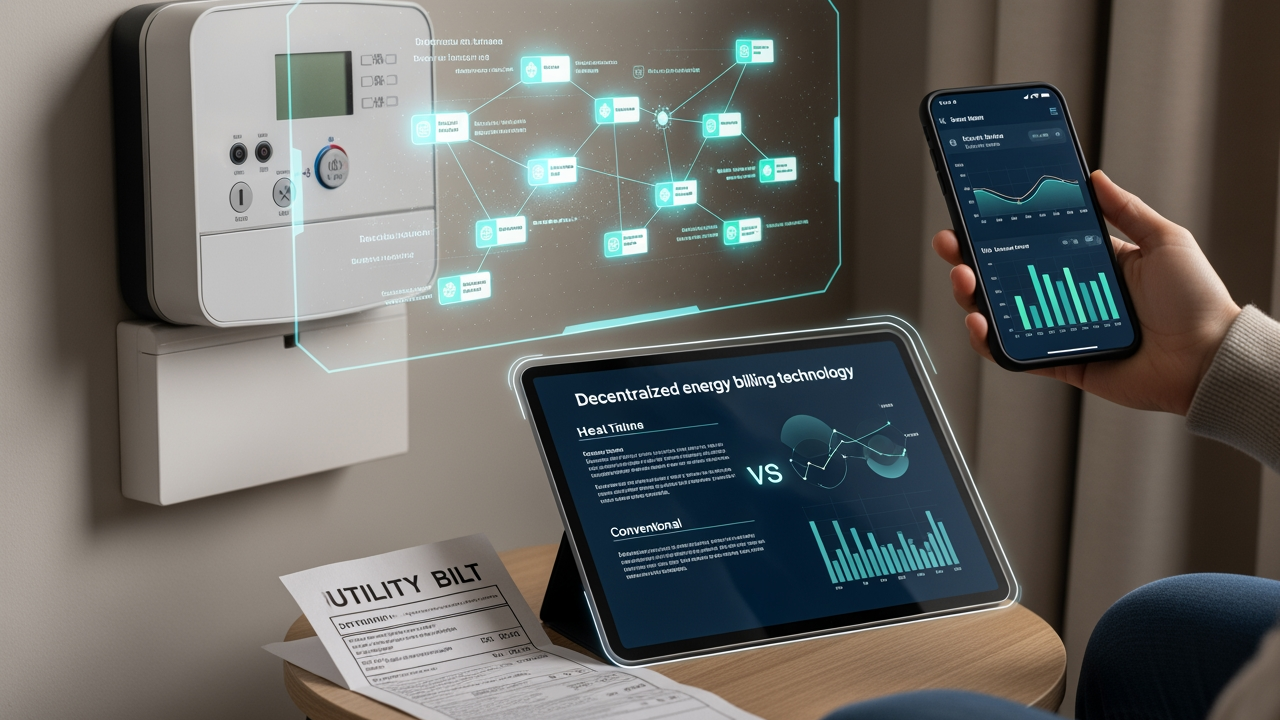
As energy costs continue to rise across the UK, homeowners and businesses are looking for greater transparency and control over their heating expenses. Traditional utility billing systems often suffer from delays, inaccuracies, and limited visibility into consumption patterns. Blockchain technology presents a revolutionary approach to addressing these challenges, offering a decentralised, transparent, and automated solution for tracking and billing heating energy usage. Heating and Plumbing World recognises the importance of staying informed about emerging technologies that could transform how customers manage and pay for their heating services.
What Is Blockchain Technology?
Core Principles of Blockchain
Blockchain is a decentralised digital ledger that records transactions across multiple computers in a way that makes the data virtually impossible to alter retroactively. Each transaction is grouped into a "block" and linked to previous blocks, creating a permanent chain of records. This technology eliminates the need for a central authority to verify and manage transactions, instead relying on a distributed network of computers to validate and record data.
The key characteristics of blockchain include transparency (all network participants can view transaction history), immutability (once recorded, data cannot be changed without network consensus), and security through cryptographic verification. These features make blockchain particularly well-suited for applications requiring trust, accountability, and accurate record-keeping.
How Blockchain Differs from Traditional Systems
Traditional utility billing systems rely on centralised databases controlled by energy suppliers. These systems require manual meter readings or periodic automated readings, with data processed through multiple intermediaries before reaching the customer. This centralised approach can introduce delays, errors, and opportunities for disputes.
Blockchain utility billing operates on a fundamentally different model. Rather than storing data in a single location controlled by one entity, the information is distributed across a network. Smart meters can record consumption data directly onto the blockchain in real-time, creating an immutable record that both supplier and customer can access instantly. This eliminates intermediaries, reduces administrative costs, and provides unprecedented transparency into energy usage and charges.
Current Challenges in Heating Utility Billing
Billing Transparency Issues
Many UK households receive estimated bills rather than actual consumption-based charges, particularly when meter readings are delayed or inaccessible. These estimates often prove inaccurate, leading to customer frustration and disputes. Even with smart meters installed, the lack of real-time visibility into consumption data means customers cannot track their heating usage effectively.
Complex tariff structures further complicate matters. Time-of-use rates, standing charges, and seasonal variations make it difficult for consumers to understand their bills or predict costs. This opacity reduces trust in energy suppliers and makes it challenging for households to make informed decisions about heating usage.
Administrative Inefficiencies
Energy suppliers face significant administrative burdens in processing millions of customer accounts, handling meter readings, generating bills, and managing customer queries. Manual processing introduces errors and delays, whilst the cost of maintaining large customer service operations gets passed on to consumers through higher tariffs.
Payment processing also involves multiple steps and intermediaries, each adding time and cost to the transaction. When customers switch suppliers or move properties, the transfer of account information and final bill settlement can take weeks or months, causing inconvenience and potential overcharges.
Payment and Settlement Delays
Traditional banking systems require several working days to process utility payments, creating cash flow challenges for suppliers and delaying confirmation for customers. Direct debit arrangements help automate payments but still operate on scheduled cycles rather than real-time consumption.
For prepayment customers, the current system requires physical top-ups or online transfers that may not be immediately reflected in their account. This can lead to unexpected disconnections or the need to maintain higher balances than necessary for peace of mind.
How Blockchain Could Transform Heating Billing
Smart Meters and Real-Time Data
The integration of blockchain utility billing with smart meter technology creates a powerful combination for accurate, transparent heating charges. Smart meters equipped with blockchain connectivity can record consumption data directly onto the distributed ledger every few minutes or even continuously. This creates an indisputable record of actual usage that both customer and supplier can access in real-time.
Instead of waiting weeks for a bill based on estimated or monthly readings, customers could view their exact heating consumption and costs at any moment. This granular visibility enables better energy management decisions and eliminates billing disputes. The blockchain record provides proof of consumption that neither party can dispute or manipulate, building trust in the billing process.
Automated Smart Contracts
Smart contracts are self-executing programmes stored on the blockchain that automatically perform actions when predefined conditions are met. In heating bill blockchain applications, smart contracts could revolutionise how billing and payments work.
For example, a smart contract could automatically calculate charges based on real-time meter readings and the customer's tariff structure. Once consumption reaches a certain threshold or a billing period ends, the contract could automatically generate an invoice and trigger payment from the customer's digital wallet. This eliminates manual billing processes, reduces errors, and ensures immediate settlement.
Smart contracts could also enable innovative pricing models. Time-of-use tariffs could adjust automatically based on grid demand, with rates changing hourly and customers paying the exact rate applicable when they consume energy. Customers could even set spending limits, with their boiler spares and heating systems automatically adjusting consumption to stay within budget.
Peer-to-Peer Energy Trading
Blockchain technology enables direct transactions between individuals without intermediaries. In the energy sector, this could allow households with renewable heating sources or excess capacity to sell energy directly to neighbours or other consumers.
Imagine a community heating scheme where multiple properties share a central boiler or ground-source heat pump. Blockchain utility billing could track each property's consumption precisely and enable automatic cost-sharing based on actual usage. Properties generating excess renewable energy could sell it directly to others in the network, with blockchain recording and settling transactions automatically.
This peer-to-peer model could extend to renewable energy certificates and carbon credits. Households installing efficient heating systems or reducing consumption could earn tradeable credits, creating financial incentives for energy efficiency.
Benefits of Blockchain for Heating Customers
Enhanced Billing Accuracy
The elimination of estimated bills represents one of the most immediate benefits for consumers. With continuous recording of actual consumption on an immutable blockchain ledger, billing accuracy becomes guaranteed. Every unit of heating energy consumed is recorded and charged correctly, eliminating overcharges and the need for annual reconciliation adjustments.
Disputes over consumption or charges become virtually non-existent when both parties have access to the same transparent, tamper-proof record. Customers gain confidence in their bills, whilst suppliers reduce the time and cost associated with resolving billing complaints.
Improved Payment Flexibility
Blockchain-based systems could enable micropayments, allowing customers to pay for heating energy in much smaller increments than traditional monthly billing. Rather than building up a large bill over 30 days, households could make small automatic payments daily or even hourly based on consumption.
This approach benefits customers on tight budgets who find large monthly bills challenging. It also improves supplier cash flow by providing more frequent, predictable revenue. The reduced transaction costs of blockchain payments (compared to traditional banking fees) make such frequent small transactions economically viable.
Prepayment customers could top up their accounts instantly from anywhere using digital wallets, with the balance updated immediately on the blockchain. The transparency of real-time balance information and consumption tracking helps prevent unexpected service interruptions.
Greater Control and Transparency
Access to granular consumption data empowers customers to make informed decisions about their heating usage. By viewing exactly how much energy different behaviours consume - running the heating overnight versus during the day, different temperature settings, or the impact of boiler servicing on efficiency - households can optimise their usage patterns.
Blockchain records could integrate with home energy management systems, providing recommendations for reducing consumption and costs. Historical data analysis could identify unusual usage patterns that might indicate equipment problems, prompting maintenance before failures occur.
Tariff comparison also becomes simpler when standardised blockchain records allow different suppliers to quote prices based on a household's actual consumption profile rather than crude estimates.
Technical Implementation Considerations
Integration with Existing Infrastructure
Deploying blockchain utility billing requires significant infrastructure investment. Existing smart meters may need upgrades or replacement with blockchain-compatible devices capable of writing data directly to the distributed ledger. The meters must have sufficient computing power and connectivity to participate in the blockchain network securely.
Legacy billing systems at energy suppliers would need substantial modification or replacement. These systems have been developed over decades and connect to numerous other databases and processes. Transitioning to blockchain-based systems requires careful planning to maintain service continuity and data integrity throughout the migration.
The cost of these infrastructure changes represents a substantial barrier to adoption. Suppliers must weigh the investment against potential savings from reduced administrative costs and improved customer satisfaction. Government support or regulatory mandates may be necessary to drive widespread implementation.
Data Privacy and Security
Whilst blockchain's transparency offers benefits for billing accuracy, it raises important privacy considerations. Energy consumption patterns reveal sensitive information about household occupancy, behaviours, and routines. The public or semi-public nature of some blockchain networks could expose this data to unwanted scrutiny.
Private or permissioned blockchain networks address these concerns by limiting who can access detailed transaction data. Only authorised parties - the customer, supplier, and relevant regulators - would have access to consumption records, whilst still benefiting from blockchain's other advantages.
Cybersecurity remains crucial. Although blockchain technology is inherently secure due to its distributed nature and cryptographic protections, the endpoints - smart meters and customer devices - represent potential vulnerabilities. Robust security measures must protect these access points from hacking or manipulation.
Scalability Challenges
Processing millions of meter readings and transactions for heating bill blockchain applications requires substantial computing power and network bandwidth. Some blockchain platforms struggle with transaction volume, leading to delays and increased costs during peak usage.
Newer blockchain technologies address scalability through various approaches - layer-two solutions that process transactions off the main chain, sharding that divides the network into smaller segments, or alternative consensus mechanisms that require less computational overhead. However, these remain relatively immature technologies requiring further development and testing at utility scale.
Energy consumption by the blockchain network itself also warrants consideration. Some blockchain platforms require significant electricity to maintain, which could undermine sustainability goals. Energy-efficient blockchain protocols must be prioritised for heating and energy applications.
Regulatory and Industry Barriers
Current Regulatory Framework
Energy markets operate within complex regulatory frameworks designed to protect consumers, ensure supply security, and promote competition. Introducing blockchain utility billing requires regulatory clarity on numerous questions: Who is responsible if the smart contract code contains errors? How should blockchain records be treated in legal disputes? What consumer protections apply to automated payments?
Data protection regulations, particularly the UK GDPR, impose strict requirements on how personal data is collected, stored, and processed. The immutable nature of blockchain creates tension with "right to be forgotten" provisions, requiring technical solutions to reconcile these requirements.
Energy regulators would need to update licensing requirements, billing standards, and dispute resolution processes to accommodate blockchain-based systems. This regulatory development typically lags behind technological innovation, potentially delaying adoption.
Industry Adoption Hurdles
The energy industry's conservative nature and focus on reliability over innovation can slow the adoption of new technologies. Utilities have invested heavily in existing systems and processes, creating organisational inertia against change. Senior decision-makers may lack familiarity with blockchain technology, making them hesitant to commit resources to implementation.
Achieving the full benefits of blockchain utility billing requires coordination across multiple stakeholders - meter manufacturers, energy suppliers, network operators, payment processors, and regulators. This ecosystem complexity makes standardisation and interoperability challenging. Without industry-wide standards, early adopters risk investing in systems that become obsolete or incompatible with later developments.
Competition concerns may also arise if blockchain platforms create new forms of lock-in or barriers to switching suppliers. Regulators must ensure that any blockchain implementation enhances rather than restricts market competition.
Real-World Pilot Projects and Case Studies
International Blockchain Energy Initiatives
Several countries are piloting blockchain applications in energy management and billing. In Europe, projects have tested peer-to-peer energy trading in community solar schemes, with blockchain tracking generation, consumption, and automated settlements between participants. These trials demonstrate technical feasibility whilst revealing implementation challenges around regulation, user adoption, and integration with existing infrastructure.
Australia has explored blockchain for renewable energy certificate tracking, creating transparent records of green energy generation and consumption. This application showcases blockchain's strength in providing tamper-proof records for compliance and trading purposes.
These international pilots provide valuable lessons about user interface design, transaction speeds, and regulatory requirements. However, each energy market has unique characteristics, limiting the direct transferability of solutions between countries.
Potential for UK Heating Sector
The UK's relatively advanced smart meter rollout provides a foundation for future blockchain integration. Gas boilers and oil heating systems could benefit from more accurate consumption tracking and billing, particularly in rural areas where meter access has traditionally been challenging.
District heating schemes represent an ideal application for blockchain utility billing. These systems supply multiple properties from central plants, requiring accurate sub-metering and fair cost allocation. Blockchain could provide transparent consumption tracking and automated billing for each connected property, reducing administrative overhead for scheme operators.
The timeline for mainstream adoption remains uncertain. Whilst technical feasibility has been demonstrated, regulatory frameworks, industry coordination, and infrastructure investment requirements suggest widespread implementation is likely several years away. Early adoption will probably occur in new-build developments or district heating projects where infrastructure can be designed with blockchain capabilities from the outset.
Conclusion
Blockchain technology offers compelling solutions to longstanding challenges in utility billing for heating. The combination of real-time consumption tracking, automated smart contracts, and transparent immutable records could eliminate billing disputes, reduce administrative costs, and empower customers with unprecedented visibility into their energy usage. The potential for peer-to-peer energy trading and innovative payment models could transform the relationship between consumers and energy suppliers.
However, significant barriers remain before blockchain utility billing becomes mainstream. Technical challenges around scalability, privacy, and integration with existing infrastructure require continued development. Regulatory frameworks must evolve to provide clarity and consumer protection whilst encouraging innovation. Industry coordination is essential to establishing standards and ensuring interoperability.
For homeowners and businesses interested in optimising their heating efficiency today, proven technologies like regular boiler servicing, efficient expansion vessels, and proper system maintenance remain the most effective approaches. As blockchain applications mature, staying informed about developments will help prepare for future opportunities to benefit from these innovations.
If you have questions about your current heating system or need advice on improving efficiency, contact us for expert guidance tailored to your specific requirements.