

How to Conceal Pipes and Radiators for a Clean Look
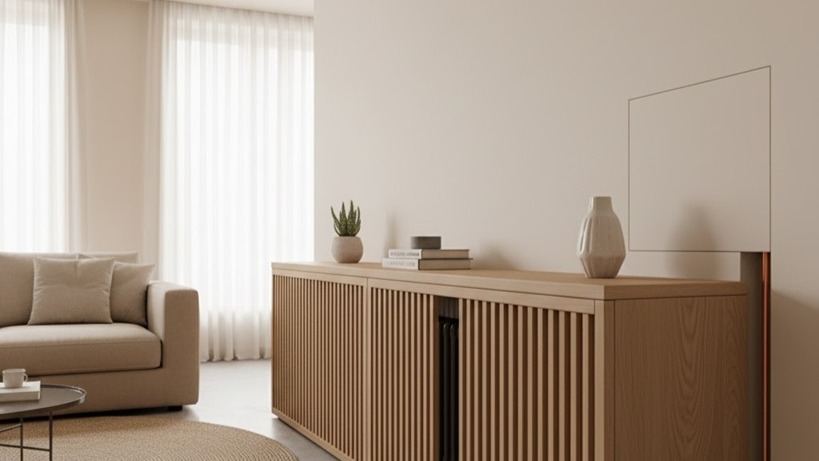
Exposed pipework running along walls and floors can turn an otherwise polished room into an industrial eyesore. Whether you're dealing with legacy copper runs, bulky flow and return pipes, or unsightly radiator tails, there's always a practical way to conceal pipes without compromising system performance or maintenance access. The trick isn't to bury everything behind plasterboard and hope for the best; it's about smart radiator pipe boxing, thoughtful material choices, and making sure you can still get to valves and joints when you need to.
Professional pipe concealment balances three critical factors: aesthetics, thermal performance, and serviceability. Done right, you'll barely notice the heating system exists. Done wrong, you'll be ripping out entire sections of the boxing just to bleed a radiator or replace a leaking valve.
Why Proper Pipe Concealment Matters Beyond Looks
Most clients fixate on the visual side, and fair enough, nobody wants copper runs dominating a newly decorated lounge. But there's more at play than just tidying up the sightlines.
Concealed pipework protects against accidental damage, especially in high-traffic areas or homes with young children. Boxing also acts as a barrier against dust accumulation on hot surfaces, which can cause that distinctive "burnt dust" smell when the heating fires up after summer.
The real engineering challenge comes down to maintenance access. A heating system isn't fit-and-forget. Valves wear out, joints can weep, and TRVs occasionally need replacing. Any boxing solution that doesn't account for this will cost your client, or you, far more in the long run when sections need dismantling just to check a compression fitting.
Reading Your Pipe Layout Before You Start
Walk the system before you measure a single piece of timber or MDF. Trace the flow and return pipes from the boiler to each radiator. Identify isolating valves, drain points, and any junction boxes if the system includes zone valves or motorised actuators.
Note where pipes drop vertically from upstairs radiators; these vertical runs are often the most visible and the hardest to conceal neatly. Check for any flexible hoses connecting to radiators; these shouldn't be boxed in without removable panels because they're a common failure point.
Get a feel for pipe spacing, too. Pipes running tight against walls are easier to box than those sitting 50mm proud because of poor clip spacing or bulky insulation. Sometimes the simplest fix isn't boxing at all, it's re-clipping the pipes closer to the substrate and repainting them to match the skirting.
Boxing Methods for Radiator Pipes
Radiator pipe boxing is the go-to method for runs near skirting level or where pipes travel horizontally beneath radiators. It's essentially a three-sided channel, back, top, and front, fixed to the wall and floor, leaving the sides open for thermal circulation.
The standard approach uses 18mm MDF or timber battens to create a frame, with a fascia panel covering the front. You'll fix vertical battens to the wall using appropriate plugs and screws, spacing them every 400-600mm depending on the span. The top of the boxing typically sits flush with the top of the skirting or just below the radiator bracket height.
Here's the bit most people get wrong: ventilation. A sealed box around hot pipes creates a mini convection oven. You don't want that heat trapped; it reduces radiator efficiency and can cause the boxing to warp over time. Drill ventilation holes (10-12mm diameter, spaced every 150mm) along the top edge of the fascia, or fit discrete vent grilles. This allows hot air to escape upwards without looking like you've taken a drill to your woodwork at random.
For radiator tails specifically, the vertical pipes connecting to the radiator valves, you've got two routes. Either box them individually with slim, vertical covers that stop just below the valve, or incorporate them into a wider run of skirting-level boxing that wraps around the room. The latter looks cleaner but makes valve access slightly more awkward unless you've fitted magnetic or clip-on access panels.
A quick story: I once walked into a newly refurbished office where the decorators had boxed every radiator tail with beautifully mitred MDF, screwed and glued solid. Looked fantastic. Then the client mentioned the heating wasn't working properly. Turns out the TRVs were set to maximum but trapped behind the boxing, which was acting like an insulating jacket around the sensor heads. The valves thought the room was roasting and throttled the flow. We had to cut access hatches into every single box to expose the valve heads. Measure twice, think three times.
Skirting-Level Solutions and Vertical Runs
Pipes running along walls at skirting height are prime candidates for decorative boxing that doubles as an extended skirting board. This method involves fitting a deeper skirting profile, typically 150-200mm tall rather than the standard 100mm, with a void behind to accommodate the pipework.
Use the same skirting profile as the rest of the room for a seamless look, but build it out from the wall using spacer battens. The pipe sits in the cavity behind, and the whole assembly is fixed securely to the wall. This approach doesn't scream "pipe cover", it just looks like a design choice.
For vertical pipes, usually feeding upstairs radiators, you've got three realistic options: surface-mounted covers, stud wall infill, or decorative column boxing. Surface-mounted covers are slim, U-shaped channels that clip or screw directly over the pipes. They're easy to remove for maintenance, but they don't disappear visually; they just look tidier than bare copper.
Stud wall infill works if you're boxing in a corner. Build a lightweight timber frame, clad it with plasterboard, and plaster to match the rest of the wall. Critical point: fit an access hatch at valve heights or anywhere there's a joint. Cutting into finished plaster six months down the line because a compression fitting wept is nobody's idea of fun.
Materials and Installation Essentials
If you're building bespoke boxing, you'll need 18mm MDF or moisture-resistant MDF for fascias, 50x25mm timber battens for the frame, appropriate fixings, and primer plus paint for finishing. Think of boxing like building a really shallow wardrobe; you're creating a structure that needs to be square, level, and rigid enough not to flex when you lean on it.
Material choice matters for damp areas. Standard MDF swells like a sponge if it gets wet, so anywhere near external walls or bathrooms, use moisture-resistant MDF (MR MDF) or exterior-grade plywood. Prime and paint everything, including edges, before installation.
The process is straightforward: fix battens to create the frame, ensuring they're plumb and level. Cut the fascia panel to size, pre-drill screw holes, and fix it to the battens. For a clean finish, countersink the screws, fill with wood filler, sand smooth, and paint. For access panels, use magnetic catches or leave sections unfixed so they can be lifted out when needed.
Installation Compliance and Key Considerations
Ventilation is non-negotiable for boxing around hot pipework. Allow air to circulate, and you'll avoid creating dead zones or overheating the timber. If you're boxing pipes in areas with high ambient temperatures, use fire-rated board or maintain clearances as per manufacturer guidance.
Access to isolating valves, drain points, and compression fittings must be preserved. If you've boxed in a section with a valve, fit a removable panel or hatch directly in front of it. Label it if the installation is going to a landlord or commercial client; future maintenance engineers will thank you.
Don't forget about thermal expansion. Heating pipes expand and contract as they heat up and cool down. Leave a 5-10mm gap between the pipe and the boxing material, and use felt or foam where pipes pass through the boxing at fixed points to dampen noise.
Common Mistakes to Avoid
Boxing in without access tops the list. Every joint, valve, and drain point needs to be reachable without dismantling half the installation. If you're not sure where joints are, trace the pipework carefully before starting.
Inadequate ventilation creates thermal traps. The boxing gets hot, paint discolours, and in extreme cases, the board warps. Drill vent holes or fit grilles, simple fix, massive difference.
Poor material choices for damp areas will haunt you. Standard MDF in a bathroom will swell and deteriorate within months. Use moisture-resistant materials and seal all edges with primer before painting.
Ignoring pipe insulation is another error. If the pipes were insulated before you started, don't remove it just to make the boxing slimmer. Box over the insulation and accept the slightly larger profile.
Forgetting about radiator efficiency matters too. Boxing that restricts airflow around a radiator reduces its output. Keep boxing at least 50mm below the bottom panel to allow cool air to enter.
Maintenance Access and Long-Term Planning
Access panels should be located wherever there's a serviceable component: TRV heads, lockshield valves, drain valves, and compression fittings. The panel should be large enough to get a spanner in without contorting your wrist, usually 150x150mm for a single valve.
Use discrete fixings like push-latches or magnetic catches so panels sit flush with no visible handle. If you're in a commercial setting, consider hinged access doors with turn-catches, more obvious but more durable when opened repeatedly.
Think about the lifecycle of the system. Components like TRVs might last 10 years, pump seals 8-12 years, and compression fittings can weep any time. Your boxing needs to be easily removed when it fails. Design for disassembly, not permanence.
The Final Finish
Once the structure's built, it's down to finishing touches. Use quality acrylic primer on all bare MDF before topcoating. For the topcoat, satinwood or eggshell gives a durable, easy-clean finish.
If your boxing sits alongside existing skirting, carry the same profile across to the new work. This single detail, matching the trim, makes the difference between "obvious pipe cover" and "integrated joinery." Caulk any junction between the boxing and the wall or floor with flexible acrylic sealant. Don't use silicone; it's a nightmare to paint over.
Small details matter. Countersunk screws, smooth edges, tight mitres, and uniform paint finish elevate the job from DIY cover-up to professionally integrated work. Clients notice the difference, even if they can't articulate why.
Balancing Form and Function
Pipe concealment should never compromise the heating system's function. The best boxing is invisible, thermally neutral, and easily serviceable. If a radiator's boxed in so tightly that it struggles to heat the room, you've failed, regardless of how good it looks.
Get the engineering right first. That means preserving radiator airflow, maintaining access to valves, allowing for thermal expansion, and ventilating hot surfaces. Once those boxes are ticked, then focus on aesthetics: clean lines, matched profiles, and a finish that blends seamlessly with the rest of the room.
A good heating engineer doesn't just hide pipes; they integrate them into the building's fabric in a way that respects both form and function. That's the standard to aim for.
Professional Pipe Concealment Done Right
Concealing pipework is part craft, part common sense. You're not hiding evidence; you're tidying up the installation so the room looks how the client imagined it, without exposed copper runs cutting across freshly painted walls.
The skills involved are basic carpentry and a solid understanding of how heating systems work. If you can measure accurately, cut square, and drill straight, you're 90% there. The other 10% is anticipating maintenance needs and thermal behaviour.
For trade professionals, concealing pipes well adds value to every installation. Clients see it as part of the complete service, not an optional extra. For DIYers, it's achievable with standard tools and materials. Just remember: access, ventilation, and thermal performance come before looks.
If you're sourcing materials or exploring options for radiator valves and heating controls, Heating and Plumbing World stocks everything from industry-leading brands like Honeywell controls and Danfoss components to quality pipe fittings from Altecnic. For technical queries or product recommendations tailored to your specific installation, contact the team directly. They've seen every pipe concealment challenge going.