

Ideal Thermostat Settings for Comfort and Efficiency
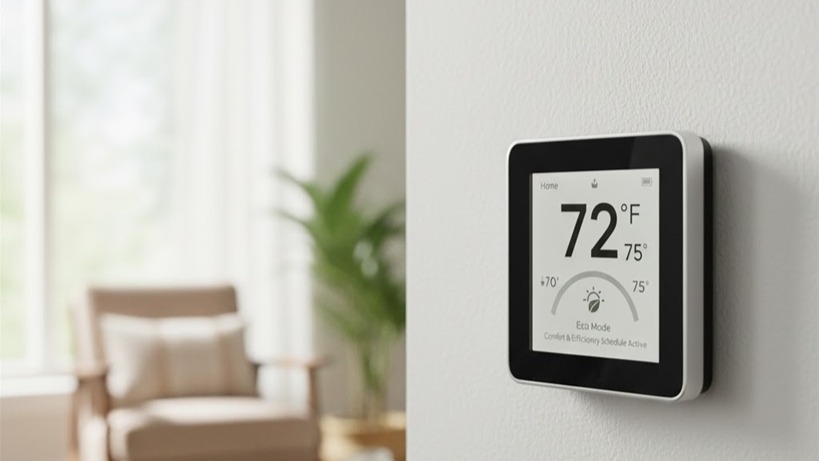
Finding the sweet spot between a comfortable home and manageable energy bills often comes down to how you set your thermostat. For most UK households, the sweet spot sits around 18-21°C during occupied hours, but getting it right involves more than just picking a number and forgetting about it.
The ideal thermostat settings depend on your heating system, insulation quality, and daily routines. Energy-efficient thermostat settings balance comfort with reduced fuel consumption, cutting your gas or oil usage without leaving anyone shivering. Let's break down the practical approach to dialling in your heating controls properly.
Understanding Thermostat Temperature Ranges
Most modern heating systems perform best when the thermostat sits between 18°C and 21°C during the day. The World Health Organisation recommends a minimum of 18°C for healthy adults, whilst 21°C suits households with young children, elderly residents, or anyone with reduced mobility.
Setting your thermostat above 22°C rarely adds meaningful comfort. It does, however, add roughly 10% to your heating bill for every degree beyond the optimal range. That's wasted money and unnecessary boiler runtime.
Think of your thermostat as a trigger point, not a throttle. It tells the boiler when to fire, not how hard to work. A boiler at full chat heats your home at the same rate whether the thermostat's set to 19°C or 25°C; the only difference is how long it runs.
Day and Night Temperature Adjustments
Dropping your thermostat overnight or when you're out makes a tangible difference to fuel consumption. Reducing the temperature by 3-4°C during unoccupied periods cuts heating costs by roughly 8-10% annually without sacrificing comfort when you're actually home.
Modern programmable thermostats, available from brands like Honeywell and EPH Controls, handle this automatically. You set the schedule once, and the system adjusts itself.
A common mistake? Setting the thermostat much higher in the morning to "heat the house faster." It doesn't work that way. Your boiler fires at maximum output regardless of the target temperature; you're just telling it to run longer, not harder.
Setback vs. Constant Temperature
Some argue that maintaining a constant temperature uses less energy than repeatedly heating a cold property. In most UK homes, that's a myth. Properties with decent insulation benefit from temperature setback, especially overnight.
Properties with poor insulation or single-glazed windows may see smaller savings from setback, but you'll still cut fuel use. The key is ensuring your boiler doesn't work overtime reheating a stone-cold house. A 3-4°C drop is manageable; switching the heating off entirely for 12 hours isn't.
Zoned Heating and Room-by-Room Control
Not every room needs the same temperature. Bedrooms typically sit at 16-18°C for comfortable sleep, whilst living areas might warrant 20-21°C during the evening.
Zoned heating allows you to control temperatures independently in different areas. This requires thermostatic radiator valves (TRVs) on individual radiators or a multi-zone system with motorised valves and separate room thermostats. Brands like Danfoss manufacture reliable TRVs that give you granular control without replacing your entire heating system.
Here's a practical breakdown of room-by-room targets:
- Living rooms: 20-21°C during occupied hours
- Bedrooms: 16-18°C, slightly warmer for children's rooms
- Bathrooms: 22-23°C for comfort during morning routines
- Hallways and landings: 18°C, as these are transit spaces
- Unused rooms: 15-16°C to prevent damp without wasting fuel
TRVs work by sensing the air temperature around them and restricting flow to the radiator when the room reaches the setpoint. They're mechanical, reliable, and don't require batteries or programming. Just turn the dial.
Smart Thermostats and Learning Features
Smart thermostats have shifted from gimmick to genuinely useful kit. Models from manufacturers like Honeywell and EPH Controls learn your patterns, adjust heating based on outside temperature, and allow remote control via smartphone.
The real advantage isn't the app, it's the optimisation. A learning thermostat notices when you typically get home, pre-heats the property efficiently, and avoids firing the boiler when you're away. Over time, this cuts fuel use by 10-15% compared to a basic programmer running fixed schedules.
One job site saw a small office block reduce gas consumption by nearly 20% after installing smart controls with weather compensation. The boiler modulated based on outside temperature, avoiding the constant on-off cycling that plagued the old setup. Less cycling means longer boiler life and lower energy bills.
Avoiding Common Thermostat Mistakes
Cranking the thermostat to maximum doesn't speed up heating. Your boiler runs at full output whether you've set 20°C or 30°C. You're just extending runtime and overshooting your target.
Placing the thermostat poorly throws off the entire system. Avoid locations near radiators, draughty hallways, or external walls. Mount it in a representative room, typically a living area, at roughly 1.5m height. A thermostat in a cold hallway will overfire the system; one next to a radiator will short-cycle and leave other rooms cold.
Ignoring boiler controls whilst obsessing over the thermostat is backwards. If your boiler has a flow temperature dial, set it appropriately for your emitters. Radiators typically need 70-75°C flow, whilst underfloor heating runs at 45-50°C. Running the boiler too hot wastes fuel through increased standby losses and flue temperature.
Blocking radiators with furniture or curtains undermines your thermostat's ability to sense room temperature accurately. TRVs especially need free airflow to function correctly.
Programmer and Timer Settings
Your thermostat sets the target temperature; your programmer decides when the heating runs. The two work together, and both need sensible settings.
Most households suit two heating periods daily: early morning (06:00-08:30) and evening (17:00-22:00). Adjust these based on your actual routine; there's no point heating an empty house because "that's what everyone does."
Consider using the programmer's advance or boost function rather than changing the schedule for one-off events. If you're home mid-afternoon on a cold day, hit advance to fire the heating for an hour. Don't reprogram the entire week.
Modern programmers from EPH Controls offer seven-day scheduling with multiple daily time periods. Use them. Weekends often follow different patterns from weekdays, and rigid schedules waste fuel.
Seasonal Adjustments
Your ideal thermostat settings shift slightly with the seasons. In autumn and spring, you might drop the target by 1°C and reduce heating hours as outside temperatures rise. This prevents the house from becoming stuffy whilst still taking the chill off.
During deep winter, resist the temptation to crank the thermostat beyond 21°C. Instead, improve insulation, seal draughts, and consider whether your heating system itself needs attention. A higher thermostat setting won't fix an undersized boiler or poorly balanced radiators.
Some installers recommend lowering the boiler flow temperature in milder weather. Modern condensing boilers achieve higher efficiency at lower flow temperatures, especially when paired with oversized radiators. Dropping from 75°C to 65°C flow in April can improve efficiency by 5-8% without sacrificing comfort.
Humidity and Perceived Comfort
Temperature isn't everything. A room at 19°C with 50% relative humidity feels more comfortable than the same temperature at 30% humidity. Dry air makes you feel colder, leading to unnecessarily high thermostat settings.
In tightly sealed modern homes, mechanical ventilation with heat recovery (MVHR) maintains both air quality and humidity. In older properties, consider a standalone humidifier during the winter months. You'll feel warmer at lower temperatures, cutting heating demand.
Conversely, excessive humidity, above 60%, promotes condensation and mould growth. This is common in poorly ventilated properties where occupants set the thermostat high whilst blocking airbricks and keeping windows sealed. Proper ventilation matters as much as temperature control.
Balancing Comfort and Running Costs
Energy-efficient thermostat settings don't mean suffering in a cold house. They mean heating your home sensibly, avoiding waste, and ensuring your system operates as designed.
Picture this: an older couple in a 1980s semi struggled with £200 monthly gas bills despite setting their thermostat to a modest 19°C. The problem wasn't the thermostat; it was a grotty, scale-clogged heat exchanger and a circulator pump that had seized half-open. Once sorted, their bills dropped by a third at the same comfort level.
Your thermostat is only as effective as the system behind it. A poorly maintained boiler, airlocked radiators, or a failing Grundfos circulation pump will undermine any attempt at efficient control.
Practical Steps for Optimising Settings
Start with these straightforward adjustments:
- Set a realistic daytime temperature around 19-20°C and test it for a week. Adjust by 0.5°C increments if needed.
- Programme a 3°C setback overnight and during work hours. Monitor comfort and fuel use.
- Install or adjust TRVs to create zones. Reduce heating in unused rooms.
- Check thermostat placement. Move it if it's near a heat source or draughty location.
- Service your boiler annually and bleed radiators to ensure efficient heat distribution.
If you're unsure whether your system is performing correctly, contact us for guidance. Sometimes what looks like a thermostat problem is actually a circulation, balancing, or boiler issue.
Advanced Controls and Weather Compensation
For installers and facilities managers running larger systems, weather compensation takes thermostat efficiency a step further. A sensor mounted externally adjusts the boiler flow temperature based on outside conditions. When it's milder, the boiler runs cooler; when it's freezing, it fires hotter.
This modulating approach keeps the system running continuously at low output rather than cycling on and off. It's more efficient, reduces wear on components like Grundfos pumps, and maintains steadier indoor temperatures.
Weather compensation works best with low-temperature emitters, oversized radiators or underfloor heating. On systems designed for 82°C flow, the benefits are smaller but still measurable.
Final Considerations
Your ideal thermostat settings balance comfort, efficiency, and system capability. For most homes, 19-21°C during occupied hours with a 3-4°C overnight setback delivers the best compromise.
Don't chase perfection. A thermostat set to 19.5°C instead of 20°C won't transform your bills. Focus on the fundamentals: sensible temperatures, smart scheduling, proper zoning, and a well-maintained heating system.
Whether you're running a basic mechanical thermostat or a smart learning system from Honeywell, the principles remain identical. Set it appropriately, programme it sensibly, and let the system do its job. And if your bills remain stubbornly high despite sensible settings? That's usually a sign to check the kit itself, not the thermostat.
For a complete range of heating controls, thermostats, and system components, Heating and Plumbing World stocks reliable brands that help you maintain comfortable, efficient heating year-round.