

Immersion Heater Backup: Emergency Hot Water Solutions
When a boiler fails at 6 a.m. on a Tuesday, your client still expects hot water for showers, washing, and daily operations. That's where backup heating proves its worth, not as a permanent solution, but as a reliable bridge until the primary heating system is back online.
Most engineers treat immersion heaters as an afterthought, something specified to tick a regulatory box. But in reality, they're the difference between a manageable service call and an emergency callback with an irate facilities manager. Understanding how to specify, install, and maintain these backup systems properly means you'll deliver resilient hot water solutions that work when everything else doesn't. Heating and Plumbing World supplies comprehensive hot water cylinder components and backup heating equipment for commercial installations.
Why Backup Heating Matters
Immersion heaters aren't glamorous. They don't feature cutting-edge controls or smart connectivity. But they're the most dependable emergency hot water source available because they're simple, self-contained, and independent of the primary heating system.
Primary heating failures happen more often than you'd think. Boilers lock out due to low pressure, pumps seize, controls fail, and fuel supply issues crop up. In commercial settings (hotels, care homes, hospitals), hot water isn't optional. It's a regulatory requirement and an operational necessity.
Backup heating provides immediate redundancy. When the boiler goes down, you switch to immersion heating and maintain service. No panicked calls, no emergency hotel bookings for care home residents, no health and safety breaches.
Think of it like the spare tyre in a van. You hope you never need it, but when you do, it's invaluable. The difference is that immersion heater failures are far more predictable and preventable than punctures.
How Backup Systems Work
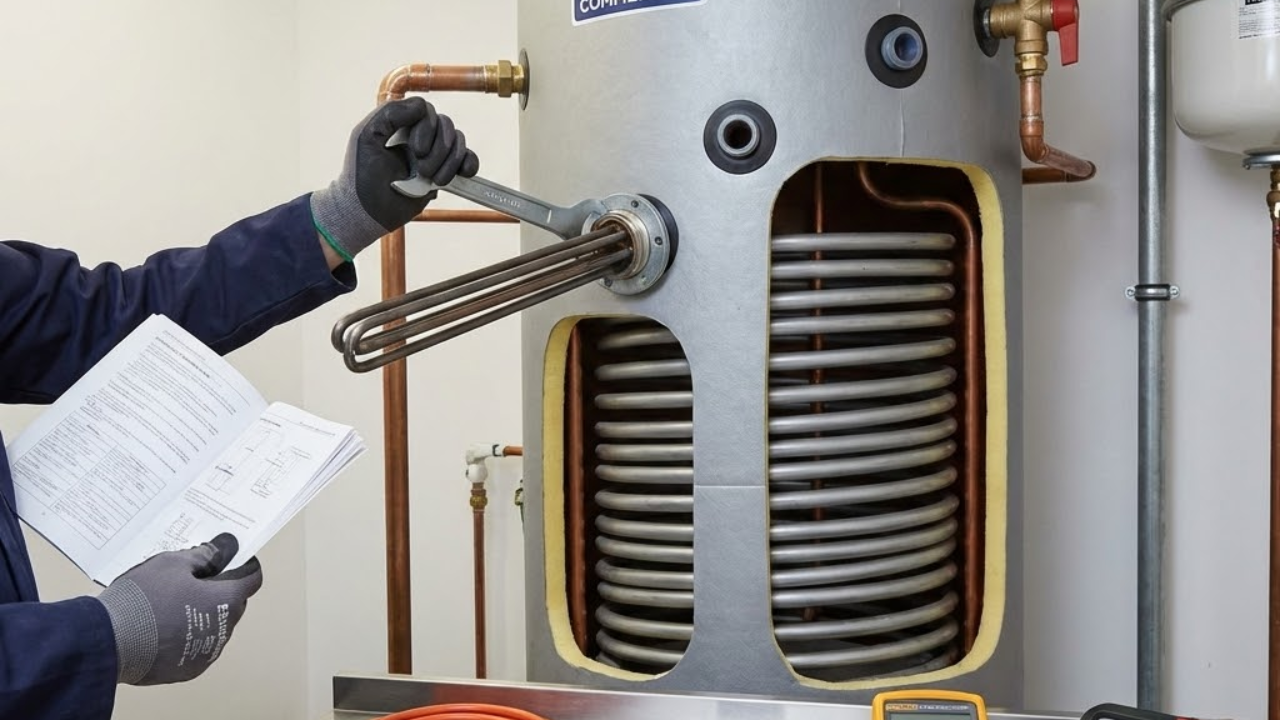
An immersion heater is an electric resistance element installed directly into a hot water cylinder. When energised, it converts electricity into heat, warming the water around it. Unlike boiler-fed systems that rely on heat exchangers, pumps, and controls, immersion heaters are self-contained units.
Most backup configurations use a dual-coil cylinder. The primary coil connects to the boiler, handling day-to-day heating. The immersion heater sits as a secondary heat source, wired to a dedicated circuit and controlled independently. In normal operation, it's switched off. When the boiler fails, you energise the immersion heater manually or via an automatic changeover system.
Cylinder sizing is critical. A 300-litre dual-coil cylinder with a 3kW immersion heater takes roughly 3-4 hours to heat from cold to 60°C. That's manageable overnight but problematic if you need hot water immediately. Larger Gledhill cylinders with multiple immersion heaters (say, two 6kW elements) halve the recovery time, making them suitable for high-demand applications.
Thermostatic control is non-negotiable. Every immersion heater must have an integral or strap-on thermostat, typically set between 60-65°C. This prevents scalding, controls energy use, and stops the element from dry-firing if water levels drop. Without it, you risk overheating, cylinder damage, and safety hazards.
Specifying Immersion Heaters for Backup Duty
Choosing the right immersion heater isn't about picking the cheapest option from the catalogue. It's about matching the element type, power rating, and control strategy to the application.
Element length matters. Standard immersion heaters come in 11-inch, 18-inch, and 27-inch lengths. Longer elements distribute heat more evenly and reduce localised hotspots, which improves efficiency and element lifespan. For backup duty, an 18-inch element offers a good balance between performance and cost.
Power rating determines recovery time. A 3kW element is standard for domestic cylinders, but commercial applications often need 6kW or dual 3kW elements for faster reheat. Remember, a 6kW element draws 25 amps at 240V, so you'll need appropriately rated cabling with heat-resistant flex and circuit protection. Undersized wiring leads to voltage drop, nuisance tripping, and potential fire risk.
Material selection impacts longevity. Copper-sheathed elements are standard, but in hard water areas, they scale up quickly. Incoloy or titanium-sheathed elements resist scaling and corrosion, extending service life in aggressive water conditions. They cost more upfront but reduce maintenance and replacement frequency.
For systems serving care homes or hospitals, consider dual immersion heaters. One heats the lower half of the cylinder for bulk storage, whilst a second heats the top section for rapid hot water availability. This configuration provides faster response times during peak demand and maintains stratification for better efficiency.
Installation Best Practices
Poor installation undermines even the best-specified immersion heater. Get the basics right, and the system will run trouble-free for years. Cut corners, and you'll be back within months.
Electrical connections must meet BS 7671 requirements. Immersion heaters are fixed appliances, so they need a dedicated radial circuit protected by a 20A or 32A MCB (depending on element rating) and a 30mA RCD. The circuit should terminate at a 20A double-pole switch with a neon indicator, positioned within sight of the cylinder but not in a bathroom zone.
Use heat-resistant flex (typically 2.5mm² or 4mm² depending on load) between the isolator and the immersion heater terminal. Standard PVC flex degrades under heat, leading to insulation failure and potential short circuits. Heat-resistant flex is rated to 90°C and remains stable even when mounted close to the cylinder.
Thermostat positioning is critical. Strap-on thermostats must make full contact with the cylinder surface, secured tightly with the metal strap provided. Any air gap reduces thermal transfer, causing the thermostat to read incorrectly and overheat the water. For integral thermostats (built into the immersion heater boss), ensure the sensing element sits at the correct depth, typically one-third down from the top of the cylinder.
Don't forget the safety cut-out. High-limit thermostats (often called thermal cut-outs) should be wired in series with the immersion heater. If the primary thermostat fails and water temperature exceeds safe limits, the cut-out trips and isolates the supply. It's a simple failsafe that prevents cylinder damage and scalding injuries.
Automatic Changeover Systems
Manual switching works fine for small domestic properties, but commercial installations need automatic changeover to maintain hot water supply without operator intervention.
These systems monitor boiler operation, typically via a flow sensor, temperature sensor, or boiler interlock signal. When the boiler stops delivering heat, the changeover controller energises the immersion heater circuit automatically. Once the boiler resumes normal operation, the controller switches the immersion heater off.
Manufacturers offer pre-packaged automatic changeover systems designed for this application. They're straightforward to wire, reliable, and eliminate the risk of someone forgetting to switch the immersion heater on during a boiler failure.
In larger systems, consider time-delayed activation. If the boiler stops briefly (say, during a routine defrost cycle or short power cut), you don't want the immersion heater kicking in unnecessarily. A 15-30 minute delay prevents nuisance activation whilst still providing backup if the boiler remains offline.
Sizing Backup Heating for Practical Demand
Backup heating isn't about replacing the boiler's full output. It's about maintaining minimum acceptable service during an outage.
Start by calculating daily hot water demand. A care home with 40 residents might use 2,000 litres per day at 60°C. If the boiler fails overnight, you need enough stored hot water to cover morning showers and kitchen use (say, 800 litres). A 500-litre cylinder with dual 6kW immersion heaters can reheat that volume in roughly 4-5 hours, ready for the next day's demand.
On a recent care home project, a facilities manager sized a backup cylinder at 200 litres to save costs, ignoring the engineer's recommendation for 500 litres. When the boiler failed during a cold snap, the undersized cylinder ran dry by 9 a.m., leaving 30 residents without hot water for the rest of the day. The subsequent complaints, regulatory visit, and emergency cylinder upgrade cost far more than specifying correctly from the start would have done.
For lower-priority applications (office buildings, light commercial), you can reduce backup capacity. A 300-litre cylinder with a single 3kW element might suffice, accepting that hot water will be rationed until the boiler is repaired.
Don't oversize. A massive cylinder with inadequate immersion heating takes forever to recover and wastes energy maintaining temperature. Match cylinder volume to realistic backup demand, not peak boiler output.
Maintenance and Troubleshooting
Immersion heaters fail for predictable reasons: scale buildup, thermostat drift, and element burnout. Regular maintenance catches these issues before they cause complete failure.
Annual inspections should include:
- Visual check of electrical connections for signs of overheating or corrosion
- Thermostat operation test (confirm it trips at the set temperature)
- Element continuity test (measure resistance across the element terminals, typically 15-20 ohms for a 3kW element at 240V)
- Cylinder condition check (look for signs of leaks, corrosion, or insulation damage)
Scaling is the primary enemy. In hard water areas, limescale deposits on the element surface, reducing heat transfer and forcing the element to work harder. This accelerates burnout. If you're in a high-hardness area, consider water softening or plan for element replacement every 3-5 years as routine maintenance.
When an immersion heater stops working, start with the simple checks. Is the isolator switch on? Has the MCB tripped? Has the thermal cut-out activated? Many "failures" are just tripped safety devices that need resetting.
If the element has genuinely failed, replacement is straightforward. Drain the cylinder below the immersion heater boss, unscrew the old element, clean the threads, fit a new gasket, and install the replacement. It's a 30-minute job if you've got the right tools and a new element on hand.
Immersion Heater Backup in Renewable Systems
Heat pumps and solar thermal systems are fantastic for efficiency, but they're slow to recover compared to boilers. That makes backup heating even more critical.
A heat pump might take 6-8 hours to reheat a depleted cylinder, which is fine for planned usage but problematic if demand spikes unexpectedly. An immersion heater provides rapid top-up heating, ensuring hot water availability without oversizing the heat pump.
Many modern cylinders designed for renewable systems include pre-installed immersion heater bosses at multiple heights. This allows you to install a lower element for bulk heating (powered by off-peak electricity) and an upper element for rapid top-up during peak times.
Smart controls from Honeywell thermostats can optimise this further. Programme the immersion heater to activate only when the heat pump can't meet demand, or use time-of-use tariffs to heat water overnight at cheaper rates. This maximises renewable energy use whilst maintaining service reliability.
Regulatory Considerations
Building Regulations Part G requires stored hot water to be heated to at least 60°C to control Legionella bacteria. Backup systems must comply with this, meaning thermostats should be set to 60-65°C, not lower.
In commercial properties, Legionella risk assessments under HSE ACOP L8 apply to all hot water systems, including backup heating. Ensure immersion heaters can achieve and maintain 60°C, and that dead legs or low-flow areas don't create bacterial growth opportunities.
All electrical work must comply with BS 7671 requirements. Key requirements include RCD protection, appropriate cable sizing, and correct zoning in bathrooms. Non-compliance isn't just illegal, it's dangerous and invalidates insurance.
Cost-Benefit Analysis
Backup heating isn't free. You're paying for the cylinder, the element, the electrical installation, and ongoing running costs if the boiler fails. But compare that to the cost of no hot water.
A hotel losing hot water for 24 hours might face guest complaints, refunds, and reputational damage worth thousands. A care home could breach health and safety regulations, risking enforcement action. A hospital without hot water is a clinical risk.
Payback isn't measured in energy savings, it's measured in avoided disruption. The immersion heater might sit unused for years, but when the boiler fails, it justifies its cost in a single day.
For domestic properties, backup heating is often a planning requirement in areas with unreliable gas supply or for properties using oil or LPG boilers. It's not optional, it's part of delivering a compliant, resilient system.
Choosing the Right Cylinder and Components
Not all cylinders are created equal. For reliable backup operation, you need a well-insulated, correctly sized dual-coil cylinder with proper boss fittings.
Kingspan cylinders both offer high-quality indirect cylinders with factory-fitted immersion heater bosses and excellent insulation. These reduce standing losses and ensure the immersion heater's heat stays in the water, not radiating into the plant room.
For pumped systems requiring additional pressure, Stuart Turner pumps integrate seamlessly with these backup configurations, maintaining flow rates even when running on backup heating.
When specifying controls, EPH Controls both offer programmable timers and automatic changeover systems suitable for automated immersion heater management.
Conclusion
Backup heating isn't glamorous, but it's essential for resilient hot water systems. When the boiler fails (and it will), a properly specified and installed immersion heater keeps taps running, showers hot, and clients satisfied.
The key is treating backup heating as a critical system component, not an afterthought. Size the cylinder correctly, choose quality elements and controls, install to BS 7671 standards, and maintain regularly. Do that, and your backup system will sit quietly in the background until the moment it's needed, then it'll work flawlessly.
For heating engineers, this is about reputation. Clients remember the engineer who installed a system that kept working when the boiler died. They also remember the one who didn't. Which one do you want to be?
If you're specifying backup heating for a new installation or upgrading an existing system, our trade heating supplies include cylinders, immersion heaters, and controls you need. For technical advice on sizing or system design, contact our technical team and we'll help you get it right first time.