

Kingspan AUXN180ERP Internal Expansion Vessel Cylinders: Space-Saving Design Benefits
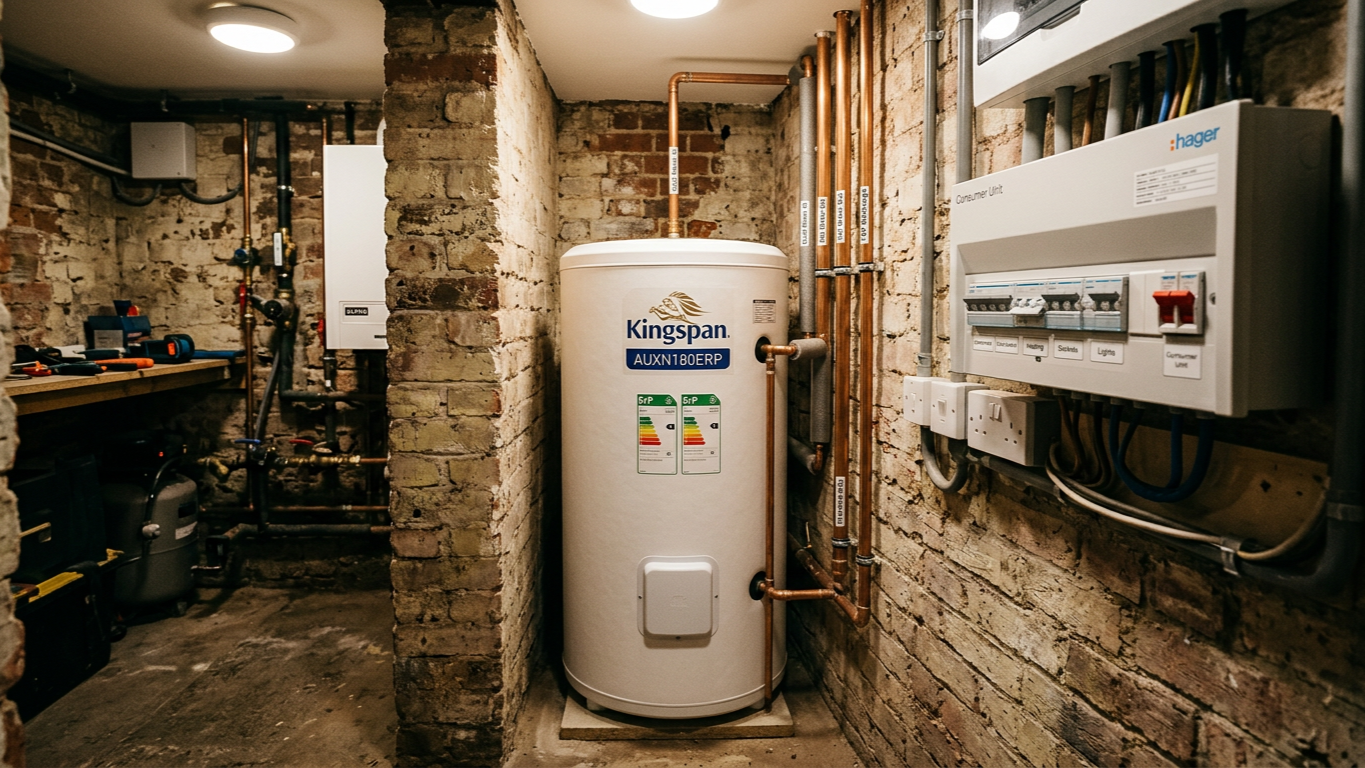
Mechanical rooms across the UK are shrinking rapidly. This isn't because we are building smaller homes, but because every single square metre now costs more than ever. That is exactly why the Kingspan AUXN180ERP series matters. These cylinders pack the expansion vessel inside the unit itself. Consequently, they completely eliminate the bulky external tanks that traditionally eat up precious floor space.
Think of it like buying a premium suitcase with built-in, perfectly sized compartments rather than carrying three awkward, separate bags. It simply keeps everything neat, compact, and perfectly organised.
We've installed dozens of these systems in properties where the plant room barely accommodates the boiler, let alone separate expansion vessels, pressure gauges, and associated pipework. The difference in the finished aesthetic and workable area is immediate and measurable.
What Makes Internal Expansion Vessels Different
At Heating and Plumbing World, we constantly speak with installers who are struggling with tight spaces. Standard traditional unvented cylinders require a separate expansion vessel mounted externally on a wall. This external vessel safely absorbs the increased water volume as the cylinder heats up. The glaring problem is that it demands its own dedicated installation footprint, mounting brackets, connecting pipework, and maintenance access.
The Kingspan AUXN180ERP range intelligently integrates this vessel directly into the cylinder body. The internal expansion vessel sits securely within the insulated jacket and connects internally. You get the exact same crucial safety function without the messy external clutter.
Here is what changes practically during your fit-out:
- Installation footprint: A 180-litre traditional setup requires massive floor space for service clearances. The integrated model needs roughly half that area.
- Pipework runs: External vessels mean additional pipe runs and potential leak points. The internal design eliminates these messy connections.
- Future maintenance: The replacement process is far simpler because you are already working on the main unit.
Real-World Space Savings In Typical UK Properties
Let's get specific about where this genuinely matters. We recently worked on a Kensington flat conversion where the original coal cellar became the plant room. A bulky setup using traditional unvented cylinders wouldn't physically fit without relocating the expensive boiler. However, the integrated design slotted in beautifully with plenty of clearance for servicing.
Modern developers frequently squeeze plant rooms into tiny cupboards. You simply can't fit a standard system in that depth while maintaining strict Building Regulations clearances. The internal design makes these tight installations perfectly code-compliant.
If you are upgrading an older property, you might usually consider a reliable Kingspan indirect Combi Fortic tank. However, when upgrading to mains pressure, an internal vessel effortlessly solves the space issue without requiring structural changes to the building.
Installation Advantages Beyond Floor Space
The space-saving design creates fantastic secondary benefits that drastically affect installation costs and long-term reliability. Every single joint in a heating system is a potential failure point. External expansion vessels require at least two additional joints, plus the vessel connection itself. Eliminating these entirely means fewer leak risks and less time spent making watertight connections.
On a recent commercial job, an apprentice completely forgot to account for an external vessel's clearance. He ended up having to dismantle an entire door frame just to wedge it into the cramped airing cupboard. It was a completely avoidable nightmare if he'd just specified an internal vessel from the start.
Furthermore, standard setups require you to check the pre-charge pressure separately. The Kingspan AUXN180ERP conveniently comes pre-charged and factory-tested as a complete unit. You are essentially commissioning one integrated, reliable system.
Technical Specifications That Matter
This cylinder isn't just about saving space; it also delivers serious hot water performance. The 180-litre capacity comfortably serves a typical three-to-four bedroom property. With a standard 3kW immersion heater, recovery takes roughly 2.5 hours from cold.
The internal vessel is factory-sized to precisely match the cylinder capacity. For a 180-litre unit, the expansion vessel perfectly handles the cylinder plus approximately 100 litres of system water. If you are running a massive radiator network, you absolutely must calculate the total system volume. Huge properties might still need supplementary expansion capacity to remain safe.
It features a maximum working pressure of 6 bar. This perfectly suits standard UK mains pressure supplies without requiring additional pressure-reducing valves in most basic installations.
Where Internal Expansion Vessels Excel
Not every installation benefits equally from this specific design. They excel dramatically in retrofit replacements where the existing space was never meant for bulky additions. They also shine brilliantly in multi-unit developments where standardising the installation footprint ensures consistent, predictable fitting times across dozens of identical apartments.
We've installed these in tight loft conversions where getting a separate Worcester expansion vessel up through the hatch would have required dismantling the frame. Having everything integrated made an impossible installation completely manageable.
In modern properties built with weak dot-and-dab plasterboard, finding solid wall fixings for external vessels is highly problematic. The internal design completely eliminates this frustrating concern for the installer.
Installation Considerations And Planning
Despite the obvious advantages, these clever cylinders aren't totally plug-and-play. You still need to carefully calculate your total system volume before ordering. The vessel must comfortably accommodate expansion from the entire system, not just the cylinder itself. For massive residential heating systems, you will absolutely need supplementary expansion capacity.
You must also ensure proper access for ongoing maintenance. Building Regulations legally require 500mm clearance in front and 150mm on the sides for servicing. Don't assume the smaller installation footprint means you can cram it into a completely inaccessible corner.
Finally, thoroughly plan your lifting strategy. The cylinder weighs approximately 65kg when totally empty. We frequently use sturdy cylinder trolleys for ground floor installations to save our engineers' backs.
Comparing Costs: Internal Vs External Expansion Vessels
A cylinder with an integrated vessel typically costs slightly more upfront than standard setups. However, the installation labour costs tell a very different story. Let's break down the realistic, real-world comparison:
- Material costs: Buying a separate Zilmet Hy-Pro vessel alongside extra copper pipework and brackets adds up very quickly.
- Labour costs: Installing and fully commissioning an external vessel adds roughly 1-1.5 hours to your installation time.
- Total comparison: Older traditional unvented cylinders might cost less initially, but they demand significantly more materials and highly paid labour.
Maintenance And Longevity Factors
Integrated designs subtly change the ongoing annual maintenance equation. You still need to check the pressure relief valve and carefully inspect the immersion heater annually. However, you don't require separate pre-charge checks unless you are actively diagnosing a specific pressure fault.
If system pressure drops unexpectedly, diagnosing the root fault is slightly different. You are testing the entire unit as one cohesive system. Thankfully, an internal expansion vessel is far less exposed to the mechanical stress that comes from separate wall mountings.
When an internal expansion vessel eventually fails, you are usually replacing the entire cylinder. While this sounds incredibly expensive, these specific failures rarely occur before the cylinder itself has reached the end of its natural, useful lifespan.
Building Regulations Compliance
This modern range perfectly meets all relevant UK Building Regulations for unvented hot water. However, you still need proper, G3-compliant installation procedures carried out by a certified professional.
The pressure relief valve discharge must terminate externally in a highly visible location. You should use standard 22mm copper pipework with a tundish located in the exact same space as the cylinder.
The unit includes a 90°C temperature relief valve, which must also discharge safely outdoors. The internal expansion vessel flawlessly handles normal thermal expansion. The PRV simply provides reliable backup protection if that supplementary expansion capacity is somehow catastrophically exceeded.
Real Installation: Before And After
We recently replaced a highly inefficient old system in a 1930s semi-detached property. The original plant room measured just 1.5 metres by 1.8 metres. Before the upgrade, the old external vessel was mounted directly on the wall, consuming massive amounts of workable space.
After installing the new unit, we freed up enough wall space to accommodate a brand new electrical consumer unit. The homeowner gained incredibly valuable storage space. Furthermore, the actual installation took just six hours instead of our usual eight.
If you are currently debating between an integrated model and a standalone Kingspan direct pressurised cylinder, always heavily factor in the true, long-term value of the space you will save.
When Internal Expansion Vessels Aren't Ideal
Honesty matters, and these units simply aren't universally superior for every single job you undertake. Properties boasting extensive radiator systems might require massive supplementary expansion capacity anyway. This effectively negates the core space-saving advantage of the cylinder.
If you're only replacing a leaky cylinder and the existing external vessel is relatively new, reusing it makes perfect economic sense. Alternatively, some commercial maintenance contracts strongly prefer external vessels because replacing them doesn't require completely draining the main cylinder.
If strict budget limits are your only concern and you have plenty of room, you might prefer a standard ACV indirect cylinder. However, this completely ignores the long-term maintenance efficiency.
Conclusion
The Kingspan AUXN180ERP series brilliantly solves a genuine problem that constantly affects thousands of UK installations. By smartly integrating the vessel within the cylinder body, these units drastically reduce your installation footprint.
The space savings matter most in tight retrofit situations, compact apartments, and older properties with awkward access. While traditional unvented cylinders still have their place in large builds, an integrated model constantly pays for itself through reduced installation complexity.
Always accurately calculate your total system volume before ordering any components. Verify your physical space constraints, and carefully compare the complete installation costs. If you need help specifying the correct model for your next project, reach out to our experts for professional, trade-focused advice.