

Lockshield Valves: Purpose and Proper Adjustment
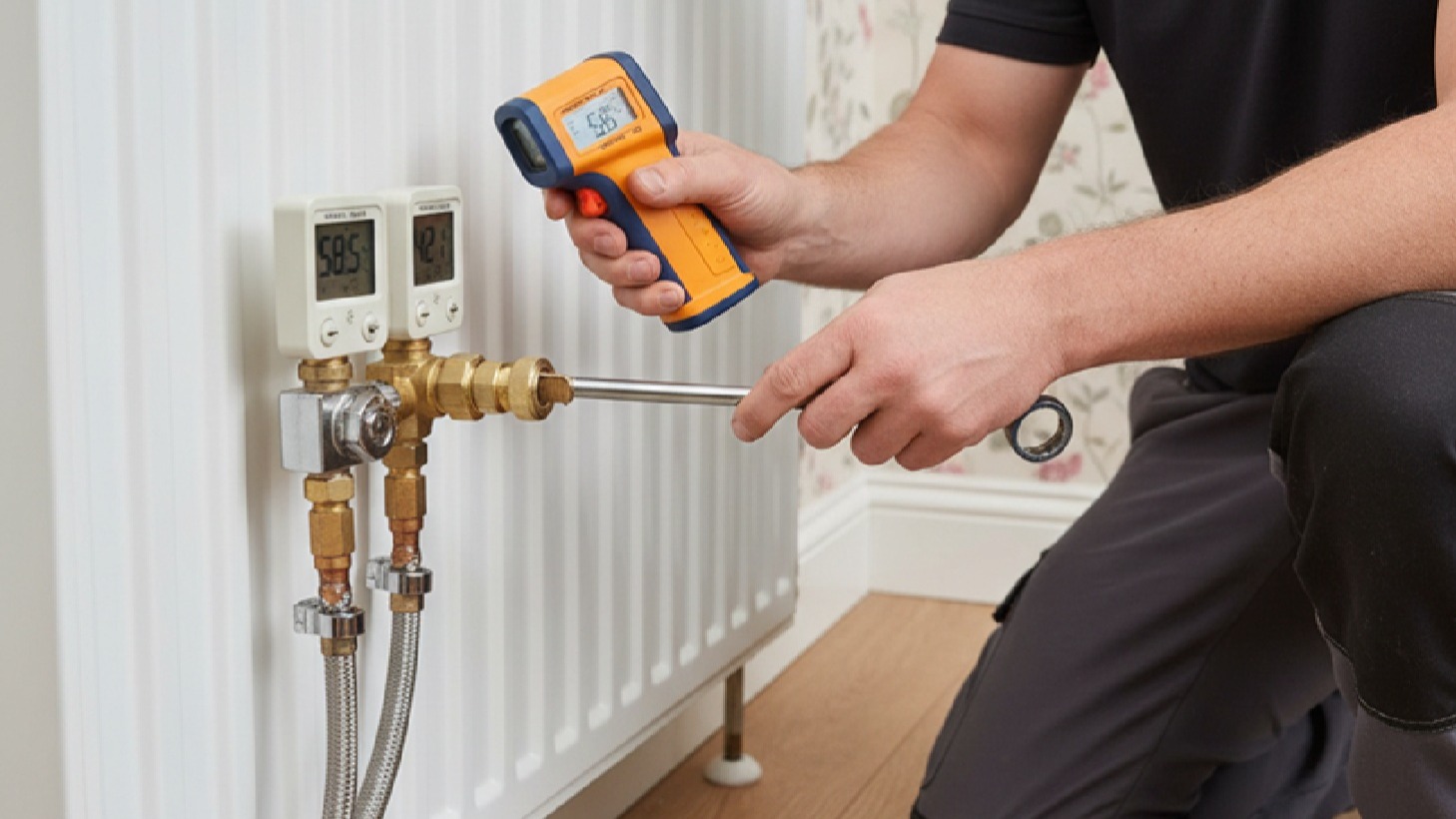
Lockshield valves control water flow through individual radiators, but most homeowners never touch them after installation. That's a mistake. Proper adjustment can cut heating bills by 15-20% and eliminate cold spots throughout your home.
These valves sit opposite the thermostatic radiator valve (TRV) on each radiator. Whilst the TRV responds to room temperature, the lockshield valve sets the maximum flow rate through that specific radiator. Together, they balance your entire heating system so every room reaches the desired temperature at the same rate.
What Lockshield Valves Actually Do
A lockshield valve restricts how much hot water flows through a radiator. The plastic cap covers the adjustment mechanism to prevent accidental changes once you've balanced the system.
Here's why this matters: without proper adjustment, radiators closest to your boiler receive too much hot water, whilst distant radiators stay lukewarm. Your boiler works harder, cycling on and off as nearby rooms overheat whilst far rooms stay cold. We've measured temperature differences of 8-12°C between rooms in unbalanced systems.
The valve contains a spindle that moves up and down to open or close the water passage. Turn it clockwise to restrict flow, anticlockwise to increase it. The adjustment is precise; sometimes a quarter-turn makes the difference between a perfectly balanced radiator and one that underperforms.
How Lockshield Valves Differ from TRVs
Confusion between these two valves causes most balancing problems. They work together but serve different functions:
Thermostatic Radiator Valves (TRVs) respond to room temperature. As the room warms, a wax element expands and closes the valve. When the room cools, it opens again. You set the desired temperature with the numbered dial (typically 1-5). Quality TRVs from manufacturers like Danfoss or Honeywell offer precise temperature control that works seamlessly with proper lockshield valve adjustment.
Lockshield valves set the flow rate regardless of temperature. Once adjusted, they don't change unless you manually turn them. They determine how quickly a radiator can heat up, not what temperature it reaches.
Think of it this way: the TRV is automatic climate control, the lockshield valve is the accelerator pedal. Both need correct settings for efficient operation.
Why System Balancing Matters
An unbalanced heating system wastes energy in three ways:
Boiler short-cycling: When nearby radiators heat quickly, the boiler thinks the whole house is warm and shuts off. Distant radiators never reach a temperature. The boiler restarts, repeats the cycle. Each start-up uses maximum fuel. Modern condensing boilers from manufacturers like Andrews are particularly sensitive to this cycling, which reduces their efficiency gains.
Pump strain: Your circulation pump works harder, pushing water through fully-open valves on nearby radiators whilst struggling to reach distant ones. This shortens pump life from 10-12 years to 6-8 years. Quality circulator pumps from Grundfos handle varied flow conditions better, but proper balancing still extends their operational life significantly.
Uneven temperatures: You'll increase the thermostat to warm cold rooms and overheating rooms with unrestricted radiators. We've seen living rooms at 24°C whilst bedrooms sit at 16°C in the same house.
Proper radiator valve maintenance prevents these issues and extends system life.
Tools You Need for Adjustment
Professional balancing requires specific equipment:
- Radiator bleed key: Remove air pockets before balancing
- Adjustable spanner or grips: Remove lockshield caps
- Digital thermometer or infrared gun: Measure pipe temperatures accurately
- Notepad: Record valve positions and temperatures
- Flat-head screwdriver: Turn the valve spindle on some models
The infrared thermometer is critical. Guessing temperatures by touch introduces 3-5°C errors, which throws off the entire balance. Digital models cost £15-25 and pay for themselves in reduced heating bills within one season.
The Balancing Process Step-by-Step
Balance your system when it's cold, early morning or after being off for several hours. The process takes 2-3 hours for an average home.
Step 1: Bleed All Radiators
Air pockets skew temperature readings. Open each bleed valve until water (not air) flows out. Start upstairs and work down.
Step 2: Open All Valves Fully
Remove lockshield caps by pulling straight off or unscrewing. Turn each lockshield valve fully anticlockwise (usually 3-4 complete turns). Count the turns so you know when it's fully open. Open all TRVs to maximum.
Step 3: Identify Radiator Order
Start your heating system. Using your thermometer, check which radiators heat first. These sit closest to the boiler in terms of pipe run, not physical distance. Note the order, you'll adjust them from first to last.
Step 4: Adjust the First Radiator
This radiator (closest to the boiler) needs the most restriction. Close its lockshield valve completely, then open it a quarter-turn at a time. Measure the temperature difference between the pipe entering the radiator (flow) and the pipe leaving it (return).
Target a 12°C difference. If the difference is smaller, close the valve slightly. If larger, open it more. This typically requires 1-2 full turns open from fully closed.
Step 5: Work Through Remaining Radiators
Move to the second radiator. Follow the same process, but this one will need fewer restrictions, perhaps 2-3 turns open. Continue through all radiators, opening lockshield valves progressively more as you move away from the boiler.
The radiator furthest from the boiler typically runs fully open (all turns anticlockwise).
Step 6: Record Valve Positions
Write down how many turns open each valve sits. If you need to drain the system for repairs, you'll restore the balance quickly.
Step 7: Replace Lockshield Caps
Push or screw the caps back on to prevent accidental adjustment.
Common Adjustment Mistakes
Opening valves too much: A quarter-turn can double the flow rate through a partially-restricted valve. Make small adjustments and wait 10-15 minutes for temperatures to stabilise before measuring again.
Measuring too quickly: Radiators take 15-20 minutes to reach steady-state temperatures after adjustment. Rushing leads to overcorrection.
Ignoring pipe layout: Physical distance doesn't determine balancing order. A bedroom directly above the boiler might heat before a kitchen that's closer, but connected through longer pipe runs. Always measure the actual heating sequence.
Balancing with air in the system: Air pockets create false temperature readings. We've seen systems that needed complete rebalancing after proper bleeding revealed the actual flow patterns.
Forgetting to set TRVs correctly: After balancing lockshields, set each TRV to your desired room temperature. Don't leave them all on maximum, or you've wasted the balancing effort.
Troubleshooting Specific Issues
One radiator stays cold: Fully open its lockshield valve. If it still won't heat, check for sludge buildup or a stuck TRV. The valve might need professional repair or replacement. Quality replacement valves and pipe fittings ensure reliable long-term operation.
Radiator hot at top, cold at bottom: This indicates sludge accumulation, not a balancing problem. The radiator needs flushing or replacement. Adjusting the lockshield valve won't fix this.
System loses balance over time: Sludge buildup changes flow patterns. Add an inhibitor to your system annually and consider a power flush every 5-7 years for older systems.
Radiator heats too slowly, even fully open: The lockshield valve itself might be partially blocked. Close both valves, remove the radiator, and flush it with a hose. Check the valve body for debris.
Temperature difference exceeds 12°C: The radiator is oversized for the room, or the flow rate is too restricted. Open the lockshield valve more. If already fully open, the issue lies elsewhere, possibly pump speed or pipe sizing.
When to Rebalance Your System
Rebalancing becomes necessary when:
- You've added or removed radiators
- You've replaced the boiler or pump
- You've drained and refilled the system
- Room temperatures have become noticeably uneven
- Heating bills increase without explanation
- You've flushed the system to remove sludge
Annual checks take 30 minutes. Measure the flow/return temperature difference on each radiator. If any have shifted more than 3°C from your recorded 12°C target, readjust those specific valves.
Lockshield Valves vs Flow Restrictors
Some modern systems use flow restrictors instead of adjustable lockshield valves. These fixed-orifice devices come in specific sizes (typically 6mm, 8mm, 10mm, 12mm) that restrict flow by predetermined amounts.
Flow restrictors work well in new installations where heating engineers calculate the exact requirements. They prevent accidental adjustment and maintain balance permanently. However, they lack flexibility; changing room usage or adding radiators requires replacing the restrictors.
Traditional lockshield valves suit existing systems where you need adjustment flexibility. Most homes built before 2010 use adjustable valves.
Professional vs DIY Balancing
DIY balancing saves £150-250 in professional fees and teaches you how your system works. The process is straightforward if you follow the steps methodically and have accurate temperature measurement tools.
Consider professional help when:
- Your system includes 12+ radiators (complexity increases significantly)
- You have a combination of radiator types (panel, column, towel rails)
- The system includes underfloor heating zones
- You lack confidence working with heating systems
- Previous DIY attempts haven't resolved temperature imbalances
Professionals use differential thermometers that measure flow and return simultaneously, speeding up the process. They also identify underlying problems like pump issues or pipe restrictions that prevent proper balancing.
Maintaining Lockshield Valves
These valves require minimal maintenance but benefit from annual attention:
Annual checks: Remove caps and turn valves fully open, then back to the set position. This prevents seizures from a lack of movement. Valves that sit untouched for years can freeze in position.
Leak inspection: Check the gland nut (where the spindle enters the valve body) for weeping. Tighten half a turn if you spot moisture. Don't overtighten; this damages the packing.
Cap replacement: Cracked or missing caps expose the adjustment mechanism to accidental knocks. Replacement caps cost £1-2 each.
Valve replacement: Lockshield valves last 15-20 years typically. Replace any that leak from the body (not just the gland nut), turn roughly, or won't close fully. Modern valves offer better flow control than 20-year-old designs.
Quality heating system components prevent premature failures and maintain system efficiency.
Radiator Selection and Valve Compatibility
The effectiveness of lockshield valve adjustment depends partly on radiator design. Column radiators from manufacturers like Myson offer excellent flow characteristics that respond well to precise balancing. Their internal waterways allow fine control through lockshield adjustment, making it easier to achieve the target 12°C differential.
Panel radiators typically have simpler internal designs but still benefit from proper balancing. The key is ensuring valve sizing matches radiator capacity. A large radiator with undersized valves will never achieve proper flow, regardless of how you adjust the lockshield.
System Pressurisation and Balance
Maintaining correct system pressure supports effective lockshield valve operation. Expansion vessels and pressure control components from suppliers like Altecnic ensure stable operating conditions that allow lockshield valves to function as designed.
Low system pressure reduces flow rates across all radiators, making it difficult to achieve the target temperature differentials. High pressure can force water past partially-closed lockshield valves, undermining your balancing efforts. Check system pressure regularly; it should sit between 1.0 and 1.5 bar when cold for most domestic systems.
Integration with Smart Controls
Modern heating controls from manufacturers like EPH Controls work more effectively when the underlying system is properly balanced through lockshield valve adjustment. Smart thermostats and programmers can't compensate for fundamentally unbalanced radiator circuits.
Balance the system first using lockshield valves, then add smart controls to optimise timing and zone control. This sequence ensures you're building automation on top of a sound hydraulic foundation rather than trying to use electronics to fix mechanical problems.
Achieving Optimal Performance
Lockshield valves transform heating efficiency when properly adjusted. The 2-3 hours spent balancing your system returns 15-20% lower heating bills every year, eliminates cold rooms, and extends boiler life by reducing short-cycling.
The process requires patience and accurate temperature measurement, but no specialised plumbing skills. Work methodically from the radiator closest to your boiler to the furthest, targeting a 12°C difference between flow and return pipes on each radiator.
Record your valve positions after balancing. This documentation saves hours if you need to drain the system for repairs. Check temperatures annually and readjust any radiators that have drifted from the 12°C target.
Proper lockshield valve adjustment is fundamental to heating system performance. Master this one skill and you'll maintain comfortable, even temperatures throughout your home whilst cutting energy waste that most homeowners never realise they're paying for.
For quality radiator valves and heating system components that support effective system balancing, Heating and Plumbing World supplies professional-grade products suitable for both new installations and upgrades. If you need specific advice on valve selection or system balancing challenges, get in touch for expert guidance.