
 -
- Loctite Thread Sealants: Anaerobic Sealing for Metal Threads
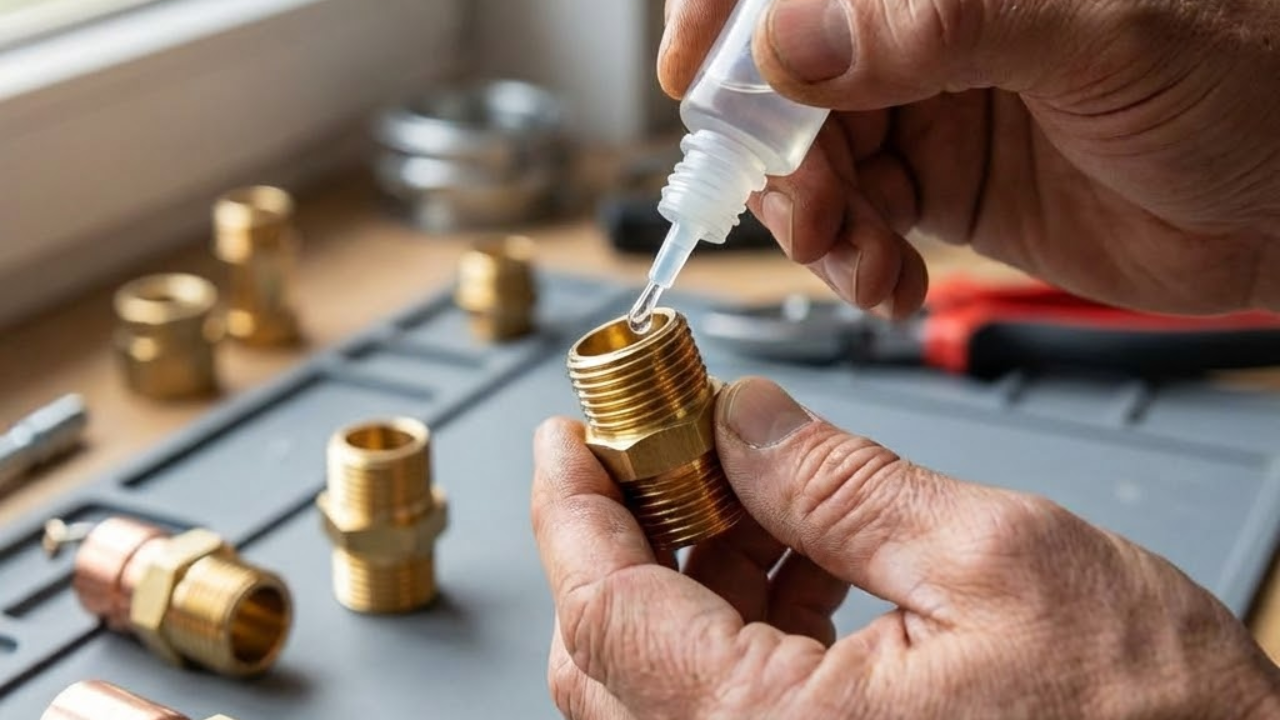
Thread sealing in heating systems isn't about stopping leaks – it's about preventing them from happening in the first place. When you're commissioning a commercial boiler system or installing a manifold on a residential job, the last thing you need is a callback for a weeping joint at 2am. That's where Loctite thread sealants earn their place in your toolkit.
Unlike traditional PTFE tape that can shred, bunch up, or leave gaps under pressure, Loctite's anaerobic thread sealing technology cures in the absence of air to form a tough, resilient seal that locks threads together. They're not just gap-fillers. They're engineered adhesives that prevent loosening under vibration, thermal cycling, and the hydraulic shocks common in pressurised heating systems. For engineers working with metal thread sealant applications on pumps, radiator valves, or boiler union sealing, they offer a level of reliability that tape simply can't match.
Heating and Plumbing World stocks a range of thread sealing solutions designed for the demands of modern HVAC installations, and understanding when and how to use these anaerobic sealants can transform your approach to leak prevention.
What Makes Anaerobic Sealants Different
Anaerobic sealants cure through a chemical reaction triggered by the absence of oxygen and the presence of metal ions. When you apply Loctite to a threaded connection and tighten the joint, the sealant fills the microscopic gaps between the threads. Once air is excluded and the sealant contacts the metal surface, it begins to polymerise – transforming from a liquid into a solid, cross-linked plastic.
This curing process creates a seal that's 100% contact area. There are no voids, no channels for fluid to migrate through, and no reliance on compression alone to maintain the seal. The result? A joint that won't leak, won't loosen, and won't fail under thermal expansion.
Think of anaerobic thread sealing like mixing two-part epoxy – until the components meet under the right conditions, nothing happens. But once the chemical reaction starts, you get a permanent bond that's stronger than the original materials. Traditional PTFE tape just sits there, hoping compression will do the work.
Key Properties of Loctite Thread Sealants
Vibration resistance: The cured sealant locks threads in place, preventing loosening from pump vibration or system cycling. This vibration-resistant sealing proves essential on Grundfos pump connections and manifold installations where mechanical disturbance is constant.
Chemical compatibility: Resistant to water, glycol, oils, and most system chemicals used in heating and plumbing installations.
Temperature range: Suitable for systems operating from -50°C to +150°C, depending on the grade.
Instant low-pressure seal: Many formulations provide an immediate seal at low pressures, allowing for faster system commissioning.
Gap filling: Fills imperfections in threads up to 0.5mm, compensating for worn or damaged threads.
Where Anaerobic Sealants Excel in Heating Systems
You wouldn't use a hammer to tighten a compression fitting, and you shouldn't use PTFE tape on every threaded connection. Loctite thread sealants are purpose-built for specific metal thread sealant applications where traditional methods fall short.
Pump Connections and Manifolds
Circulator pumps generate vibration – especially older models or those running at higher speeds. Over time, this vibration can work a PTFE-taped joint loose, leading to weeping or even complete failure. Anaerobic thread sealing prevents this by locking the threads together mechanically, creating vibration-resistant sealing that maintains integrity through continuous operation.
On recent commercial heating installations, engineers specify Grundfos pumps across multiple zones. Instead of tape, using Loctite 577 on every union and isolating valve connection ensures Grundfos pump connections remain leak-free. Eighteen months later, not a single joint has loosened – even on pumps running continuously at high duty cycles.
Boiler Connections and Heat Exchangers
Boiler connections operate in harsh conditions: high temperatures, pressure fluctuations, and exposure to inhibited water or glycol mixes. PTFE tape can degrade over time in these environments, especially at temperatures above 100°C. Anaerobic sealants maintain their integrity and sealing performance throughout the system's service life.
When connecting a commercial boiler to a primary circuit, using an anaerobic sealant on the flow and return unions ensures boiler union sealing won't fail during the first thermal shock or when the system ramps up to full temperature. This vibration-resistant sealing proves particularly valuable on installations where boilers cycle frequently.
Radiator Valves and Thermostatic Controls
Radiator valves – particularly thermostatic radiator valves (TRVs) – are frequently adjusted, removed for maintenance, or replaced. Anaerobic sealants allow for disassembly without destroying the seal. You can break the joint with standard tools, clean the threads, and reapply sealant for reassembly.
Brands like Danfoss and Honeywell produce TRVs and zone valves that benefit from the reliability of anaerobic sealing, especially in systems where valve cycling is frequent. Danfoss valve sealing with Loctite products ensures thermostatic elements can be replaced without compromising the thread seal, while Honeywell controls installations maintain their integrity through years of zone valve operation.
Gas Connections (With the Right Grade)
Not all Loctite sealants are gas-safe, but specific formulations like Loctite 577 are approved for natural gas, LPG, and oxygen lines. If you're sealing gas valve connections on a boiler or running gas pipework, always check the product data sheet for approvals to BS EN 751-3 or equivalent standards.
Using a gas-rated anaerobic sealant eliminates the risk of tape fragments entering the gas valve or burner assembly – a failure mode that's caused more than a few boiler lockouts.
Choosing the Right Loctite Grade
Loctite produces several grades of thread sealant, each formulated for different applications, pressures, and thread sizes. Selecting the wrong grade can lead to leaks, difficulty disassembling joints, or even system contamination.
Loctite 577
This is the workhorse of the range. Loctite 577 is a medium-strength, thixotropic sealant suitable for metal threads up to M80. It's approved for use with natural gas, LPG, oxygen, and potable water, making it the go-to choice for most heating and plumbing applications.
- Cures in 24 hours to full strength
- Instant low-pressure seal (up to 2 bar)
- Temperature range: -50°C to +150°C
- Disassembly: Can be removed with standard hand tools
Use 577 on boiler unions, Grundfos pump connections, manifold joints, and gas valve connections. It provides reliable boiler union sealing while allowing for future maintenance access.
Loctite 542
A hydraulic-grade sealant designed for high-pressure systems. Loctite 542 is ideal for large-diameter threads (up to M80) and applications where system pressures exceed 10 bar.
- Higher strength than 577, making disassembly more difficult
- Suitable for hydraulic and pneumatic systems
- Temperature range: -50°C to +150°C
Use 542 on pressurisation unit connections, large-bore heating mains, and any joint where vibration or pressure cycling is extreme.
Loctite 55
Technically not an anaerobic liquid, Loctite 55 is a PTFE cord impregnated with sealant. It's applied by wrapping the cord around the threads, then tightening the joint. The cord compresses and fills the thread form, while the impregnated sealant cures anaerobically.
- Suitable for irregular or damaged threads
- No curing time required for low-pressure applications
- Easy to apply without mess or drips
Use 55 on radiator tails, older fittings with worn threads, or any joint where you need immediate pressure testing.
How to Apply Loctite Thread Sealants Correctly
Even the best sealant won't work if it's applied incorrectly. Follow these steps to ensure reliable metal thread sealant applications every time.
Step 1: Clean the Threads
Remove all traces of old sealant, PTFE tape, oil, grease, or corrosion. Use a wire brush and a degreaser if necessary. Anaerobic sealants require clean, dry metal surfaces to cure properly.
If you're working with brass fittings that have been stored for a while, wipe them down with a solvent to remove any oxidation or tarnish.
Step 2: Apply the Sealant
Apply a continuous bead of sealant to the male thread, starting two threads back from the end. Don't apply sealant to the first two threads. This prevents excess sealant from being squeezed into the system when you tighten the joint.
For threads up to 1", apply sealant around the entire circumference. For larger threads (above 1"), apply a heavier bead or multiple passes to ensure complete coverage.
Step 3: Assemble the Joint
Thread the connection together by hand until finger-tight, then tighten with a spanner to the manufacturer's recommended torque. Don't overtighten. Anaerobic sealants work by filling gaps, not by compressing the joint to destruction.
As you tighten, you'll see excess sealant squeeze out at the joint face. This is normal. Wipe away the excess with a clean rag.
Step 4: Allow to Cure
Most Loctite sealants provide an instant low-pressure seal, but full cure takes 24 hours. If you need to pressure-test the system immediately, keep pressures below 2 bar until the sealant has fully cured.
For systems that will operate at high temperatures or pressures, allow the full 24-hour cure time before commissioning.
Common Mistakes (And How to Avoid Them)
Using Too Much Sealant
More isn't better. Excess sealant can contaminate the system, clog strainers, or interfere with valve operation. Apply a thin, continuous bead – just enough to fill the thread form.
Applying Sealant to Both Threads
Only apply sealant to the male thread. Applying it to both the male and female threads creates a hydraulic lock that can crack fittings or make disassembly nearly impossible.
Not Allowing Cure Time
If you pressurise the system too quickly, the sealant may not have fully cured, leading to leaks or joint failure. Respect the cure time, especially on critical connections like boiler union sealing.
Using the Wrong Grade for the Application
Not all Loctite sealants are gas-safe or potable water-approved. Always check the product data sheet and ensure the sealant meets the relevant standards for your metal thread sealant applications.
Disassembly and Maintenance
One of the advantages of anaerobic sealants over thread-locking compounds is that they're designed to be disassembled. To remove a joint sealed with Loctite, simply apply heat (if necessary) and unscrew with standard tools. The cured sealant will break away cleanly.
Clean the threads with a wire brush and solvent, then reapply fresh sealant for reassembly. Don't try to reuse old sealant – it won't cure properly a second time.
For joints that need to be disassembled frequently, consider using Loctite 577 (medium strength) rather than 542 (high strength). The lower strength makes disassembly easier without compromising seal integrity or vibration-resistant sealing performance.
Real-World Reliability
Here's a scenario that plays out more often than it should: a heating engineer installs a new circulator pump on a primary circuit, using PTFE tape on the union connections. The system is commissioned, pressurised to 1.5 bar, and left to run. Three months later, the client reports a slight weep from one of the pump unions. The engineer returns, drains down, retapes the joint, and refills. Six months later, the same joint weeps again.
The problem isn't the installation. It's the sealant. PTFE tape compresses under load and shifts under vibration. It's not designed for dynamic applications like Grundfos pump connections or boiler union sealing.
Switch to Loctite 577, and that joint won't leak. Not in three months, not in three years. The anaerobic thread sealing locks the threads, absorbs vibration, and maintains 100% contact even as the system cycles through temperature and pressure changes. That's vibration-resistant sealing that actually works.
Why Anaerobic Sealing Matters for System Integrity
Heating systems are closed-loop environments. Every leak, no matter how small, introduces air, reduces system pressure, and increases the risk of corrosion. Over time, even minor weeping joints can lead to pump cavitation, radiator cold spots, and premature component failure.
Loctite thread sealants eliminate this risk by creating a permanent, reliable seal that won't degrade, compress, or shift. They're not a shortcut – they're a professional-grade solution that reflects an understanding of how heating systems actually work.
For trade professionals who specify components from trusted brands like Grundfos, Danfoss, or Honeywell, using the right thread sealant is just as important as selecting the right pump or valve. Proper Danfoss valve sealing, reliable Honeywell controls installations, and secure Grundfos pump connections all depend on choosing appropriate metal thread sealant applications. It's part of a systems-thinking approach that prioritises long-term reliability over short-term convenience.
Conclusion
Loctite thread sealants represent a step change in how we approach threaded connections in heating and plumbing systems. They're not a replacement for good installation practice, but they are a significant upgrade over traditional PTFE tape in applications where vibration, thermal cycling, and high pressures demand a more robust solution.
Whether you're working on boiler union sealing on a commercial installation, connecting thermostatic valves on a multi-zone system with Danfoss valve sealing requirements, or assembling gas connections on a new installation, anaerobic thread sealing offers reliability, ease of use, and long-term performance that tape simply can't match. The vibration-resistant sealing properties prove essential for Grundfos pump connections and manifold installations where traditional methods fail.
For engineers and installers who take pride in their work and understand that a leak-free system is a well-designed system, Loctite represents the professional choice for metal thread sealant applications. If you're specifying components for your next project, contact our technical team to discuss the right sealing solutions for your application.