

Lowara e-LNE: In-line Centrifugal Pump Alignment And Commissioning
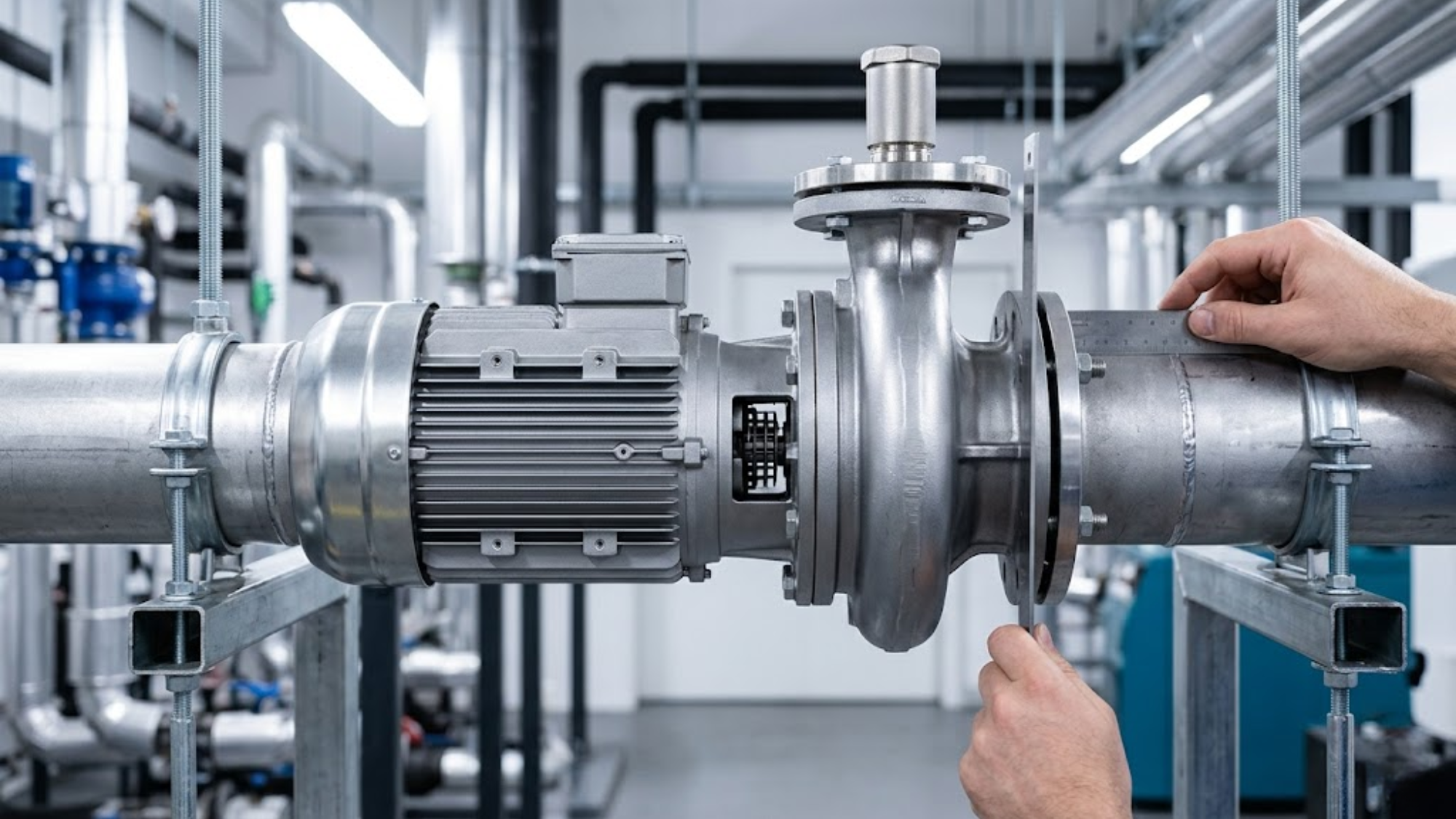
Proper alignment and commissioning of the Lowara e-LNE in-line centrifugal pump determines whether an HVAC system runs efficiently for years or becomes a maintenance headache within months. Real-world performance comes down to specific procedures that most installation guides gloss over.
Executing a flawless lowara e-lne in-line centrifugal pump alignment ensures the unit operates within its design parameters. These pumps move water at flow rates from 3 to 500 m³/h with heads up to 120 metres, but only when installed correctly. A misaligned pump wastes energy, creates noise, and destroys bearings prematurely.
Pre-Installation Checks That Prevent Problems
Before bolting the pump to the pipework, verify the foundation and pipe alignment. Pipe misalignment at the mounting flanges is measured using a straight edge and feeler gauges. Acceptable tolerance is 0.5mm maximum deviation across the flange face.
Think of aligning this pump like building a skyscraper. If the foundation is out of level by even a few millimetres, the entire structure eventually leans and fails. Pipe alignment serves as the foundation for the e-LNE. Heating and Plumbing World provides the necessary components to ensure these foundations are secure.
Support the pipework independently. The pump cannot bear the weight of connected pipes without causing misalignment. Install supports within 500mm of each flange connection. Measure the gap at four points around each flange. Variation exceeding 0.3mm indicates angular pipe misalignment that will load the pump bearings unevenly. Correcting angular pipe misalignment at this stage is far easier than fixing it after the system is filled.
Alignment Procedure For Inline Configuration
Unlike base-mounted pumps where you adjust shims, the e-LNE aligns through pipe positioning. This makes the initial pipe installation critical for a successful lowara e-lne in-line centrifugal pump alignment.
Install the pump without tightening flange bolts. Rotate the shaft by hand; it should turn freely with consistent resistance. Binding at any point indicates angular pipe misalignment or debris in the hydraulic assembly.
The tightening sequence follows a three-pass method: 30%, 70%, and then 100% of final torque. For DN50 to DN80 flanges, final torque is 60-80 Nm. After both flanges are torqued, rotate the shaft again. If resistance increased, the heating pipe systems pulled the pump out of alignment during bolt tightening.
Electrical Connection And Motor Checks
The e-LNE uses high-spec motors that require precise electrical parameters. An incorrect IE3 efficiency motor connection can damage the windings within seconds. Verify whether the supply is 230/400V three-phase or 400/690V for industrial applications.
Before connecting pipes, jog the motor momentarily. Looking at the motor from the fan end, rotation must be clockwise. Wrong rotation reduces performance by 40-60%. Furthermore, measuring insulation resistance using a 500V megger is a vital part of a professional IE3 efficiency motor connection. Minimum acceptable reading is 2 megohms for new installations. Using high-quality plumbing fittings and supplies for the electrical conduit entries helps prevent moisture ingress.
System Filling And Air Removal
Air trapped in the pump causes cavitation and performance loss. The e-LNE requires specific procedures to purge air completely. Close the discharge valve and open the suction valve slowly. Open the air vent on the pump casing until an air-free stream exits.
The e-LNE's compact design puts the vent plug on the top of the volute casing. On some installations, this becomes difficult to access. Installing a vent valve with an extended handle before final assembly is a smart move. Beyond the pump, remove air from the entire circuit using the radiator valves and high-point vents.
Initial Start-Up Sequence
The first start determines whether commissioning succeeds or creates problems that persist for months. Check that the shaft rotates freely by hand and the suction valve is fully open.
On a recent industrial project, a contractor forced a DN150 pump into place using a pry bar to line up the bolt holes. The resulting pipe stress was so severe that the bearings reached their maximum temperature within ten minutes of startup. The entire motor assembly had to be replaced after just forty-eight hours of operation, proving that rushing the lowara e-lne in-line centrifugal pump alignment is a false economy.
Start the motor and verify correct rotation. Open the discharge valve slowly over 30-60 seconds while monitoring current draw. If you are installing water pump units for the first time, remember that current should decrease as the valve opens. Record these baseline readings for future preventive maintenance.
Performance Verification
Commissioning isn't complete until you verify the pump delivers design performance. Install calibrated flow meters to confirm the e-LNE delivers within 5% of design flow.
Conducting a wire-to-water efficiency calculation provides the ultimate proof of a healthy system. The formula requires measuring flow, head, and power input simultaneously. Typical e-LNE efficiency ranges from 65% to 82% depending on the model size. If your wire-to-water efficiency calculation shows results below these ranges, investigate for restrictions or bypasses in the heating controls network.
Common Commissioning Issues And Solutions
If the pump doesn't deliver rated flow, check valve positions first. Verify that you have sufficient positive suction pressure to prevent cavitation. The e-LNE requires a minimum 0.5 bar positive suction pressure at the suction port.
Blocked strainers reduce flow dramatically. Installers should use strainers with pressure gauges on both sides to monitor differentials. When differential exceeds 0.3 bar, clean the strainer. Maintaining positive suction pressure also requires ensuring the temperature control system isn't causing rapid pressure fluctuations that lead to air ingress.
Documentation And Handover
Record the flow rate, suction pressure, and motor current on all three phases. This baseline data enables condition monitoring. When vibration increases by 50% from the baseline established during the lowara e-lne in-line centrifugal pump alignment, bearing replacement becomes necessary before failure occurs.
Photograph the installation showing pipe supports and valve positions. These photos help maintenance staff understand the system configuration years later. The modular design allows bearing replacement without removing the pump, provided proper alignment is maintained throughout its life.
Conclusion
Successful commissioning requires methodical attention to alignment, electrical connections, and air removal. The inline configuration eliminates coupling alignment but demands precise pipe positioning. Installations following these procedures operate reliably for 40,000 hours with minimal maintenance. If you require assistance with commissioning protocols or need help with a wire-to-water efficiency calculation, reach out to our team to get expert advice today.