

Magnetic System Filters: Do They Really Improve Boiler Efficiency?
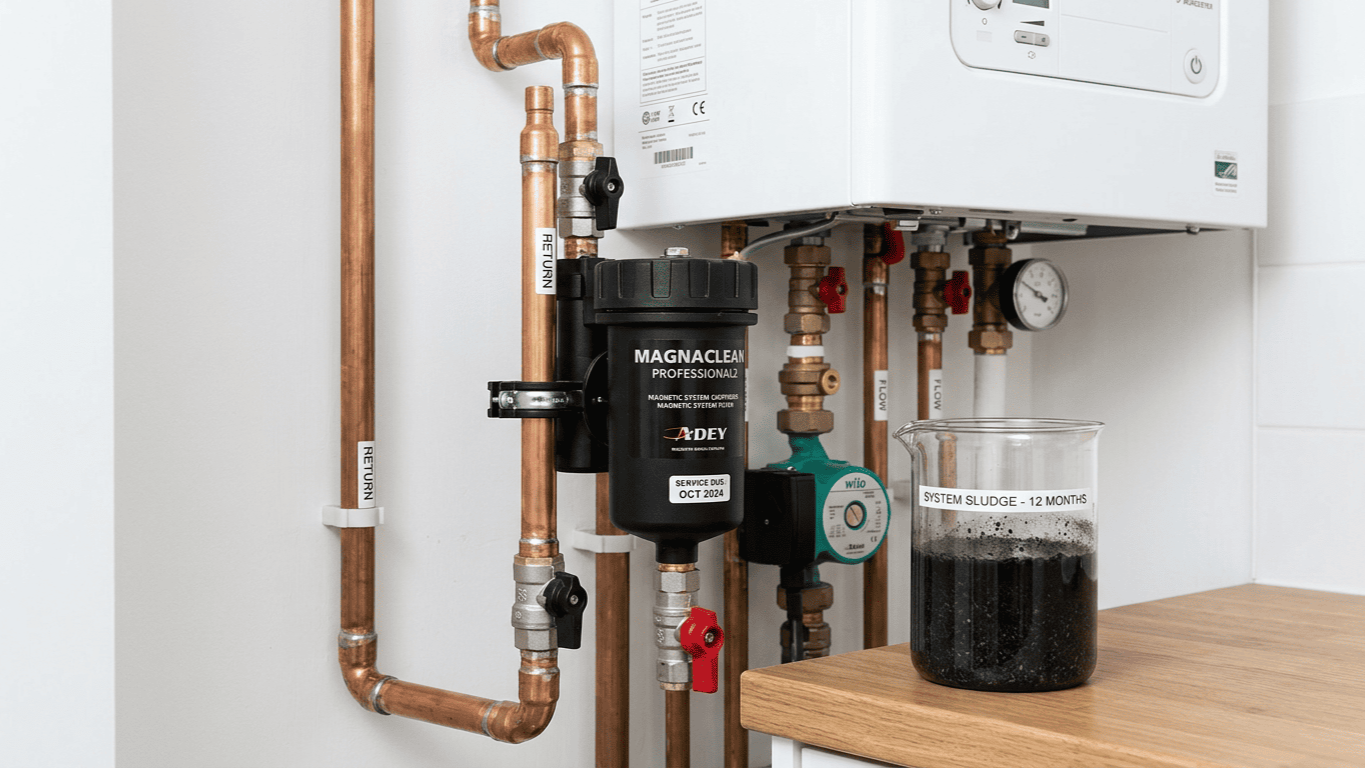
Magnetite sludge in a heating system doesn't announce itself with fanfare. It accumulates quietly; black, iron oxide debris circulating through pipework, settling in radiators, and coating heat exchangers. Over time, this contamination forces boilers to work harder, pumps to strain, and efficiency to drop. Magnetic system filters have become the go-to solution for capturing this debris, but the question remains: do they genuinely improve boiler efficiency, or are they just another component on the invoice?
The short answer is yes, but only when installed correctly, maintained regularly, and matched to the right system. A magnetic filter won't resurrect a boiler that's already failed, nor will it compensate for poor system design. What it will do is remove the particles that cause heat exchanger fouling, reduce flow rates, and trigger premature component wear. For heating engineers, the value lies in understanding how these filters work, where they deliver measurable benefits, and when they're worth specifying.
Think of a magnetic filter like the oil filter in your van. You wouldn't expect an engine to last 200,000 miles if you never caught the tiny metal shards and carbon deposits circulating in the oil. A heating system is no different; it needs a way to strip out the "grit" before it grinds the moving parts to a halt or coats the "engine" in a layer of thermal insulation.
How Magnetic Filters Capture System Debris
Magnetic system filters use a powerful neodymium magnet to attract and trap ferrous particles as they circulate through the heating system. The filter housing sits inline with the pipework, typically on the return leg, just before the boiler, and forces water through a magnetic core. As the water passes, iron oxide particles stick to the magnet, preventing them from entering the boiler's heat exchanger or clogging narrow passageways.
The design is straightforward. Water enters the filter, flows around the neodymium magnet, and exits cleaner than it arrived. Over weeks and months, the magnet accumulates a thick layer of black iron oxide sludge, which you'll see when servicing the unit. That visible debris is what would otherwise be circulating through the system, abrading pump seals and reducing heat transfer efficiency.
Most filters include a drain valve at the base, allowing you to flush out collected iron oxide sludge without isolating the entire system. High-quality models also feature non-return valves to prevent backflow during servicing, and some incorporate a secondary mesh filter to catch larger particles like pipe swarf or jointing compound residue.
The Link Between Sludge And Boiler Efficiency
Boiler efficiency drops when heat exchangers can't transfer energy effectively from the burner to the circulating water. Iron oxide sludge acts as an insulating layer, coating the internal surfaces and causing heat exchanger fouling that reduces thermal conductivity. The boiler has to fire for longer to achieve the same temperature rise, which increases gas consumption and wear on components.
In condensing boilers, the problem is even more acute. These units rely on extracting latent heat from flue gases by cooling them below their dew point, typically around 54°C. If the return water temperature is too high due to restricted flow or poor heat transfer, the boiler can't condense efficiently. You lose the efficiency gains that make combi boiler technology worthwhile.
Pump performance also suffers. Magnetite particles can wear down impellers and increase friction in bearings. A circulator struggling against increased resistance draws more power and generates more heat, compounding the inefficiency. Over time, this leads to premature failure and costly callouts for heating pumps that would otherwise have lasted for years.
Real-World Efficiency Gains: What The Data Shows
Independent testing by manufacturers and trade bodies has quantified the efficiency benefits of magnetic filtration. Trials conducted by the Heating and Hotwater Industry Council (HHIC) found that systems with magnetic filters maintained higher efficiency over time compared to unfiltered systems. Some showed fuel savings of up to 6% over a single heating season. That figure assumes a moderately contaminated system with regular filter maintenance and not a worst-case scenario.
The efficiency gain comes from two sources: improved heat transfer and reduced system resistance. A clean heat exchanger transfers energy more effectively, so the boiler reaches target temperature faster and cycles less frequently. Using thermostatic radiator valves alongside a filter further improves this by ensuring heat is only delivered where it is needed, without the boiler fighting internal debris.
But here's the caveat: you won't see these gains if the system is already clean or if the filter isn't serviced. A magnetic filter full of sludge is just another restriction in the circuit. If you're installing one on a new system with clean pipework and inhibited water, the efficiency benefit will be marginal until contamination starts to build. The real value emerges over years, not weeks.
When Magnetic Filters Deliver The Most Value
Magnetic filters prove their worth in three scenarios: older systems with legacy pipework, systems that have been repeatedly topped up without inhibitor, and installations where pipework has been altered or extended. In each case, the filter acts as a safeguard, capturing debris that would otherwise migrate to the boiler or block radiators.
Older systems with steel radiators and mild steel pipework are the biggest culprits for magnetite generation. Corrosion is ongoing in these systems, especially where inhibitor levels have dropped. A magnetic filter on a 15-year-old system can fill with sludge within months, preventing that debris from reaching the boiler. It's often wise to check the expansion vessel at the same time to ensure the system pressure isn't causing fresh oxygen to enter via the relief valve.
New installations benefit too, but for different reasons. During pipework installation, swarf and flux residue can enter the system. A magnetic filter with a secondary mesh catches these particles before they reach the boiler. It's a cheap insurance policy against installation debris causing an early warranty claim.
Installation Best Practices For Maximum Effectiveness
The return leg, just before the boiler, is the standard location for a magnetic filter. This position captures debris before it enters the heat exchanger and ensures the filter operates at lower temperatures, which improves magnetic attraction.
When fitting a filter, ensure the pipework is flushed first. If you're retrofitting to a contaminated system, use a power flushing rig or chemical cleaner to mobilise existing sludge. Installing a filter on a heavily contaminated system without using a power flushing rig first means the filter will fill quickly and require frequent servicing.
Arrow markings on the filter body indicate flow direction; get this wrong, and you'll create turbulence that reduces filtration efficiency. Fit isolation valves either side of the filter to simplify future servicing and position the unit where the drain valve is accessible. You'll need to service it annually, so mounting it behind a boiler or in a tight corner is a false economy.
Maintenance: Effective vs Ineffective Filtration
A magnetic filter only works if you service it. That means isolating the filter, draining the contents, and cleaning the neodymium magnet at least once a year. The sludge you remove is a direct indicator of system health. A filter that's still clean after 12 months suggests either excellent water treatment or insufficient circulation to mobilise debris.
On a recent project, an engineer attended a "no heat" call on a three-year-old boiler. The homeowner had a magnetic filter, but it hadn't been cleaned since installation. The neodymium magnet was so overloaded with magnetite that it had actually started to block the flow, causing the boiler to overheat and lockout. After five minutes of cleaning the filter, the system ran perfectly. It's a prime example of why a "fit and forget" attitude doesn't work with water treatment.
After cleaning, check the magnet's condition. If it feels weak or the filter is consistently collecting less debris, it may be time to replace the core. Top up inhibitor after servicing to maintain the hot water storage system chemistry. Draining the filter removes a small volume of treated water, so you should dose the system according to manufacturer guidelines.
Do Magnetic Filters Extend Boiler Lifespan?
Boiler manufacturers increasingly require magnetic filtration as a condition of extended warranties. They recognise that sludge is a leading cause of premature heat exchanger failure. For engineers, this shifts the conversation from "should I fit a filter?" to "which filter meets warranty requirements?"
Heat exchanger failure is expensive. Replacement costs can approach half the price of a new boiler. If a magnetic filter prevents even one heat exchanger replacement over a boiler's lifespan, it's paid for itself several times over. For larger properties, combining these with a smart trv setup ensures the entire system operates at peak reliability.
Conclusion
Magnetic system filters do improve boiler efficiency, but only when they're correctly specified, properly installed, and regularly maintained. They capture the iron oxide sludge that fouls heat exchangers, restricts flow, and accelerates component wear. For heating engineers, they're a straightforward addition to any installation or service visit.
The key is treating the filter as part of a broader water treatment strategy. Pair it with inhibitor, flush contaminated systems before installation, and service the filter annually. Do that, and you'll see cleaner systems and fewer breakdowns. Heating and Plumbing World offers a comprehensive range of filters and chemicals to support your next project.
If you need guidance on specifying the right filter for a specific application, please contact our technical team for expert advice.