

Mixing Valves: How They Improve Comfort and Safety
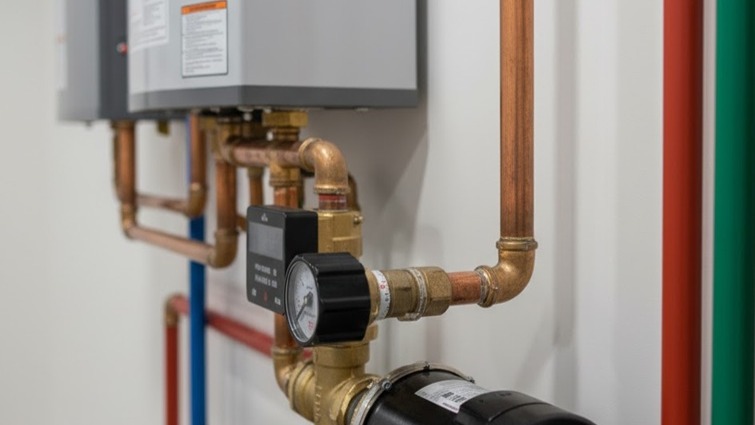
Scalding injuries from domestic hot water systems send thousands of people to the hospital every year. Many of these accidents are entirely preventable with the correct installation of thermostatic mixing valves.
Thermostatic mixing valves are precision devices that blend hot and cold water to deliver a consistent, safe outlet temperature. They're essential in hospitals, care homes, schools, and increasingly in domestic properties where vulnerable occupants, young children or elderly residents, face heightened scalding risks. Beyond safety, these valves solve common comfort complaints: inconsistent shower temperatures, tepid water at distant taps, or wasteful reheat cycles.
For heating engineers and plumbers, understanding mixing valve technology isn't optional. Building Regulations Part G and BS 8558 mandate specific outlet temperatures in many applications. Get the specification wrong, and you're exposing clients to legal liability and genuine harm.
What Thermostatic Mixing Valves Actually Do
A thermostatic mixing valve (TMV) automatically adjusts the ratio of hot to cold water to maintain a preset outlet temperature, regardless of fluctuations in supply pressure or temperature. Think of it like a thermostat for your taps, constantly sensing and correcting to keep output stable.
The valve contains a thermostatic element, usually a wax cartridge or bimetallic strip, which expands or contracts in response to water temperature. This movement repositions an internal shuttle or piston, modulating the hot and cold inlet ports. If incoming hot water temperature spikes, the element closes the hot port slightly whilst opening the cold port wider. The reverse happens if the hot supply drops.
This happens in real time. Reaction speed matters enormously in preventing scalding injuries.
Key advantages include:
- Scald prevention – Outlet temperature capped at a safe maximum (typically 43-46°C for baths, 41°C for bidets)
- Legionella control – Hot water can be stored at 60°C+ for bacterial control, then tempered at the point of use
- User comfort – Stable temperatures eliminate sudden cold shocks or scalding spikes
- Water efficiency – Less time spent adjusting taps means less water wasted running to the desired temperature
Why Standard Mixer Taps Aren't Enough
A standard manual mixer tap relies entirely on the user to achieve the desired temperature. That's fine for an able-bodied adult adjusting a kitchen tap. It's wholly inadequate for vulnerable users or in situations where supply conditions vary.
Pressure imbalances are the usual culprit. If someone flushes a WC whilst you're showering, cold pressure drops. The hot supply suddenly dominates, and you get scalded. Manual mixers can't compensate. They're passive devices.
Thermostatic shower valves offer some protection with built-in temperature limiters and fail-safes, but they're designed for showering only. A proper TMV is a system-level solution, often installed on the hot water cylinder outlet or at manifold points to protect multiple outlets simultaneously.
I've seen a case where a care home fitted manual thermostatic shower valves in every en-suite, thinking that was sufficient. They'd missed the WHB taps. A resident with reduced sensation ran a basin, not realising the water was approaching 70°C from a recently recovered cylinder. Third-degree burns. Entirely avoidable with a central TMV3-rated valve protecting all outlets.
Mixing Valve Benefits in Real-World Applications
Safety Compliance and Legal Mandates
Building Regulations Approved Document G mandates that hot water delivered to baths in new dwellings must not exceed 48°C. In healthcare and educational settings, limits are stricter, often 41-43°C, depending on user vulnerability.
Honeywell and Danfoss both manufacture TMV2 and TMV3-certified valves designed to meet these exacting standards. TMV3 is the higher specification, featuring enhanced fail-safe mechanisms and tighter tolerance on outlet temperature deviation (±2°C under normal operation).
Fitting a certified TMV isn't just best practice. In many contexts, it's a statutory requirement. Local authorities increasingly audit care facilities and nurseries for compliant installations. A missing or incorrectly specified valve can result in enforcement notices or prosecution following an incident.
Consistent Comfort Across Zoned Systems
Modern domestic properties often feature multiple bathrooms fed from a single unvented cylinder. Pressure and temperature can vary significantly between ground and first-floor outlets, especially if pipe runs differ in length.
A centrally located TMV smooths out these inconsistencies. Every tap gets water at the target temperature, whether you're running the en-suite shower or filling the kitchen sink. No more complaints about the upstairs bathroom being lukewarm whilst downstairs is scalding.
This is particularly valuable in properties with solar thermal systems or heat pump cylinders, where stored water temperature may fluctuate throughout the day as the system recovers or dumps excess heat. The TMV compensates automatically.
Legionella Risk Management Without Compromise
Here's the dilemma: Legionella bacteria thrive between 20-45°C. HSE guidance (HSG274) and the Approved Code of Practice L8 require hot water storage at 60°C minimum to control bacterial growth. But 60°C water will scald skin in under five seconds.
Thermostatic mixing valves solve this contradiction elegantly. Store water hot, distribute it safely. The cylinder stays at bactericidal temperature, killing Legionella at the source. The TMV then tempers water to a safe 43-48°C at outlets.
Without a TMV, you're forced into a dangerous compromise, either risk scalding by leaving taps hot, or risk Legionella by storing lukewarm. Neither is acceptable in commercial settings, and increasingly unacceptable in domestic installations where immunocompromised occupants live.
Reducing Installer Callbacks
Picture this: You've installed a new unvented cylinder and a G3-certified expansion vessel. A week later, the customer rings complaining about wildly inconsistent shower temperatures. You return to the site, check the cylinder thermostat, it's fine. Check the shower valve, also fine. Eventually, you trace the problem to mains pressure fluctuations caused by neighbouring properties.
Had you fitted a TMV at the cylinder outlet, this callback never happens. The valve would've absorbed those pressure variations, delivering a stable temperature regardless of external factors. That's not just customer satisfaction, it's protecting your labour margin and reputation.
Callbacks cost time and money. A £150 TMV installation might seem like an upsell initially, but it pays for itself by eliminating temperature-related complaints.
Types of Thermostatic Mixing Valves
Not all TMVs are created equal. Choosing the right type depends on application, flow rate requirements, and the level of safety certification needed.
TMV2 vs TMV3 Certification
TMV2 valves are suitable for commercial and domestic applications where risk is moderate. They're tested to BS 7942 and meet basic fail-safe requirements; if either hot or cold supply fails, the valve shuts off flow entirely.
TMV3 valves meet the more stringent requirements of BS EN 1287 and BS 7942. They're mandatory in healthcare settings, care homes, schools, and nurseries where vulnerable users are present. TMV3 valves feature tighter temperature tolerances, faster reaction times, and enhanced fail-safe mechanisms, including high-temperature limit stops.
The practical difference? A TMV3 valve reacts within two seconds if the inlet temperature spikes. A TMV2 might take four to five seconds. That's the difference between a minor discomfort and a serious burn injury.
Always specify TMV3 for vulnerable occupants. The cost difference is negligible, usually £20-40, but the liability difference is enormous.
Point-of-Use vs Central Blending
Point-of-use TMVs install directly beneath individual taps or showers. They're ideal for retrofits where replumbing isn't feasible, or for protecting specific high-risk outlets like bidets or assisted baths.
Central blending stations are installed at the hot water cylinder outlet or on a manifold, protecting multiple downstream outlets simultaneously. They're more efficient in new builds or major refurbishments where pipework is accessible.
Central blending requires careful design. You'll need to calculate total flow demand across all outlets, ensuring the TMV is sized correctly. Undersizing causes the outlet temperature to drift under peak demand. Oversizing wastes money and can create unnecessarily high standing losses if the valve body is poorly insulated.
Adjustable vs Fixed-Temperature Models
Most professional-grade TMVs feature an adjustable temperature dial, typically ranging from 35-65°C. This allows fine-tuning on site to suit specific applications, 38°C for a bidet, 46°C for a bath, 41°C for a healthcare washbasin.
Fixed-temperature valves, usually set at 43°C or 48°C, are tamper-proof. They're specified where adjustment by unauthorised persons could create risk, such as in public facilities, schools, or care homes. The temperature is factory-set and requires special tools to alter.
For domestic installations, adjustable valves offer flexibility. For commercial or care settings, fixed valves provide certainty and eliminate liability from tampering.
Installation Best Practices
Even a correctly specified TMV will fail to perform if the installation is poor. Here's what separates a professional job from a bodge.
Positioning and Access
Mount the valve in an accessible location with sufficient space for maintenance. TMV thermostatic elements require periodic inspection and eventual replacement, they don't last forever. If you've buried the valve behind sealed boxing with no access panel, you've created a future problem.
Orientation matters. Most TMVs are designed for horizontal pipe runs with the thermostatic element at the bottom of the valve body. Mounting upside-down or vertically can affect performance, trapping air or causing element misalignment. Always check manufacturer instructions.
Install isolation valves on both hot and cold inlets, plus a service valve on the outlet. This allows the TMV to be isolated and drained without shutting down the entire system. It's basic serviceability, but you'd be surprised how often it's omitted.
System Balancing and Pressure Matching
TMVs require balanced inlet pressures to function correctly. If the hot supply is at 3 bar and the cold at 1.5 bar, the valve struggles to maintain a stable output, particularly under varying demand.
Fit pressure-reducing valves (PRVs) if necessary to balance supplies. Ideally, hot and cold pressures should be within 0.5 bar of each other. Check static and dynamic pressures; dynamic pressure under flow is what matters, not static gauge readings with taps closed.
Cold supply should be taken directly from the mains or an adequately sized cold water storage cistern, never from a WC cistern feed or other branch that might experience sudden pressure drops.
Commissioning and Temperature Verification
After installation, commission the valve properly. Don't just open the taps and assume it's working.
Use a calibrated digital thermometer to verify outlet temperature at maximum flow. Run the tap for at least one minute to purge standing water from the pipework. Check the temperature at multiple outlets if you've fitted a central blending station.
Test the fail-safe operation by isolating the cold supply whilst hot runs. The TMV should shut off flow within two seconds (TMV3) or five seconds (TMV2). Repeat with the hot supply isolated. If the flow doesn't stop immediately, the valve is faulty or incorrectly installed.
Document these commissioning checks. In commercial installations, it's a regulatory requirement. In domestic work, it's evidence of professional workmanship should any dispute arise.
Maintenance and Longevity
Thermostatic mixing valves aren't fit-and-forget components. They require periodic maintenance to ensure continued safe operation.
Routine Inspection and Testing
BS 8558 recommends annual inspection for TMV3 valves in commercial settings, with full strip-down and element replacement every five years or as per manufacturer guidance. Domestic installations don't have mandated inspection frequencies, but annual checks are sensible, particularly in hard water areas where limescale accelerates wear.
Testing involves verifying outlet temperature under varying flow conditions, checking fail-safe operation, and inspecting for weeps or leaks around the valve body or compression fittings.
If outlet temperature has drifted beyond tolerance (typically ±2°C for TMV3, ±3°C for TMV2), the valve needs adjustment or servicing. Don't just tweak the temperature dial to compensate; investigate the cause. Worn thermostatic elements, scaled internal ports, or debris in the strainer basket all compromise safety.
Limescale and Debris Issues
Hard water is the enemy of TMVs. Limescale builds up on the thermostatic element and internal shuttle, slowing reaction time and eventually causing mechanical seizure.
Fit a scale inhibitor or water softener upstream if you're working in a very hard water area (300+ mg/l CaCO₃). At a minimum, ensure the TMV's integral strainers are checked and cleaned annually. A blocked strainer restricts flow, causing the valve to operate outside design parameters.
I've stripped TMVs after five years in London installations where they've never been touched. The element was entombed in limescale, reaction time had slowed to over 10 seconds, and outlet temperature was drifting by 8-10°C under demand. Completely unsafe, and the customer had no idea.
When to Replace Rather Than Repair
Thermostatic elements have finite lifespans. Even with perfect water quality, thermal cycling gradually degrades the wax cartridge or bimetallic strip. Expect 5-10 years in domestic installations, potentially less in commercial settings with high usage.
Replacement elements are available for most professional-grade valves from manufacturers like Altecnic Ltd. However, if the valve body is corroded, fittings are leaking, or internal ports are scaled beyond cleaning, replace the entire unit.
False economy to fit a £30 element in a valve that's mechanically worn. You'll be back in six months when the shuttle seizes or the body fails.
Selecting the Right Valve for Your Application
Choice of TMV depends on several factors: user vulnerability, outlet type, flow rate requirements, and regulatory mandates.
Healthcare and Care Facilities
TMV3 certification is mandatory. Specify valves with tool-only adjustment to prevent tampering, and ensure models are on the approved TMV3 listed products register (check BuildCert or similar accreditation bodies).
Flow rates in these settings can be high, with multiple WHBs, showers, and assisted baths operating simultaneously. Size the valve accordingly, and consider a manifold arrangement with individual TMVs per zone rather than a single large central valve. This provides redundancy and easier maintenance.
Schools and Nurseries
Again, TMV3 is required. Fixed-temperature models set at 38-41°C are typical for WHBs accessible to young children. Staff facilities can run slightly hotter at 43°C.
Installation height matters. Mount accessible adjustment controls out of reach of children, or specify fully tamper-proof models.
Domestic Installations
TMV2 is sufficient for most applications unless vulnerable occupants are present, in which case specify TMV3. Building Regulations Part G mandates compliance for baths in new dwellings, but fitting TMVs to showers and WHBs as well is increasingly common.
Heating and Plumbing World stocks a comprehensive range of TMV2 and TMV3 certified valves suitable for retrofit or new installation. For specific product recommendations or technical support, contact us directly.
High-Flow Applications
Standard TMVs are rated for flows up to 30-40 litres per minute. If you're supplying multiple high-flow outlets, think commercial gym showers or hotel bathrooms, you'll need either a larger body valve or multiple valves on a manifold.
Don't undersize. A TMV operating constantly at its flow limit will have reduced lifespan and poorer temperature stability. Allow at least 20% overhead capacity for peak demand scenarios.
Common Installation Mistakes to Avoid
Even experienced installers trip up occasionally. Here's what to watch for.
Inadequate Strainer Protection
Most TMVs have integral strainers on the inlets, but these are fine mesh, designed to catch grit and debris, not system swarf or flux residue from recent pipework. Always flush the system thoroughly before connecting the TMV. Better yet, fit full-bore inline strainers upstream as secondary protection.
I've seen brand-new TMVs fail commissioning because the thermostatic element was jammed with copper filings from pipe cutting. Entirely preventable.
Incorrect Inlet Connection
Hot and cold inlets are clearly marked, but rushed installers have been known to reverse them. The result? The valve works backwards, attempting to deliver cold water as the setpoint. Outlet temperature becomes dangerously unstable.
Check inlet temperatures with a thermometer during commissioning. Hot inlet should read 55-65°C, cold inlet should be mains temperature (typically 10-15°C in the UK). If readings don't make sense, you've cross-connected.
Ignoring Expansion and Pressure Relief
If you're fitting a TMV to an unvented cylinder system, ensure the expansion vessel and pressure relief valve are correctly sized and functioning. A TMV doesn't replace safety components; it works alongside them.
Some installers mistakenly think a TMV provides overpressure protection. It doesn't. Its job is temperature control only. Overpressure protection remains the responsibility of the PRV, T&P relief valve, and correctly sized expansion vessel from brands such as Gledhill or Kingspan.
Leaving Dead Legs Unprotected
A common oversight in retrofit installations: fitting a TMV at the cylinder outlet, but leaving long dead legs (unused pipe runs) unprotected. These can still deliver scalding water for the first few seconds until the TMV-controlled water reaches the outlet.
Solution? Either fit point-of-use TMVs at high-risk outlets, or reduce dead leg lengths to comply with BS 8558 (maximum 2 litres volume or one metre of 22mm pipe). Sometimes that means rerouting pipework.
Integration With Modern Heating Systems
TMVs aren't standalone devices. They interact with the broader system, and that interaction needs consideration during design.
Heat Pumps and Low-Temperature Systems
Heat pump cylinders typically store water at 45-55°C, lower than conventional gas boilers. You might assume a TMV is unnecessary at these temperatures. Think again.
Even 50°C water can scald, given sufficient exposure time, particularly for vulnerable users. More importantly, TMVs provide temperature stability. Heat pump recovery cycles can cause gradual temperature drift throughout the day as the cylinder stratifies and reheat cycles occur. A TMV ensures the outlet temperature remains consistent regardless of these fluctuations.
Specify TMVs with appropriate temperature ranges for low-temperature systems. Some models aren't calibrated below 45°C outlet and won't function correctly.
Solar Thermal Systems
Solar cylinders can overheat dramatically during summer months, particularly if the system's undersized for hot water demand or poorly controlled. I've seen cylinder top temperatures exceed 85°C on long summer days with low draw-off.
A TMV is essential here, not optional. Without it, the first morning shower after a sunny weekend could deliver near-boiling water. The TMV blends with cold to bring the temperature safely down, but ensure it's rated for high inlet temperatures (up to 95°C on the hot side). Not all domestic TMVs are.
System Pressures and Combination Boilers
Combination boilers present unique challenges. Hot water is generated on demand at mains pressure, whilst cold supply is also at mains pressure. Sounds ideal for a TMV, perfectly balanced supplies.
The issue is instant temperature response. When a combi fires, there's a brief lag before water reaches setpoint. Some combis overshoot initially before modulation stabilises. A TMV can compensate for this, smoothing the delivery temperature, but reaction time needs to be fast, TMV3 specification recommended.
Ensure the TMV is rated for the full dynamic mains pressure (typically 3-4 bar in most UK locations, higher in some areas). Domestic TMVs are usually rated to 5 bar, but check.
Balancing Safety, Comfort, and Compliance
The mixing valve benefits extend beyond regulatory box-ticking. Yes, you're meeting Building Regs and safeguarding vulnerable users. That's fundamental. But you're also delivering genuine comfort improvements and protecting your professional reputation.
Customers notice stable shower temperatures. They appreciate not having to constantly adjust taps. They definitely notice when young children or elderly relatives can use facilities without supervision anxiety.
From a business perspective, positioning TMV installation as standard rather than optional in quotes demonstrates professionalism and care. It's a value-add that differentiates you from competitors who still treat them as costly extras.
The upfront cost, £100-200 for a quality TMV3 valve plus an hour's labour, is minimal compared to the potential cost of a scalding injury claim or the reputational damage from repeated temperature complaints. It's not even a debate.
For healthcare and commercial clients, it's non-negotiable. For domestic work, it should be your default recommendation on every unvented cylinder installation and any system upgrade involving bathrooms.
Stock a range of TMV2 and TMV3 valves on the van. When you're pricing a cylinder replacement or bathroom renovation, include the TMV in the base quote, not as an optional extra. Explain why it's there. Most customers will appreciate the thought, and those who question cost usually understand once you explain scalding risks and Legionella control.
Future-Proofing Your Installations
Regulations tighten over time. What's optional today often becomes mandatory tomorrow. Part G requirements for bath temperatures were introduced relatively recently. Expect similar mandates for shower temperatures and broader TMV usage in domestic properties within the next decade.
By specifying TMVs now, you're future-proofing installations. When regulations do tighten, your customers won't need costly retrofits. They're already compliant.
It's also worth noting insurance implications. Some insurers are beginning to ask about TMV installations in care settings and properties where vulnerable people reside. Demonstrating compliant installations can affect premiums and, critically, coverage in the event of an incident.
From a heating engineer's perspective, the technology is mature, reliable, and proven. There's no good reason not to specify thermostatic mixing valves on every appropriate installation. The safety case is overwhelming, the comfort benefits are tangible, and the regulatory trajectory is clear.
Make TMVs your default, not your exception.