

Modular Boiler Systems for Flexible Heating
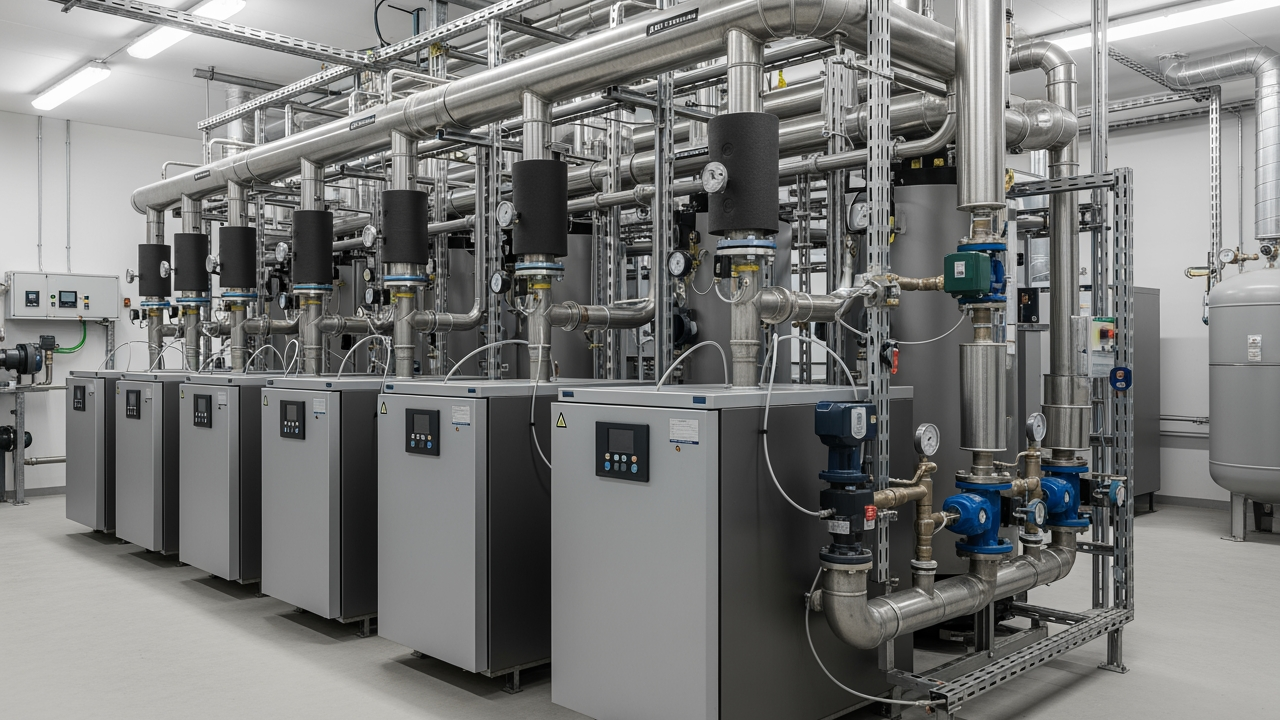
Commercial heating demands shift constantly. A restaurant expands its dining room. A hotel adds a conference wing. A manufacturing facility increases production. Traditional single-boiler systems can't adapt to these changes without expensive overhauls or wasteful oversizing.
Modular boiler systems solve this problem by using multiple smaller boilers instead of one large unit. Each boiler operates independently, turning on or off based on actual heating demand. When the load increases, additional modules activate. When demand drops, excess modules shut down.
The result: heating capacity that matches needs while cutting fuel costs by 15-30% compared to conventional systems.
How Modular Boiler Systems Work
A modular system connects 2-10 smaller boilers (typically 80-500 kW each) through a common header. A master control sequence that fires boilers based on building load. When heating demand reaches 30%, one boiler operates. At 60% demand, two boilers run. The system scales up or down automatically.
Each module contains its own burner, heat exchanger, and controls. If one unit fails, others continue operating; you lose 25% capacity in a four-boiler system instead of 100% in a single-boiler setup. This redundancy keeps facilities operational during repairs.
The modular approach also changes how boilers handle low-load conditions. A single 2,000 kW boiler running at 20% capacity operates inefficiently, cycling on and off frequently. Four 500 kW boilers can run one unit at 80% capacity instead, right in the efficiency sweet spot.
Efficiency Gains Through Staging
Boiler efficiency drops sharply below 40% firing rate. A conventional system sized for peak winter demand spends most of the year running at partial load, burning excess fuel. We've measured efficiency losses of 8-12% during shoulder seasons in oversized single-boiler installations.
Modular heating systems maintain high efficiency across varying loads. With four boilers, you can match capacity in 25% increments. On mild days requiring 30% of peak capacity, one boiler fires at 120% of its individual capacity (impossible) or two boilers share the load at 60% each, well above the efficiency threshold.
The control logic prioritises keeping active boilers above 50% firing rate. As demand increases, the system fully loads operating boilers before starting additional modules. This "lead-lag" sequencing prevents the efficiency penalty of multiple boilers running at low fire. Advanced Honeywell and EPH Controls systems can manage these complex staging sequences automatically.
Temperature reset strategies work better with modular systems, too. When outdoor temperatures rise, the system reduces supply water temperature and may shut down entire modules rather than forcing a large boiler to modulate down to inefficient firing rates.
Installation Flexibility and Space Considerations
Moving a 2,000 kW boiler into a basement requires heavy rigging equipment, reinforced floors, and sometimes removing walls. Four 500 kW modules fit through standard doorways on hand trucks. We've installed modular systems in locations where crane access or structural modifications would have made conventional boilers impossible.
The smaller footprint per unit creates layout options. Modules can sit side-by-side, in an L-configuration, or even in separate mechanical rooms connected by piping. One healthcare facility we worked with placed three modules in the existing boiler room and added a fourth in a renovated storage closet when they expanded.
Vertical space requirements drop, too. Compact modular boilers often stand 1.2-1.5 metres tall versus 2+ metres for commercial fire-tube boilers. This matters in buildings with low ceiling heights or where mechanical rooms share space with other equipment.
Venting presents fewer challenges. Multiple smaller flues are easier to route through existing structures than one large stack. Some high-efficiency modular systems use PVC or polypropylene venting, eliminating the need for expensive stainless steel chimneys.
Maintenance Access and Lifecycle Management
Single large boilers create all-or-nothing maintenance situations. Annual servicing requires a complete system shutdown, forcing facilities to schedule work during mild weather or arrange temporary heating. Repairs to critical components like heat exchangers can take weeks if parts need fabrication.
Modular systems allow maintenance on one unit while others handle the load. We rotate service schedules so each boiler gets cleaned and inspected without affecting building comfort. During a recent heat exchanger replacement on one module, the facility maintained 75% heating capacity throughout the three-day repair.
Component standardisation across modules reduces spare parts inventory. Instead of stocking unique parts for different heating zones, you maintain parts for one boiler design. Burners, igniters, flame sensors, and gaskets are interchanged between units.
The phased replacement approach extends system life and spreads capital costs. After 15-20 years, you can replace one or two ageing modules while keeping others in service. This beats the financial hit of replacing an entire large boiler at once. One manufacturing client replaced two modules in year 18, two more in year 20, and modernised their entire system over three budget cycles.
Load Matching for Variable Demand
Buildings rarely need full heating capacity. A school operates at 100% load during cold mornings, drops to 60% mid-day, and reduces to 30% overnight. Restaurants peak during service hours. Hotels vary by occupancy.
Traditional boilers sized for peak load run inefficiently during these partial-load periods. A 1,500 kW boiler serving a building with 800 kW average demand operates at 53% capacity most of the time, below optimal efficiency.
Three 500 kW modules serve the same building better. Average demand requires two boilers at 80% capacity (1,000 kW total). Peak demand brings the third online. Overnight setback runs one boiler at 60%. The system spends more time in efficient operating ranges.
This load-matching advantage compounds in buildings with distinct zones or schedules. A hotel can operate two modules for guest rooms and a third for conference spaces, firing the conference module only during events. A campus might stage boilers based on which buildings need heat, rather than maintaining one oversized system for the entire complex.
Integration With Building Management Systems
Modern modular boiler controls communicate via BACnet, Modbus, or proprietary protocols. Building management systems (BMS) can monitor individual boiler status, runtime hours, efficiency metrics, and fault codes. This visibility helps operators identify problems before they cause failures.
The BMS can also adjust staging logic based on occupancy schedules, weather forecasts, or energy pricing. During peak demand periods when electricity costs spike, the system can pre-heat the building using cheaper overnight rates, then reduce boiler operation when prices climb.
We've programmed systems to rotate lead boilers weekly, equalising runtime across modules. This prevents one unit from accumulating excessive hours while others sit idle. Equal runtime means synchronised maintenance schedules and similar remaining lifespans.
Alarm integration catches issues early. When a module reports a fault, the BMS notifies maintenance staff while other boilers compensate. Compare this to a single-boiler failure that triggers an emergency no-heat situation at 2 AM.
Fuel Flexibility and Future Adaptation
Many modular boilers accept multiple fuel types with burner changes. Natural gas systems can convert to propane if gas service becomes unavailable. Some models accommodate biodiesel or waste oil with appropriate burner packages.
This flexibility matters as energy markets and regulations shift. Several European installations we've studied started with natural gas, added hydrogen blending capability as infrastructure developed, and plan eventual conversion to 100% hydrogen. The modular approach allows testing new fuel sources on one unit before committing the entire system.
Electric and heat pump modules can integrate into gas-fired systems, creating hybrid configurations. During mild weather or when renewable electricity is abundant, electric modules handle the load. Gas boilers provide backup and peak capacity. This hedges against fuel price volatility and carbon regulations.
The incremental capacity additions also match building expansions better than traditional systems. Adding 500 kW of heating capacity costs less than replacing a 1,500 kW boiler with a 2,000 kW unit. You pay only for the capacity you need, when you need it.
Cost Analysis and Payback Periods
Modular heating systems carry higher upfront costs than single boilers, typically 15-25% more for equivalent total capacity. A 2,000 kW single boiler might cost £45,000 installed, while four 500 kW modules run £55,000. The premium buys efficiency, redundancy, and flexibility.
Fuel savings close this gap quickly. A building using 50,000 therms annually at £0.60/therm spends £30,000 on gas. A 20% efficiency improvement from better load matching saves £6,000 yearly. The £10,000 premium pays back in under two years.
Maintenance costs trend lower over time. Smaller boilers need less intensive service. Parts cost less. Technicians can handle repairs without specialised equipment. We've tracked 12-18% lower annual maintenance costs for modular installations compared to large commercial boilers.
The redundancy value is harder to quantify but significant. One hospital avoided £200,000 in lost revenue and patient transfers when a module failed during flu season; the other three kept critical areas heated while repairs proceeded. A single-boiler failure would have forced emergency measures.
Common Applications and Use Cases
Commercial Buildings: Office towers, retail centres, and mixed-use developments benefit from load matching and redundancy. Variable occupancy patterns make efficient part-load operation valuable.
Healthcare Facilities: Hospitals and care homes require 24/7 reliability. The redundancy of modular boiler systems prevents heating failures that could endanger patients. Maintenance without shutdowns keeps facilities compliant with regulations.
Education: Schools and universities have distinct heating schedules, high demand during school hours, setback overnight and during breaks. Modular staging matches these patterns better than single boilers.
Hospitality: Hotels experience occupancy swings from 30% to 100%. Modular systems scale capacity to match actual guest loads rather than maintaining oversized equipment year-round.
Industrial: Manufacturing facilities often expand production gradually. Adding boiler capacity in modules aligns capital expenditure with revenue growth rather than requiring large upfront investments.
Making the Modular Decision
Modular boiler systems transform heating from a fixed infrastructure into a flexible asset. The ability to match capacity to actual demand, maintain operations during repairs, and expand incrementally as needs grow makes these systems particularly valuable for facilities with variable loads or growth plans.
The efficiency gains, typically 15-30% fuel savings, deliver measurable returns that offset higher initial costs within 2-4 years. Beyond the financial benefits, the operational resilience of having multiple independent units reduces risk and simplifies maintenance scheduling.
For facilities replacing ageing single-boiler systems or designing new installations, modular configurations deserve serious consideration. The upfront premium buys long-term flexibility that single large boilers simply cannot provide. As buildings become more complex and energy costs remain volatile, the adaptability of modular systems becomes increasingly valuable.
Quality circulation pumps from manufacturers like Grundfos ensure proper flow distribution across multiple modules, while Danfoss valves and controls provide precise staging management. Heating and Plumbing World stocks a comprehensive range of modular boiler components and complete systems. For technical guidance on specifying modular configurations for your facility, get in touch with our commercial heating specialists.