

Named Spares Planning for Occupied Heating Jobs on Site
Named spares are technically confirmed parts linked to an identified asset and an agreed task. For occupied heating jobs, readiness also means having the required quantities in usable condition, available where authorised work can take place while people continue using the building. A familiar part number or a full store cupboard cannot establish all of that. The useful question is whether this task has the parts and practical arrangements it needs.
Occupation matters because receiving goods, entering rooms and interrupting services must fit around other people's activities. Parts may be ready while access remains unresolved; access may be agreed while an essential component is still unavailable. Keep those states separate. This is preparation for a defined job, not a guide to diagnosing faults, designing heating systems or deciding how maintenance should be performed.
Establish What the Planned Task Actually Needs
A planned replacement or consumable can be justified before its first failure on that site. The requirement might follow an established maintenance instruction or a competent assessment of the scheduled work. Failure history provides context, but cannot define the entire requirement: a part that failed previously may not be needed now, while a never-replaced item may be necessary for the next task. Record the reason for inclusion rather than treating previous purchases as automatic instructions.
Tenant and staff reports belong in that preparation as observations requiring an appropriate response. Record the affected service and pass the report through the site's agreed assessment route. A report of no heat neither identifies a replacement component nor becomes irrelevant because it lacks a part number. Keep the reported problem separate from the confirmed task, so an unresolved complaint is not mistaken for an authorised parts order or lost altogether.
Identity, Compatibility and Task Confirmation Are Separate
Asset identity establishes which equipment the work concerns. Part compatibility establishes whether the proposed component suits that equipment and application. Task confirmation establishes whether it is required for the agreed work. These are different decisions: an accurately identified boiler does not prove which component needs replacing. Use the relevant model, serial and other identifying details alongside the technically established requirement when comparing boiler spares, rather than selecting from a symptom or general product image.
A previously packed number proves what was supplied, not current compatibility or successful use. Equipment may have changed, the earlier part may have been returned, or a replacement reference may require further checks. Preserve historical references as evidence without promoting them into today's specification. Use existing records and safely visible identification first; do not ask occupants to remove covers or disturb equipment. An old body already removed safely can help, but bringing one is not compulsory.
Accessories Follow the Confirmed Work
Required accessories complete the specified task; they are not a standard surcharge attached to every spare. Have the competent maintainer establish which seals, connection components or consumables are needed for the selected replacement and retained assembly. Then establish which are included and which need separate supply. Silence in a listing leaves contents unconfirmed: it does not prove that everything is included, or justify buying every plausible extra.
The same distinction applies to isolation arrangements. Safe isolation is a maintenance requirement determined for the work; purchasing another isolation valve is not automatically the answer. Existing arrangements may be suitable, or additional work may be necessary before replacement can proceed. Keep that technical decision visible rather than assuming a valve in the delivery makes the job safe. Package completeness and safe working arrangements support readiness in different ways.
Turn Available Stock into Allocated Task Kits
Stock availability answers whether a product can be supplied; allocation answers which task may use a particular unit. A store total can include parts reserved elsewhere, unidentified items or goods awaiting inspection. Count only confirmed, usable units available to this job when deciding what remains to buy. Otherwise, two planners can each assume the same spare is theirs and discover the conflict only when one takes it away.
Two assets requiring the same confirmed component need separate unit allocations, not necessarily separate identical purchase lines. One order quantity can cover both while the task record shows which unit belongs where. Check whether quantities refer to individual pieces or packs, especially for consumables. Keep any deliberate reserve distinguishable from the quantity required for the planned work; a reserve needs a reason, but is not inherently wasteful.
Condition Matters as Much as Quantity
Check received or stored goods against the confirmed references and quantities. Look for visible packaging damage and signs of contamination while keeping protective packaging and seals intact where required. If the contents or condition cannot be established from the available information, resolve the uncertainty through appropriate product information or an agreed inspection approach. Where shelf life, expiry dates or storage conditions apply, check them against the intended work date. Do not invent an expiry requirement for every metal component.
Unidentified or questionable stock should remain separate from confirmed task kits until assessed. Record what is uncertain and who will resolve it, rather than discarding it merely because its label is missing. Equally, do not count it as ready because its shape resembles the required part. This preserves potentially useful stock without allowing uncertainty to disappear inside the available quantity.
Make the Work Window Realistic
A product page, order acknowledgement and received component represent different supply states. Establish what is actually held, what is reserved and what still depends on supply confirmation before treating the work window as achievable. Allow for receiving and checking goods, not merely their expected arrival. A component reaching the building after the authorised receiver has left may be physically nearby without being available to the person carrying out the task.
Agree who receives the delivery, where it goes and how the allocated kit reaches the work area. Early receipt provides time to resolve discrepancies, but requires suitable secure storage; later receipt reduces storage time while leaving less room for correction. Choose between them using the actual site arrangements and confirmed supply information. Neither approach supports a blanket delivery promise or an assumption that someone will accept an unattended consignment.
Authorised Access and Working Constraints
Obtain access arrangements from the responsible site contact, including permitted times, affected rooms, security procedures and restrictions on moving goods. Confirm who coordinates notifications to occupants and any agreed interruption of heating or hot water. Possession of a key is not permission for every room or activity. Where access passes through a home, use the authorised arrangements rather than asking the occupant to expose equipment or obtain inaccessible identification.
HSE's maintenance guidance stresses planning, competent personnel, safe access and precautions for others affected by the work. In an occupied building, that means coordinating maintenance with continuing activities, not merely arranging entry. Give the appointed maintainer the known constraints so the safe working arrangements can account for them. Parts readiness does not authorise disturbance of hot, pressurised or energised equipment, and a short appointment cannot override the time needed to work safely.
Store the Kits Without Obstructing the Building
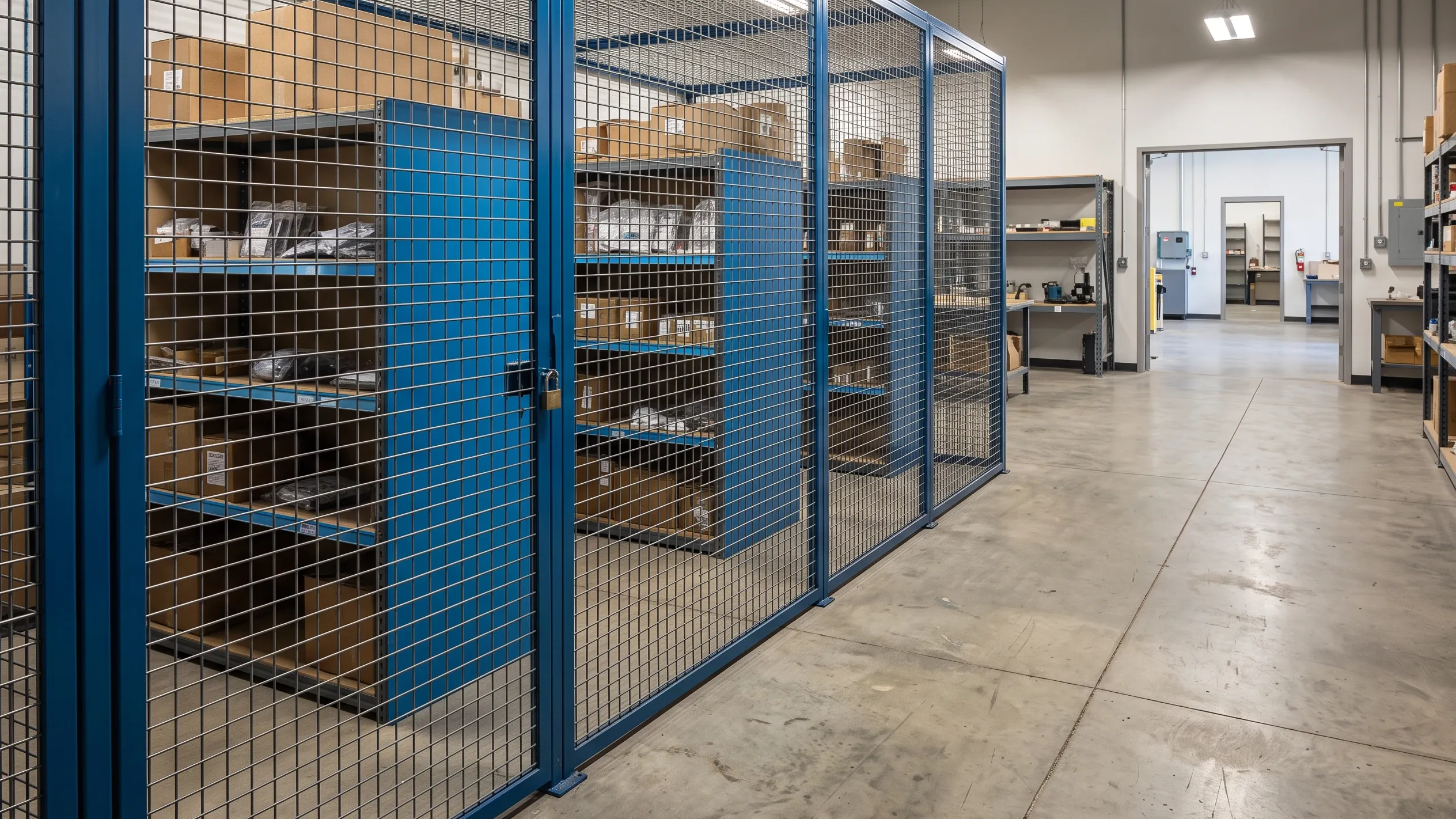
Use a designated storage or staging area agreed with the site contact, with separate confirmed task kits and controlled access to them. Keep the parts protected and reachable by authorised personnel without placing cartons in circulation space. A locked store is useful only if the appointed person can access it during the agreed window. Record the storage location and access arrangement together so security does not inadvertently make allocated stock unavailable.
Keep passageways and escape routes clear throughout receiving, storage and movement. GOV.UK's fire safety and evacuation plans guidance specifies a clear passageway to all escape routes within its workplace and non-domestic premises framework, which includes common areas of multi-occupied residential buildings. This is not a statement of universal legal duties inside private flats. Follow the site's arrangements rather than treating a temporarily empty corridor as an available stockroom.
Use task or asset references that the authorised team can interpret without displaying tenant names, access codes or private contact details on exposed packaging. Keep sensitive access information in the restricted job record. If a kit is moved or a unit borrowed for another task, update the allocation immediately. A label can identify a kit, but cannot prove that its recorded contents are still present.
Keep Unresolved Items Visible Before Work Starts
An unconfirmed detail needs an owner and a consequence, not a guessed value. State whether the gap concerns compatibility, quantity, condition, supply or access, and identify what resolves it. A hold point is a decision that must be settled before the affected work proceeds. For example, an unresolved replacement reference prevents treating that component as ready even if a similar item is already stored on site.
If an essential dependency remains open, the responsible parties should decide whether to resolve it, revise the authorised scope or rearrange the affected work. There is no automatic rule to miss the whole access window: an independent task may still be achievable, provided the competent maintainer confirms that separation is safe and the site agrees. Equally, using the appointment is not a reason to fit an unconfirmed substitute.
Leave the Next Task with an Accurate Starting Point
After the visit, reconcile what was fitted, removed, unused and still held against the relevant task and asset. A supplied component was not necessarily installed, and an unused one is not automatically available for another job. It may remain allocated to unfinished work or require a condition check before return to general stock. Keep removed items separate from usable spares, with their status clear while any assessment or return is resolved.
Use those outcomes to prepare the next distinct task. A fitted replacement changes the equipment record; an unused accessory may reduce a future purchase only after its suitability is confirmed; consumed reserve stock changes what remains available. Preserve any unresolved work and its allocation rather than copying the previous order wholesale. This closes the readiness gap between what was expected before the visit and what the next planner can actually rely on.
Conclusion
For an occupied heating job, parts and permission must be ready together. Keep the task's confirmed components available to the authorised maintainer without obstructing the building's continuing use, then reconcile what was actually fitted or left unused. Accurate allocation and records give the next planner a reliable starting point.