

New Build Boiler Packages: Worcester Vs Baxi Complete System Kits
Specifying a heating system for a new build isn't like replacing a broken boiler in an existing home. You're working from a blank slate, which means you've got the opportunity to get everything right from the start, or to lock in problems that will haunt the property for decades.
The decision between Worcester Bosch and Baxi complete system kits matters more than most developers realise. Hundreds of these packages have been installed across commercial and residential new builds. The differences in installation time, long-term reliability, and warranty support are substantial. This isn't about brand loyalty. It's about understanding what you're actually getting when you specify one manufacturer's package over another.
What's Actually Included In A Complete System Kit
A proper setup should give you everything needed for a functioning heating system, not just the boiler itself. Both Worcester and Baxi offer comprehensive new build boiler packages, but the devil is in the details.
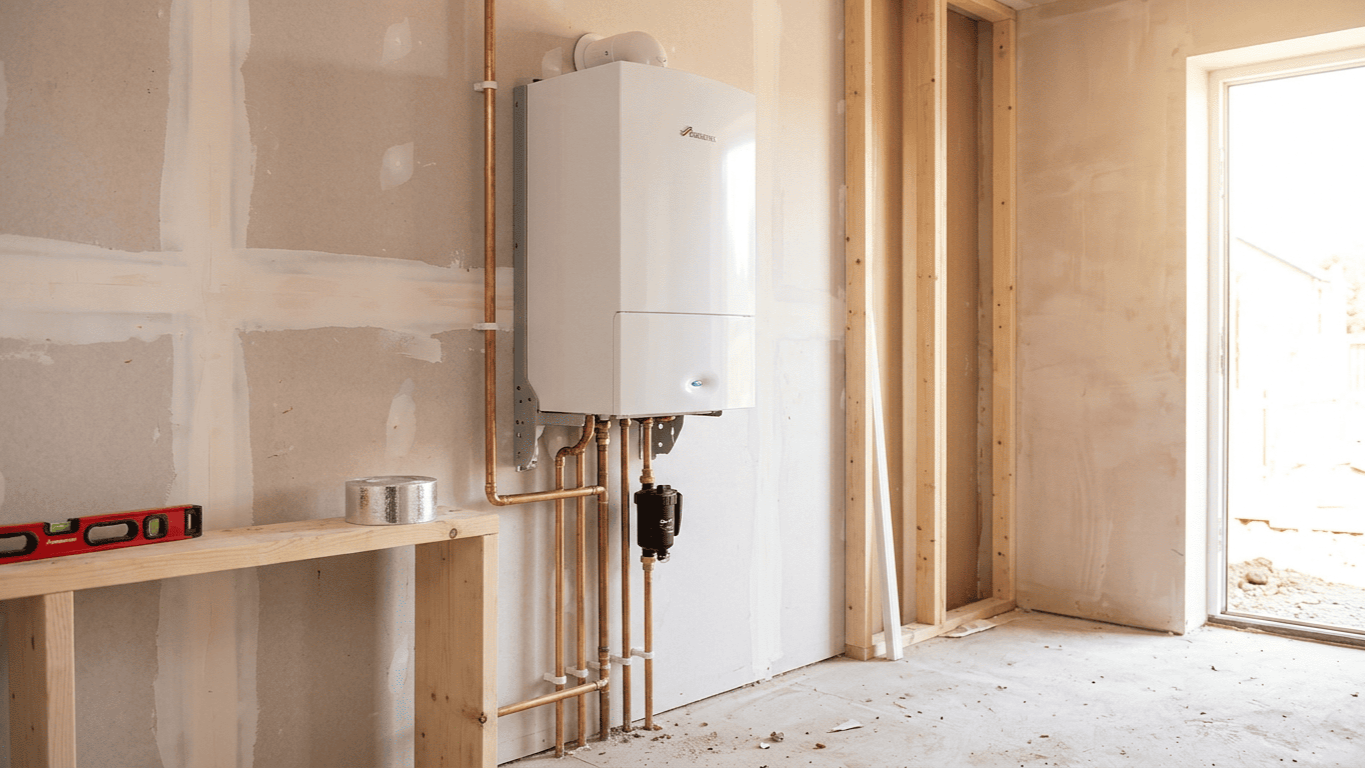
Worcester Bosch new build boiler packages typically include the boiler unit, flue components, system controls, a magnetic system filter, and in some configurations, a hot water cylinder. Their Greenstar range dominates the market, with the 4000 series being the most common choice for volume housebuilders.
Baxi takes a slightly different approach. Their packages centre around either the EcoBlue Advance or the 600 series, and they have recently improved their bundled controls significantly. You'll get the boiler, flue kit, basic controls, and often a magnetic system filter, but the cylinder options are more limited.
Think of specifying these packages like buying a new commercial van. Worcester is the fully loaded model where the racking, bulkheads, and roof bars come pre-installed. Baxi is the base model where you get a solid vehicle but might need to source specific add-ons separately to suit your exact needs.
Installation Speed And Site Practicality
On a recent development of fifteen semi-detached homes, the site team installed twelve Worcester systems in just under three days. The same team estimated alternative packages would have taken them an extra day. That's not because the alternatives make inferior products. It's because the packaging and documentation are optimised specifically for volume installation.
When sourcing through Heating and Plumbing World, developers notice Worcester's advantage lies in how they've designed their systems for speed. The flue components snap together with minimal fuss. The control wiring is colour-coded and clearly labelled. The mounting brackets are standardised across their range, so installers aren't hunting through different fixings for different models. When you're doing multiple identical installations, these details save hours.
Baxi systems require more thought during installation. The flue assembly isn't quite as intuitive, and installers often have to reference the manual more frequently. That said, Baxi's boilers themselves are often easier to commission once they're mounted, as their diagnostic interface is clearer, and the initial setup process is highly straightforward.
Reliability And Long-Term Performance
This is where things get interesting, because the reputation doesn't always match the reality. Worcester Bosch has built a reputation for reliability that is largely deserved. Their heat exchangers are robust, and their control boards have improved significantly over the past five years. There are generally fewer callback issues with Worcester systems in the first two years after installation. However, when Worcester boilers do develop faults, replacing specific heating system components can be expensive, and you're generally locked into using approved parts.
Baxi's reliability has improved dramatically since they overhauled their EcoBlue range. The older Baxi boilers had a reputation for developing issues requiring a complex diverter valve diagnostic, but the current generation has addressed most of these problems. You will rarely need a deep diverter valve diagnostic on modern Baxi units unless the system is heavily contaminated.
The key difference is how failures present themselves. Worcester systems tend to fail cleanly. The boiler displays a clear error code, and the issue is usually straightforward to diagnose. Baxi systems sometimes develop intermittent faults that are harder to pin down, particularly with the control interface.
Warranty And Support Structure
Worcester offers a standard two-year warranty on their boilers, extendable to five, seven, or even ten years if the installation is registered correctly and the system is serviced annually. Their warranty process is generally smooth, and they have a well-established network of approved service engineers.
Baxi matches this with a two-year standard warranty, extendable to seven years. The registration process is similar, but Baxi's warranty claims process can be slightly more bureaucratic. They want more documentation, more photos, and more evidence before approving parts replacements.
The real difference shows up in parts availability. Worcester parts are almost always available next-day, sometimes same-day if you're near a major distributor. Baxi parts can take longer to source, particularly for newer models. Waiting up to a week for specific boiler spares is unacceptable when a property has no heating.
Control Systems And Smart Integration
Worcester's Wave system is slick. It looks good, it's intuitive for homeowners, and it integrates well with smart home setups. The app is reliable, and remote control actually works consistently. For new builds targeting the premium market, Wave is a massive selling point.
Baxi's controls have historically been their weak point, but their recent EasyControl system has closed the gap significantly. It's not quite as polished as Wave, but it's highly functional and significantly cheaper.
If you prefer to specify your own heating controls, such as a Nest or Hive, you'll need additional interface components, which adds cost and complexity.
Both systems now support OpenTherm communication, which improves efficiency by modulating the boiler output based on actual demand rather than just turning it on and off. In practical terms, OpenTherm communication means lower running costs for the homeowner and fewer temperature fluctuations. Without OpenTherm communication, you lose that precise modulation capability.
Servicing And Maintenance Considerations
Both manufacturers recommend annual servicing, and both require it to maintain the extended warranty. The service requirements are virtually identical. You must complete a thorough combustion testing procedure, test the safety devices, clean the components, and check the system pressure.
Worcester boilers are slightly easier to service because their component layout is more logical. Everything is where you expect it to be, and there's good access to the parts that need regular attention. Baxi's component layout can be cramped, particularly in the smaller combi boiler models, which adds time to routine servicing.
During the annual combustion testing procedure, engineers often find both brands hold their calibration exceptionally well. Always document your combustion testing procedure results in the benchmark log to maintain the warranty. Ensuring your magnetic system filter is cleaned during this visit is equally crucial, as system debris destroys efficiency.
Cost Comparison And Value Analysis
Worcester new build boiler packages typically cost 15% to 25% more than equivalent Baxi systems. For a single boiler, that might be a £200 to £400 difference. For a development of fifty houses, you're looking at a £10,000 to £20,000 variance.
That premium buys you faster installation, slightly better reliability in the first few years, and stronger brand recognition with buyers. Whether that's worth it depends entirely on your market positioning.
If you're building homes in the premium bracket, Worcester's brand recognition probably justifies the extra cost. Buyers at this level expect to see Worcester. For affordable housing or mid-market developments, Baxi offers genuinely comparable performance at a lower price point. The money you save can go towards better insulation, an upgraded temperature control system, or other features that actually improve the home's performance more than a premium boiler brand would.
Conclusion
Choose Worcester if you're building homes where the boiler brand contributes to the perceived quality, where installation speed significantly impacts your programme, or where you're targeting buyers who research specifications. Choose Baxi if cost control is critical, or if you're confident that your buyers won't know or care about the boiler brand.
Either way, make sure the installation is done properly. The best boiler in the world will perform poorly if it's incorrectly commissioned, inadequately flushed, or installed without proper system filtration. Get those fundamentals right, and either Worcester or Baxi will serve the property well for fifteen to twenty years. If you need help selecting the right packages for your development, speak to our team for professional guidance.