

Office Block Plant Rooms: Twin Pump Cascade Setup And Duty Standby Rotation
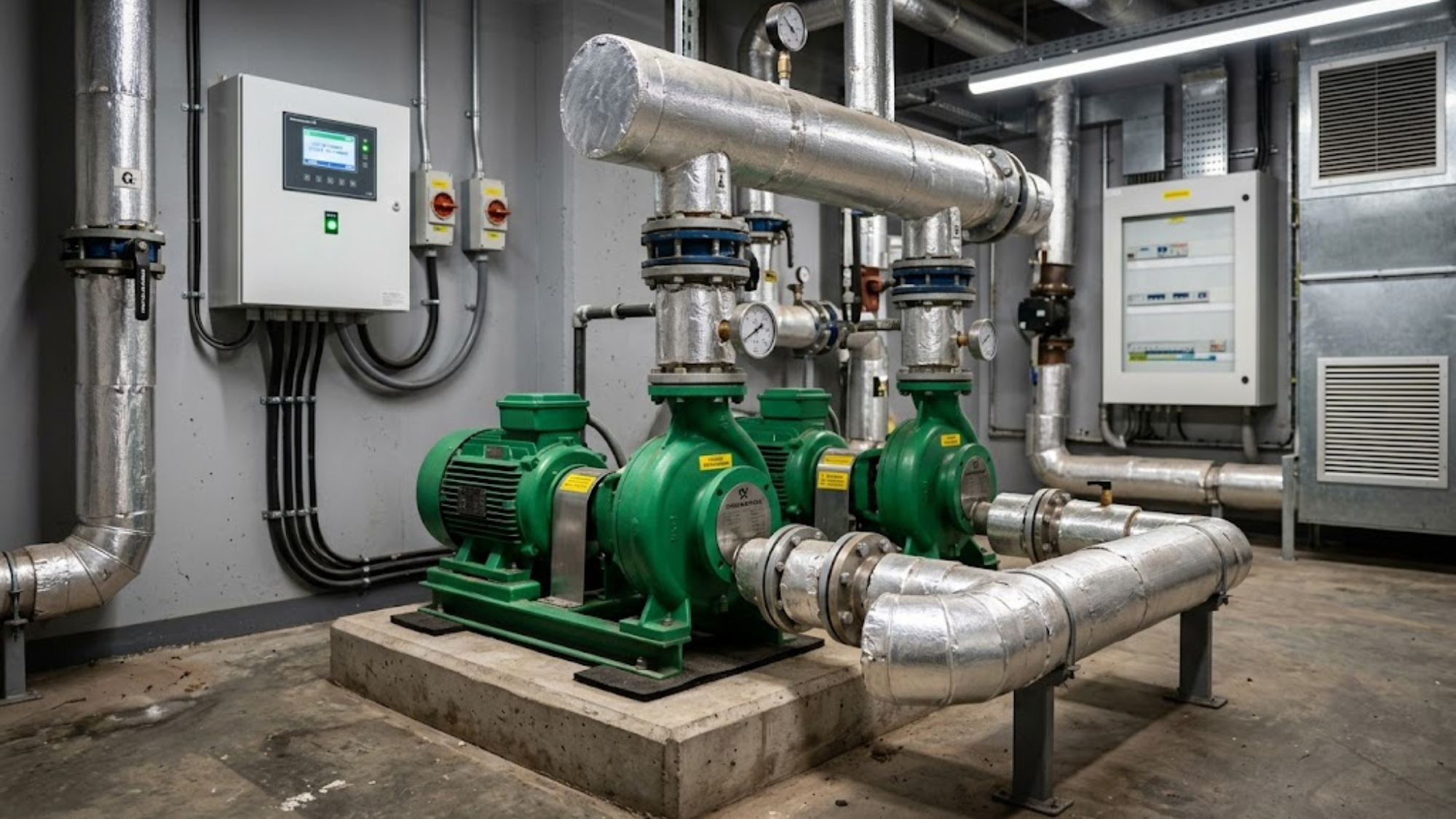
Commercial buildings run on systems most occupants never see. Behind locked doors, plant rooms house the equipment that keeps offices comfortable year-round. Among these systems, heating and cooling pumps work continuously, moving water through radiators, fan coils, and air handling units. A single pump failure in winter means cold offices. In summer, it means overheated workspaces and complaints flooding facilities management.
Twin pump setups with twin pump cascade control and duty-standby rotation solve this vulnerability. Rather than relying on one pump to handle the entire load, two pumps share the work intelligently. When demand is low, one pump runs. When demand increases, the second pump activates automatically. If either pump fails, the other takes over without interruption.
Why Single Pump Systems Create Risk
Heating and Plumbing World provides the robust infrastructure components required to prevent catastrophic failures in these environments.
A single pump handling an entire office block creates a single point of failure. When that pump breaks down, the entire heating or cooling system stops. Depending on the season, this means either frozen pipes or a building that becomes uninhabitable within hours. Maintenance windows become problematic too. Servicing a single pump requires shutting down the entire system. This forces facilities teams to schedule work outside business hours or accept building downtime. Neither option is ideal for occupied office blocks where tenant expectations run high.
Pump wear accelerates when one unit runs continuously. Bearings degrade, seals fail, and impellers wear unevenly. A pump running 8,760 hours per year experiences significantly more stress than two pumps sharing that load. The maths is straightforward: one pump at 100% duty versus two pumps alternating at roughly 50% duty each. Using high-quality heating pumps as part of a redundant system is the standard for modern commercial facilities.
How Twin Pump Cascade Systems Work
Twin pump cascade systems use two identical pumps controlled by a single panel. The control system monitors building demand through pressure sensors or temperature differentials. When demand is low, one pump runs at variable speed to match the load. When demand exceeds that pump's capacity, the second pump starts automatically.
The twin pump cascade sequence typically works like this: Pump 1 starts and ramps up to meet demand. If demand continues rising and Pump 1 reaches 80–90% capacity, Pump 2 starts. Both pumps then modulate their speeds to share the load proportionally. As demand drops, Pump 2 stops first, leaving Pump 1 to handle the reduced load alone.
This approach delivers significant energy savings. Running two pumps at 50% capacity each consumes less power than running one pump at 100% capacity due to affinity laws. Pump power consumption relates to the cube of speed. Halving the speed reduces pump power consumption to roughly one-eighth. While two pumps at half speed don't achieve perfect efficiency, the combined energy use still falls well below a single pump at full capacity.
Variable speed drives (VSDs) make this possible. Each inline pump connects to a unit that adjusts motor speed based on demand signals. The control panel coordinates both variable speed drives, ensuring smooth transitions as pumps start, stop, or modulate speed.
Duty-Standby Rotation Explained
The duty-standby rotation prevents one pump from becoming the "favourite" that runs constantly while the other sits idle. Without rotation, the duty pump accumulates operating hours rapidly while the standby pump deteriorates from disuse. Seals dry out, bearings develop flat spots, and internal components corrode. Implementing a reliable water pressure pump helps maintain the required head even when demand is shifting between units.
Automatic duty-standby rotation switches which pump serves as primary duty on a scheduled basis. Common rotation intervals include:
- Daily rotation: Pumps swap roles every 24 hours
- Weekly rotation: Pumps swap roles every 7 days
- Run-hour equalisation: Pumps swap when the difference in operating hours reaches a set threshold
Run-hour equalisation offers the most balanced approach. The control system tracks operating hours for each pump. When Pump 1 has run 100 hours more than Pump 2, they swap roles. This ensures both pumps accumulate similar wear over their service life.
I recall a callout to a central London office where they hadn't used a rotation protocol in three years. The primary pump seized on a Friday evening, and when the standby was finally called into action, the seals had dried out so badly it leaked like a sieve within ten minutes. We had to source heating spares in the middle of the night just to get the building's heat back on for the Monday morning. It’s a textbook case of why the standby unit needs to earn its keep just as much as the lead pump.
Think of a twin pump setup like a relay team. If you make one runner do all the laps while the other sits on the bench, that first runner is going to burn out quickly, and the second one will be too stiff to run when they’re finally needed. By swapping them out regularly, you keep both runners in peak condition and ensure the race never stops.
Configuring Cascade Control Parameters
Proper configuration of cascade control parameters determines whether the system delivers efficiency or just adds complexity. The key parameters require careful setting based on building characteristics. Setting these within the heating controls interface allows for precise modulation.
- Lead pump selection: Some systems rotate which pump leads the cascade sequence.
- Lag pump start point: This sets when the second pump activates. The sweet spot typically sits between 75–85% of duty pump capacity.
- Lag pump stop point: This determines when the second pump shuts down as demand falls. Setting this 10–15 percentage points below the start point creates hysteresis.
Ramp rates, or how quickly pumps accelerate, affect system stability. Rapid changes create pressure spikes and water hammer. Gradual ramps maintain smooth operation but slow system response. These cascade control parameters should be tuned specifically for the building's pipework volume.
Control Panel Integration
Modern building management systems (BMS) integrate cascade pump control through BACnet or Modbus. This integration allows facilities teams to monitor pump status and adjust the thermostat control logic or pressure setpoints from central workstations.
Critical monitoring points include individual pump run hours, current speed, and power consumption. Alarm conditions should trigger notifications before failures occur. High vibration or declining flow rates indicate developing problems. Addressing these warnings prevents emergency breakdowns and the need for unexpected radiator valves replacements if the system becomes imbalanced.
Sizing Pumps For Twin Configuration
Twin pump systems typically use one of two sizing philosophies. Duty-assist configuration means each pump handles 100% of design load. During peak demand, both pumps can run simultaneously, providing 200% capacity. This approach prioritises redundancy but costs more upfront.
Duty-duty configuration means each pump handles 60–70% of design load. Both pumps run during peak demand to meet 100% load. This approach optimises energy efficiency and reduces capital cost but provides less redundancy. Standard office blocks often choose duty-duty for better economics.
Conclusion
Twin pump cascade systems with duty-standby rotation transform plant room reliability from a vulnerability into a strength. Instead of hoping a single pump continues running, facilities teams gain automatic redundancy, balanced wear, and improved energy efficiency. Proper setup of your cascade control parameters determines whether the system delivers on its potential.
For office blocks where tenant comfort and building uptime directly affect occupancy rates, twin pump systems aren't over-engineering; they're practical infrastructure. If you're looking to upgrade your facility's reliability or need advice on pump sequencing, reach out to our experts to ensure your building services are operating at peak efficiency.