

Office Building Heating: Balancing Comfort and Cost
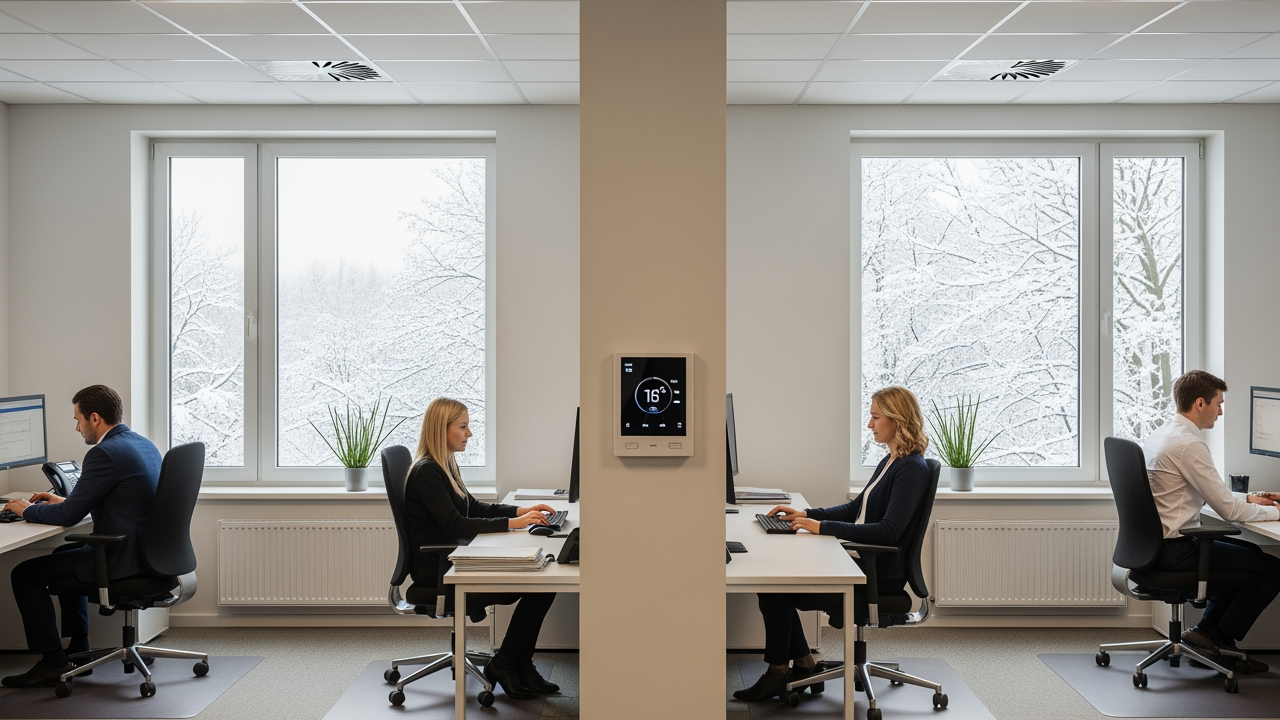
Office buildings consume 40% of their energy budget on heating alone, yet 30% of employees report being too cold at work, whilst another 25% complain about overheating. This disconnect costs businesses twice, once in utility bills and again in lost productivity.
Modern office heating efficiency requires a systematic approach that addresses zone control, equipment efficiency, and occupancy patterns. Properly designed systems cut energy costs by 25-35% whilst keeping your workforce comfortable.
Why Standard Heating Systems Fail Office Buildings
Most commercial heating setups treat entire floors as single zones. A south-facing conference room with floor-to-ceiling windows needs vastly different heating than a north-facing interior office with no natural light. Running both spaces on the same thermostat creates hot spots and cold zones simultaneously.
Temperature variations of 8-12°C across single floors occur regularly in buildings using basic zone control. The typical response, setting the thermostat higher, just wastes energy heating already-warm areas whilst barely improving cold spots.
The problem compounds during shoulder seasons. Spring and autumn days might hit 18°C outside but drop to 8°C overnight. Buildings with slow-responding heating systems either overheat during the day or leave staff cold in the morning. This lag costs 15-20% more in energy compared to responsive systems.
The Cost of Poor Temperature Control
Uncomfortable employees don't just complain, they underperform. Research from Lawrence Berkeley National Laboratory shows that productivity drops 2% for every degree temperature deviates from the 21-23°C comfort zone. For a 50-person office, that's equivalent to losing one full-time employee's output when temperatures miss the mark by just 3 degrees.
The financial impact extends beyond productivity. Buildings that rely on outdated heating system components spend 40-60% more on maintenance. Old boilers cycle inefficiently, wearing out pumps and valves faster. Maintenance costs drop by £3,000-5,000 annually after upgrading to modern, properly-sized equipment.
Energy waste hits hardest during unoccupied hours. Buildings heating empty offices overnight burn 30-40% of their total heating budget on spaces no one uses. A 2,000 square metre office running heating 24/7 wastes approximately £8,000-12,000 per year compared to optimised scheduling.
Modern Office Heating Systems That Actually Work
Zoned hydronic systems divide buildings into 4-8 zones based on exposure, occupancy, and function. Each zone operates independently with its own thermostat and control valve. Conference rooms heat up quickly before meetings, then scale back. Perimeter offices with windows receive more heat than insulated interior spaces.
The setup requires quality zone valves and actuators that respond within 5-10 minutes of temperature changes. Cheap components lag 20-30 minutes, defeating the purpose of zoning. Honeywell actuators provide fast, reliable response in commercial applications, whilst Danfoss offers robust zone control solutions.
Variable speed pumps adjust flow rates to match actual demand rather than running full-tilt constantly. When only two zones need heating, the pump runs at 30% capacity instead of 100%. This single upgrade typically cuts pump energy consumption by 50-70% and reduces wear on the entire system. Grundfos manufactures variable-speed circulators specifically designed for commercial office heating efficiency.
Condensing boilers extract heat from exhaust gases that standard boilers waste. They achieve 90-96% efficiency compared to 75-85% for conventional units. For a medium office building, that efficiency gain translates to £4,000-6,000 in annual gas savings. The payback period runs 3-5 years, after which it's pure cost reduction.
Smart Controls That Pay for Themselves
Building Management Systems (BMS) sound expensive and complex, but modern cloud-based systems start at £2,000-4,000 for small-to-medium offices. They pay for themselves within 18-24 months through three mechanisms:
Occupancy-based scheduling heats spaces only when people use them. Link the BMS to your access control system, and heating automatically adjusts based on who's actually in the building. Offices with flexible work arrangements see the biggest savings, 25-35% reductions when heating follows actual occupancy rather than assumed schedules.
Weather compensation adjusts heating output based on outdoor temperature. When it's 12°C outside instead of 5°C, the system automatically reduces boiler temperature and flow rates. This prevents overheating and cuts gas consumption by 15-20% during mild weather. EPH Controls provides accessible weather compensation systems suitable for retrofit applications.
Real-time monitoring catches problems before they become expensive. BMS systems alert facility managers to failing pump seals or clogged filters days before complete failure. One client avoided a £12,000 emergency boiler replacement because monitoring caught a pressure anomaly early enough for a £400 repair.
Balancing Comfort Across Different Office Zones
Perimeter zones need the most attention. Offices within 4-5 metres of exterior walls experience heat loss through windows and thermal bridging. These spaces require 30-40% more heating capacity than interior zones. Install separate thermostats for perimeter areas and set them 1-2°C higher than interior spaces to achieve consistent comfort.
Meeting rooms present unique challenges. Empty 90% of the time, they need rapid heating when occupied. Use fast-response heating with occupancy sensors that trigger heating 30 minutes before scheduled meetings. This approach cuts energy use by 60-70% compared to maintaining meeting room temperatures constantly.
Server rooms and equipment spaces generate significant heat. Server rooms run 8-12°C hotter than surrounding offices. Isolate these spaces from your heating zones and use their waste heat strategically. Ducting warm air from server rooms to adjacent offices can provide 20-30% of heating needs during winter.
Open plan areas benefit from destratification fans that mix warm ceiling air back down to occupied levels. Without circulation, warm air pools at ceiling level whilst staff sit in cold air below. Quality destratification fans cost £200-400 each but can reduce heating requirements by 15-20% in spaces with ceilings above 3 metres.
Maintenance That Prevents Expensive Failures
Annual boiler servicing catches 80% of potential failures before they cause breakdowns. A £200-300 service call prevents £2,000-5,000 emergency repairs. Check combustion efficiency during every service; drops of more than 3-4% indicate problems that waste energy and shorten equipment life.
System flushing every 3-5 years removes sludge and scale that reduce heat transfer efficiency. Dirty systems require 10-15% more energy to achieve the same heating output. Power flushing costs £800-1,500 for typical office buildings but recovers that investment within two heating seasons through improved efficiency.
Radiator balancing ensures even heat distribution. Radiators closest to the boiler often run too hot, while distant ones stay lukewarm. Proper balancing using lockshield valves takes 2-3 hours but eliminates hot and cold spots without increasing energy use. Complaints drop by 70% after systematic balancing.
Replace worn pump impellers and bearings every 5-7 years before they fail. Pumps running with worn components use 20-30% more electricity and create vibration that damages pipes and connections. Scheduled replacement costs £300-600; emergency replacement with consequential damage costs £1,500-3,000.
Cost-Effective Upgrades for Existing Systems
Not every office needs a complete heating overhaul. Strategic upgrades deliver significant returns without major capital expenditure.
Thermostatic radiator valves (TRVs) cost £15-30 each but provide individual room control. Install them throughout the building, and occupants can adjust their immediate environment without affecting other spaces. This simple upgrade typically reduces heating costs by 12-18% whilst improving comfort satisfaction scores.
Weather compensation controls retrofit to existing boilers for £400-800. They automatically adjust boiler output based on outdoor temperature, eliminating manual thermostat adjustments. Payback runs 12-18 months in most climates.
Pipe insulation in plant rooms and risers prevents heat loss before it reaches occupied spaces. Uninsulated pipes in cool plant rooms can lose 20-30% of heat before reaching the building. Quality insulation costs £8-15 per linear metre and pays back within one heating season.
Smart thermostats replace basic programmers for £150-300 per zone. They learn occupancy patterns, adjust for weather, and allow remote control via smartphone. The convenience factor alone reduces the temptation to override schedules, which typically adds 15-20% to heating costs.
Measuring Success and Ongoing Optimisation
Install heat metres on major zones to track actual consumption. Metres cost £200-400 each but provide data that reveals waste patterns. Zones consuming 40-50% more energy than necessary can be identified simply by comparing metre readings across similar spaces.
Track degree days against gas consumption to establish your building's baseline efficiency. Sudden increases in consumption relative to degree days signal problems, often before occupants complain. This early warning system prevents small issues from escalating into major failures.
Survey staff quarterly about comfort. Simple five-question surveys reveal problem areas before they impact productivity. Buildings with regular feedback loops maintain 85-90% comfort satisfaction; those without hover around 65-70%.
Benchmark against similar buildings using CIBSE TM46 energy benchmarks. Office buildings should target 120-150 kWh/m² annually for heating. Buildings significantly above this range will benefit from systematic improvements that deliver substantial savings.
Conclusion
Effective office heating systems aren't about spending more; they're about spending smarter. The combination of proper zoning, responsive controls, and regular maintenance cuts energy costs by 25-40% whilst improving comfort satisfaction from the typical 65% to 85-90%.
Start with the fundamentals: zone your building logically, install quality controls, and maintain equipment proactively. These basics deliver 70-80% of potential savings before considering expensive upgrades.
For existing systems, prioritise quick wins like TRVs, weather compensation, and smart scheduling. These upgrades pay for themselves within 1-2 years and immediately improve comfort.
Heating systems degrade gradually. A system that worked well five years ago now wastes 15-25% more energy due to accumulated inefficiencies. Regular assessment and strategic upgrades keep performance optimal and costs under control.
Buildings that balance comfort and cost best treat heating as a system requiring ongoing attention, not a set-and-forget utility. Invest in monitoring, respond to data, and maintain equipment before it fails. This approach consistently delivers comfortable environments at 30-35% lower cost than reactive management.
Heating and Plumbing World stocks a comprehensive range of components for office heating systems from leading manufacturers. For technical advice on improving your office heating efficiency, contact us to discuss your specific requirements.