

Oil Boiler Nozzles: Sizing and Spray Angle Selection
Getting the nozzle size wrong on an oil boiler is like trying to fill a kettle through a straw; technically possible, but you'll be waiting all day and wasting energy in the process. We've seen countless heating systems underperforming simply because someone grabbed the wrong nozzle during a service visit, or worse, kept using the same specification for decades without questioning whether it still matched the appliance requirements.
Oil boiler nozzles might seem like small, insignificant components, but they're actually precision instruments that determine how efficiently your heating system converts fuel into warmth. The spray angle, flow rate, and spray pattern all work together to create the perfect combustion conditions. Get any of these elements wrong, and you'll see sooty deposits, incomplete combustion, higher fuel bills, and potentially dangerous carbon monoxide production.
What Actually Happens Inside an Oil Boiler Nozzle
The nozzle's job is deceptively simple: take liquid heating oil and transform it into millions of tiny droplets that mix with air and burn cleanly. The oil enters under pressure (typically between 100-140 PSI), passes through a swirl chamber that spins it rapidly, then exits through a precision-drilled orifice that breaks it into a fine mist.
The quality of this atomisation determines everything about combustion efficiency. Droplets that are too large won't burn completely, creating soot and wasting fuel. Droplets that are too small might ignite before they've properly mixed with air, causing flame instability. The nozzle specification controls droplet size through flow rate, whilst the spray angle determines how this mist disperses into the combustion chamber.
We've measured combustion efficiency differences of 8-12% between correctly and incorrectly specified nozzles on identical boilers. That's not a marginal improvement, that's the difference between a heating system that costs £1,200 annually to run and one that costs £1,350 for exactly the same heat output.
Decoding Nozzle Specifications
Every oil boiler nozzle carries a specification stamped on its body, typically formatted something like "0.65 x 60° S". These numbers tell you everything you need to know, provided you understand what they mean.
The first number (0.65 in this example) indicates the flow rate in gallons per hour (GPH) at standard pressure. This determines how much fuel the boiler consumes and directly relates to its heat output. A 0.65 GPH nozzle delivers approximately 6.5 kW of heat output, assuming reasonable combustion efficiency.
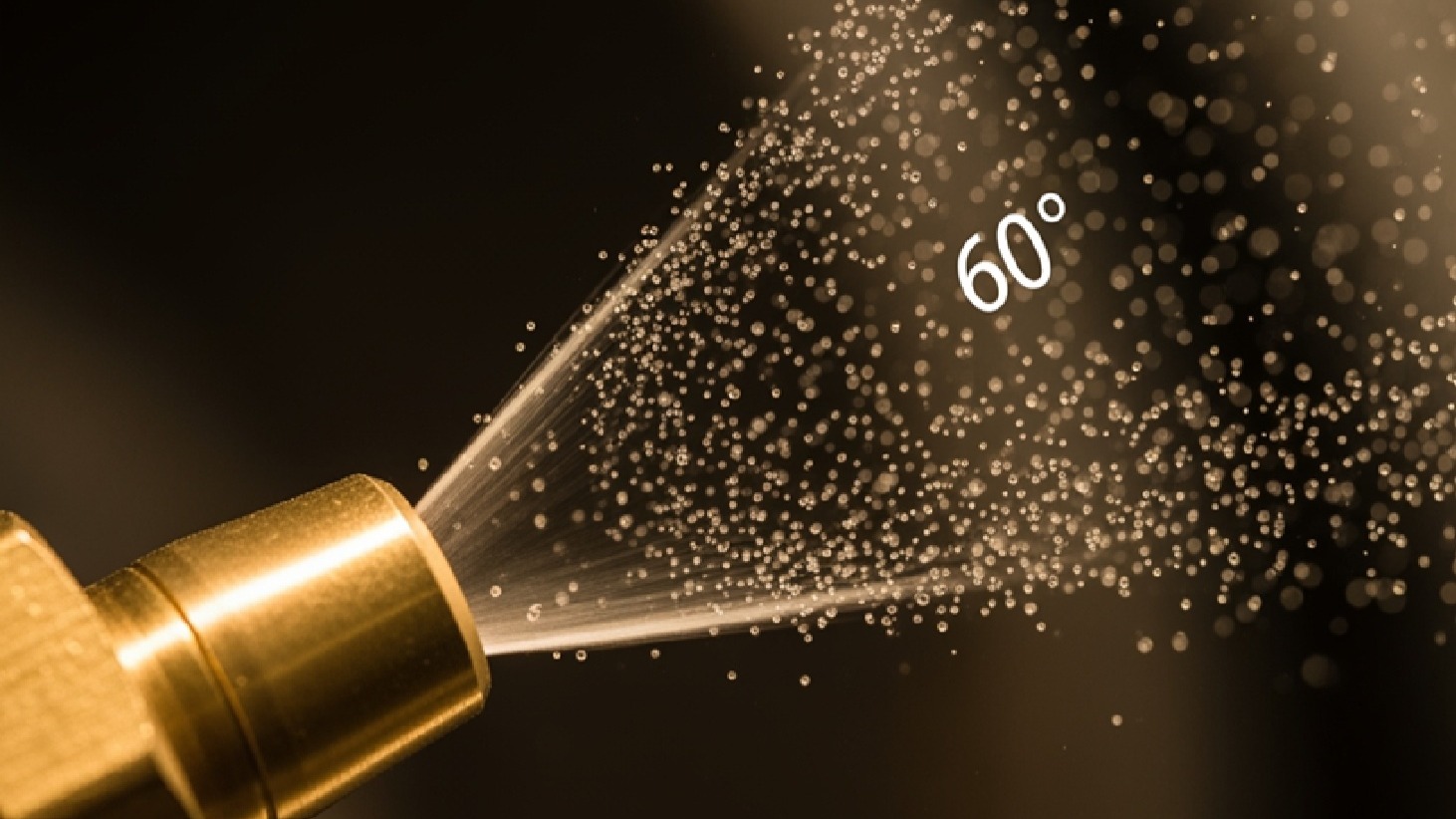
The second number (60° here) represents the spray angle, the cone shape the fuel forms as it leaves the nozzle. Common angles range from 30° for narrow spray patterns up to 90° for wide dispersal. This angle must match the combustion chamber geometry to ensure complete mixing and burning.
The letter at the end indicates spray pattern type. "S" stands for solid cone (the most common), "H" indicates hollow cone (used in specific burner designs), and "B" denotes semi-solid patterns for particular applications.
Matching Nozzle Size to Boiler Requirements
The starting point for nozzle sizing is always the boiler manufacturer's specification plate. This tells you the design heat output, which directly determines the required fuel flow. The calculation is straightforward: divide the boiler's kW output by 10 to get the approximate GPH requirement.
A 15 kW boiler needs roughly 1.5 GPH, a 20 kW unit requires about 2.0 GPH, and so on. This assumes kerosene (28-second oil) and reasonable combustion efficiency around 85%. For gas oil (35-second), you'll need slightly different flow rates due to the fuel's higher viscosity and energy content.
However, real-world sizing isn't quite this simple. Older boilers often ran oversized compared to actual heating demands, especially in homes that have since been insulated or had double glazing fitted. We regularly find 25 kW boilers serving properties that now only need 18 kW, with the nozzle still sized for the original specification.
Running an oversized nozzle causes short cycling, the boiler fires, quickly reaches temperature, shuts down, then repeats this cycle endlessly. Each start-up wastes fuel during the ignition and stabilisation phase, and the frequent on-off cycling stresses components. Downsizing the nozzle by 10-15% in these situations often improves overall efficiency and extends equipment life.
The range of Andrews heating components includes nozzles from 0.40 GPH up to 3.00 GPH, covering everything from compact domestic boilers to larger commercial units.
Spray Angle Selection Based on Combustion Chamber Design
Spray angle determines how the fuel mist fills the combustion space. Too narrow an angle concentrates the flame in the centre, potentially causing flame impingement on the heat exchanger and creating hot spots. Too wide an angle spreads the fuel too thin, causing incomplete combustion at the flame edges and sooty deposits on chamber walls.
Modern pressure-jet burners in domestic boilers typically use 60° or 80° angles. The 60° pattern suits deeper combustion chambers where you need the flame to project forward before spreading out. The 80° angle works better in shorter, wider chambers where you want immediate dispersal.
Older boilers with refractory-lined combustion chambers often specify 45° angles. The refractory material helps reflect heat back into the flame, so the narrower spray pattern concentrates combustion in the hottest zone. Converting these systems to wider angles without adjusting other parameters usually results in incomplete combustion.
Wall-flame burners use a completely different geometry, often requiring 30° narrow angles that project the flame along the chamber wall rather than into the centre. Using a standard 60° nozzle in a wall-flame burner creates a flame shape that doesn't match the heat exchanger design, dramatically reducing efficiency.
We've seen engineers replace a failed nozzle with whatever they had in the van, ignoring the spray angle specification. The boiler still ran, so they considered the job done. Three months later, the heat exchanger was sooted up, efficiency had dropped 15%, and the customer faced a costly service call. The £8 saving on using the wrong nozzle cost £200 in additional work.
Spray Pattern Types and When to Use Them
Solid cone (S) nozzles create an evenly distributed spray throughout the cone angle. The fuel density is relatively consistent from the centre to the edges, producing a stable, predictable flame shape. This pattern suits the vast majority of domestic and light commercial applications.
Hollow cone (H) nozzles concentrate fuel around the outer edge of the spray pattern, leaving the centre relatively empty. This creates a ring-shaped flame that works well in specific burner designs where air enters through the flame centre. Hollow patterns also help in situations where you need flame stability at very low firing rates.
Semi-solid (B) patterns fall between these extremes, with denser fuel concentration in the centre but still some distribution throughout the cone. These find use in boilers that need flexible flame characteristics across a wide modulation range.
Using the wrong pattern type causes immediate combustion problems. We've diagnosed boilers that wouldn't stay lit, produced excessive smoke, or created dangerous carbon monoxide levels, all traced back to someone fitting a hollow cone nozzle where the manufacturer specified solid, or vice versa.
The Danfoss range includes nozzles across all these pattern types, manufactured to precise tolerances that ensure consistent performance.
Pressure Settings and Their Effect on Performance
Oil boiler nozzles are designed to operate at specific pressures, typically 100 PSI for standard domestic applications or 140 PSI for improved atomisation. The pump pressure directly affects droplet size and spray characteristics.
Running below the specified pressure produces larger droplets that don't burn completely. You'll see black smoke, sooty deposits, and poor efficiency. The flame becomes lazy and ill-defined, with visible yellow tips indicating unburned carbon.
Excessive pressure creates problems, too. Whilst atomisation improves, the spray pattern changes, narrower and more concentrated than the nozzle's rated angle. This can cause flame impingement on heat exchanger surfaces and uneven heating. Some nozzles distort their spray patterns at pressures above 150 PSI, regardless of their nominal specification.
Modern oil pumps with pressure gauges make setting the correct pressure straightforward. Older pumps without gauges require a pressure gauge temporarily fitted to the test port during commissioning and annual service. We've found countless installations running at incorrect pressures simply because no one checked.
Quality controls from Honeywell and similar manufacturers help maintain consistent pressure across the operating range, ensuring the nozzle performs as specified.
Fuel Types and Their Influence on Nozzle Selection
Kerosene (28-second heating oil) and gas oil (35-second) have different viscosities and combustion characteristics. The nozzle specification that works perfectly for kerosene might not suit gas oil, and vice versa.
Gas oil's higher viscosity means it doesn't atomise quite as easily as kerosene. For optimal combustion, you might need to increase pump pressure slightly or adjust the nozzle size to compensate. The energy content difference is about 5%, so a boiler running on gas oil delivers slightly more heat from the same nozzle flow rate.
Biodiesel blends are becoming more common in heating oil, with B30 (30% biodiesel, 70% mineral oil) increasingly available. These blends have different atomisation characteristics and may require nozzle specification adjustments, particularly regarding spray angle. We've found that B30 blends sometimes perform better with slightly wider spray angles compared to pure mineral oil.
Switching between fuel types without adjusting nozzle specifications rarely causes immediate failure, but combustion efficiency suffers. We've measured 4-6% efficiency losses when systems optimised for kerosene run on gas oil without adjustment.
Combustion Testing After Nozzle Changes
Fitting a new nozzle isn't the end of the job; it's the beginning of the tuning process. Proper combustion analysis confirms whether the specification matches the boiler's actual requirements and operating conditions.
We measure flue gas composition using electronic analysers that track oxygen, carbon dioxide, carbon monoxide, and flue gas temperature. Optimal combustion shows CO2 levels around 11-13% (depending on fuel type), oxygen around 3-5%, CO below 50 ppm, and flue temperatures appropriate for the boiler design.
High oxygen levels (above 6%) indicate excess air; the burner is pulling in more air than needed to burn the fuel completely. This wastes heat by warming unnecessary air that goes straight up the flue. The solution might be adjusting the air shutter, but sometimes it indicates the nozzle flow rate is too low for the burner's air supply capacity.
Low oxygen levels (below 2%) mean insufficient air for complete combustion. You'll see elevated CO levels, sooty deposits, and poor efficiency. This often happens when the nozzle flow rate is too high for the burner's air delivery capacity, or when the spray angle doesn't match the combustion chamber geometry.
Smoke readings using a smoke pump and filter paper provide additional combustion quality information. Anything above smoke number 1 on the Bacharach scale indicates incomplete combustion requiring adjustment.
Troubleshooting Common Nozzle-Related Problems
When a boiler won't light, the nozzle is often suspected, but rarely the actual problem. More commonly, issues lie with the fuel supply (blocked filter, air in the line, empty tank) or ignition system (worn electrodes, failed transformer). However, a completely blocked nozzle will prevent starting, though this usually only happens after years of running unfiltered fuel.
Delayed ignition, where the burner runs for several seconds before lighting, suggests weak atomisation. This might be a worn nozzle, but more often indicates low pump pressure or air in the fuel line, reducing the pressure available at the nozzle. The delayed ignition allows fuel to accumulate before igniting, creating a small explosion that stresses components and frightens occupants.
Pulsating flames that surge and fade rhythmically point to pressure fluctuations in the fuel supply. Whilst this could be a partially blocked nozzle, it's more commonly caused by a failing pump, air leaks in the suction line, or a blocked fuel filter creating resistance that varies as the filter collapses and recovers.
Yellow-tipped flames instead of the correct blue-white colour indicate incomplete combustion, often from an incorrect spray angle or a worn nozzle orifice. The yellow colour comes from carbon particles glowing as they burn slowly, exactly what you don't want. These particles eventually deposit as soot throughout the heat exchanger.
The Morco heating parts range includes replacement burner components that work alongside correctly specified nozzles to ensure reliable, efficient combustion.
Making Specification Changes for Efficiency Improvements
Downsizing nozzles in oversized boilers represents one of the most cost-effective efficiency improvements available. A boiler originally specified for 25 kW serving a now-insulated property needing only 18 kW wastes fuel through constant cycling. Fitting a smaller nozzle reduces heat output to match actual demand, cutting fuel consumption by 10-15% in typical cases.
This approach requires careful calculation and testing. You can't simply guess at a smaller size; you need to measure actual heat demand, calculate required output, select the appropriate nozzle, and then verify combustion efficiency through flue gas analysis. Done properly, the fuel savings pay for the modification within a single heating season.
Some older boilers respond well to switching from 60° to 80° spray angles, particularly if the combustion chamber design has been modified or if deposits have changed its effective geometry. The wider angle improves fuel-air mixing in chambers that have become effectively shorter due to deposit buildup.
Increasing pump pressure from 100 PSI to 140 PSI whilst simultaneously fitting a smaller nozzle to maintain the same flow rate improves atomisation quality. The finer droplets burn more completely, reducing soot formation and improving heat transfer. We've measured 3-4% efficiency improvements from this modification alone.
Selecting Nozzles for Replacement Burners
Replacing an entire burner assembly often requires nozzle specification changes compared to the original installation. Modern burners typically achieve better atomisation and air mixing than older designs, potentially allowing smaller nozzles or different spray angles whilst maintaining the same heat output.
Burner manufacturers provide nozzle specifications for their products, but these are starting points rather than absolute requirements. Site conditions, fuel quality, and boiler characteristics all influence optimal specification. We typically start with manufacturer recommendations, then fine-tune based on combustion analysis results.
Converting from older vaporising burners to modern pressure-jet designs completely changes nozzle requirements. Vaporising burners don't use nozzles in the same way; they heat fuel until it evaporates, then burn the vapour. Pressure-jet conversions need careful sizing to match the boiler's heat exchanger design and capacity.
The Halstead spares we stock include nozzles and burner components for common replacement scenarios, ensuring you have access to correctly specified parts for conversion projects.
Oil Nozzle Replacement Guide Essentials
Oil boiler nozzles deserve more attention than they typically receive. These precision components directly determine combustion efficiency, fuel consumption, emissions levels, and system reliability. The difference between correct and incorrect specification might only be a few pounds in parts cost, but thousands of pounds in lifetime fuel consumption.
Annual replacement during routine servicing isn't excessive; it's sensible maintenance that ensures consistent performance. Combined with proper combustion analysis and adjustment, fresh nozzles help maintain efficiency levels that deteriorate gradually with worn components.
When following an oil nozzle replacement guide, stick to manufacturer specifications unless you have a good reason to deviate and the knowledge to verify your changes through proper testing. The engineer who grabs whatever nozzle is in the van might get the boiler running, but they're not delivering the efficiency and reliability the customer deserves.
Quality matters more than price in nozzle selection. The few pounds saved buying budget components disappear within weeks through reduced efficiency, and the risk of premature failure or poor combustion far outweighs any initial saving. Systems with properly specified oil boiler nozzles maintain optimal performance whilst reducing running costs and emissions.
For quality oil boiler nozzles and replacement components, Heating and Plumbing World stocks a comprehensive range suitable for all major oil-fired heating systems. Pumps from Grundfos and components for systems from Gledhill work alongside correctly specified nozzles to deliver reliable, efficient heating. Technical guidance on nozzle selection and combustion optimisation is available, get in touch for professional support.