

Pipe Bending Springs: Internal vs External Types
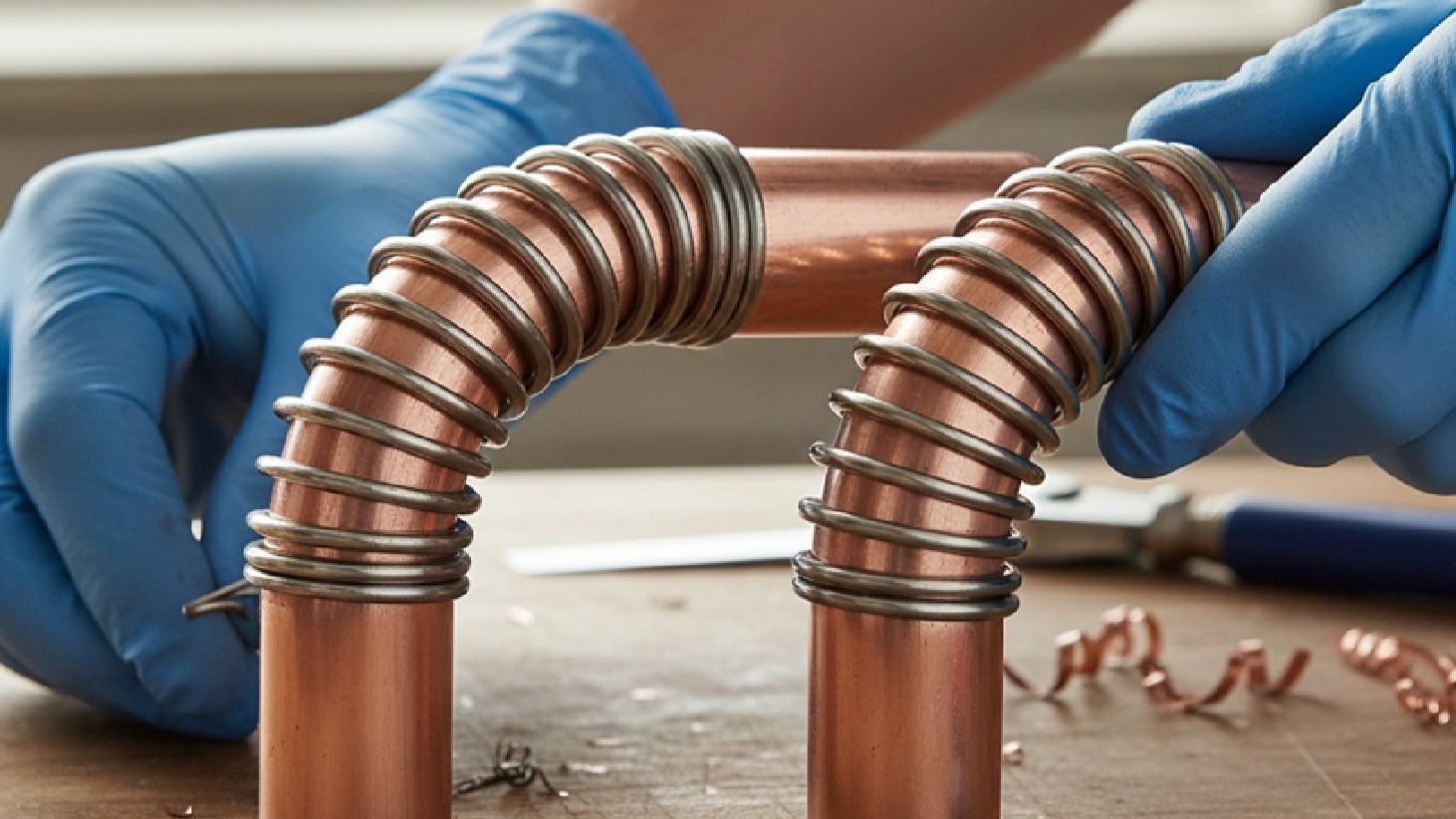
Bending copper or soft metal pipes without kinking them is one of those tasks that separates a clean, professional plumbing job from a bodged one. Whether you're working on central heating pipework, hot water systems, or bathroom installations, the right pipe-bending technique makes all the difference. That's where pipe-bending springs come in, simple tools that have saved countless pipes from the scrap heap.
The choice between internal and external pipe bending springs isn't just about personal preference. Each type serves specific purposes, works with different pipe bending spring sizes, and delivers distinct advantages depending on your project. Understanding which spring to reach for can save you time, reduce material waste, and help you achieve those smooth, kink-free bends that mark quality workmanship.
What Pipe Bending Springs Actually Do
Before diving into the differences between internal and external types, it's worth understanding the mechanics at play. When you bend a pipe without support, the outer wall stretches whilst the inner wall compresses. This uneven pressure causes the pipe to collapse inward, creating that telltale kink that restricts water flow and weakens the entire installation.
A bending spring provides uniform support around the pipe's circumference during the bend. This distributes the stress evenly, maintaining the pipe's circular cross-section throughout the curve. The result is a smooth, professional bend with no loss of internal diameter.
The spring's design matters here. Made from tempered steel wire wound in a tight coil, quality bending springs flex enough to follow your desired curve whilst providing sufficient resistance to prevent collapse. Cheaper springs often lack the right balance, too stiff and they won't bend easily; too flexible and they won't prevent kinking. Think of it like a corset for pipes, providing just enough support to maintain shape under stress without restricting natural movement.
Internal Pipe Bending Springs Explained
Internal springs slide inside the pipe before you make your bend. They're the traditional choice for many plumbers, particularly when working with smaller diameter copper pipes commonly found in domestic heating systems.
The spring's diameter is slightly smaller than the pipe's internal diameter, allowing it to slip inside with minimal friction. Once positioned at the bend point, you can work the pipe around your knee, a pipe bender, or whatever forming method you prefer. The spring supports the pipe walls from the inside out, preventing inward collapse.
Getting the spring out afterwards requires a specific technique. You twist it in the direction that tightens the coil, which reduces its diameter slightly and breaks the friction bond with the pipe wall. Then you can withdraw it smoothly. This twisting motion becomes second nature with practice, though it can frustrate newcomers who try to pull the spring straight out simply.
Internal springs work brilliantly for pipes up to about 22mm in diameter. Beyond that size, the spring becomes heavy and awkward to manipulate, and the force required to bend the pipe increases significantly. For 15mm copper pipe, probably the most common size in UK domestic heating, an internal spring is often the quickest and most convenient option.
One limitation worth noting: you need clear access to both ends of the pipe. If you're working with installed pipework where one end is already connected, an internal spring won't work. That's when you need the external alternative.
External Pipe Bending Springs Demystified
External springs wrap around the outside of the pipe, gripping it with their internal diameter whilst supporting the walls from the outside in. They're particularly useful when working with pipes that are already partially installed or when you need to make multiple bends in quick succession.
The design differs slightly from internal springs. External versions typically have a tighter coil pattern and slightly thicker wire to provide adequate support from the outside. Quality external springs feature a tapered end that makes them easier to slide onto the pipe, plus they often include a ring or hook at one end for easier handling.
Because they don't need to be inserted into the pipe, external springs work faster in many situations. You simply slide the spring along to your bend point, make the bend, then slide it off. No twisting technique required, no risk of getting stuck inside the pipe.
External springs handle larger diameter pipes more effectively than internal types. The mechanical advantage of support from the outside means you can bend 28mm or even 35mm copper pipe with less physical effort. This makes them popular for larger heating installations and commercial work.
The trade-off is visibility. With an external spring, you can't see the exact position of the bend as clearly during the process. Internal springs let you see the pipe surface directly, making it easier to judge your angle and position. This matters less as you gain experience, but beginners often find internal springs more intuitive for this reason.
Choosing Between Internal and External Types
The decision often comes down to the specific job at hand rather than one type being universally superior. Consider these factors when selecting pipe bending spring sizes and types:
For tight spaces and installed pipework: External springs win every time. When you're working in a cupboard or behind a radiator where pipe access is limited, being able to slide a spring onto the accessible section makes the job possible.
For precision work and visible bends: Internal springs give you better visual feedback. When you're creating bends that will be on show, perhaps in a traditional radiator installation or exposed pipework, the extra control helps achieve consistent results.
For larger diameter pipes, External springs handle the mechanical demands better. Once you're working with 28mm pipe and above, the weight and stiffness of internal springs become a genuine hindrance.
For production work, External springs speed up the process. If you're pre-bending multiple pipes for a large installation, the ability to quickly slide the spring on and off saves considerable time over repeatedly inserting and extracting internal springs.
For apprentices learning the trade, Internal springs teach better technique. The need to properly position the spring and use the correct extraction method builds skills that transfer to other aspects of pipework.
Many experienced plumbers keep both types in their toolkit. A set of internal springs for 15mm and 22mm pipe, plus external springs for 22mm and 28mm, covers most domestic heating and plumbing scenarios you'll encounter.
Quality plumbing components from Heating and Plumbing World ensure your installations meet professional standards from pipework to the finished system.
Getting the Bend Right Every Time
Regardless of which spring type you choose, the actual bending technique determines your results. The spring prevents kinking, but it won't automatically create a neat, consistent curve.
Start by marking your bend point clearly on the pipe. The spring should be centred on this mark, with equal length on either side of where the bend's apex will be. For a 90-degree bend in a 15mm pipe, you want roughly 50-75mm of spring coverage on either side of the mark.
Apply steady, even pressure rather than forcing the bend quickly. Copper work-hardens as you bend it, meaning it becomes stiffer during the process. Rushing leads to uneven curves and potential kinks despite the spring's presence. Take your time and let the metal move gradually.
For tight radius bends, consider using a former or bending machine in conjunction with the spring. The spring prevents kinking, whilst the former ensures a consistent radius. This combination produces professional results, particularly for visible pipework where aesthetics matter.
Temperature affects bending significantly. Cold pipes resist bending more than those at room temperature. If you're working in a cold environment or with pipe that's been stored outside, bringing it to room temperature first makes the job noticeably easier.
Maintaining Your Bending Springs
Quality pipe bending springs last for years with minimal care, but a few simple practices extend their working life considerably.
Clean them after use, particularly if you've been working with flux or cutting oil. These substances can corrode the spring wire over time, reducing flexibility and eventually causing breakage. A quick wipe with a cloth and occasional spray of light oil keeps them in good condition.
Store springs properly to prevent tangling and damage. Hanging them on individual hooks or keeping them in separate compartments stops the wire from developing kinks or weak spots. A tangled spring often develops permanent deformation that affects its performance.
Check for wear regularly. Look for broken coils, gaps in the winding, or areas where the wire has thinned. A compromised spring won't provide even support, increasing the risk of pipe damage. Replace worn springs rather than persevering with damaged tools.
Internal springs take more abuse than external ones because of the insertion and extraction process. The twisting motion gradually works hardens the wire, particularly at the ends. Rotating which end you insert first helps distribute this wear more evenly.
Common Mistakes That Damage Pipes
Even with the right spring, certain errors lead to poor results. These mistakes appear repeatedly on job sites and are worth avoiding.
Using the Wrong Size Spring
A spring that's too small won't support the pipe adequately. One that's too large (particularly internal springs) either won't fit or will be impossible to extract. Always match the spring precisely to your pipe diameter. Understanding correct pipe bending spring sizes prevents this common error.
Positioning the Spring Incorrectly
If the spring isn't centred on your bend point, you'll get support where you don't need it and exposure where you do. Mark your bend point clearly and double-check the spring position before applying pressure.
Forcing the Bend Too Quickly
Copper needs time to deform smoothly. Rushing creates stress concentrations that can crack the pipe or create weak spots even if no visible kink appears.
Over-Bending Then Straightening
Some people deliberately over-bend and then pull back to the desired angle. This work-hardens the copper excessively and creates internal stress that can lead to eventual failure, particularly in heating systems with thermal cycling.
Neglecting to Anneal When Necessary
For very tight bends or when working with pre-hardened copper, annealing (heating the bend area until it glows dull red, then quenching) softens the metal and makes bending easier. Attempting tight bends in hard copper without annealing often results in kinks despite using a spring.
An apprentice plumber once spent three hours on a bathroom installation, repeatedly attempting to bend 22mm copper for basin feeds using a worn-out internal spring he'd found in the van. Each attempt produced slight kinks that he dismissed as "acceptable." When the senior engineer arrived for final inspection, he rejected every single bend, seven pieces of pipe were wasted because the apprentice hadn't checked the spring condition or asked for a replacement. A £12 new spring would have saved £40 in wasted materials and three hours of labour.
When Bending Springs Aren't Enough
Pipe bending springs work brilliantly within their design parameters, but some situations call for different approaches.
Very tight radius bends, those with a radius less than three times the pipe diameter, often exceed what springs can reliably support. Professional pipe benders or hydraulic bending machines deliver better results for these demanding curves.
Multiple bends in close proximity create complications. The spring needs to be repositioned for each bend, and if the bends are too close together, you can't centre the spring properly on each one. Pre-formed fittings or machine-bending become more practical.
Hard-drawn copper pipe resists hand-bending even with springs. This material is work-hardened during manufacture for strength and rigidity. Whilst you can anneal it, using appropriate fittings often proves more efficient.
Stainless steel and other exotic materials require specialised bending equipment. Standard copper pipe springs won't provide adequate support for these harder materials, and attempting to use them risks both pipe damage and spring breakage.
Building Your Spring Collection
A professional toolkit needs variety. Here's a recommended approach for comprehensive coverage:
Start with internal springs for 15mm and 22mm copper pipe. These two sizes account for the vast majority of domestic heating work in the UK. Quality springs from established manufacturers, who cost more initially but last longer and perform better than budget alternatives.
Add external springs for 22mm and 28mm pipe once you're regularly working on larger installations. The 22mm external spring complements your internal version, giving you flexibility depending on the job requirements.
Consider specialist springs if you work in niche areas. Some manufacturers produce springs specifically for microbore pipe (8mm and 10mm), whilst others offer extended-length springs for long-radius bends.
Understanding correct pipe bending spring sizes ensures you select the right tool for each application, preventing damage to both pipes and springs.
Integration with Modern Heating Systems
Today's heating installations demand precision. Whether you're working with traditional copper pipework for radiator circuits or creating custom pipework for heat pumps and renewable systems, clean bends matter more than ever.
Modern condensing boilers and heat pumps operate at lower flow temperatures than older systems. This means pipework sizing becomes more critical; any restriction from kinked pipes has a proportionally larger impact on system performance. A kink that might have caused minor efficiency loss in an old boiler system can significantly affect heat pump performance.
When installing quality heating components from brands like Andrews, the pipework quality needs to match. There's little point fitting premium boilers or controls if the distribution pipework introduces unnecessary resistance.
Underfloor heating circuits particularly benefit from proper bending technique. The small-diameter pipes used in UFH systems are prone to kinking, and restrictions in these circuits create uneven heat distribution across zones. Using appropriately sized pipe bending springs for this work ensures consistent flow through all loops.
Quality system components from manufacturers like Danfoss and EPH Controls require properly installed pipework to perform at their rated specifications.
Professional Results Every Time
Mastering pipe bending springs, both internal and external types, represents a fundamental skill in plumbing and heating work. The tools themselves are simple, but applying them effectively requires understanding their capabilities and limitations.
Choose internal springs when you need precision, visual feedback, and are working with smaller diameter pipes in accessible locations. Opt for external springs when working with installed pipework, larger diameters, or when speed matters. Keep both types available and you'll have the right tool for virtually any situation.
The difference between adequate and excellent pipework often comes down to these small details. Smooth, kink-free bends improve system efficiency, reduce pressure loss, and demonstrate professional standards. They also make future maintenance easier; well-formed pipes are simpler to trace, access, and modify than kinked, compromised pipework.
Whether you're installing a complete heating system with reliable pumps from Grundfos or simply replacing a section of damaged pipework, taking the time to bend pipes properly pays dividends. The few extra seconds spent positioning your spring correctly and making a controlled bend save hours of potential remedial work later.
Quality tools produce quality results. Investing in proper pipe bending springs, maintaining them correctly, and developing your technique creates pipework that performs reliably for decades. That's the standard worth aiming for in every installation.
For technical guidance on pipe bending techniques or to source quality plumbing tools and components, contact us for expert support.