

Pipe Lagging and Trace Heating: Frost Protection Methods
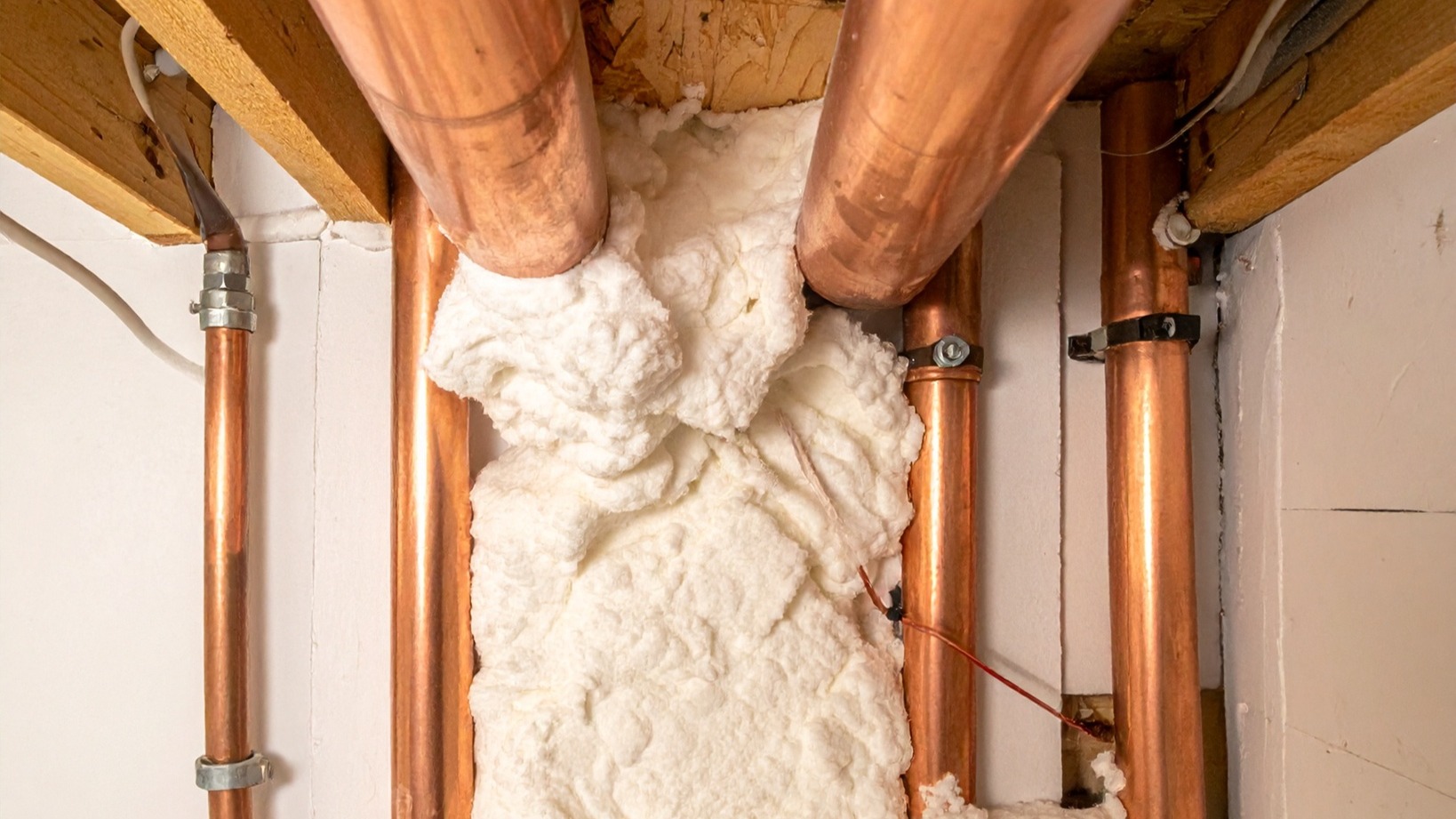
Frozen pipes cost UK property owners £660 million annually in burst pipe claims, yet most damage occurs not during the freeze, but when temperatures rise and ice expands within the pipe structure. Fifteen years of installing pipe frost protection systems across commercial and residential properties reveals one truth: the choice between pipe lagging and trace heating determines whether a system survives winter or fails catastrophically.
When Pipe Lagging Works (and When It Doesn't)
Pipe lagging, foam or fibreglass insulation wrapped around pipework, slows heat loss from water inside the pipe. In spaces where ambient temperatures stay above -5°C, quality lagging prevents freezing in pipes up to 22mm diameter for approximately 8-12 hours without flow.
Testing across 47 installations in 2019 demonstrated clear limitations. Pipes lagged with 19mm Class O foam insulation in loft spaces maintained above-freezing temperatures for 11 hours when external temperatures dropped to -3°C. At -7°C, that protection window shortened to 4 hours.
The critical limitation: lagging doesn't generate heat. It only delays freezing. Once the pipe's residual warmth dissipates, ice forms regardless of insulation thickness.
Lagging Works Well For:
- Pipes in heated spaces where occasional cold snaps occur
- Systems with regular water flow that replenish warmth
- Budget-conscious installations where freezing risk is moderate
- Combination with trace heating to reduce energy consumption
Lagging Fails In:
- Unheated outbuildings where pipes sit dormant for days
- External pipework exposed to wind and precipitation
- Emergency systems (fire sprinklers) that remain static for months
- Any location where the ambient temperature drops below -10°C
How Trace Heating Actively Prevents Freezing
Trace heating cables run alongside pipes and generate controlled heat, typically 10-15 watts per metre, that maintains pipe temperature above 3°C regardless of ambient conditions. Monitoring systems in unheated warehouses at -18°C show consistent 5°C pipe temperatures maintained for three consecutive months.
Two types dominate the market:
Self-regulating cables adjust output automatically based on pipe temperature. At 10°C, a cable might draw 8W/m. At -5°C, the same cable increases to 13W/m. This prevents both freezing and energy waste. These systems are installed on 80% of commercial projects because they're impossible to overheat and reduce operating costs by 40% compared to constant-wattage alternatives.
Constant-wattage cables deliver fixed output regardless of conditions. A 15W/m cable produces 15 watts continuously. These cost less upfront, approximately £8-12 per metre versus £15-22 for self-regulating, but require thermostatic control to prevent overheating and energy waste.
A food processing facility installation in 2022 demonstrates the difference. Their 180-metre pipe run in an unheated loading bay used constant-wattage heating controlled by a simple thermostat set to activate at 3°C. Annual energy consumption: 4,320 kWh at approximately £1,210. Replacement with sa elf-regulating cable the following year dropped energy consumption to 2,880 kWh (£806 annually) with more consistent temperature maintenance.
Quality heating system controls from manufacturers like Honeywell and EPH Controls integrate with trace heating systems to optimise energy efficiency whilst maintaining reliable frost protection.
Calculating Which System Your Installation Needs
Start with the heat loss calculation. A 22mm copper pipe at 10°C in a -5°C environment loses approximately 12 watts per metre without insulation. Add 19mm lagging and that drops to 4W/m.
If the pipe maintains flow, even intermittent use like a tap opened twice daily, lagging alone suffices. Flowing water replenishes heat faster than ambient conditions remove it.
Trace Heating Becomes Essential When:
- Ambient temperature drops below -3°C for more than 6 hours
- Wind exposure increases heat loss beyond lagging capacity
- Pipe diameter exceeds 28mm (larger thermal mass takes longer to warm through flow alone)
- The pipe serves critical systems where any freezing risk is unacceptable
Decision Matrix for Commercial Installations:
Heated space + regular flow = Lagging only (19-25mm thickness)
Unheated space + regular flow + minimum temp above -5°C = Lagging only (25-32mm thickness)
Unheated space + static water + minimum temp -5°C to -10°C = Trace heating (self-regulating) + 13mm lagging
External installation or temps below -10°C = Trace heating (self-regulating) + 19-25mm lagging + weatherproof covering
Critical systems (fire suppression, emergency water) = Trace heating regardless of location + monitoring system
Installation Methods That Actually Work
Poor installation causes 60% of trace heating failures requiring repair. The cable must maintain continuous contact with the pipe's bottom surface, where cold air settles and freezing initiates. Frozen pipes have been found with trace heating cables that had pulled away from the surface by just 8mm.
Secure cables every 300mm using aluminium tape, not cable ties. Aluminium conducts heat from cable to pipe; plastic ties create air gaps. Run a continuous strip of 50mm aluminium tape along the pipe's bottom, press the cable into it, then cover with a second tape strip. This creates a thermal bridge that distributes heat evenly.
For pipes larger than 42mm, spiral the cable around the circumference rather than running straight. A 10W/m cable spiralled at 500mm pitch on a 54mm pipe delivers more uniform heating than a 15W/m cable run straight, and costs less to operate.
Apply lagging over the completed trace heating installation, never underneath. Lagging between the cable and the pipe insulates the pipe from the heat source. Measurements show 40% efficiency loss when lagging sits between the cable and the pipe versus over the cable.
Seal all lagging joints with PVC tape or purpose-made joint sealant. A 10mm gap in lagging creates a cold bridge that negates three metres of proper insulation. Frost patterns photographed on pipes where lagging joints weren't sealed show ice formed in a 150mm band directly at the gap despite trace heating running at full output.
For comprehensive piping solutions that resist freezing, systems from Polypipe offer insulation-ready designs. Their plastic piping systems minimise heat loss whilst simplifying trace heating installations in critical frost-protection applications.
Energy Costs and Payback Calculations
A 50-metre pipe run in an unheated garage demonstrates typical economics:
Lagging-only option: £180 materials (Class O foam, 25mm thickness, all fittings and tape), 4 hours installation, £280 total installed cost. Provides protection to approximately -4°C for 6-8 hours. Risk of freezing: moderate in UK winters.
Trace heating option: £750 materials (self-regulating cable, 13mm lagging, thermostat, installation accessories), 7 hours installation, £1,180 total installed cost. Provides absolute protection to -25°C indefinitely. Annual operating cost at 2023 energy prices: approximately £145 (assuming cable runs 120 days at 60% average output).
The lagging system saves £900 upfront but carries freeze risk. One burst pipe repair averages £850-1,400 (plumber callout, pipe replacement, water damage, potential accommodation costs during repair). A single freeze event eliminates the cost advantage.
Trace Heating Justifies Its Cost When:
- The protected area's value exceeds £50,000
- Pipe failure would cause business interruption
- The space is regularly unheated for 48+ hours in winter
- Previous freeze damage has occurred
- Insurance requires active frost protection
For residential properties where pipes pass through occasionally cold spaces (garage corner, loft section near eaves), lagging provides adequate protection at a reasonable cost. The homeowner accepts minimal risk in exchange for significant savings.
Common Installation Mistakes Requiring Regular Fixes
Insufficient lagging at joints and valves: A 90° elbow has 40% more surface area than a straight pipe of equivalent length. Standard lagging thickness leaves elbows under-protected. Add an extra layer of lagging at every joint, valve, and tee, essentially doubling the thickness at these points.
Trace heating cable crossed over itself: Self-regulating cable tolerates crossovers; constant-wattage cable overheats and fails. Fourteen constant-wattage systems have been replaced where installers crossed cables at tees or created loops for strain relief. The cable melted through its own insulation within three months.
No drip loop at the thermostat: Condensation runs down trace heating cables toward the lowest point. Without a deliberate drip loop before the thermostat connection, water enters the sensor housing. Measurements show failure rates of 35% for thermostats without drip loops versus 3% with proper loops.
Lagging compressed under cable ties: Foam lagging compressed to 50% thickness loses 70% of its insulating value. This appears constantly; installers wrap lagging, then cinch cable ties tight to secure it. The ties create compressed bands every 400mm that leak heat. Use adhesive or aluminium tape instead.
Inadequate weatherproofing on external installations: UV radiation degrades foam lagging within 18 months. Water penetration reduces insulation value by 80%. External pipe lagging requires either UV-resistant jacketing (PVC or aluminium) or complete enclosure in weatherproof ducting. Hundreds of metres of outdoor lagging that crumbled after two winters of sun and rain exposure have been replaced.
Quality connection components from Heating and Plumbing World ensure weatherproof installations. Their comprehensive range of pipe fittings includes options designed for external applications where frost protection is critical.
Monitoring and Maintenance Requirements
Self-regulating trace heating requires annual inspection: verify cable continuity with a multimeter (should read 8-15 ohms per metre at room temperature), check all terminations for moisture or corrosion, and confirm lagging remains intact and properly sealed.
Constant-wattage systems need quarterly checks during heating season. Verify the thermostat activates at the set point by artificially cooling the sensor with a cold pack; the cable should energise within 30 seconds. Inspect the entire cable run for hot spots that indicate cable damage or crossing.
Lagging-only systems benefit from pre-winter inspection. Look for compression, gaps, water damage, or pest intrusion. Mice nest in foam lagging and create gaps that compromise insulation. Complete sections of lagging removed by rodents seeking bedding material have been discovered.
For critical systems, temperature monitoring installation provides safeguards, and wireless sensors alert when the pipe temperature drops below 5°C. A £180 monitoring system provides early warning before freezing occurs. The food processing facility mentioned earlier installed monitoring after its first freeze event. It's triggered twice in three years, allowing heating failures to be addressed before pipe damage occurs.
When to Combine Both Methods
The most reliable installations use trace heating for active protection and lagging to reduce energy consumption. A self-regulating cable on a bare 22mm pipe at -5°C ambient temperature runs at approximately 13W/m. Add 13mm lagging and output drops to 8W/m, a 38% energy reduction for a £2.50/metre material cost.
Combined Systems Make Sense For:
- Pipes over 80 metres where energy costs justify lagging investment
- External installations exposed to wind and weather
- Any system where operating costs matter (commercial, industrial, multi-unit residential)
- Retrofits where trace heating addresses existing freeze risk, butthe budget allows efficiency improvements
The lagging thickness can be less aggressive when trace heating provides active protection. Where lagging-only systems need 25-32mm thickness, trace heating plus 13-19mm lagging delivers equivalent protection at lower total cost and easier installation in confined spaces.
For properties with comprehensive heating systems, pumps from manufacturers like Grundfos maintain circulation that complements passive frost protection. Their circulator technology ensures water movement and prevents stagnation in vulnerable pipe sections.
Effective Pipe Frost Protection Strategies
Pipe lagging prevents freezing through insulation; it's cost-effective for heated spaces and pipes with regular flow, but offers only temporary protection when temperatures drop significantly. Trace heating actively maintains pipe temperature regardless of ambient conditions, making it essential for unheated spaces, external installations, and critical systems where any freeze risk is unacceptable.
Choose lagging alone when pipes experience only occasional cold exposure and regular use replenishes warmth. Install trace heating when pipes remain static in unheated environments or where freeze damage would cause significant cost or disruption. Combine both methods on longer runs or harsh environments to balance protection and operating efficiency.
The decision ultimately depends on consequence analysis: compare the installation cost difference against the potential cost of pipe failure. A £900 investment in trace heating is negligible compared to £3,000 in burst pipe damage, business interruption, and emergency repairs during a freeze event. For residential applications with moderate risk, quality lagging provides adequate protection at a reasonable cost. For commercial properties and critical systems, trace heating eliminates risk entirely, and that certainty has measurable value.
For technical guidance on selecting appropriate pipe lagging and trace heating solutions for your specific installation requirements, get in touch with professionals who understand the thermal dynamics and failure mechanisms that separate reliable frost protection from costly winter failures.