

Plumber's Mait: Multipurpose Sealing Compound Applications
Every heating and plumbing engineer knows the frustration of a leak that won't quit. You've tightened the fitting, checked the thread, and still – drip, drip, drip. Sometimes the solution isn't another wrench turn, but the right sealing compound. That's where Plumber's Mait comes in.
This multipurpose sealing compound has been a staple on job sites for decades, and for good reason. It's a non-setting putty sealant that creates watertight seals in applications where traditional methods fall short. Unlike PTFE tape or jointing compound, Plumber's Mait stays pliable, making it ideal for situations where you need flexibility, immediate pressure resistance, and the ability to dismantle joints later without destructive force.
Understanding when and how to use this material separates efficient installations from callbacks. Heating and Plumbing World stocks quality sealing compounds for professional installers who understand that proper material selection prevents problems before they start. Let's break down the technical properties, practical applications, and common mistakes that can turn a simple seal into a site headache.
What Makes Plumber's Mait Different
Plumber's Mait compound is a non-setting, non-hardening putty-based sealant. This fundamental characteristic defines its use cases. Where silicone cures and PTFE tape compresses, Plumber's Mait maintains its putty-like consistency indefinitely.
The compound typically contains a blend of mineral oils, inert fillers, and plasticisers. It's designed to resist water, mild acids, and alkalis, making it suitable for most domestic and light commercial plumbing applications. The material won't shrink, crack, or become brittle over time – a critical advantage in systems subject to thermal cycling.
Temperature tolerance sits between -20°C and +100°C for most formulations. This range covers the vast majority of heating and plumbing scenarios, though it's worth checking manufacturer specifications for extreme applications. The compound remains pliable across this spectrum, unlike some sealants that become rigid in cold conditions or degrade under sustained heat.
Think of this non-setting putty sealant like modelling clay that never dries out – it fills gaps, moves with the joint, and can be removed cleanly years later. Traditional silicone, by contrast, sets hard and tears when you try to remove it. That permanent bond is great for bath edges, but terrible for mechanical joints you might need to service.
One major advantage: immediate pressure resistance. You don't need to wait for curing. Once applied correctly, the joint can be pressurised straight away. On time-sensitive commercial jobs, this saves hours compared to silicone-based alternatives.
Core Applications in Heating and Plumbing Systems
Sealing Sink and Basin Wastes
This is where most engineers first encounter Plumber's Mait. When connecting waste traps to sink outlets, the compound creates reliable waste trap sealing between the trap and the waste fitting. Roll a thin rope of the putty, press it around the waste thread or seating face, then tighten the connection.
The beauty here is adaptability. Not every sink outlet is perfectly machined, and older installations often have worn seating faces. Plumber's Mait fills these imperfections without the rigidity that causes cracking under movement. Kitchen sink waste connections, subject to frequent vibration from waste disposal units, particularly benefit from this flexibility.
I once watched an apprentice struggle for twenty minutes trying to seal a waste trap with silicone on a stainless steel sink. The sink flexed every time someone leaned on it, breaking the silicone seal. We scraped it off, applied a 4mm rope of Plumber's Mait compound, tightened the connection, and it never leaked – even two years later when I passed the site again.
Apply a bead approximately 3-4mm thick around the waste outlet before inserting the trap. Avoid over-tightening – the putty needs slight compression to form the seal, but excessive force simply squeezes it out without improving performance.
Bath and Shower Tray Installations
Sealing bath waste outlets on acrylic or steel baths presents a different challenge. The material flexes under load, and rigid sealants can crack or lose adhesion. Plumber's Mait accommodates this movement while maintaining a watertight seal.
Form a ring of compound around the waste outlet on the underside of the bath or tray. When you tighten the waste fitting from above, the putty compresses to fill any gaps between the outlet and the bath surface. This method works particularly well with older baths where the waste hole may have enlarged slightly over time.
Tank Connector Seals
When installing tank connector seals for cold water storage tanks, particularly older galvanised or plastic tanks, achieving a perfect seal can be tricky. The tank wall may not be perfectly flat, or the connector thread might not align precisely.
Apply the Plumber's Mait compound to both sides of the tank wall – between the connector body and the internal tank surface, and between the backnut and the external surface. This dual application ensures the compound fills any irregularities in the tank material while providing a cushioned seal that won't crack if the tank wall flexes.
This approach is especially valuable when working with plastic tanks in loft spaces. Temperature fluctuations cause expansion and contraction, and a non-setting compound maintains the seal through these cycles far better than rigid alternatives.
Temporary Seals and Testing
Here's an application many engineers overlook: temporary sealing during pressure testing. When commissioning a system or isolating sections for testing, you sometimes need to cap off an outlet temporarily. Plumber's Mait can create quick temporary pressure seals that are pressure-resistant and easily removed afterwards.
Press the compound into the open end of a pipe or fitting, then cap it with a test plug or blank. The putty prevents water ingress during the test, and you can simply peel it away when you're ready to complete the installation. This saves time compared to fitting and removing temporary caps with PTFE tape.
Where Plumber's Mait Shouldn't Be Used
Understanding the limitations is as important as knowing multipurpose sealing applications. This compound isn't a universal solution, and using it incorrectly causes more problems than it solves.
Threaded Pipe Joints Under High Pressure
Don't use Plumber's Mait on threaded pipe joints in pressurised systems. It's not designed for this application and won't provide a reliable seal on male-female pipe threads. PTFE tape or liquid thread sealant is the correct choice here.
The compound lacks the thread-locking properties needed for rotating joints. When you tighten a threaded connection, you need the sealant to fill the thread valleys and resist the rotational forces. Plumber's Mait simply squeezes out without providing adequate sealing in these conditions.
Gas Installations
Never use Plumber's Mait on gas systems. It's not approved for gas applications and won't meet the requirements of BS 6891 or current Gas Safe regulations. Gas installations require specific sealants and jointing methods – typically PTFE tape for threaded connections or compression fittings with proper olives.
Using an unapproved sealant on gas work isn't just poor practice; it's illegal and dangerous. The compound's resistance to gas permeation hasn't been tested or certified, and the consequences of a gas leak far outweigh any convenience.
Potable Water Contact in High-Temperature Systems
While Plumber's Mait is generally safe for cold water applications, check the manufacturer's approval for potable water contact, especially in hot water systems. Some formulations aren't rated for continuous contact with drinking water above certain temperatures.
For hot water cylinder connections or heating system components where the compound might contact water above 60°C, verify compliance with WRAS (Water Regulations Advisory Scheme) or equivalent standards. Gledhill cylinders and other quality manufacturers specify approved sealants in their installation instructions – follow these recommendations.
Solvent-Bearing Plastic Pipes
Some plastic pipe systems use solvent cement for joints. Don't apply Plumber's Mait to these connections – the compound can interfere with the solvent welding process, preventing a proper chemical bond. The result is a weak joint that may fail under pressure.
Similarly, avoid using the compound on push-fit connections unless specifically sealing around the external joint face for secondary water resistance. The internal O-rings in push-fit systems provide the primary seal, and introducing putty can actually prevent proper insertion depth or damage the O-ring.
Application Techniques for Reliable Seals
Getting the best performance from the non-setting putty sealant requires proper application. Here's the method that delivers consistent results.
Surface Preparation
Start with clean, dry surfaces. Wipe away any old sealant, grease, or debris. The compound adheres better to clean surfaces, and contaminants can prevent proper sealing. A quick wipe with a clean rag is usually sufficient – you don't need solvents or aggressive cleaning.
For porous surfaces like unglazed ceramics, slightly dampening the surface can help the compound adhere initially, but ensure no standing water remains. Excess moisture can prevent the putty from forming a cohesive seal.
Forming and Applying the Compound
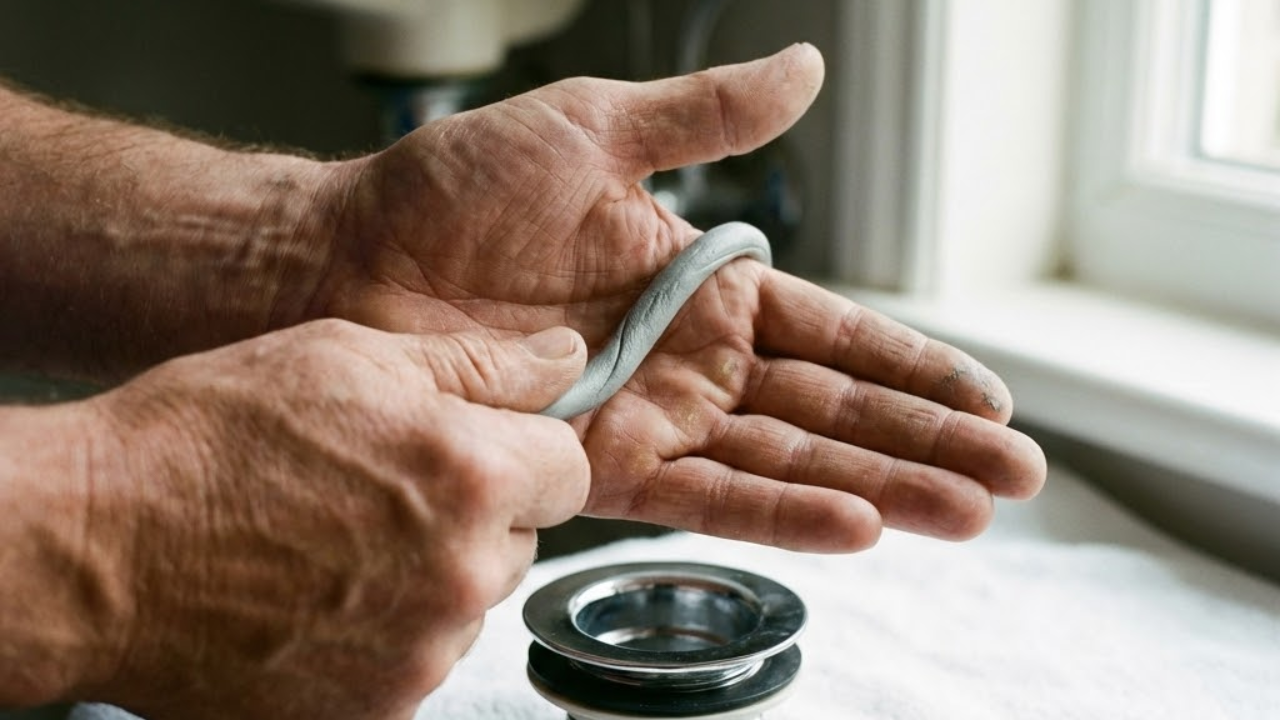
Break off the amount you need and roll it between your palms to form a rope or snake of consistent diameter. For most multipurpose sealing applications, 3-5mm diameter works well. The rope should be long enough to form a complete ring around the joint without gaps.
Press the rope firmly onto the sealing surface, ensuring good contact along its entire length. Don't leave gaps or thin spots – these become leak paths. For circular applications like sink waste connections, overlap the ends slightly and blend them together to create a continuous seal.
Joint Assembly
Bring the joint together steadily, applying even pressure. You should see the compound compress and begin to squeeze out slightly around the joint – this indicates proper compression. Tighten the connection according to the fitting manufacturer's recommendations, but avoid excessive force.
If large amounts of compound squeeze out, you've applied too much. If none appears at the joint line, you might need more material or greater tightening. The ideal result shows a thin, consistent bead of excess around the joint perimeter.
Removing Excess Material
Once the joint is assembled and tightened, trim away excess compound with a putty knife or scraper. This isn't just cosmetic. Excess material can trap water or debris, leading to staining or hygiene issues. Wipe the joint clean with a dry cloth.
The compound remains pliable indefinitely, so you can perform this cleanup immediately without waiting for curing. Any material that gets on your hands or tools wipes away easily with a dry cloth or paper towel.
Comparing Plumber's Mait to Alternative Sealants
Versus PTFE Tape
PTFE tape excels on threaded pipe joints where you need a seal that can withstand rotation during assembly. It's thin, doesn't add significant bulk, and works well on tapered threads. However, it's useless for sealing flat surfaces or filling gaps in irregular joints.
Plumber's Mait provides gap-filling capability and flexibility that PTFE tape can't match. For waste trap sealing and similar applications where you're sealing a compression joint rather than a threaded pipe connection, the compound performs better. Think of PTFE tape as a thread lubricant and seal enhancer, while Plumber's Mait is a gap-filling gasket material.
Versus Silicone Sealant
Silicone creates a strong, waterproof bond once cured, and it's excellent for sealing around baths, shower trays, and other fixtures where you need a permanent, flexible seal. However, it requires 24 hours or more to cure fully, and joints can't be disturbed during this period.
Plumber's Mait offers immediate pressure resistance and remains permanently removable. If you need to dismantle a joint sealed with silicone, you're cutting and scraping. A joint sealed with the compound comes apart cleanly with no damage to the components. For installations where future maintenance access matters, this is a significant advantage.
The trade-off? Silicone provides better long-term adhesion to non-porous surfaces and superior resistance to mould growth in wet environments. For visible sanitary seals around baths and basins, silicone remains the better choice. For hidden mechanical joints, Plumber's Mait often wins.
Versus Jointing Compound
Liquid jointing compounds (paste-type thread sealants) work well on metal pipe threads, particularly in heating systems. They provide good sealing and some thread lubrication, and they're easier to apply to small threads than PTFE tape.
However, they're designed specifically for threaded connections and don't work well on compression joints or flat sealing surfaces. Plumber's Mait's putty consistency makes it better for filling larger gaps and accommodating movement, while jointing compounds excel in the tight tolerances of properly cut pipe threads.
For a typical heating system, you'd use jointing compound on the threaded connections at Danfoss radiator valves and Grundfos pump unions, but Plumber's Mait compound for tank connector seals or overflow fittings where you need gap-filling capability.
Troubleshooting Common Issues
Leaks After Initial Installation
If a joint sealed with the non-setting putty sealant leaks immediately after installation, you've either used insufficient material or failed to achieve adequate compression. Drain the system, disassemble the joint, and inspect the compound.
If the putty shows uneven compression or gaps, you need more material or better distribution. Reform the seal with a fresh application, ensuring complete coverage. If the compound appears adequately compressed but the joint still leaks, check for damage to the mating surfaces – cracks, chips, or deep scratches that exceed the compound's gap-filling capability.
Delayed Leaks
Leaks that develop days or weeks after installation often indicate movement or thermal cycling issues. The joint may be subject to vibration, or temperature changes may be causing expansion and contraction beyond the compound's capacity.
Check the joint for looseness – thermal cycling can cause threaded connections to back off slightly. Re-tighten if necessary. If the joint remains tight but continues to leak, the compound may have been displaced by excessive movement. This suggests the application isn't suitable for Plumber's Mait, and you need a different sealing method – perhaps a proper compression joint with an O-ring, or a more rigid connection that prevents movement.
Difficulty Removing Old Compound
While Plumber's Mait remains pliable, it can become embedded in rough surfaces or contaminated with debris over time, making removal challenging. Use a plastic scraper to avoid damaging the surface, and work patiently to peel away the material.
For stubborn residue, a cloth dampened with white spirit or paraffin can help soften the compound for easier removal. Avoid aggressive solvents that might damage plastic components. Once removed, clean the surface thoroughly before applying fresh compound.
Storage and Shelf Life
Plumber's Mait comes in tubs or wrapped blocks. Store it in a cool, dry place with the lid or wrapper properly sealed. The compound can dry out if exposed to air for extended periods, becoming crumbly and losing its sealing properties.
Properly stored, the material has an indefinite shelf life. If you open a tub and notice the surface has formed a skin, simply remove this layer – the compound underneath should remain usable. If the entire contents have hardened, the material is past its useful life and should be replaced.
Keep your stock fresh by rotating inventory. Mark tubs with the date opened, and use older stock first. A dried-out compound won't seal effectively, and trying to save a few pounds on old material can cost you hours in callbacks.
Regulatory Compliance and Standards
When using Plumber's Mait in domestic or commercial installations, ensure the product meets relevant standards for your application. For potable water systems, look for WRAS approval or equivalent certification confirming the material is safe for drinking water contact.
Check the manufacturer's technical data sheet for temperature ratings, chemical resistance, and approved applications. Don't assume all formulations are identical – different manufacturers may use different base materials with varying properties. For installations with Gledhill's unvented cylinders or other quality hot water storage systems, ensuring WRAS-approved sealants maintains warranty compliance and system safety.
For commercial installations, particularly in healthcare, food service, or pharmaceutical facilities, you may need to demonstrate that all materials meet specific hygiene or safety standards. Keep product data sheets and certification documents available for inspection.
Practical Tips from the Job Site
Here's what separates experienced engineers from apprentices when working with sealing compounds:
Keep your hands dry. Wet hands make the compound difficult to work with and prevent proper adhesion. Have a clean, dry cloth handy.
Don't reuse compound. Once you've removed it from a joint, bin it. Contamination from the old joint reduces effectiveness, and fresh material is cheap insurance against callbacks.
Size matters. Too little compound and you'll get leaks. Too much and you're wasting material and creating cleanup work. Experience teaches the right amount, but start with a 4mm rope and adjust from there.
Temperature affects workability. In cold conditions, the compound becomes stiffer and harder to work. Warm it slightly in your hands before application. In hot weather, it becomes softer – work quickly before it becomes too pliable to handle cleanly.
Combine methods when appropriate. Plumber's Mait isn't always a standalone solution. On some installations, you might use a rubber washer for primary sealing and add compound to fill minor imperfections. Understanding when to combine techniques comes with experience.
Environmental Considerations
Like all petroleum-based products, Plumber's Mait should be disposed of responsibly. Small amounts of waste compound can go in general waste, but larger quantities should be treated as chemical waste and disposed of according to local regulations.
Avoid washing excess compound down drains – it can contribute to blockages, particularly in older drainage systems. Wipe excess material onto paper towels or rags for disposal.
Some manufacturers now offer alternative formulations with reduced environmental impact. If you're working on projects with strict environmental requirements or green building certifications, check whether eco-friendly versions are available and suitable for your application.
When to Stock Plumber's Mait
Every service van should carry at least one tub of the Plumber's Mait compound. It's one of those materials that sits unused for weeks, then saves a job when you need it. The cost is minimal compared to the value of having the right material on hand when a standard seal won't work.
For contractors focusing on bathroom installations, kitchen fitting, or maintenance work, it's essential stock. If you're primarily doing new-build heating systems with predominantly compression and push-fit connections, you'll use it less frequently – but it's still worth having for those awkward tank connector seals or temporary pressure seals during commissioning.
Quality matters less than you might think with this product. Most formulations perform similarly because the base chemistry is straightforward. Buy from reputable suppliers and you'll get reliable material at competitive prices.
Conclusion
Plumber's Mait isn't the most glamorous product in your toolkit, but it solves specific sealing challenges that other materials can't handle. Its non-setting nature, immediate pressure resistance, and gap-filling capability make it invaluable for waste trap sealing, tank connector seals, and situations where you need a flexible, removable seal.
Understanding where it works – and critically, where it doesn't – prevents misapplication and the callbacks that follow. It's not for threaded pipe joints, gas installations, or applications requiring permanent adhesion. But for compression joints, irregular surfaces, and installations subject to movement or thermal cycling, it's often the best choice for multipurpose sealing applications.
The difference between a reliable seal and a leak often comes down to using the right material for the application. Keep the non-setting putty sealant in your van, understand its properties, and you'll have a solution ready when standard methods fall short. That's what separates efficient installations from repeated site visits.
For technical advice on specific applications or to stock up on quality sealing compounds, contact our technical team for guidance.