

Plumbing Fitting Mistakes That Cause Returns and Site Delays
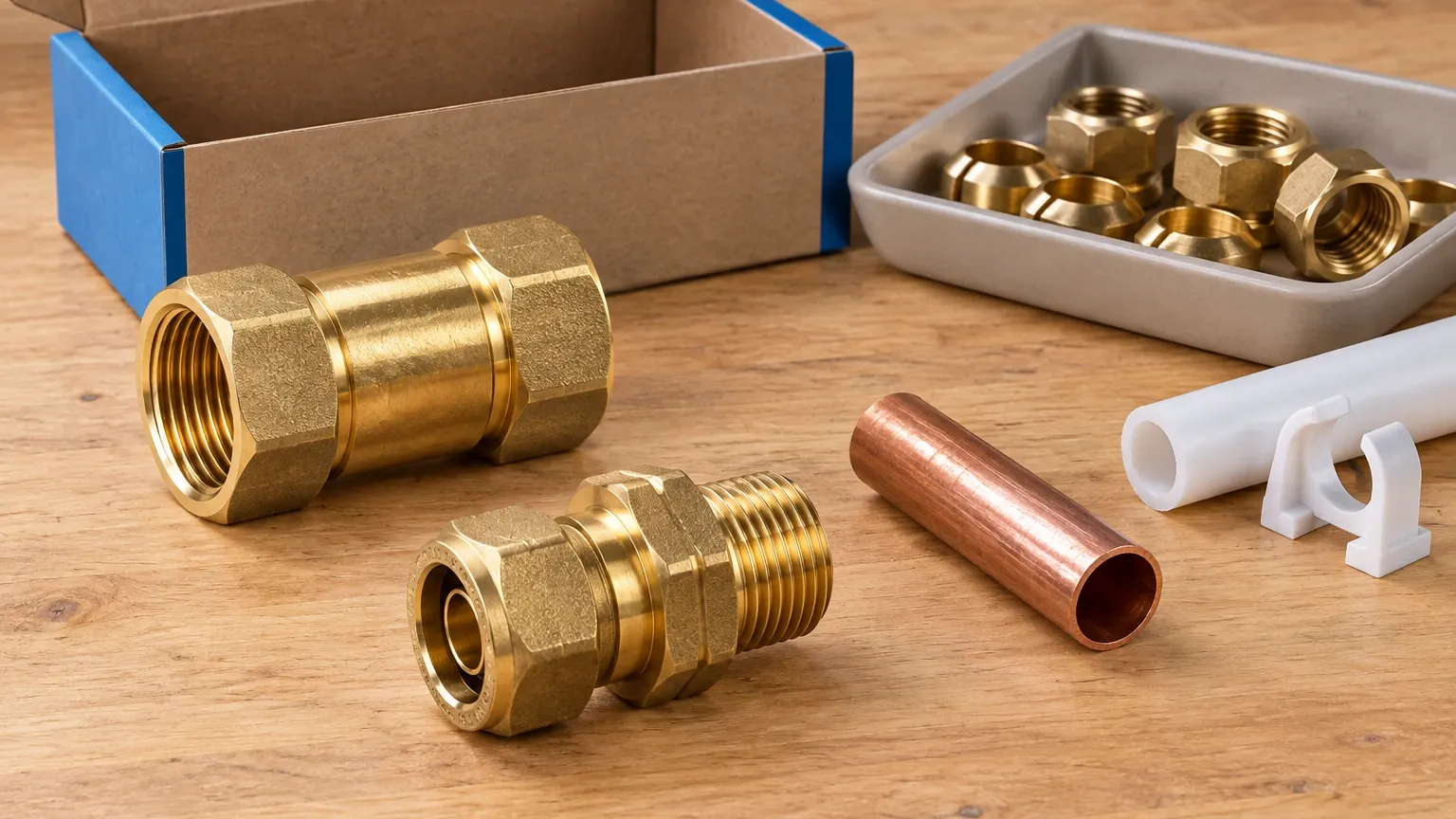
A fitting can be the right size and still be the wrong purchase. Its connections may suit a different pipe system, a required component may be missing, or its valve mechanism may not do the job intended. Avoiding plumbing fitting mistakes means understanding where the mismatch occurred, rather than simply ordering another similar-looking part.
Start by separating three situations: a product that differs from the order, an order that specified the wrong product, and a correctly supplied fitting associated with a fault after installation. Each needs a different response. Confusing them can produce another return without resolving the cause of the site delays.
When the Size Matches but the Pipe System Does Not
A size such as 22mm does not establish compatibility by itself. The fitting also needs to accept the identified pipe material and system. A connection designed for one plastic pipe range should not be assumed suitable for another because both pipes have the same stated outside diameter. The supported pipe types and joint arrangement matter together.
Push-fit describes a connection that grips and seals around an inserted pipe. Compression describes a connection in which a nut compresses a sealing ring, called an olive, around the pipe. Those mechanisms explain why changing the joint type can change the supporting components needed, even when the size remains unchanged.
The service matters too: drinking water, hot-water supply and central heating are not interchangeable applications. In England and Wales, Regulation 4 of the Water Supply (Water Fittings) Regulations 1999 requires water fittings within its scope to be of appropriate quality and standard and suitable for their circumstances of use. That requirement does not establish the suitability of a particular model.
For a proposed substitute, compare its stated application and operating limits with the actual system requirements. A physically matching fitting may still be unsuitable for the temperature, pressure or water service involved. Equally, the failed fitting's presence is not proof that it was suitable originally; copying it can preserve the reason it failed.
Mixed Ends Can Belong to One Adaptor
An adaptor connects different connection types or systems. One body can legitimately have a compression end and a threaded end, or another specified combination. Describing two joint types therefore does not automatically mean two fittings are needed. Splitting a single mixed-end adaptor into separate purchases can introduce unnecessary connections or leave the required transition missing.
Suppose a replacement needs to connect a measured pipe to a threaded equipment port. The pipe end and equipment end answer different questions. The first needs the correct pipe connection; the second needs the correct thread specification. Keeping both descriptions attached to one adaptor makes the intended transition clear without treating either end as an alternative.
A thread is the spiral ridge that allows matching parts to screw together. Male threads are external; female threads are internal. BSP means British Standard Pipe, a thread family, but that abbreviation alone may leave the exact form unresolved. Parallel and tapered threads need the specified mating arrangement and sealing method; a similar appearance is not enough.
The flat-sided section used by a spanner is not a thread measurement. Nor should a pipe diameter be substituted for a nominal thread designation. If an adaptor failed to connect, identify which end disagreed with the requirement. Replacing the whole description with 'wrong size' loses the distinction needed to correct the next order.
An Insert Must Match More Than the Diameter
A pipe insert is a support fitted inside a pipe end where the system requires it. It helps the pipe retain the shape needed by the connection. Omitting required support can compromise the joint, but adding any insert marked with the same size is not a reliable correction. The insert must be specified for the pipe and connection concerned.
Plastic pipes with the same outside diameter can have different internal dimensions or system requirements. Insert designs can also differ between connection arrangements. A component intended for one arrangement should not be transferred to another simply because it enters the pipe. Use the identified system's instructions to establish the appropriate support and any restrictions on the fitting.
This makes 'insert missing' an incomplete return diagnosis. Was a required insert omitted from the parts request, was the specified component absent from the delivery, or was the wrong insert selected? Those are separate failures. Recording which happened prevents a repeat order from supplying another fitting while leaving the supporting component unresolved.
Missing Components and Excluded Components Are Different
A correct main body does not necessarily make a complete set of parts for the work. Nuts, olives, washers or other seals may be included, supplied separately or specific to the connection. Compare the stated package contents with what the work requires. A product photograph showing an assembled item should not override an explicit description of what is supplied.
Our plumbing stock includes a pressure-reducing valve described as having a gauge port but no gauge. The port is a connection point; it is not the measuring instrument itself. That distinction illustrates how an expected accessory can become a site delay without anything being missing from the product as sold.
Existing nuts and seals introduce a different question. Their presence does not establish that they are suitable for a replacement body or fit for reuse. Have the required replacement components established for the selected product rather than assuming that everything attached to the old fitting will transfer. This is a completeness decision, not a reason to buy unrelated extras.
Valve Mechanism Is Not a Bore Measurement
Valve descriptions combine several independent properties. The mechanism explains how the valve opens and closes. The connection describes how it joins the pipe. The bore is the internal flow passage. Matching one property does not settle the others, so '22mm valve' leaves more unresolved than the pipe size alone suggests.
Compare a 22mm lever valve with a 22mm gate valve. A lever ball valve operates a rotating ball; a gate valve raises or lowers an internal gate. Gate does not universally mean restricted bore, and lever does not universally mean full bore. Our full bore lever valve and compression gate valve are useful examples of descriptions that need reading in full, not interchangeable size labels.
If the requirement specifies a full-bore passage, retain that requirement when comparing alternatives. Also consider the space needed to operate the chosen handle and the replacement's dimensions. A valve can connect to the pipe yet be awkward or impossible to operate in the available space. Changing mechanism is a specification decision, not simply a response to a seized handle.
A Reducer Needs Both Sizes and the Right Arrangement
A reducer joins connections of different sizes. If the requirement is to connect 22mm pipe to 15mm pipe, a straight 22mm coupling does not provide that reduction. Both sizes belong in the reducer description, together with the connection types. Otherwise, an order can correctly name the larger end while leaving the smaller end impossible to connect.
Different reducing arrangements can occupy different amounts of space. A separate reducer and coupling may not have the same assembled length as a single reducing fitting. Where existing pipes must remain in position, compare the relevant dimensions rather than assuming that an extra adaptor will fit the gap. Any arrangement change needs assessment before it becomes a purchasing substitution.
Receiving Checks Should Identify the Kind of Error
Check delivered goods against the order and the agreed requirement before they are needed. Compare the product reference, connection descriptions, quantities and stated contents. Keep packaging and small components together, and protect open ends from dirt. Examine accessible features without dismantling the fitting or trying it on live pipework merely to see whether it fits.
If the product differs from the order, record the difference with the delivery reference and clear photographs. If it matches the order but not the requirement, correct the specification before reordering. Ask about the applicable return arrangements rather than assuming that an opened, altered or used product can be exchanged. No universal return outcome follows from discovering a mismatch.
Do not remove an installed fitting simply to obtain a comparison sample. Identification can begin with accessible markings, existing records and photographs. Removal or disturbance needs suitable assessment and safe isolation by someone competent to do the work. An old body already removed safely can provide evidence, but it is not a prerequisite for every stock enquiry.
Use the Return Reason to Prevent Recurrence
Keep the original reason for a rejected purchase beside the corrected selection. 'Wrong threaded end; pipe connection correct' is more useful than 'wrong fitting'. Likewise, 'required insert not ordered' points to a different correction from 'insert supplied does not match pipe system'. The next buyer can then see what changed and avoid copying the failed reference.
A leak after installation should not automatically be recorded as an ordering error or defective stock. Pipe damage, incomplete engagement, movement or another installation issue may need investigation. Retain the observed symptoms separately from the confirmed cause. Reordering the same body addresses a product replacement; it does not establish why the joint failed or prevent that failure returning.
Conclusion
Correct the cause of the wrong purchase, not just its product number. A compatibility error, incomplete package expectation and delivery discrepancy need different remedies. Once the requirement is settled, use our product descriptions to select the stock required, keeping the return reason with the corrected order. Installation decisions remain separate from buying the parts.