

Portable Boilers for Temporary Commercial Heating
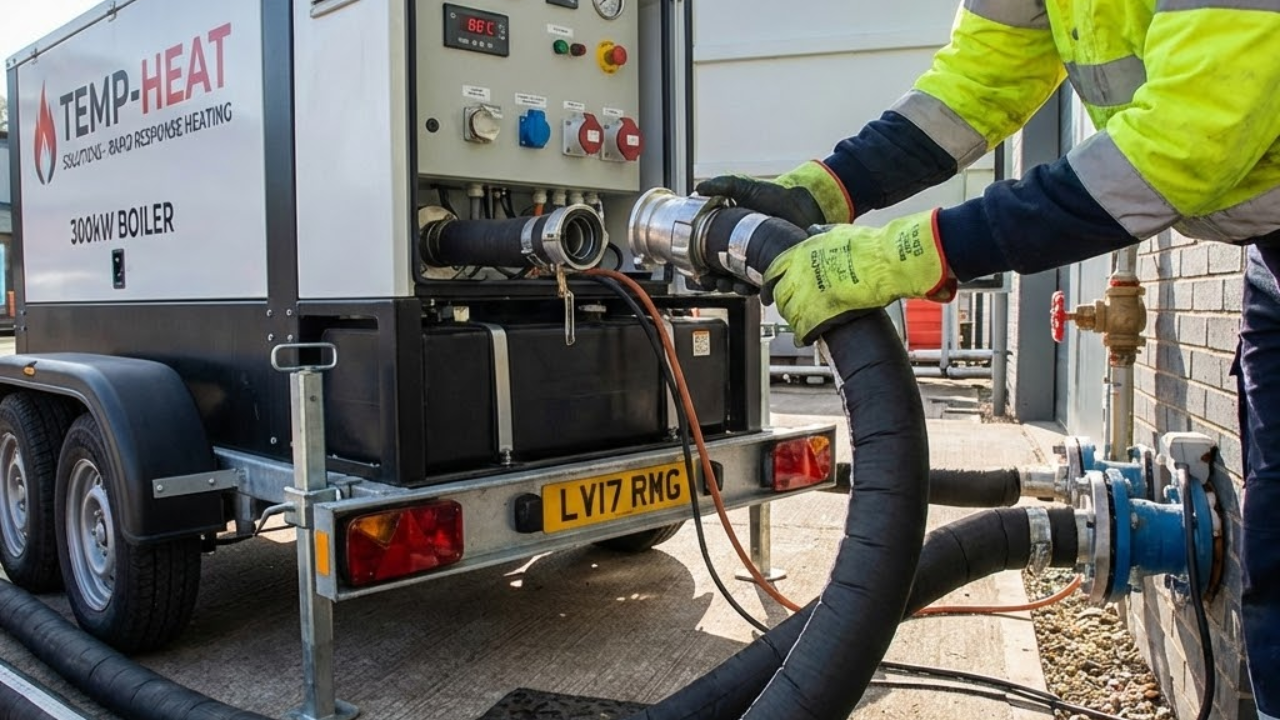
When a commercial heating system fails in the middle of winter, or a building renovation demands temporary climate control, portable boilers become the difference between operational continuity and costly downtime. These mobile heating units deliver immediate warmth to factories, hospitals, construction sites, and commercial buildings without the delays of permanent installation.
Portable commercial boilers aren't just scaled-down versions of fixed plant equipment. They're engineered for rapid deployment, designed to operate in variable conditions, and built to maintain precise temperature control whilst being moved between sites. For facilities managers and heating engineers, understanding their capabilities means being prepared when permanent systems fail or temporary heating becomes non-negotiable. Heating and Plumbing World supplies temporary heating solutions and the specialist components required for reliable portable boiler installations.
What Makes a Boiler Truly Portable
A portable boiler combines the core heating capacity of a fixed unit with mobility features that allow quick setup and relocation. These aren't compact domestic boilers on wheels—they're commercial-grade heating plants mounted on trailers, skids, or within containerised enclosures.
Key characteristics include:
- Trailer-mounted or skid-mounted designs that enable transport by flatbed lorry or towing
- Self-contained fuel systems with integrated tanks for oil, gas, or dual-fuel operation
- Modular connections for rapid hookup to existing heating circuits via flexible hoses
- Weatherproof housings that protect components during outdoor operation
- Built-in controls that allow autonomous operation without extensive commissioning
The output range varies dramatically. Small portable units start around 50kW—suitable for warming a construction site office—whilst large containerised boiler houses can deliver 3-5MW, enough to heat an entire hospital wing during an emergency outage.
When Temporary Heating Becomes Essential
Portable boilers serve distinct scenarios where permanent heating infrastructure either doesn't exist yet or has become temporarily unavailable. Understanding these applications helps engineers specify the right capacity and configuration.
Emergency breakdown cover represents the most urgent use case. When a primary boiler fails during peak demand, a portable unit maintains building temperatures whilst repairs proceed. Hospitals, care homes, and food processing facilities can't tolerate extended heating outages—portable boilers provide immediate backup without waiting for parts or lengthy repairs.
Planned maintenance and upgrades create predictable heating gaps. Replacing an ageing boiler plant in an occupied commercial building requires continuous heating during the changeover. A temporary boiler maintains comfort whilst contractors remove old equipment, modify pipework, and commission new systems—often over several weeks.
Construction and fit-out projects need heating before permanent systems go live. New builds require warm, dry conditions for plastering, painting, and floor laying. Portable boilers provide controlled heat that accelerates drying times and prevents cold-weather delays. They're particularly valuable during winter construction when unheated buildings would halt progress.
Seasonal demand spikes sometimes exceed permanent boiler capacity. A university adding temporary accommodation during peak enrolment, or a warehouse converting cold storage to ambient space, might need supplementary heating for just a few months. Portable units augment existing systems without permanent infrastructure investment.
Industrial process heating for temporary operations—think concrete curing, chemical processing during plant expansion, or thermal treatment during remediation work—demands precise temperature control that portable boilers can deliver on short notice.
Sizing Portable Boilers for Commercial Applications
Getting capacity right matters more with temporary installations because oversized units waste fuel and create temperature swings, whilst undersized boilers can't maintain setpoints during cold snaps. The calculation follows the same principles as fixed plant design but demands faster assessment.
Start with heat loss calculations for the space requiring temporary heating. For existing buildings, check original design documentation or use simplified methods: multiply floor area by typical heat loss factors (80-100 W/m² for modern commercial buildings, 120-150 W/m² for older structures with poor insulation).
Think of sizing a portable boiler like selecting the right power generator for a site. Just as an undersized generator causes voltage drops and equipment failures, an undersized boiler leaves occupants cold. Conversely, an oversized generator wastes fuel idling, and an oversized boiler cycles inefficiently.
A 2,000 m² warehouse built in the 1980s might require 2,000 × 120 = 240 kW to maintain 18°C during winter conditions. Add a 20% margin for extreme weather and heat-up capacity, bringing the requirement to roughly 290 kW. You'd specify a 300 kW portable unit or combine smaller units for redundancy.
Consider distribution losses when connecting temporary boilers to existing circuits. Long hose runs between the portable unit and building entry points lose heat—particularly if they're not adequately insulated. For every 10 metres of uninsulated 100mm pipe carrying 80°C water, expect losses around 1-2 kW. Account for this in your heat loss calculation.
Factor in altitude and ambient conditions at the installation site. Boiler efficiency drops at higher elevations where combustion air is thinner, and extreme cold affects fuel viscosity and startup reliability. If you're deploying a unit to a Scottish hillside in January, specify slightly higher capacity than the heat loss calculation suggests.
Think about redundancy requirements for critical applications. A hospital maintaining emergency heating during boiler replacement might run two 150 kW portable units instead of one 300 kW model—providing N+1 redundancy if one fails. The added cost of dual units pales against the risk of losing heating in patient areas.
Fuel Options and Practical Considerations
Portable boilers run on various fuels, each with distinct advantages and site-specific constraints. Choosing the wrong fuel type creates operational headaches that undermine the speed advantage of temporary heating.
Natural gas offers clean combustion and low running costs but requires mains connection or bottled LPG supply. If the building already has a gas meter with adequate capacity, connecting a portable gas boiler is straightforward—run a temporary gas line with appropriate pressure regulation. For sites without gas infrastructure, LPG becomes the alternative, stored in bulk tanks positioned near the boiler. LPG delivery logistics and tank rental costs need factoring into project budgets.
Heating oil (kerosene or gas oil) provides fuel independence, stored in integral tanks or temporary bulk tanks. Oil-fired portable boilers suit remote sites where gas isn't available. The trade-off involves fuel delivery coordination—running out of oil mid-operation stops heating immediately. Calculate consumption rates carefully: a 300 kW oil boiler running continuously at 80% load consumes roughly 30 litres per hour. A 1,000-litre tank provides about 33 hours of operation, meaning daily refills during peak demand.
Dual-fuel capability adds operational flexibility, allowing the boiler to switch between gas and oil based on availability or cost. This matters most on long-term temporary installations where fuel prices fluctuate or supply interruptions occur.
Electric boilers avoid combustion entirely, using immersion elements to heat water. They're cleaner and simpler but limited by electrical supply capacity. A 100 kW electric boiler draws roughly 145 amps at 400V three-phase—more than many temporary site supplies can provide. Electric portables work best for smaller applications or where three-phase power is readily available.
Installation and Connection Logistics
Speed matters with temporary heating, but rushing connections creates leaks, inefficient operation, and safety risks. Proper installation balances urgency with engineering discipline.
Site preparation begins before the boiler arrives. Identify a level, stable surface close to the building requiring heat—ideally within 20 metres to minimise distribution losses. The ground must support the combined weight of the boiler, fuel, and water (a loaded 500 kW trailer unit can exceed 8,000 kg). For soft ground, lay steel plates or timber mats to prevent sinking.
Hydraulic connections link the portable boiler to the existing heating system. Most temporary boilers use quick-connect couplings—large-diameter cam-lock or flange fittings that seal without welding. Run flexible hoses (typically 50-100mm diameter) from the boiler's flow and return ports to accessible connection points on the building's heating circuit.
Insulate these hoses properly. Uninsulated pipework carrying 80°C water loses heat rapidly, wasting fuel and reducing available capacity. Lagging with 25-50mm mineral wool or foam insulation cuts losses by 70-80%. Secure hoses to prevent trip hazards and protect them from vehicle traffic.
Electrical supply powers controls, pumps, and burners. Most portable boilers need single-phase 230V or three-phase 400V supply, depending on size. Run a dedicated supply from the site distribution board, protected by appropriately rated MCBs or RCBOs. Don't tap into lighting circuits or use undersized extension leads—insufficient power causes nuisance trips and control failures.
Flue positioning ensures safe combustion gas dispersal. Portable boilers typically use balanced flue systems with integral fans, but flue terminals must still be positioned away from windows, air intakes, and pedestrian areas. Follow the manufacturer's minimum clearance distances—usually 2-3 metres from openings and 600mm from combustible materials.
Condensate drainage from condensing portable boilers needs directing to drains or soakaways. Don't discharge acidic condensate directly onto grass or paving—it damages surfaces and creates slip hazards. Run a small-bore plastic pipe to a suitable drainage point, fitted with a trap to prevent odours.
Control Integration and System Compatibility
Portable boilers must work harmoniously with existing heating systems, matching flow temperatures, pressures, and control strategies without extensive reprogramming or modification.
Temperature control typically uses the portable boiler's integral controller, set to maintain a target flow temperature matching the building's requirements. For radiator systems, this might be 70-80°C; for underfloor heating, 40-50°C. The boiler's built-in modulating burner adjusts firing rate to maintain setpoint as demand varies.
Interlock with existing controls prevents conflicts. If the building has a BMS or existing boiler controller, coordinate their operation. Common approaches include:
- Disabling the existing boiler and allowing the portable unit to operate independently
- Parallel operation where both permanent and temporary boilers respond to a common demand signal
- Lead-lag control where the portable boiler acts as a backup, firing only when the primary system can't meet demand
For simple installations, a frost thermostat in the building triggers the portable boiler when temperature drops below a threshold. For complex systems, coordinate with the building's controls engineer to integrate the temporary boiler properly. Honeywell controls and Danfoss valves are commonly specified for sophisticated temporary heating control integration.
Pressure management matters when connecting to sealed heating systems. The portable boiler's pump must overcome system resistance without overpressuring pipework or causing noise. Check the building's design pressure and flow rate, then configure the portable boiler's pump accordingly. Most units have adjustable pump speeds or multiple pump settings. Grundfos pumps feature in many quality portable boiler installations, offering reliable circulation under varying system conditions.
Water quality affects temporary boilers just as it does permanent plant. If connecting to an existing system, check water treatment levels—particularly inhibitor concentration and pH. Untreated water causes rapid corrosion in hot sections. Dirty water clogs heat exchangers. If system water looks discoloured or smells foul, consider chemical cleaning before connecting the portable boiler.
Maintenance and Monitoring During Operation
Temporary doesn't mean neglected. Portable boilers need regular checks to maintain efficiency, prevent breakdowns, and ensure safe operation throughout their deployment.
Daily visual inspections catch developing problems early. Check for:
- Fuel levels and arrange refills before tanks run dry
- Visible leaks around connections, pumps, and heat exchangers
- Flue plume appearance—clear or light condensation is normal; black smoke indicates combustion problems
- Unusual noises—rattling, banging, or grinding suggests mechanical issues
- Control panel alarms that indicate faults requiring attention
Weekly technical checks involve more detailed assessment. Verify combustion efficiency using flue gas analysis—aim for oxygen levels around 3-5% and CO below 100 ppm for gas, below 200 ppm for oil. Deteriorating combustion wastes fuel and risks safety. Clean or replace burner components if readings drift.
Check system pressure and temperature readings against expected values. A gradual pressure drop suggests leaks somewhere in the temporary pipework or building system. Investigate and repair promptly—low pressure causes pump cavitation and unreliable heating.
Fuel consumption monitoring highlights efficiency problems and helps schedule deliveries. Record metre readings daily and calculate consumption per degree-day or per operating hour. A sudden increase in fuel use indicates issues—perhaps fouled heat exchangers, air leaks, or control failures.
Remote monitoring systems on modern portable boilers provide real-time data via mobile connection. Engineers receive alerts for faults, low fuel, or abnormal operation without site visits. This matters most for critical applications where heating interruption causes serious consequences. If specifying a portable boiler for hospital backup or industrial process heating, prioritise models with telemetry and remote diagnostics.
Safety Considerations for Temporary Installations
Portable boilers operate in less controlled environments than fixed plant—often outdoors, sometimes in public areas, and always with temporary connections. This demands heightened safety awareness.
Fire safety starts with clearances. Keep combustible materials—stored equipment, waste, vegetation—at least 1 metre from the boiler enclosure. Ensure the flue terminal doesn't direct hot gases toward flammable surfaces. Position fire extinguishers (CO₂ or powder type) within 5 metres of the boiler for quick access.
Carbon monoxide risk exists with any combustion appliance. Although portable boilers use room-sealed combustion (drawing air from outside), damaged flues or improper installation can allow CO ingress. Fit audible CO alarms in any enclosed spaces near the boiler, and ensure adequate ventilation if the unit operates in a semi-enclosed area.
Electrical safety demands proper earthing and overcurrent protection. The portable boiler's metal enclosure must be bonded to the site's main earth. Use weatherproof electrical connections rated for outdoor use. Never bypass electrical safety devices—RCDs prevent electrocution from damaged cables or water ingress.
Pressure system regulations apply to portable boilers operating above 0.5 bar. Ensure safety valves are set correctly and discharge pipes terminate safely—not directed at walkways or where escaping steam could cause injury. Check pressure relief valves weekly by manually lifting the test lever momentarily.
Access control prevents unauthorised interference. Fence or barrier off the boiler area if it's in a public space. Lock control panels to prevent tampering with settings. Post warning signs indicating hot surfaces and restricted access.
Cost Factors and Hire Considerations
Portable boilers are typically hired rather than purchased, given their temporary nature. Understanding cost structures helps budget accurately and avoid surprises.
Hire rates vary by capacity, duration, and specification. A basic 100 kW trailer-mounted oil boiler might cost £150-250 per week; a large 1 MW containerised unit with telemetry and dual-fuel capability could reach £1,500-2,500 per week. Long-term hires (over 12 weeks) usually attract discounted rates—negotiate if your project extends over months.
Delivery and installation charges add to the headline hire rate. Expect £200-500 for transport, depending on distance and unit size. Installation—connecting pipework, electrical supply, and commissioning—typically costs £500-1,500, depending on complexity. Factor in removal costs at project end, usually similar to installation charges.
Fuel consumption represents the largest operational cost. Calculate based on boiler capacity, operating hours, and efficiency. A 300 kW boiler running 12 hours daily at 70% load and 90% efficiency consumes roughly 2,500 litres of heating oil per week at current prices (around £1.50/litre), that's £3,750 weekly for fuel alone—dwarfing the hire cost.
Maintenance and monitoring may be included in hire agreements or charged separately. Full-service packages include regular inspections, consumable replacement, and emergency callouts—typically adding 10-20% to weekly hire rates but providing peace of mind for critical applications.
Insurance and liability considerations matter if the portable boiler causes damage or injury. Check whether your project insurance covers temporary plant, or if the hire company's policy provides adequate protection. Clarify responsibility for theft, vandalism, or accidental damage during the hire period.
Choosing a Reliable Supplier
Not all portable boiler providers offer the same service quality. Selecting the right supplier affects reliability, response times, and overall project success.
Equipment age and condition vary significantly between suppliers. Inspect the proposed unit before delivery if possible. Look for well-maintained exteriors, clean burners, and functioning controls. Older boilers may be less efficient and more prone to breakdowns—worth paying a premium for newer equipment on critical projects.
Technical support availability matters when problems arise. Does the supplier offer 24/7 emergency callout? How quickly can they respond to breakdowns? For hospital or industrial applications where heating failure causes serious consequences, prioritise suppliers with proven rapid response and local service teams.
Fuel supply coordination simplifies logistics. Some suppliers provide integrated fuel delivery, monitoring tank levels and scheduling refills automatically. This removes the burden of fuel management from your team—particularly valuable on sites with multiple priorities competing for attention.
Flexibility and responsiveness separate good suppliers from mediocre ones. Can they upsize or downsize equipment mid-hire if your requirements change? Will they relocate the unit within the site if access issues arise? Do they accommodate urgent deployment for emergency breakdowns? These factors matter more than marginal price differences.
Track record in your sector provides confidence. A supplier experienced in hospital temporary heating understands infection control and critical infrastructure requirements. One familiar with construction sites knows how to navigate restricted access and coordinate with multiple trades. Ask for references from similar projects.
Brands like Grundfos and Danfoss supply components found in many quality portable boiler systems, whilst Honeywell controls often feature in more sophisticated temporary heating installations. Familiarity with these established manufacturers can indicate a supplier's commitment to quality equipment.
Environmental and Efficiency Considerations
Temporary heating needn't mean wasteful heating. Modern portable boilers achieve efficiencies comparable to permanent plant when properly specified and operated.
Condensing technology recovers heat from flue gases, boosting efficiency from typical 80-85% (gross) for non-condensing units to 90-95% for condensing models. Over a three-month hire with continuous operation, the fuel savings can offset the higher hire cost of condensing equipment. This matters most on long-term installations or where fuel costs are high.
Modulating burners adjust firing rate to match demand precisely, avoiding the inefficiency of on-off cycling. A well-sized modulating portable boiler maintains steady temperatures whilst consuming only the fuel necessary for actual heat demand. Oversized fixed-output boilers waste fuel during partial-load conditions—common in temporary heating scenarios where demand fluctuates.
Insulation quality of the boiler enclosure and distribution pipework dramatically affects overall efficiency. Heat escaping from poorly insulated casings is wasted energy. When specifying or inspecting a portable boiler, check that the enclosure has adequate thermal insulation and that all external pipework comes pre-lagged or can be easily insulated on site.
Smart controls on advanced portable boilers optimise firing patterns based on weather compensation, time schedules, and load prediction. These features—once exclusive to permanent BMS-controlled systems—now appear on hire equipment, reducing fuel consumption without compromising comfort.
Emissions compliance matters even for temporary installations. Modern portable boilers meet current emission standards for NOx, CO, and particulates. If your project has environmental conditions or operates in an air quality management area, verify the boiler's emission certification before deployment. Some local authorities require notification of temporary combustion plant above certain capacities—check requirements with environmental health teams before installation.
Common Deployment Mistakes to Avoid
Even experienced engineers make errors when deploying portable boilers under time pressure. Understanding these pitfalls helps avoid costly setbacks.
Undersizing the boiler capacity leads to inadequate heating during cold snaps. The calculation seems straightforward, but engineers sometimes forget to account for distribution losses, altitude effects, or extended hose runs. A borderline-sized portable boiler struggles during peak demand, leaving occupants cold and damaging the project's reputation. Always add contingency—15-20% margin covers most uncertainties.
Poor connection quality causes leaks, efficiency losses, and operational headaches. Quick-connect couplings work brilliantly when properly installed but leak profusely if cross-threaded, inadequately tightened, or fitted with damaged gaskets. Take time to inspect couplings before connection, replace worn seals, and tighten fittings to manufacturer specifications. A 30-minute installation delay beats a 3-hour emergency callback for leak repairs.
Inadequate fuel management creates avoidable interruptions. On a large construction project last winter, a 500 kW portable boiler ran out of heating oil on a Friday evening because nobody monitored tank levels. The building froze over the weekend, delaying plastering work by four days. Simple daily fuel checks and scheduled deliveries prevent this entirely—yet it happens repeatedly on busy sites where temporary heating becomes "someone else's problem."
Ignoring site preparation causes stability and safety issues. Placing a heavy portable boiler on soft ground without load-spreading plates risks the unit sinking, stressing connections, and creating trip hazards. Similarly, positioning the boiler too far from the building increases distribution losses and complicates maintenance access. Proper site survey and preparation take perhaps two hours but eliminate weeks of operational problems.
Control integration errors cause system conflicts and inefficient operation. Leaving the existing boiler controller active whilst running a portable unit in parallel can create temperature swings, short-cycling, and wasted fuel. Coordinate control strategies before commissioning—disable conflicting controls, set appropriate interlocks, and verify the temporary boiler responds correctly to demand signals.
Regulatory Compliance and Documentation
Deploying portable boilers involves navigating safety regulations, environmental requirements, and insurance documentation—often under tight timescales. Understanding these obligations prevents compliance failures and project delays.
Gas safety regulations apply to all temporary gas-fired equipment. If your portable boiler runs on natural gas or LPG, the installation must be carried out by Gas Safe registered engineers. The temporary gas supply—whether tapped from existing mains or fed from LPG tanks—requires proper pressure regulation, emergency isolation, and leak testing. Keep commissioning certificates on file for the duration of the hire period.
Pressure system safety regulations cover boilers operating above 0.5 bar—which includes virtually all commercial portable units. The Written Scheme of Examination (WSE) from the permanent boiler plant doesn't automatically cover temporary equipment. Confirm whether the hire company's insurance and certification covers the pressure system compliance, or if you need separate examination before commissioning.
Environmental health notifications may be required for temporary combustion plant in some local authority areas. Large portable boilers (typically above 500 kW) sometimes need advance notification, particularly if operating in air quality management zones or near sensitive receptors like schools or hospitals. Check with the local environmental health team before installation—retrospective notifications can trigger enforcement action.
Noise regulations apply to portable boiler operations, especially on construction sites in residential areas. Modern portable boilers are reasonably quiet, but fan noise and pump vibration can cause complaints if the unit operates overnight near housing. Position the boiler to minimise noise impact, or specify acoustic enclosures if sound levels become problematic.
Record-keeping throughout the hire period demonstrates proper management. Maintain a logbook documenting daily inspections, fuel deliveries, maintenance visits, and any operational issues. If incidents occur—perhaps a fuel spill, pressure relief valve discharge, or control failure—having contemporaneous records proves you've acted diligently. Insurance claims and safety investigations both rely on documented evidence.
Future Trends in Temporary Heating Technology
The portable boiler market continues evolving, driven by efficiency demands, digital integration, and decarbonisation pressures. Understanding emerging trends helps specify equipment that remains relevant as regulations tighten.
Hydrogen-ready portable boilers are entering the market, designed to run on natural gas now but convertible to hydrogen blends (20% initially) or eventually pure hydrogen. Given the UK's hydrogen heating strategy, specifying hydrogen-compatible temporary boilers future-proofs hire fleets and aligns with net-zero targets. Conversion involves burner modifications and control updates—simpler than replacing entire units.
Telemetry and predictive maintenance become standard features rather than premium options. Modern portable boilers continuously monitor combustion parameters, pump performance, fuel consumption, and component health, transmitting data to cloud platforms. Algorithms detect abnormal patterns—perhaps gradually increasing fuel consumption indicating heat exchanger fouling—and schedule maintenance before breakdowns occur. This reduces unplanned downtime significantly.
Compact condensing designs improve portability without sacrificing efficiency. Newer condensing portable boilers achieve 95% seasonal efficiency in packages 30% smaller than five years ago. Reduced weight and dimensions simplify transport, lower hire costs, and enable deployment where site access restricts larger units. Expect continued miniaturisation as heat exchanger technology advances.
Hybrid systems combining portable boilers with temporary heat pumps or electric heating emerge for specific applications. Where electrical supply permits, blending heat pump base load with boiler peak capacity optimises efficiency and reduces emissions. These integrated temporary heating systems suit projects with sustainability reporting requirements or emissions budgets.
Digital control platforms unify management across multiple temporary heating sites. Facilities managers overseeing several simultaneous projects access centralised dashboards showing fuel levels, runtime hours, and efficiency metrics for all deployed portable boilers. Automated alerts and remote parameter adjustment reduce site visits and enable proactive intervention before problems escalate.
Conclusion
Portable boilers represent essential backup infrastructure for commercial heating continuity. When permanent systems fail or temporary heating becomes necessary, properly specified and deployed portable units maintain operational capability without the delays and costs of expedited permanent installations. They're not stopgap solutions to tolerate—they're engineered heating plants deserving the same attention to sizing, efficiency, and safety as fixed equipment.
Success with portable boilers comes down to five principles. First, size conservatively—undersized units can't deliver, whilst modest oversizing provides operational headroom. Second, choose fuel pragmatically based on site infrastructure and supply logistics rather than marginal cost differences. Third, invest time in proper installation—quality connections and adequate insulation prevent most operational problems. Fourth, maintain discipline with daily inspections and weekly technical checks—temporary equipment still needs regular attention. Fifth, select suppliers based on service quality and technical capability rather than headline hire rates alone.
The efficiency gains from modern condensing portable boilers, modulating burners, and smart controls mean temporary heating needn't be wasteful heating. A well-specified portable boiler achieves 90-95% seasonal efficiency—comparable to permanent plant—whilst providing the flexibility to redeploy when project requirements change.
For facilities managers planning maintenance outages, construction teams requiring winter heating, or engineers responding to emergency breakdowns, understanding portable boiler capabilities, limitations, and deployment best practices makes the difference between smooth continuity and costly disruption. Heating and Plumbing World stocks the specialist components, controls, and connection hardware required for professional temporary heating installations. For technical advice on portable boiler deployment or sourcing quality temporary heating equipment, contact our technical team and discuss your specific project requirement.