

Positive Head vs Negative Head Shower Pumps Explained
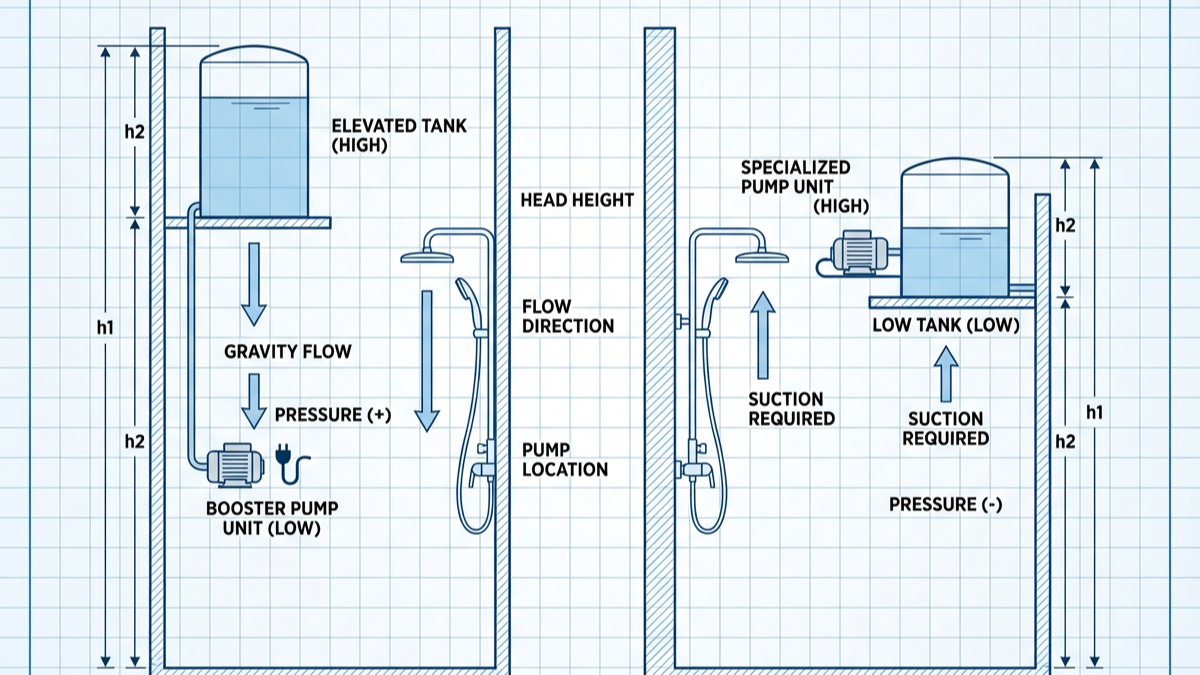
Choosing the wrong shower pump costs you twice, once for the pump itself, and again when you call a plumber to fix the problem. The difference between positive vs negative head pumps comes down to one thing: where your cold water tank sits relative to your shower.
Countless homeowners have wasted money on pumps that never worked for their setup. What follows explains exactly which pump you need based on your home's plumbing configuration.
What Does Head Mean in Shower Pumps
Head refers to the vertical distance between your cold water tank and your shower head. This measurement determines whether gravity can push water to your shower or whether the pump needs to do all the work.
Measure from the base of your cold water tank (usually in the loft) down to the shower head outlet. If that distance is 600mm (about 2 feet) or more, you have a positive head. Anything less than 600mm means you're working with a negative head.
The 600mm threshold exists because gravity needs that minimum distance to create enough pressure for the pump's pressure switch to activate. Below this height, gravity can't generate sufficient flow, and standard positive head pumps fail.
How Positive Head Pumps Work
Positive head pumps rely on gravity to start the water flowing. When you turn on your shower, gravity pulls water down from the tank, creating a flow through the pump. This flow triggers the pressure switch, which activates the impeller to boost the water pressure.
These pumps cost less, typically £150-£300, because they use simpler mechanics. The pump doesn't fight against gravity; it amplifies the pressure that's already building naturally.
Positive head pumps require:
- Cold water tank at least 600mm above the shower head
- Equal height between the hot water cylinder and the cold tank (within 150mm)
- Adequate tank capacity, minimum 50 litres for single impeller pumps, 100+ litres for twin impeller models
- Proper venting on both hot and cold supplies
Most homes built before 2000 have this configuration. The cold water tank sits in the loft space, well above bathroom fixtures, making positive head pumps the straightforward choice.
How Negative Head Pumps Work
Negative head pumps handle situations where gravity can't help. These pumps use a different activation system, typically a flow switch or pressure transducer, that doesn't depend on gravity-fed pressure to trigger operation.
When you open the shower valve, the negative head pump detects the drop in pressure or the attempt to draw water, then actively pulls water from the tank while simultaneously boosting pressure. This dual action requires more sophisticated components, pushing prices to £300-£600.
Negative head pumps suit:
- Cold water tank less than 600mm above the shower head
- The shower is installed on the same level as the cold tank
- Loft conversions where the bathroom sits near or above the original tank location
- Homes where relocating the tank isn't practical
The extra cost buys you flexibility. Negative head pumps work in positive head situations too, though you'd be paying for capability you don't need.
Measuring Your System Correctly
Grab a tape measure and head to your loft. Locate the cold water tank; it's the larger tank, typically plastic, that feeds your taps and shower.
Measure vertically from the bottom of this tank down to where water exits your shower head. Don't measure to the shower tray; measure to the actual shower head outlet. This distinction matters because that extra metre can mean the difference between positive and negative head.
Common measuring mistakes:
- Measuring to the shower valve instead of the shower head
- Measuring from the top of the tank rather than the base
- Forgetting to account for the shower head's position when using a riser rail
- Not considering ceiling height variations in conversions or extensions
If your measurement lands close to 600mm (say, between 500-700mm), consider the negative head option. Borderline cases often perform poorly with positive head pumps because variations in tank water level can drop you below the minimum threshold.
Single vs Twin Impeller Pumps
Both positive and negative head shower pumps come in single or twin impeller configurations. This choice affects performance, not compatibility.
Single impeller pumps boost either just the hot water or just the cold. These are specified for showers with built-in thermostatic valves that already balance temperature. They deliver flow rates around 12-18 litres per minute, adequate for standard shower heads.
Twin impeller pumps boost both hot and cold supplies simultaneously. They're essential for mixer showers and deliver higher flow rates, typically 20-50 litres per minute depending on the model. This extra power supports rainfall shower heads, body jets, and multiple outlets.
The price difference runs £50-£100, with twin impeller models costing more. For most shower upgrades, twin impeller pumps provide better performance and future-proof your installation if you upgrade your shower later.
Installation Differences That Matter
Positive and negative head shower pumps mount the same way, usually on a platform near the hot water cylinder or secured to joists in the loft. The difference lies in the control mechanism.
Positive head pumps need unrestricted flow to trigger their pressure switches. Any air locks, kinks in supply pipes, or partially closed valves prevent activation. The installation must ensure gravity-fed water reaches the pump freely.
Negative head pumps require power to their electronic controls and sometimes need specific wiring configurations. The flow switches or pressure sensors need careful positioning, typically within 150mm of the pump body, to detect demand accurately.
Both pump types require:
- 22mm supply pipes from tanks to the pump
- 22mm delivery pipes from the pump to the shower (never reduce to 15mm before the shower valve)
- Isolation valves on both inlet and outlet sides
- Anti-vibration mounts or pads to reduce noise
- Adequate ventilation around the pump body
Poor pipe sizing causes more pump failures than choosing the wrong head type. Under-sized pipes strangle flow, making even powerful pumps perform poorly.
Why Pumps Fail When You Choose Wrong
Install a positive head pump in a negative head situation and it simply won't start. The pressure switch never triggers because gravity can't generate enough flow. You'll turn on the shower and get a trickle, the same weak flow you had before installing the pump.
The reverse mistake, negative head pump in a positive head setup, works but wastes money. You're paying for electronics and features that add no benefit when gravity already does the job.
Common failure symptoms:
- Pumps cycling on and off: Usually indicates air in the system or inadequate tank capacity
- Pumps running continuously: Typically, a failed pressure switch or leak in the delivery pipework
- Reduced flow over time: Scale buildup in the pump body or check valves
- Noisy operation: Poor mounting, pipe vibration, or cavitation from restricted inlet flow
Most failures trace back to installation issues rather than pump defects. Getting the head type right is step one; proper pipe sizing, venting, and electrical connections complete the job.
Cost Comparison and Long-Term Value
Budget £150-£250 for a quality positive head pump from manufacturers like Salamander, Stuart Turner, or Grundfos. Add £100-£150 for professional installation if you're not confident working with plumbing and electrics.
Negative head pumps start around £300 and reach £600 for high-performance models. Installation costs run similar to positive head pumps, £100-£150, assuming no complications.
The running costs differ minimally. Both pump types draw 150-400 watts during operation. At UK electricity rates, a 10-minute shower costs roughly 5-8 pence to pump, regardless of head type.
Reliability matters more than initial cost. Quality pumps last 10-15 years with minimal maintenance. Cheap pumps (under £120) typically fail within 3-5 years, often from bearing failure or switch problems. The £50 you save initially costs £200+ in replacement and labour.
Alternative Solutions Worth Considering
Before committing to a negative head pump for a difficult installation, consider these alternatives:
Raising the cold water tank: If you have loft space, lifting the tank 500mm might convert your system to positive head. This requires structural support capable of holding 100+ litres of water (100kg+) but eliminates the need for expensive pumps.
Relocating the shower: Moving the shower head 600mm lower changes the equation. Obviously not practical in most cases, but worth considering during major bathroom renovations.
Mains pressure systems: Homes with good mains pressure (2+ bar) can use unvented cylinders and eliminate tanks entirely. This removes the head question completely but requires cylinder replacement and building control notification. Budget £1,500-£3,000 for this conversion.
Electric showers: These connect directly to the cold mains and heat water internally. They bypass the hot water system entirely, making head irrelevant. Modern electric showers deliver surprisingly good performance, though not matching pumped power showers.
Each alternative involves trade-offs. Pumps remain the most cost-effective solution for homes with existing tank systems and adequate loft access.
Making Your Decision
Start with your measurement. If your cold tank sits 600mm or more above the shower head, positive head pumps work reliably and cost less. This covers most traditional homes.
If you measure less than 600mm, or if your bathroom sits in a loft conversion, negative head is your only pump option. The extra cost buys functionality, not luxury.
Consider your shower plans, too. Installing a rainfall head or multiple body jets demands higher flow rates. Twin impeller pumps deliver this performance in either head configuration. Single impeller models suit basic shower upgrades where you simply want better pressure from your existing shower head.
Check your cold water tank capacity. Pumps draw water faster than most tanks can refill. A 50-litre tank barely supports a single impeller pump; twin impeller systems need 100+ litres to avoid the pump running dry mid-shower.
The positive vs negative head pumps decision isn't about quality or performance; it's about physics. Measure the vertical distance from your cold tank base to your shower head. Above 600mm means positive head pumps work; below requires negative head models.
Most installation problems stem from ignoring this fundamental measurement or trying to save money with the wrong pump type. A £200 positive head pump performs brilliantly in the right setup but fails completely when installed in negative head situations. Similarly, spending £500 on a negative head pump makes no sense when gravity already provides the pressure you need.
Get your measurement right, match it to the correct pump type, ensure proper pipe sizing throughout, and you'll transform weak shower pressure into powerful performance that lasts years. The measurement takes five minutes; getting it wrong costs hundreds in wasted equipment and installation time.
Heating and Plumbing World stocks head shower pumps and water pressure solutions from leading manufacturers, including Stuart Turner shower pumps, Grundfos circulation systems, Gledhill cylinders, and Kingspan hot water storage. For expert guidance on selecting the correct pump for your installation, get in touch with the technical team.