

Potterton Kingfisher Spares: Heritage Boiler Maintenance
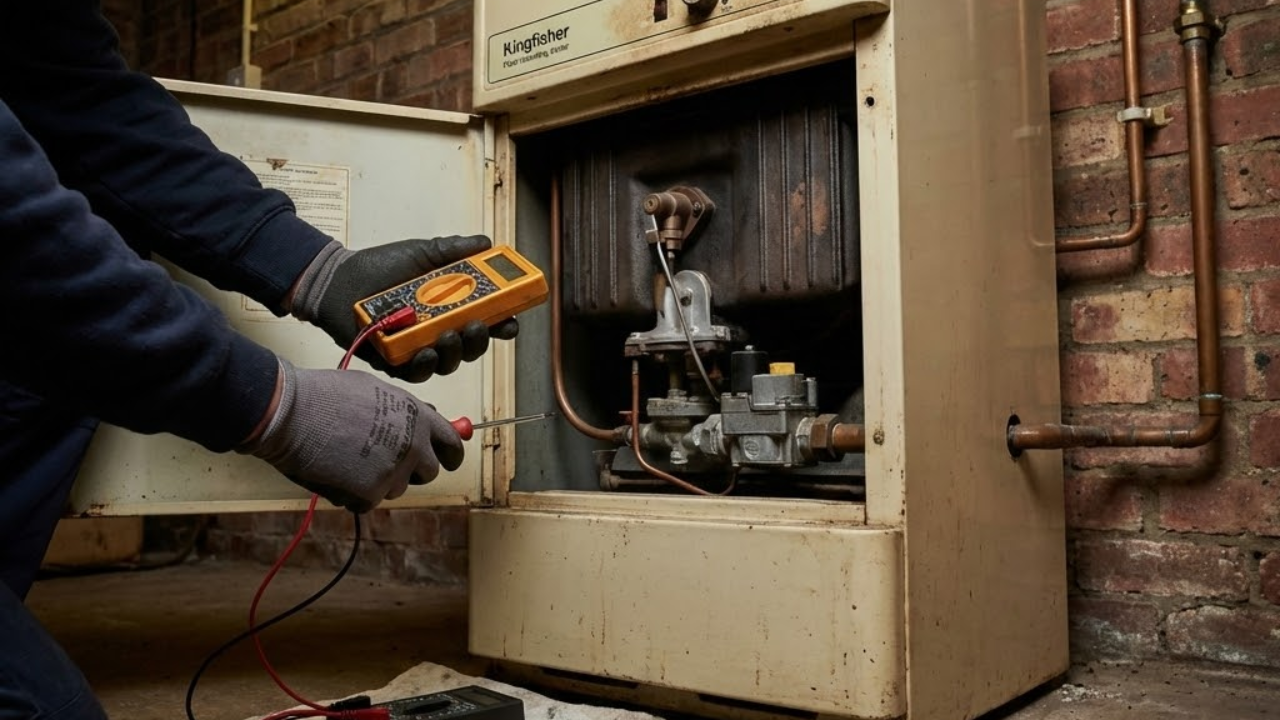
The Potterton Kingfisher earned its place in British heating history for good reason. Thousands of these floor-standing boilers still operate in homes across the UK, many installed during the 1970s and 1980s. They've outlasted countless modern replacements, testament to robust engineering and simple, serviceable design.
But here's the reality: keeping a Kingfisher running requires a different approach than maintaining contemporary boilers. These units weren't built with modular components or plug-and-play electronics. They rely on cast iron heat exchangers, mechanical thermostats, and pilot assemblies that demand hands-on knowledge. When something fails, you can't just order a universal part and expect it to fit.
The challenge isn't just finding Potterton Kingfisher spares. It's understanding which components actually need replacing, how to source genuine alternatives when original parts are discontinued, and when it makes financial sense to keep repairing versus replacing the entire system. For heating engineers maintaining these heritage boilers, that knowledge separates a quick callback from a job done right.
Why Kingfisher Boilers Still Matter
You'd think a boiler design from the 1970s would be extinct by now. Yet walk into any older property with original heating infrastructure, and there's a fair chance you'll find a Kingfisher humming away in the basement or utility room.
The reason comes down to fundamental engineering. Potterton built these units with cast iron sections that could handle thermal stress year after year. Unlike pressed steel heat exchangers that corrode from condensation, cast iron tolerates temperature fluctuations without cracking, much like how a well-seasoned cast iron pan handles repeated heating and cooling without warping. The burner design was equally straightforward: atmospheric combustion with minimal electronics to fail.
Property owners keep them running because replacement costs easily exceed £3,000-£4,000 once you factor in system modifications, power flushing, and new controls. If the existing Kingfisher still fires reliably and the heat exchanger remains sound, spending £200-£300 on Potterton Kingfisher spares makes economic sense.
But there's a tipping point. When multiple components fail simultaneously (say, the gas valve, thermocouple, and pilot assembly), the repair bill starts approaching replacement territory. That's when you need to assess the boiler's overall condition, not just fix the immediate fault.
Common Failure Points and Required Spares
Every Kingfisher model shares similar vulnerabilities. Understanding these failure patterns helps you diagnose faults faster and keep the right Potterton Kingfisher spares on hand.
The pilot system causes more callouts than any other Kingfisher component. These boilers use a standing pilot light that burns continuously, heating a thermocouple to keep the gas valve open. When the pilot goes out, the thermocouple cools, and the safety interlock shuts off gas flow.
Thermocouples fail gradually. You'll notice the pilot becoming increasingly difficult to keep lit, requiring longer hold times on the control knob. Eventually, it won't stay lit at all. Replacement thermocouples for the Kingfisher typically cost £15-£25, but here's the catch: generic thermocouples often don't generate sufficient thermocouple millivoltage for the original Potterton gas valve. You need the correct length and output specification.
For comprehensive heritage boiler components and hard-to-find legacy parts, Heating and Plumbing World supports engineers maintaining older heating systems with expert sourcing guidance.
The pilot injector itself can block with debris, particularly in areas with hard water or if the gas supply contains particulates. A blocked injector produces a weak, yellow flame instead of a strong blue cone. Pilot injector cleaning sometimes works, but replacement injectors (£10-£20) provide a more reliable fix.
The Honeywell V4600 valve was standard on many Kingfisher models. These electromagnetic valves use the thermocouple's millivoltage signal to hold open, then respond to thermostat calls for heat by opening the main burner supply.
Gas valves rarely fail outright. More commonly, they develop intermittent faults. The boiler fires but cuts out randomly, or the main burner won't light despite a healthy pilot. Internal diaphragms can stiffen with age, or the electromagnetic coil weakens.
Replacement gas valves for the Kingfisher range from £80-£150 depending on the specific model. Installation requires Gas Safe registration, obviously, but the physical swap takes under an hour. The critical step is ensuring the replacement Honeywell V4600 valve matches the original's pressure rating and connection orientation.
Honeywell V4600 valves are known for reliability, but they're not immune to failure. Electrical coils can burn out, diaphragms can perish, and mechanical linkages can stick. Always verify the fault before ordering a replacement. Gas valves aren't cheap, and misdiagnosis is costly.
Cast iron sections don't fail often, but when they do, it's usually catastrophic. Cracks develop from thermal shock, typically when someone repeatedly fires a cold boiler at full rate without allowing gradual warm-up. You'll see water weeping from section joints or, worse, pooling beneath the boiler.
Here's the problem: heat exchanger cast iron sections for the Kingfisher are virtually impossible to source new as Potterton Kingfisher spares. Potterton discontinued production decades ago, and remaining stock has long since sold out. Your options narrow to three: source used sections from a specialist breaker (risky, as you can't verify internal condition), seal minor weeps with high-temperature sealant as a temporary measure (not a permanent fix), or recommend system replacement.
Before condemning the heat exchanger, verify the leak isn't coming from replaceable gaskets or door seals. We've seen cases where water traced back to a failed pump seal or expansion vessel, not the cast iron sections themselves.
The Kingfisher used simple mechanical thermostats, either a rod-type or a liquid-filled capillary sensing element. These thermostats close a circuit when water temperature drops below setpoint, signalling the gas valve to fire.
Thermostat failures present as either constant firing (stat stuck closed) or no firing despite low temperature (stat stuck open or capillary broken). Replacement stats cost £30-£60, but you must match the capillary length and mounting configuration to your specific Kingfisher model.
Some engineers retrofit modern digital thermostats onto Kingfisher boilers. This works if you're only controlling a simple on/off gas valve, but it won't integrate with weather compensation or modulating controls (which the Kingfisher doesn't support anyway).
Sourcing Genuine Potterton Kingfisher Spares
Finding parts for a discontinued boiler line requires a different sourcing strategy than ordering current-production components.
Baxi, which acquired Potterton, maintains limited spares support for legacy products. They'll supply certain consumable items (thermocouples, door seals, electrodes) but don't expect availability of major components like gas valves or pumps specific to Kingfisher models.
When you contact Baxi technical support, have the boiler's GC number ready through GC number cross-reference. This identifies the exact model variant and helps them cross-reference available Potterton Kingfisher spares. The GC number appears on the data badge, usually inside the front panel.
Several UK suppliers specialise in obsolete heating spares. These outfits buy up old stock, source from European warehouses, or salvage components from decommissioned boilers. Quality varies dramatically.
For critical safety components like gas valves and thermocouples, stick to new or verified refurbished Potterton Kingfisher spares. For mechanical items like pump heads or thermostats, carefully inspected used parts can work if new stock isn't available.
Always verify part numbers before ordering. The Kingfisher range included multiple variants (CF, MF, RS models), and components aren't always interchangeable despite looking similar.
Some Kingfisher components used standard industry parts that remain available under different brand names. The Honeywell V4600 valves, for instance, appeared on numerous boiler makes. If you can identify the valve model number through GC number cross-reference, you might find new stock listed for a different boiler brand.
Similarly, circulator pumps on Kingfisher boilers were often standard Grundfos or similar makes. Rather than searching for "Kingfisher pump," identify the pump model directly and source it as a standalone component. For pump replacements and circulator upgrades, Grundfos components offer reliable alternatives when original Potterton Kingfisher spares are unavailable.
This approach requires more technical knowledge but dramatically improves your chances of finding Potterton Kingfisher spares when Potterton-branded stock has dried up.
Diagnostic Approach for Kingfisher Faults
Effective troubleshooting on these heritage boilers follows a different logic than modern diagnostic routines. There's no fault code readout or self-test sequence. You're working with mechanical and electromechanical components that fail in predictable patterns.
Start with gas supply. Sounds obvious, but we've seen engineers strip pilot assemblies only to discover the meter was switched off after supply work. Verify gas pressure at the inlet: should be 20-21 mbar for natural gas.
If gas supply is confirmed, check the thermocouple circuit. Measure thermocouple millivoltage output whilst the pilot burns. Should read 15-25mV typically. Below 10mV indicates a failing thermocouple or weak pilot flame. Clean or replace the pilot injector if the flame is yellow or weak.
Gas valve coil resistance should measure within manufacturer specs (typically 5-15 ohms). Infinite resistance means an open coil; near-zero suggests a short. Either requires valve replacement.
For control system diagnostics and temperature regulation components, brands like Danfoss offer compatible solutions when sourcing original Potterton Kingfisher spares becomes challenging.
This points to the control circuit between thermostat and gas valve. With the pilot established, the gas valve's electromagnetic coil should energise when the thermostat calls for heat.
Check for 240V at the gas valve coil terminals when the thermostat closes. No voltage means a broken circuit: failed thermostat, loose connection, or broken wire. Voltage present but no firing indicates gas valve failure.
Don't overlook the overheat thermostat (if fitted). These safety cutouts open the circuit if boiler temperature exceeds safe limits. They're usually manual-reset types hidden under the casing.
Intermittent lockout suggests either thermocouple dropout or gas valve issues. Monitor the thermocouple millivoltage whilst the burner runs. If it drops below the gas valve's holding threshold (typically 5-7mV), the valve closes as designed.
Voltage drop during firing can result from a loose thermocouple connection, a failing thermocouple that can't maintain output under load, or excessive heat affecting the connection. Tighten, clean, and retest before replacing.
If the thermocouple millivoltage remains stable but the boiler still cuts out, suspect the Honeywell V4600 valve holding circuit or a faulty connection at the valve terminals.
When Replacement Makes More Sense
Every heritage boiler reaches a point where continued maintenance becomes economically irrational. For Kingfisher units, several factors signal that tipping point.
If you're replacing the gas valve, thermocouple, pump, and thermostat in one visit, the repair cost approaches £400-£500 including labour. At that spend level, the homeowner is a quarter of the way toward a modern condensing boiler that'll cut their gas bills by 25-30%.
More importantly, multiple failures suggest the entire boiler has reached end-of-life. Components don't usually fail together by coincidence. They've all experienced the same decades of thermal cycling and wear.
A cracked or severely corroded heat exchanger ends the discussion. Without replacement cast iron sections available as Potterton Kingfisher spares, you can't make a safe, lasting repair. Temporary sealants might buy a few months, but you're just delaying the inevitable replacement conversation.
Check the sections carefully during any major service. Look for water staining, rust bloom on the outside of sections, or white mineral deposits indicating historical leaks. If the cast iron has deteriorated to the point of visible pitting, failure is imminent even if it's not leaking yet.
The Kingfisher's non-condensing design means it's operating at roughly 70-75% efficiency at best, and that's when everything is perfectly tuned. Compare that to a modern condensing boiler achieving 90-94% efficiency, and the annual fuel cost difference is substantial.
For a typical three-bedroom home using 15,000 kWh annually, the efficiency gap costs roughly £200-£250 per year in wasted gas. Over a modern boiler's expected 15-year lifespan, that's £3,000-£3,750 in additional fuel costs. The Kingfisher's reliability becomes expensive when you factor in operational costs, not just Potterton Kingfisher spares bills.
For control upgrades and modern efficiency improvements, manufacturers like Honeywell offer compatible controls that can enhance older system performance where appropriate.
Older boilers often lack modern safety features: flame supervision devices, overheat protection, proper room-sealing for combustion air. Whilst they met regulations when installed, current Building Regulations (Part L) and Gas Safety standards expect higher safety margins.
If you're working on a rental property, landlords face stricter obligations under the Gas Safety (Installation and Use) Regulations. A boiler that technically functions but lacks modern safety interlocks might not satisfy a rigorous safety inspection.
Practical Maintenance to Extend Service Life
When replacement isn't immediately feasible, proper maintenance maximises the remaining service life of a Kingfisher boiler.
Strip and clean the burner annually. Carbon deposits reduce combustion efficiency and can cause incomplete combustion. Remove the burner tray, brush away loose debris, and vacuum thoroughly. Check burner ports aren't blocked. Use a wire brush if needed.
Inspect and clean the pilot assembly. Remove the pilot hood, clean the injector with compressed air (never poke with wire, as this enlarges the orifice), and verify the flame pattern when reassembled.
Test the thermocouple millivoltage output under operating conditions. Don't just check it with the pilot lit. Run the boiler through a full firing cycle and monitor voltage throughout. This reveals thermocouples that are marginal and likely to fail soon.
Cast iron tolerates poor water chemistry better than modern heat exchangers, but it's not invincible. Black iron oxide sludge accumulates in older systems, reducing heat transfer and causing pump wear.
A proper power flush removes years of accumulated debris. For a Kingfisher system, expect to recover significant quantities of black magnetite sludge. Follow up with inhibitor dosing, something like Fernox F1 or Sentinel X100, to slow further corrosion.
Check system pH annually. It should sit between 7-9. Acidic water (below 7) accelerates corrosion; highly alkaline water (above 10) can attack gaskets and seals.
For expansion vessels and system pressurisation components, Altecnic Ltd supplies quality replacements compatible with older Kingfisher installations.
The circulator pump on a Kingfisher typically runs continuously when the boiler fires. Listen for unusual noise. Grinding or squealing indicates bearing wear. Feel the pump body for excessive vibration.
Verify flow throughout the system. If some radiators stay cold whilst others heat, you've got circulation issues: either a failing pump, blocked pipework, or air locks. Don't assume the boiler is at fault until you've confirmed proper flow.
Older pumps used in Kingfisher installations often lack modern features like automatic air venting or speed adjustment. Consider upgrading to a modern equivalent if the original pump fails. You'll get better efficiency and reliability for similar money.
Conclusion
Maintaining Potterton Kingfisher boilers requires a blend of historical knowledge, practical troubleshooting skill, and realistic assessment of when repair stops making sense. These heritage boilers earned their longevity through robust design and serviceable components, but Potterton Kingfisher spares availability and efficiency considerations increasingly favour replacement over repair.
For heating engineers, success with Kingfisher maintenance comes down to three things: knowing the common failure patterns, understanding which components have cross-compatible alternatives, and communicating honestly with customers about the economics of keeping an old boiler running versus upgrading.
When you do need Potterton Kingfisher spares, start with the boiler's GC number cross-reference and specific component identification. Generic parts work for some items (thermocouples, seals, electrodes), but safety-critical components like Honeywell V4600 valves require exact matches. Building relationships with specialist obsolete parts suppliers gives you access to stock that mainstream distributors no longer carry.
The Kingfisher's era is ending, but thousands still operate reliably. With the right Potterton Kingfisher spares knowledge and maintenance approach, you can keep them running safely until economics or regulation finally force replacement. Just remember: your job isn't to keep an old boiler alive at any cost. It's to give customers honest advice about whether repair or replacement serves them better. Sometimes, the most professional recommendation is that it's time to let the Kingfisher retire.
Accurate thermocouple millivoltage testing, proper GC number cross-reference procedures, correct Honeywell V4600 valve specification, and careful cast iron sections inspection separate professional heritage boiler maintenance from guesswork.
For sourcing current-production heating components and modern replacements, contact us for technical support on system upgrades and compatible alternatives.