

Pre-Heat Coil Cylinders: Compatibility And Future-Proofing Options
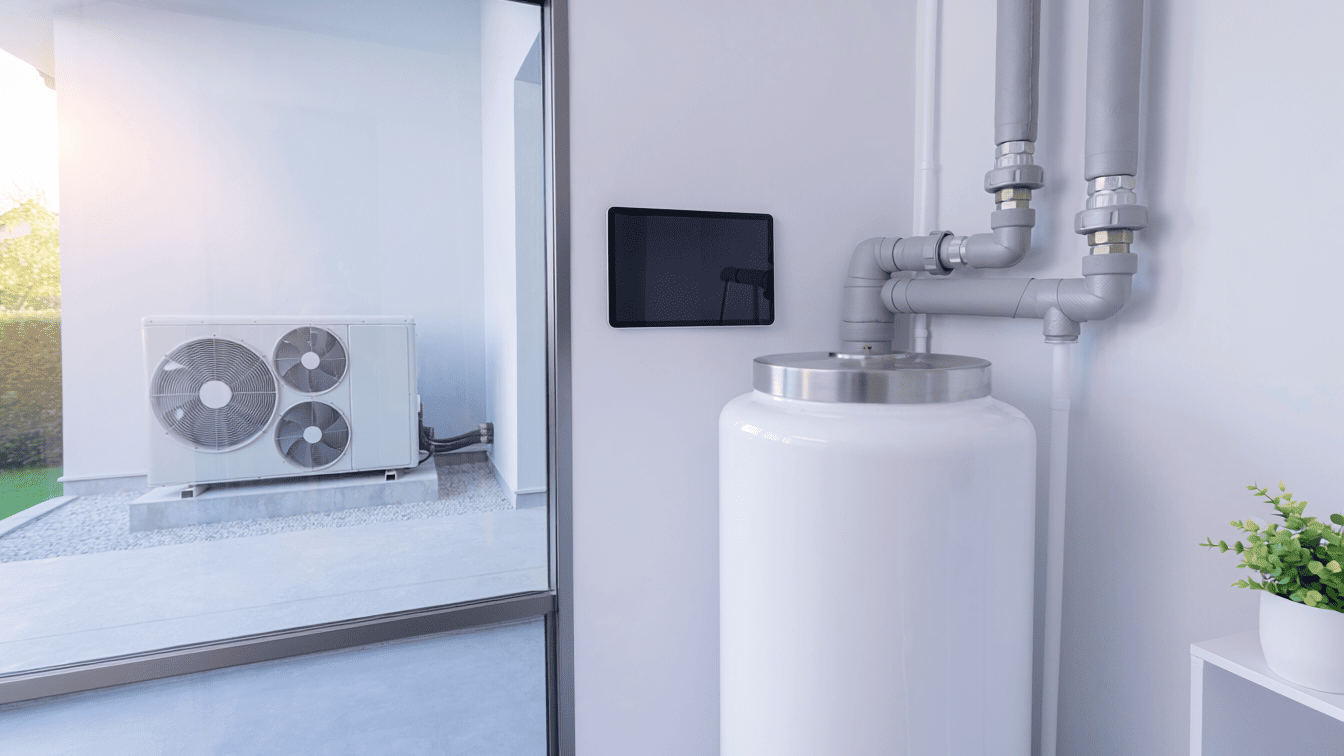
Specifying a hot water cylinder isn't just about matching capacity to demand. It is about choosing a system that will seamlessly adapt when the heat source changes. Pre-heat coil cylinders sit at the intersection of flexibility and efficiency, designed to work perfectly with renewable technologies whilst maintaining complete compatibility with conventional boilers. Get the specification right, and you are future-proofing the installation against legislative shifts and client expectations. Get it wrong, and you will be ripping it out in five years when the gas boiler gets replaced with a heat pump.
These pre-heat coil cylinders feature a dedicated coil positioned in the lower section of the vessel, specifically engineered to accept heat from lower-temperature sources like solar thermal panels or air source heat pumps. The configuration allows the primary heat source, typically a conventional boiler, to top up via an upper coil or immersion, ensuring rapid reheat when renewable input falls short. It is a highly practical hedge against the UK's phased transition away from fossil fuel heating.
Why Pre-Heat Coil Design Matters
The fundamental difference between a standard twin-coil cylinder and a pre-heat model lies in coil placement and sizing. Standard twin-coil designs position both coils in the upper two-thirds of the cylinder, optimised heavily for high-temperature inputs from gas or oil boilers. Pre-heat cylinders flip this logic entirely. The lower coil accepts heat from renewable sources operating at 35-55°C, whilst the upper section handles conventional inputs at 60-80°C.
This stratification principle actively maximises the solar or heat pump contribution. Think of thermal stratification like a multi-storey car park. The cars naturally fill the lower levels first before making their way to the top. By introducing the coolest water at the base and injecting renewable heat there, you ensure maximum energy absorption before the boiler even needs to wake up.
Cold mains water enters at the base, passes through the pre-heat coil first, then rises as it warms. If the renewable source has heated the water to 45°C, the boiler only needs to lift it the final 15-20°C to reach the target temperature. That represents a significant reduction in fossil fuel consumption, typically 40-60% during shoulder seasons when solar gain is decent but not sufficient alone.
Surface area matters massively here. Pre-heat coils are often larger than primary coils to compensate for lower flow temperatures. Specifying a quality indirect hot water cylinder with a properly sized lower coil ensures maximum energy extraction from every single degree the renewable source can deliver.
Compatibility With Renewable Heat Sources
Effective solar thermal integration represents the most common application for this technology. Evacuated tube or flat-plate collectors generate peak temperatures of 60-80°C on sunny days, but average 40-50°C across the year in the UK. A well-designed solar thermal integration system captures this variable input without complicated controls. Simple differential thermostats activate the solar pump when the collector temperature exceeds the cylinder temperature by 5-8°C.
The key specification point is ensuring the pre-heat coil can handle glycol-based heat transfer fluids reliably. Most solar setups run a 30-40% propylene glycol mix to prevent freezing during winter. The coil material must fiercely resist corrosion from glycol degradation products over a 15-20 year service life. If the concentration isn't properly monitored, a degraded propylene glycol mix turns highly acidic and eats through standard copper coils rapidly.
Proper air source heat pump compatibility requires much more careful matching. Air source heat pumps deliver flow temperatures of 35-55°C depending on outdoor conditions, which is significantly lower than boilers. The pre-heat coil must be sized precisely to transfer adequate energy at these reduced temperature differentials. A strong rule of thumb dictates that for every 10°C reduction in flow temperature, you need roughly 30% more coil surface area to guarantee reliable air source heat pump compatibility.
Ground source heat pumps operate more consistently, typically delivering 45-50°C year-round. The same pre-heat coil sizing principles apply, but the predictable output makes system balancing much simpler overall.
Boiler Integration And Control Strategies
The upper coil or immersion handles the top-up heating when the renewable input cannot meet demand. Most installations use a dedicated mid-cylinder thermostat positioned around the two-thirds height mark. When the pre-heat coil has lifted the lower section to 45-50°C, but the upper section remains below setpoint, the boiler fires to complete the reheat cycle.
This two-stage approach completely prevents the boiler from fighting the renewable source. I recently inspected a care home plant room where the original installer placed the mid-cylinder thermostat far too low. The boiler ended up firing constantly, completely overriding the expensive solar array and driving the client's gas bills through the roof. Simply repositioning that sensor 500mm higher allowed the renewables to do their job, saving the facility hundreds of pounds a month.
Legionella control complicates matters slightly. Building regulations require stored hot water to reach 60°C to prevent bacterial growth. In a pre-heat system, the upper coil or immersion must be capable of achieving this temperature in the top third of the cylinder, even if the lower section sits at 45°C. Most modern cylinders incorporate a weekly thermal disinfection cycle to handle this safely.
For commercial applications or highly complex domestic properties, integrating a dedicated thermal store allows precise temperature monitoring and independent control of multiple competing heat sources.
Material Specifications And Longevity
Cylinder construction directly impacts compatibility with different heat sources and local water conditions. Stainless steel vessels offer the absolute longest service life, typically spanning 25-30 years with minimal maintenance. They fiercely resist corrosion from both internal water quality issues and external condensation in damp plant rooms.
Copper cylinders remain the industry standard for traditional domestic installations. They are cost-effective, well-understood by installers, and perfectly adequate when water quality is reasonable. The real vulnerability lies in the coil-to-vessel joints, which require careful fabrication to prevent galvanic corrosion where dissimilar metals meet.
When undertaking heavy plant room upgrades, sourcing your infrastructure from a highly reliable trade partner like Heating and Plumbing World ensures your installations are backed by robust warranties and genuine component durability.
Sizing Considerations For Future Flexibility
Undersizing a cylinder to save £200 today costs thousands in lost efficiency and client satisfaction tomorrow. The calculation isn't just about peak hot water demand. It is about storage capacity to maximise the renewable contribution during critical low-demand periods.
A typical domestic household uses 150-200 litres of hot water daily. A standard approach would specify a 200-250 litre cylinder. However, if you are integrating solar thermal, you should bump that to 250-300 litres. Sunny days often don't align with peak hot water use. The larger cylinder stores excess solar energy from midday for use during evening showers, rather than dumping it wastefully via an overheat stat.
Heat pump sizing follows a similar logic but with different operational constraints. Air source units work most efficiently at lower outputs over longer continuous run times. A cylinder that is too small forces the heat pump to cycle on and off frequently, rapidly degrading efficiency and drastically shortening component life.
Control Integration And Smart Functionality
Modern pre-heat coil cylinders work best with intelligent controls that optimise the renewable contribution whilst ensuring total comfort and safety. Basic systems use simple differential thermostats, but advanced setups incorporate weather compensation, occupancy learning, and dynamic load balancing.
Priority switching ensures the renewable source always gets the first call on heating demand. When the solar array or heat pump is operating, the boiler circuit remains locked out unless the cylinder temperature falls below a critical threshold.
Weather compensation adjusts target cylinder temperatures based on the forecast demand. On a 25°C summer day with minimal heating load, there is no need to maintain 60°C stored water. Integrating a modern heating control app handles this automatically, learning the household's usage patterns and adjusting the setpoints dynamically to save energy.
Installation Best Practices
Cylinder positioning affects both renewable performance and future access for maintenance or replacement. The plant room layout should allow clear, unobstructed access to all connection points, including coil flow and returns, immersion pockets, temperature sensors, and drain valves.
For solar thermal systems, ruthlessly minimise pipe runs between the collectors and the cylinder. Every metre of pipework adds thermal mass that must be heated before useful energy reaches storage, and it increases standing losses. Aim for runs under 10 metres where possible, and insulate the pipework heavily.
Pressure relief and expansion accommodation require highly careful design. The pre-heat circuit operates as a sealed system when connected to solar thermal arrays. It demands its own dedicated expansion vessel sized precisely to handle the glycol volume and maximum operating temperature safely.
Maintenance And Future-Proofing
These cylinders demand minimal maintenance when correctly specified and installed, but the ancillary systems require regular attention. Solar thermal circuits need annual glycol testing, as degraded fluid loses its freeze protection entirely.
Heat pump circuits require less frequent intervention, but coil cleanliness severely affects performance. Hard water areas may see scale buildup on coil surfaces over 5-10 years, heavily reducing heat transfer efficiency. Installing premium heating system components like magnetic filters on the heating circuit helps, but it will not eliminate scale formation entirely without chemical intervention.
Specifying a pre-heat coil cylinder today, even if currently paired with a standard gas boiler, provides a remarkably straightforward upgrade path. When the boiler reaches end-of-life in 10-15 years, the cylinder remains fully compatible with the replacement heat pump.
Conclusion
Pre-heat coil cylinders represent highly practical engineering rather than speculative technology. They work efficiently with today's boilers whilst easily accommodating tomorrow's heat pumps and renewable sources. The modest cost premium buys genuine flexibility, offering tangible compatibility with multiple heat sources and straightforward, low-cost upgrade paths.
Specification comes down to accurately matching coil sizing and positioning to anticipated heat sources, choosing materials suited to local water conditions, and sizing the storage capacity to maximise the renewable contribution. Get these fundamentals right, and the cylinder becomes the most stable element in a heating system that evolves over decades.
For trade professionals navigating the transition toward renewable heating, pre-heat cylinders offer clients a highly sensible middle path. They are not locked into expensive renewable installations before they are ready, but they are not painting themselves into a corner with equipment that will be obsolete in a decade. For project-specific guidance on any commercial or domestic installation, please contact our technical team to discuss your requirements with experienced heating professionals today.