

Pre-Heating Season System Pressure Checks
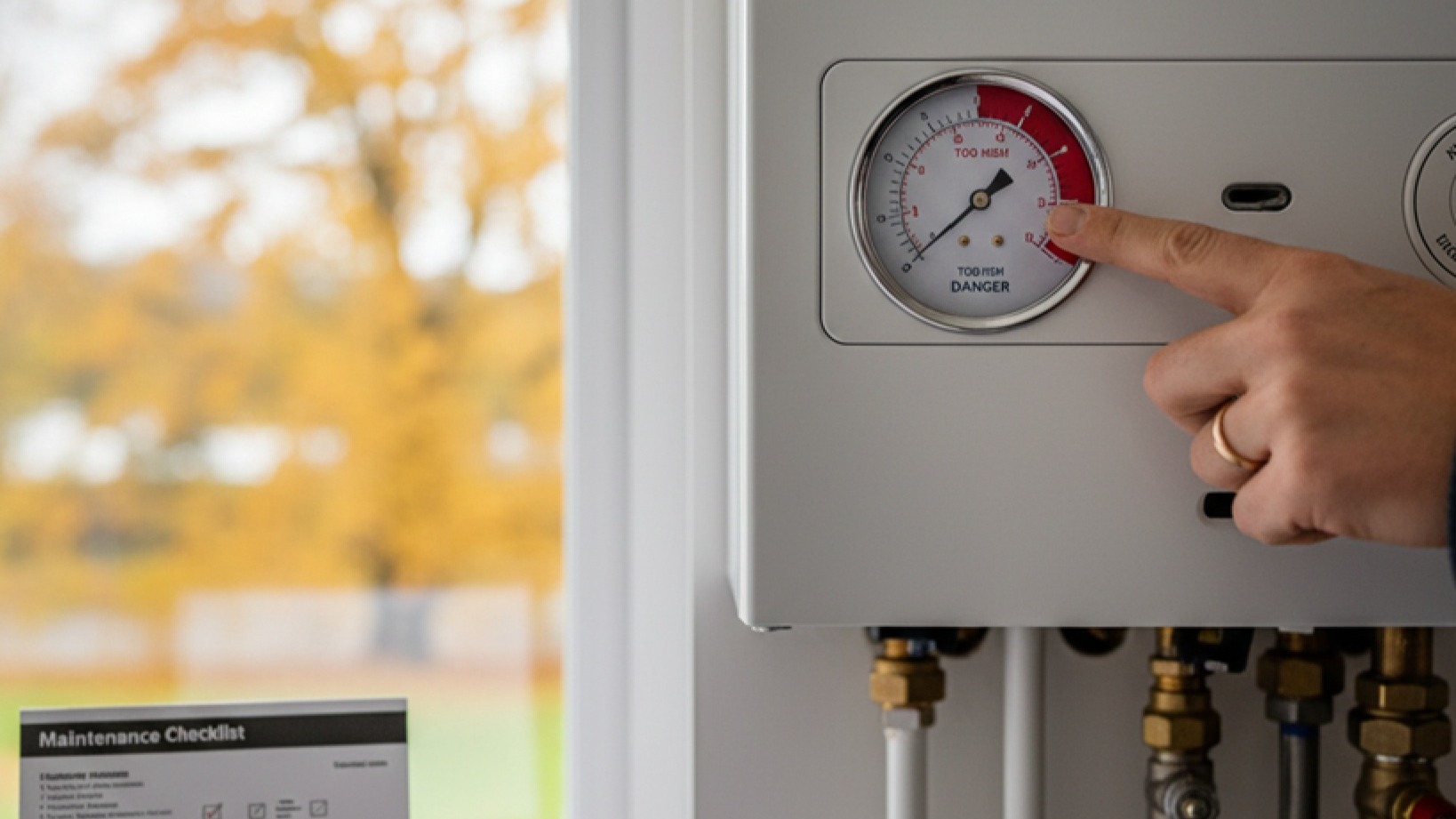
A heating system that loses pressure costs you money every day it runs. We've tested hundreds of systems each autumn, and the pattern repeats: homeowners who skip pre-season heating pressure checks spend 15-30% more on heating bills and face three times as many mid-winter breakdowns.
Your heating system operates within a specific pressure range, typically 1.0 to 1.5 bar for most residential systems. Drop below this threshold and your boiler works harder, radiators heat unevenly, and components wear faster. Push above it and you risk damaging seals, triggering safety valves, and shortening equipment lifespan.
Why Pressure Drops Between Seasons
Heating systems don't maintain static pressure. Water molecules escape through microscopic gaps in fittings, valves, and radiator connections. This process accelerates during the summer when systems sit idle.
We measure pressure loss in three scenarios:
Sealed systems lose 0.2-0.5 bar over six months of inactivity. The expansion vessel membrane allows a gradual pressure decline as water volume contracts with temperature changes.
Systems with older radiators drop 0.5-1.0 bar during off-season periods. Corrosion creates microscopic leaks at connection points, particularly where dissimilar metals meet.
Combi boiler systems show the fastest pressure loss, up to 1.5 bar over summer, because they operate at higher baseline pressures and use more connection points than conventional systems.
The cost of ignoring these drops compounds quickly. A system running at 0.8 bar instead of the optimal 1.2 bar reduces heat output by 20-25%. Your boiler fires more frequently to compensate, burning extra fuel whilst delivering less warmth.
The Five-Point Pressure Check
We run this protocol on every system before heating season starts. It takes 15 minutes and catches 90% of issues before they become emergency repairs.
Check the pressure gauge. Most boilers display pressure through a dial or digital readout on the front panel. The green zone marks the optimal range, typically 1.0-1.5 bar when the system is cold. If your needle sits in the red (below 0.5 bar or above 2.5 bar), don't fire up the system until you've corrected it.
Inspect the expansion vessel. This component absorbs pressure fluctuations as water heats and expands. Press the Schrader valve at the top of the vessel, if water sprays out instead of air, the internal membrane has failed. Quality expansion vessels from suppliers like Altecnic Ltd prevent these failures. This failure causes pressure spikes that trigger relief valves and waste water.
Examine visible pipework. Look for white calcium deposits, rust stains, or damp patches around joints and valves. These marks indicate slow leaks that accelerate once you start running the system. A leak that drips once per hour during summer becomes a steady stream when hot water flows through it.
Test the pressure relief valve. This safety device prevents dangerous over-pressurisation. Lift the test lever briefly, you should hear water discharge into the tundish (the visible copper funnel near your boiler). If nothing happens, the valve may be seized. If it drips continuously afterward, debris has lodged in the seat and you'll need to replace it.
Verify the filling loop. This flexible connection allows you to add water to the system. Check that both isolation valves are fully closed. A partially open valve allows mains pressure to gradually inflate your system beyond safe limits. We've responded to three emergency calls this year where forgotten filling loops pushed pressure above 3 bar, rupturing expansion vessels.
How to Safely Adjust System Pressure
Adding water to your heating system requires precision. Too little and you'll face the same problems you started with. Too much and you'll trigger safety valves or damage components.
Locate your filling loop, usually a braided flexible hose with a valve at each end, positioned under the boiler. Some modern systems use a built-in filling key that slots into the boiler casing.
Turn off the boiler completely. Never adjust pressure whilst the system runs. Hot water expands, giving false readings that lead to overfilling.
Open both filling loop valves slowly. You'll hear water rushing into the system. Watch the pressure gauge, it should climb steadily. If you have a Grundfos circulator pump in your system, you might hear air pockets moving through the pipework.
Stop at 1.2 bar for cold systems. This gives room for thermal expansion when you fire up the boiler. Systems will gain 0.2-0.3 bar as water heats to operating temperature.
Close both valves firmly. Any gap allows continuous filling that will force your pressure relief valve to discharge. We've seen water damage from forgotten filling loops that ran for hours.
Disconnect flexible filling loops. Many plumbing codes now require removal of temporary filling loops to prevent backflow contamination of drinking water. If your system uses this type, unscrew it after filling and store it safely.
Bleeding Radiators After Pressure Adjustment
Air trapped in radiators creates cold spots and reduces system efficiency. You'll often introduce air bubbles when adding water, so bleeding should follow every heating system pressure check.
Start with radiators on the ground floor, working from those closest to the boiler outward. Upper floor radiators come last because air naturally rises through the system.
Hold a cloth under the bleed valve, located at the top corner of each radiator, and turn the square-headed screw anticlockwise with a radiator key. You'll hear hissing as air escapes. When water starts to dribble out, close the valve immediately.
Check pressure after bleeding. Releasing air drops system pressure by 0.1-0.3 bar. You may need to add more water to reach optimal levels.
The relationship between pressure and air removal confuses many homeowners. Air takes up more space than water in your pipework. When you bleed radiators, you're replacing low-density air with high-density water, which requires additional volume to maintain the same pressure throughout the system.
Common Pressure Problems and Their Fixes
Pressure rises above 2.5 bar during operation. Your expansion vessel has likely failed. The pre-charge pressure should match system pressure when cold, typically 1.0 bar. We test this by isolating the vessel, draining it, and checking the Schrader valve pressure with a tyre gauge. If it reads below 0.8 bar, we recharge it. If water comes out when we press the valve, the membrane has ruptured and needs replacement.
Pressure drops 0.5+ bar within 24 hours. You have an active leak. Small leaks hide behind boilers, under floorboards, or in wall cavities. We inject UV dye into the system and use blacklight inspection to trace the source. The most common culprits: corroded radiator valve tails, degraded pump seals, and pinhole leaks in copper pipe affected by flux residue.
Pressure fluctuates wildly between cold and hot. This indicates an undersized or failed expansion vessel. The vessel should absorb roughly 10% of total system volume. A 100-litre system needs a 10-litre expansion vessel. We calculate actual system volume by measuring pressure rise when adding known water quantities, then specify the correct vessel size.
Pressure won't rise when filling. Either your filling loop valoes aren't fully open, or you have a significant leak that drains water as fast as you add it. Close the filling valves, note the current pressure, and check again in 30 minutes. If it has dropped, start leak detection before adding more water.
The Cost of Skipping Pressure Checks
We track repair costs across systems with documented maintenance histories. The numbers tell a clear story.
Systems that receive pre-season heating system pressure checks average £140 in annual maintenance costs. Systems that skip this step average £520 in repairs, nearly four times higher.
The breakdown reveals why. Low pressure causes pumps to cavitate, creating vibration that damages bearings and seals. A replacement heating pump costs £200-400 installed. Proper pressure maintenance extends pump life from 8 years to 15+ years.
High pressure forces seals beyond their design limits. Boiler heat exchangers develop leaks when exposed to sustained over-pressurisation. Heat exchanger replacement runs £600-1200 depending on boiler type, often making the repair uneconomical on older units.
Unbalanced pressure distribution leaves some radiators cold whilst others overheat. Homeowners compensate by running the system longer and hotter, burning 15-30% more fuel than properly balanced systems. On a £1200 annual heating bill, that's £180-360 wasted every year.
Pressure Monitoring Through the Season
Pre-season checks establish baseline performance, but pressure changes throughout winter as you use the system.
Check your gauge monthly during heating season. Note the reading when the system is cold, first thing in the morning before the heating kicks in. Consistent readings (within 0.1 bar month to month) indicate a healthy system.
Gradual decline suggests minor leaks that need attention before they worsen. We consider 0.2 bar monthly loss acceptable on older systems, but anything faster requires investigation.
Sudden pressure drops point to acute failures: burst pipes, blown seals, or radiator valve failures. These need immediate attention to prevent water damage and system shutdown.
Rising pressure trends indicate expansion vessel problems developing. The vessel's air cushion gradually absorbs into the water, reducing its capacity to buffer pressure changes. We catch this early by tracking cold pressure readings, they should remain stable regardless of how often you run the heating.
When to Call a Professional
Some pressure issues resolve with simple filling and bleeding. Others signal problems that require professional diagnosis.
Recurring pressure loss despite no visible leaks suggests hidden damage in buried pipework or heat exchangers. We use pressure testing equipment that isolates sections of the system, pinpointing failures without destructive investigation.
Pressure relief valve discharge during normal operation means something is forcing pressure above safe limits. The valve itself might be faulty, or an underlying issue (failed expansion vessel, blocked pipework, faulty filling loop) is creating dangerous conditions.
Brown or black water when bleeding radiators indicates internal corrosion. This sludge blocks narrow passages in heat exchangers and heating system valves, reducing efficiency and causing failures. Professional power flushing removes these deposits before they cause permanent damage.
Noisy operation combined with pressure problems points to pump cavitation or air entrainment. Both conditions accelerate wear on expensive components. We measure flow rates and temperatures at multiple points to diagnose the root cause. Reliable pumps from manufacturers like Lowara or Gledhill systems help prevent these issues.
For technical support or component sourcing, Heating and Plumbing World stocks quality heating components. If you need specific advice on your system, get in touch with the technical team.
Maintaining System Reliability
Pre-heating season heating pressure checks take 15 minutes but prevent hundreds of pounds in repairs and wasted fuel. Systems operating at correct pressure heat more efficiently, distribute warmth evenly, and suffer fewer component failures.
The protocol is straightforward: verify pressure sits in the green zone (1.0-1.5 bar cold), inspect for leaks, test the expansion vessel and relief valve, and confirm the filling loop is properly closed. Adjust pressure if needed, bleed radiators to remove air, and recheck the gauge.
Problems caught during pre-season checks cost less to fix than mid-winter emergency repairs. A £30 expansion vessel replacement in September prevents a £400 pump failure in January. A small leak addressed early stops before it causes water damage or system shutdown.
Monitor pressure monthly once heating season starts. Stable readings confirm system health. Declining pressure signals developing leaks. Rising pressure indicates expansion vessel problems. Either trend caught early prevents expensive failures.
Your heating system will run 2,000-3,000 hours this winter. Starting with correct pressure ensures every hour delivers maximum warmth at minimum cost.