
 -
- Pressure Gauge Calibration: When and Why It's Needed
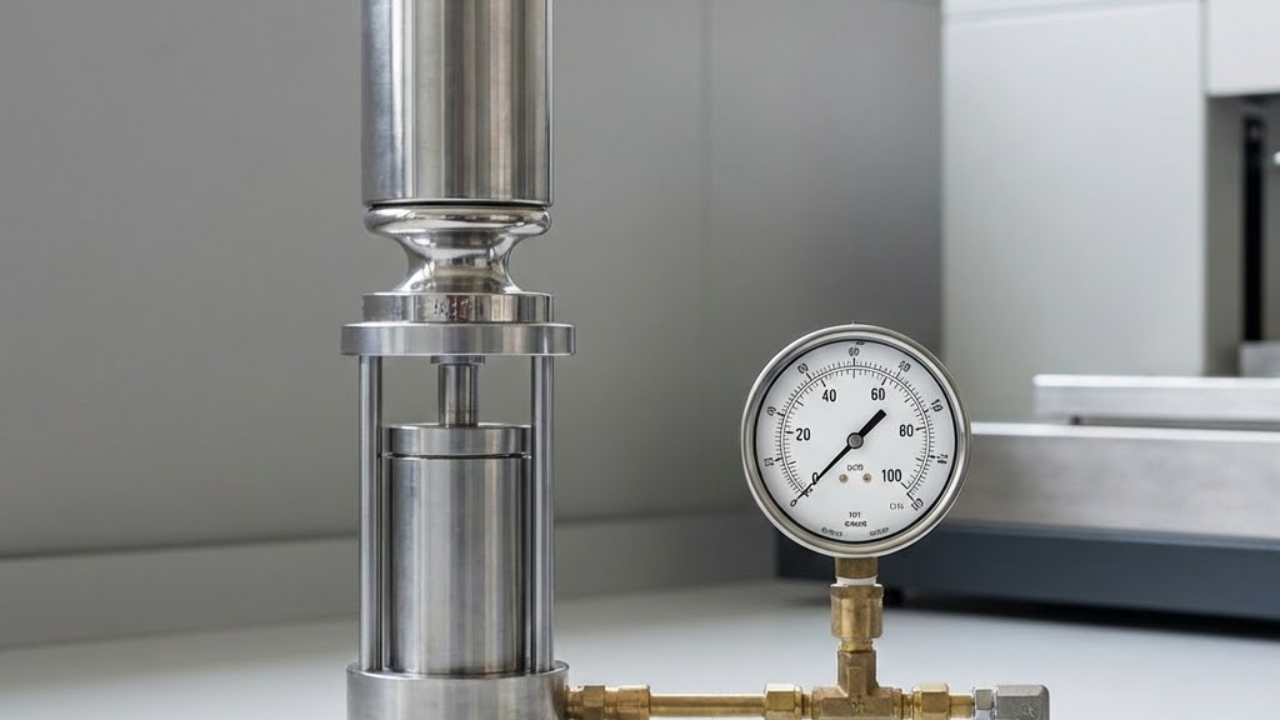
A commercial heating system running at 3.5 bar when it should be at 2 bar isn't just a minor inconvenience. It's a system failure waiting to happen. Expansion vessels can rupture, safety valves discharge prematurely, and circulation pumps work harder than they need to. The root cause? Often, it's a pressure gauge that's drifted out of calibration, giving you false readings and leading to incorrect system adjustments.
Pressure gauges are the eyes of any heating or plumbing system. They tell you whether your pressurisation unit is maintaining the correct charge, if your boiler is operating within safe parameters, and whether that new circulator pump is delivering the head you calculated. But like any measurement instrument subjected to vibration, temperature swings, and constant pressure cycling, gauges drift. When they do, every decision you make based on that reading is compromised.
Pressure gauge calibration isn't just about regulatory compliance or ticking boxes on a maintenance schedule. It's about ensuring the data you're using to diagnose faults, commission systems, and specify components is accurate. A gauge reading 0.3 bar low might not sound significant, but on a sealed system with a narrow operating window, it's the difference between correct operation and a callback.
What Actually Happens During Calibration
Pressure gauge calibration compares your gauge against known traceable standards, typically a deadweight tester or a high-accuracy reference gauge that's been certified to national or international standards. The process applies a series of known pressures across the gauge's range and records the actual reading at each point. If your gauge reads 2.1 bar when the applied pressure is actually 2.0 bar, that 0.1 bar error is documented.
A deadweight tester is the gold standard for pressure gauge calibration. It generates pressure using precisely machined weights on a piston, and the pressure produced is determined by physics (force divided by area), not by another gauge. The weights themselves are traceable standards, certified back to national measurement institutes. In the UK, that traceability chain leads to the National Physical Laboratory (NPL). This NPL traceability means your gauge's accuracy can be proven through an unbroken chain of calibrations, each referenced to the national standard.
Think of it like a watch that loses a minute every week. You don't notice the first day, maybe not the first week, but after a month you're late to everything. Pressure gauges drift the same way - gradually, invisibly, until your readings are so far off they're actively misleading you.
For most heating and plumbing applications, acceptable accuracy is typically ±2% of full scale. What's called accuracy class specification in the industry. On a 0-10 bar gauge with Class 2.5 accuracy, that's a potential error of 0.25 bar anywhere across the range. A gauge showing 2.5 bar could actually be seeing anything from 2.25 to 2.75 bar and still be within spec. Get outside that tolerance, and the gauge either needs adjustment (if possible) or replacement.
The calibration certificate you receive isn't just paperwork. It's a traceable standards document showing as-found condition (what errors existed before any adjustment), as-left condition (the accuracy after calibration or adjustment), traceability (a chain of reference back to national standards), and uncertainty (the confidence level in the calibration itself).
That traceability matters. When you're commissioning a commercial system and the building surveyor questions your pressure readings, a calibrated gauge with a valid calibration certificate backs up your numbers. Without it, you're just offering an opinion. With it, you've got documented proof that your measurements are accurate within stated tolerances and traceable to national standards.
When Calibration Becomes Non-Negotiable
Not every gauge needs annual pressure gauge calibration. The 0-4 bar gauge on a domestic boiler that's been reading consistently for three years and still matches the system behaviour? Probably fine. But there are scenarios where calibration isn't optional. It's a requirement driven by regulation, safety, or simple economics.
Commissioned systems with performance guarantees are the obvious example. If you've specified a pressurisation unit to maintain a system at 1.5 bar ±0.2 bar, and the contract includes performance penalties, you need calibrated instrumentation to prove compliance. A gauge that's drifted 0.3 bar low means you're actually running at 1.8 bar, potentially causing premature safety valve operation and failed acceptance tests.
Safety-critical applications demand it. Any system where pressure excursions could cause injury (high-temperature hot water systems, steam boilers, pressure testing of pipework) requires gauges you can trust absolutely. Heating and Plumbing World supplies pressure test equipment for these applications, and the advice is always the same: if you're pressure testing to prove integrity, your gauge needs a current calibration certificate.
Diagnostic work on complex systems is another trigger. When you're troubleshooting a hydraulic imbalance across a multi-zone heating system, and the differential pressure readings don't make sense, the first question should be: when were these gauges last checked? An engineer once spent hours chasing a phantom fault on a commercial system, only to discover the gauge on the primary circuit was reading 0.5 bar high. Pressure gauge calibration would have saved a day's labour.
Insurance and warranty requirements increasingly specify calibrated instrumentation for commissioning. Manufacturers of pressurisation units, expansion vessels, and pumps often state in their installation instructions that commissioning must be carried out with calibrated gauges. Ignore that, and you might find warranty claims rejected if a component fails and the commissioning records are questioned.
The Real-World Impact of Drift
Here's a scenario that plays out more often than it should. A facilities manager calls because a commercial boiler keeps locking out on high pressure. The engineer arrives, checks the gauge - it's reading 2.8 bar, just under the 3 bar cutoff. The expansion vessel seems fine, no obvious leaks, system fill pressure is correct according to the gauge. So the engineer adjusts the pressure relief valve up slightly to stop the nuisance lockouts.
Two weeks later, the safety valve starts weeping. Another visit. This time, the engineer brings a calibrated test gauge. The system gauge is reading 2.8 bar. The calibrated gauge reads 3.4 bar. The system's been running overpressure for weeks, the expansion vessel is waterlogged because it's been overwhelmed, and the safety valve has been doing exactly what it should - protecting the system from dangerous overpressure.
That's not hypothetical. It's a pattern that repeats wherever uncalibrated gauges are trusted without question. The cost isn't just the callouts. It's the damaged components, the downtime, and the reputational hit when the client realises the problem could have been caught earlier.
Pump selection is another area where gauge accuracy matters. Sizing a Grundfos or Lowara circulator requires accurate head calculations, and those calculations depend on knowing the actual system pressure at various points. A gauge that's 0.4 bar out skews your data, potentially leading to an oversized pump that wastes energy and causes noise, or an undersized one that can't deliver flow to the top floor.
Expansion vessel pre-charge is yet another critical application. When you're setting the charge pressure on an Altecnic Ltd expansion vessel, the gauge accuracy directly affects whether the vessel will function correctly. Set it 0.3 bar too low because your gauge is reading high, and the vessel won't absorb expansion properly. The system pressure will climb excessively during heat-up, and the safety valve will lift. That's Bourdon tube fatigue and calibration drift turning a straightforward installation into a callback nightmare.
How Often Should You Calibrate
The standard answer is annually, but that's a starting point, not a rule. Pressure gauge calibration frequency should be risk-based, considering how the gauge is used, the environment it operates in, and the consequences of inaccuracy.
High-use test gauges (the ones you carry in the van for commissioning and diagnostics) take a beating. They're connected and disconnected repeatedly, subjected to vibration during transport, and exposed to pressure shocks. These should be calibrated every 6-12 months, or after any event that might have damaged them (like being dropped or subjected to overpressure).
Permanently installed system gauges on stable, well-designed systems can often go longer between calibrations. 12-24 months is typical. But only if the system isn't experiencing pressure fluctuations, temperature extremes, or vibration from nearby pumps or pipework. A gauge mounted directly on a pump discharge with no isolation valve? That's seeing constant vibration and pressure pulsation. It'll drift faster due to Bourdon tube fatigue from repeated flexing cycles.
Reference gauges used for calibrating other instruments need more frequent attention, often 6 months or less, because they're the standard everything else is compared against. If your reference drifts, everything calibrated against it is wrong. These gauges need NPL traceability documentation and regular recertification to maintain their status as traceable standards.
Environmental factors accelerate drift. Gauges in boiler rooms with high ambient temperatures, or exposed to steam or condensation, degrade faster. Glycol systems can cause gauge internals to gum up if glycol vapour enters the Bourdon tube. For systems with Altecnic Ltd expansion vessels operating in demanding conditions, proper gauge calibration ensures accurate pressure monitoring.
Vibration from pumps, particularly older models without vibration damping, fatigues the gauge mechanism. That's Bourdon tube fatigue in action, where the metal loses its elastic properties from repeated stress cycles.
What Causes Gauges to Drift
Pressure gauges are mechanical devices, and like all mechanical devices subjected to stress, they wear. The Bourdon tube (the curved, flattened metal tube inside most pressure gauges) straightens slightly under pressure, and that movement is translated into needle rotation. Over time, repeated pressure cycling causes metal fatigue, and the tube no longer returns to exactly the same position when pressure is released. That's hysteresis, and it's one of the main causes of drift. Bourdon tube fatigue accumulates invisibly over thousands of pressure cycles until the gauge's zero point shifts or its span becomes non-linear.
Overpressure events are particularly damaging. A gauge rated to 10 bar that's subjected to a 12 bar spike during a pressure test might still appear to work, but the Bourdon tube has been permanently deformed. It'll read low across the range, and the error might not be obvious without pressure gauge calibration. Think of it like bending a paperclip. The first bend is reversible, but keep bending it back and forth, and eventually the metal work-hardens and snaps. Bourdon tubes don't snap, but they lose their calibrated spring characteristics.
Temperature effects matter too. Most gauges are calibrated at 20°C, and their accuracy class specification assumes operation near that temperature. Install a gauge in a boiler room at 35°C, and thermal expansion of the Bourdon tube and internal linkages introduces error. Quality gauges have temperature compensation, but it's not perfect. A gauge reading 2.0 bar at 20°C might read 2.1 bar at 40°C purely from thermal expansion, even with no actual pressure change.
Vibration is insidious. A gauge mounted on a pump discharge or close to a reciprocating compressor experiences constant mechanical shock. The pivot points in the movement wear, the needle bearing loosens, and the gauge starts to stick or read inconsistently. Liquid-filled gauges (glycerin or silicone) dampen vibration and significantly extend service life in these applications, but even they eventually succumb to Bourdon tube fatigue from sustained exposure.
Contamination is common in heating systems. Magnetite sludge, flux residue, or scale can enter the gauge connection if there's no isolation valve and strainer. Once inside the Bourdon tube, it restricts movement or clogs the mechanism. The gauge might stick, read erratically, or simply fail. On older systems, you'll sometimes find gauges where the needle barely moves because the Bourdon tube is partially blocked with debris.
Calibration vs Replacement: Making the Call
Not every out-of-spec gauge is worth calibrating. A £15 panel-mount gauge that's 0.5 bar out? Replace it. The cost of pressure gauge calibration (typically £30-60 per gauge, depending on range and accuracy class specification) exceeds the replacement cost. But a £200 digital pressure gauge with data logging and multiple range options? Calibration makes economic sense.
Accuracy class specification is the deciding factor. Class 1.0 gauges (±1% of full scale) and better are typically worth calibrating, especially if they're test instruments or reference standards with NPL traceability. Class 1.6 or 2.5 gauges (±1.6% or ±2.5% of full scale) are usually cheaper to replace unless they're permanently installed and difficult to access.
Pressure gauge calibration with adjustment can sometimes bring a drifted gauge back into spec, but it requires a gauge with an adjustment screw, usually only found on higher-quality instruments. Cheap gauges have no adjustment provision. They're either in spec or they're not. When a gauge fails its calibration certificate as-found readings, you need to decide: adjust if possible, or replace.
If a gauge has been subjected to severe overpressure, shows physical damage (cracked dial, bent needle, leaking), or has contamination inside the case, don't bother calibrating. Replace it. Pressure gauge calibration documents the current state. It doesn't repair mechanical damage or reverse Bourdon tube fatigue from permanent deformation.
Practical Calibration for Working Engineers
You don't need a metrology lab to verify your gauges are reasonably accurate. A simple field check using a deadweight tester or a calibrated reference gauge gives you confidence between formal calibrations.
Deadweight testers are the gold standard for pressure gauge calibration. They generate pressure using precisely machined weights on a piston, and the pressure produced is determined by physics (force divided by area), not by another gauge. They're traceable standards, accurate, and unambiguous. A basic kit suitable for 0-10 bar testing costs around £400-600, and it's a worthwhile investment if you're regularly commissioning systems or doing diagnostic work.
The beauty of a deadweight tester is that it's a primary standard. You're not comparing one gauge against another gauge. You're comparing against fundamental physics. The weights are certified, the piston area is precisely machined, and the pressure reading is mathematically certain. That's why deadweight testers maintain NPL traceability through weight certification rather than gauge-to-gauge comparison chains.
Alternatively, keep a calibrated reference gauge in the van. A high-quality instrument with a current calibration certificate showing NPL traceability that you use only for checking other gauges, never for routine work. Connect it alongside the gauge you're checking, apply pressure, and compare readings. If the difference exceeds the combined uncertainty of both gauges (check the calibration certificate for each gauge's stated uncertainty), the working gauge needs calibration or replacement.
For systems requiring sophisticated control, brands like Danfoss offer comprehensive control solutions that integrate with calibrated pressure monitoring equipment.
Document the checks. A simple logbook noting the date, gauge serial number, reference standard used, and the readings at several pressure points creates a record that demonstrates due diligence. If a gauge is consistently within spec during field checks, you can extend formal calibration intervals with confidence. The field checks don't replace formal pressure gauge calibration for critical applications, but they prevent wasting money calibrating gauges that are still reading accurately.
The Link Between Calibration and System Performance
Accurate pressure measurement isn't an end in itself. It's the foundation for correct system operation. When you're setting the charge pressure on an expansion vessel, the gauge accuracy directly affects whether the vessel will function correctly. Set it 0.3 bar too low because your gauge is reading high, and the vessel won't absorb expansion properly. The system pressure will climb excessively during heat-up, and the safety valve will lift.
Commissioning Danfoss controls or pressure-dependent valves requires knowing the actual differential pressure across the valve, not what an uncalibrated gauge thinks it is. If the gauge is wrong, the valve won't modulate correctly, and you'll get flow imbalances that no amount of adjustment will fix. Pressure gauge calibration ensures the valve sees the differential pressure your calculations specified.
For engineers working on commercial systems with building management systems (BMS), the pressure transducers feeding data to the BMS need periodic pressure gauge calibration too. A transducer that's drifted 0.2 bar might cause the BMS to make incorrect control decisions, running pumps harder than necessary, or failing to detect a slow leak because the pressure drop is masked by calibration error.
Systems using Honeywell or EPH Controls for zone management rely on accurate differential pressure signals to balance flow across multiple circuits. If the pressure sensors feeding those controls have drifted out of calibration, the entire control strategy falls apart. Zones get too much flow, others get starved, and the building never reaches thermal comfort despite the equipment working perfectly from a mechanical standpoint.
Building a Calibration Schedule That Works
Start by identifying which gauges are critical. Test equipment, commissioning gauges, and permanently installed gauges on safety-critical systems go on the annual pressure gauge calibration list. Panel-mount gauges on non-critical systems can be checked less frequently, or simply replaced when they're obviously wrong.
Tag every gauge with a calibration label showing the last calibration date and the due date for the next one. It sounds basic, but it prevents the "I think this one was done last year" guesswork. Use a permanent marker or label printer to record the gauge serial number and calibration frequency. Include the accuracy class specification on the label so you know immediately whether it's a precision instrument requiring NPL traceability or a general-purpose gauge suitable for field checks.
Keep calibration certificates accessible. When a client or inspector asks for proof of calibration, you need to produce it immediately, not hunt through filing cabinets. A simple folder (physical or digital) with certificates filed by gauge serial number takes five minutes to set up and saves hours of frustration later. Include the NPL traceability chain documents if you're working on projects with formal quality management systems.
If you're running a maintenance contract or facilities management operation, build pressure gauge calibration into the planned maintenance schedule. Gauges come off-site for calibration during a routine service visit, and you fit calibrated spares in the meantime. The client gets continuous operation, and you maintain compliance without emergency callouts.
For larger organisations, tracking calibration due dates in a spreadsheet or maintenance management system prevents gauges falling out of certification. Set reminders 30 days before calibration is due, giving you time to schedule work without urgent last-minute panic. The calibration certificate from each recertification goes straight into the file, creating an audit trail that demonstrates consistent adherence to traceable standards.
Conclusion
Pressure gauge calibration isn't glamorous, and it's easy to dismiss as an administrative burden. But when you're diagnosing a system fault at 8pm on a Friday, and the gauge readings don't match the symptoms, you'll wish you'd spent the £50 on calibration six months ago. Accurate measurement is the difference between fixing the problem in one visit and chasing ghosts across multiple callouts.
Treat your gauges as the precision instruments they are, or should be. Calibrate them regularly using deadweight testers or traceable standards, replace them when they're beyond economic repair, and don't trust a reading just because it looks plausible. The systems you work on depend on accurate pressure data for safe, efficient operation, and that starts with knowing your gauges are telling you the truth.
Bourdon tube fatigue, temperature effects, vibration, and contamination all conspire to push gauges out of specification over time. Regular pressure gauge calibration with documented calibration certificates showing NPL traceability isn't bureaucracy. It's the difference between professional work backed by traceable standards and guesswork that leaves you vulnerable when things go wrong.
If you're specifying new instrumentation or need replacement gauges for critical applications, contact us for guidance on selecting the right accuracy class specification and calibration interval for your needs.