

Pressure Test Points: Installation in Heating Systems
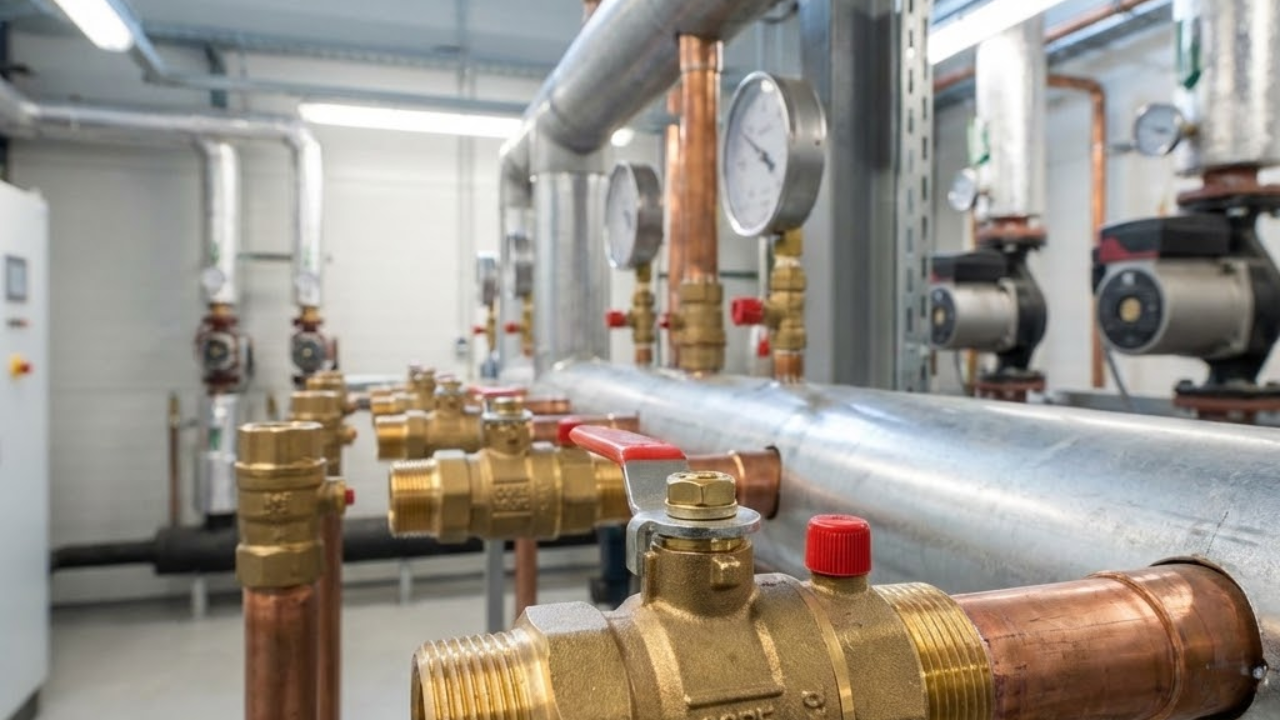
Every heating system needs proper commissioning and ongoing maintenance. Without reliable test points, you're working blind, unable to verify flow rates, diagnose pressure drops, or confirm system balance. A correctly installed pressure test points gives you direct access to system data that separates guesswork from precision through systematic test point installation.
Pressure test points aren't just about ticking boxes during commissioning. They're diagnostic tools that save hours when troubleshooting low radiator temperatures, pump cavitation, or unexplained efficiency losses. Get the test point installation right, and you'll have accurate readings for years. Rush it or cut corners, and you'll deal with leaking connections, air ingress, or readings that send you down the wrong diagnostic path entirely.
What Pressure Test Points Actually Do
A pressure test points is essentially a dedicated access port built into pipework or components. It allows you to connect gauges, data loggers, or diagnostic equipment to measure static pressure, differential pressure, or flow characteristics without disrupting system operation.
Think of them as diagnostic windows into your system. Without them, you're trying to diagnose a fault by listening to symptoms rather than checking vital signs directly. With core valve fittings or ball valve test ports properly installed, you've got immediate access to the pressure data that reveals what's actually happening inside the pipework.
In heating systems, these points serve multiple functions. During commissioning, they verify that design pressures match actual conditions across pumps, heat exchangers, and zone manifold pressure circuits. During maintenance, they help diagnose problems like blocked filters, failing pumps, or hydraulic imbalances that reduce system efficiency.
For comprehensive pressure monitoring solutions across all heating applications, Heating and Plumbing World stocks the test points and instrumentation that professional installations demand.
Where to Position Test Points for Maximum Value
Strategic placement matters more than quantity. A test point in the wrong location gives you data that doesn't answer the question you're trying to solve through effective test point installation.
Essential locations include immediately before and after circulators. This lets you measure pump head measurement differential pressure and verify performance against the pump curve. If you're seeing 3 metres of head when the curve says you should get 5 metres at that flow rate, you've got a problem worth investigating. Without pressure test points at these locations, you're guessing whether the pump's delivering design performance.
Either side of filters and strainers gives you differential pressure across filtration that tells you when elements need cleaning or replacement. A gradual increase over weeks indicates debris accumulation; a sudden jump suggests a blockage or collapsed filter media. Pressure test points here transform reactive maintenance into predictive scheduling through proper test point installation.
Monitoring pressure drop across plate heat exchangers or boiler heat exchangers identifies fouling before it cripples efficiency. Clean heat exchangers show predictable, stable pressure drops. Fouled units show increasing resistance. Test point installation at these locations provides early warning of performance degradation.
Checking zone manifold pressure at the start of each zone circuit during commissioning ensures balanced flow. If one zone shows significantly lower pressure than design calculations predicted, you've likely got an undersized pipe, a partially closed valve, or an installation error. Pressure test points reveal these issues immediately.
Position pressure test points where you can access them easily. A perfectly placed test point behind a boiler or under a floor void is useless if you can't reach it with a gauge during a callout.
Selecting the Right Test Point Hardware
Not all test points are created equal. The wrong fitting for the application leads to leaks, inaccurate readings, or connections that seize after one use.
Core valve fittings use a spring-loaded core similar to a car tyre valve. You push a gauge or hose connector onto the valve body, which depresses the core and allows fluid access. Release the connector, and the spring closes the valve automatically.
These work well for quick checks and routine maintenance through simple test point installation. They're compact, relatively inexpensive, and don't require you to isolate the system to take a reading. The downside? The spring mechanism can fail over time, especially in systems with debris or aggressive water treatment chemicals. They're also prone to weeping if the core seats incorrectly after repeated use.
Brands like Altecnic Ltd supply reliable core valve fittings designed specifically for heating applications, with brass bodies rated for typical system pressures and temperatures.
Ball valve test ports use a quarter-turn valve with a hose tail or gauge connection. You connect your equipment, open the valve to take readings, then close it when finished.
These provide a more positive seal than core valve fittings and handle higher pressures reliably. They're ideal for permanent installations on commercial systems where you'll take regular readings over years of operation. The trade-off is size. They're bulkier than core valves, and you need to remember to close them after use. Leave a ball valve test ports open, and you'll know about it quickly.
The quarter-turn valve design makes operation intuitive and provides positive feedback when fully closed, reducing the risk of accidentally leaving test points open during test point installation.
Schrader valves are the tyre-valve-style fittings you'll recognise from automotive applications. They're extremely compact and cheap, making them popular for residential installations where space is tight.
They work fine for occasional use, but they're not designed for the thermal cycling and chemical exposure typical in heating systems. Expect shorter service life compared to purpose-built heating test points. Use them where access is difficult and replacement is acceptable every few years.
Installation Best Practices That Prevent Problems
A test point is only as good as its test point installation. Rushed or careless fitting creates leak paths, introduces air, or gives you readings that don't reflect actual system conditions.
If you're installing a threaded test point, clean pipe threads thoroughly before assembly. Debris, cutting oil, or old PTFE tape fragments create leak paths or block the test point bore.
Use PTFE tape or liquid thread sealant rated for heating systems. Wrap PTFE tape clockwise (viewed from the end of the pipe) 4-5 times, keeping it back from the first thread to prevent material being pushed into the system. Liquid sealants work well on larger fittings but require curing time. Don't pressurise the system immediately after application.
Avoid over-tightening. Brass test point bodies crack easily if you apply excessive torque. Hand-tight plus one to one-and-a-half turns with a spanner is typically sufficient. If you're still seeing weeps after that, the problem is contamination or damaged threads, not insufficient torque.
For systems requiring sophisticated control and monitoring, brands like Danfoss offer comprehensive solutions that integrate with proper test point installation for complete system diagnostics.
Mount pressure test points so the connection faces outward and downward where possible. This keeps the valve body clear of debris and makes gauge connection easier. Upward-facing test points collect air and make bleeding difficult.
Leave enough clearance around the fitting for gauge connection and removal. A test point installed flush against a wall or buried behind pipework is effectively useless. Plan for at least 100mm of clear space in front of the connection point during test point installation.
Label every test point clearly with its function and location reference. "Pump 1 Inlet" or "Zone 2 Return" saves time during commissioning and prevents confusion during maintenance. Use engraved tags or heat-shrink labels that won't fade or fall off.
Document test point installation locations on system schematics and in the O&M manual. When you return to a system two years later for maintenance, you shouldn't have to hunt for test points or guess what they measure.
Taking Accurate Pressure Readings
Installing pressure test points is only half the job. Using them correctly determines whether you get actionable data or misleading numbers through proper pump head measurement technique.
Use a gauge with appropriate range and resolution for the measurement. A 0-10 bar gauge works well for most domestic heating systems. Commercial systems with higher pressures need gauges rated accordingly. Oversized gauges reduce reading accuracy. A 0-20 bar gauge used to measure 1.5 bar gives poor resolution.
Digital gauges provide better accuracy and readability than analogue types, especially for pump head measurement differential pressure measurements. They're worth the investment for professional diagnostic work.
Calibrate gauges annually against a known reference. A gauge reading 0.3 bar low might not seem significant, but it'll send you chasing phantom faults when you're trying to balance zone manifold pressure to within 0.1 bar across zones.
Air trapped in test point connections gives false readings. Before taking measurements from pressure test points, open the test point slightly and allow a small amount of water to escape, purging any trapped air. Close it, connect your gauge, then open fully for reading.
This is especially important on core valve fittings or ball valve test ports that haven't been used for months. Air migrates into closed valves over time through microscopic seal imperfections.
Many modern systems use Grundfos circulators with built-in differential pressure sensors, but external pressure test points remain essential for verifying sensor accuracy and diagnosing problems elsewhere in the system.
Pump head measurement differential pressure measurements compare pressure at two points to calculate resistance or verify flow. Measuring across a pump tells you actual head delivered. Measuring across a filter shows pressure drop due to resistance.
When measuring differential pressure, connect gauges to both pressure test points simultaneously and read the difference. Don't take two separate readings and subtract them. Temporal variations in system pressure (due to pump cycling or temperature changes) introduce errors.
Common Installation Mistakes and How to Avoid Them
Even experienced engineers make errors that compromise test point installation functionality. Recognising these patterns prevents repeated problems.
Pressure readings taken in turbulent flow give unstable, inaccurate results. Avoid positioning pressure test points immediately after bends, tees, or valves where flow is disrupted. Allow at least five pipe diameters of straight pipe upstream and two pipe diameters downstream for stable readings.
If space constraints prevent this, use a pitot tube or averaging sensor designed for turbulent conditions rather than simple core valve fittings.
Install isolation valves before pressure test points in commercial systems where you might need to replace or service the test point without draining down. Ball valve test ports either side of the test point let you isolate, remove, and reinstall without system disruption.
This adds cost and complexity, so it's typically reserved for critical measurement points on large systems. Domestic installations rarely justify the additional valves during test point installation.
Brass test points in systems with high copper content can suffer dezincification in aggressive water conditions. Stainless steel or DZR brass fittings prevent this. Check water treatment specifications and select materials accordingly during test point installation.
Similarly, ensure seals and valve cores are compatible with glycol if you're working on systems with antifreeze. Standard EPDM or nitrile seals swell and fail in glycol solutions. Use glycol-compatible materials specified by manufacturers like Danfoss.
Maintenance and Long-Term Reliability
Pressure test points need periodic attention to remain functional. Neglected fittings seize, leak, or give inaccurate readings when you need them most.
Once a year, connect a gauge to each test point and verify operation. Open and close quarter-turn valve or core valve fittings fully to prevent seizure. Check for weeping around threads or valve bodies.
This takes minimal time during annual boiler servicing but prevents the frustration of finding a seized test point when you're trying to diagnose a fault under time pressure.
Core valve fittings springs weaken over time. Ball valve test ports seals harden and crack. If a test point shows signs of wear (difficult operation, persistent weeping, or erratic readings) replace it. The cost of a new test point is trivial compared to the time wasted on inaccurate diagnostics.
Keep spare test points and seals in your van for common sizes. A failed test point during commissioning or fault diagnosis shouldn't halt work whilst you wait for parts.
Pressure test points on external pipework or in unheated spaces are vulnerable to freezing. Ice formation can crack valve bodies or damage seals. Insulate exposed test points or install them in heated locations where possible.
In systems with glycol antifreeze, ensure test point materials are compatible. Glycol attacks some seal materials and causes premature failure during test point installation.
Real-World Application: Diagnosing a Commercial System Fault
Consider a scenario where a facilities manager reports uneven heating across a three-zone commercial building. Two zones heat normally; one remains cold despite the zone valve showing open.
Without pressure test points, you'd be guessing, possibly replacing the zone valve, checking the circulator, or suspecting air locks. With properly positioned test points from systematic test point installation, diagnosis is systematic.
First, check pump head measurement differential pressure across the main circulator. It matches the pump curve, so the pump is working correctly. Next, measure static pressure at each zone manifold pressure point. Zones one and two show expected pressures; zone three shows significantly lower pressure.
Now you know the problem is between the manifold and zone three. Check differential pressure across the zone valve using ball valve test ports. It's negligible, confirming the valve is open. Measure pressure at the zone three return. It's even lower than the flow pressure, which shouldn't be possible in a functioning circuit.
This points to a blockage or closed valve in the return pipework. Physical inspection finds a partially closed balancing valve that someone adjusted incorrectly during previous maintenance. Ten minutes to correct the valve setting through quarter-turn valve adjustment, and the system is balanced.
Total diagnostic time: 20 minutes. Without pressure test points, you'd have spent hours checking components, possibly replacing parts unnecessarily, and still not found the root cause.
Integration with Modern Control Systems
Contemporary heating systems increasingly use electronic pressure sensors and data logging for continuous monitoring. These complement rather than replace physical pressure test points from proper test point installation.
Electronic sensors provide real-time data and alert you to gradual changes that indicate developing faults, like a slowly increasing pressure drop across a heat exchanger as fouling accumulates. But sensors fail, drift out of calibration, or give false readings due to electrical interference.
Physical pressure test points let you verify sensor accuracy independently. If a sensor reports 2.5 bar but your calibrated gauge at the nearby test point shows 2.1 bar, you know the sensor needs recalibration or replacement. Without ball valve test ports or core valve fittings, you'd trust faulty sensor data until a system failure forced investigation.
Brands like Honeywell integrate pressure monitoring into building management systems, but they still recommend physical pressure test points for commissioning and verification.
Regulatory and Best Practice Considerations
Whilst UK regulations don't specifically mandate test point installation in most domestic heating systems, BS 7593 (Code of practice for treatment of water in domestic hot water central heating systems) recommends provision for system monitoring and maintenance.
Commercial systems under BSRIA commissioning guidelines require documented pressure testing and flow verification, which is impractical without properly installed pressure test points. Building services engineers specify test point locations during design, and installation contractors must implement them correctly for successful commissioning.
Even where not mandated, pressure test points represent best practice. They reduce diagnostic time, improve maintenance efficiency, and provide objective evidence of system performance. For professional installers, they're a mark of quality that distinguishes competent work from minimum-compliance installations.
Conclusion
Pressure test points transform heating system diagnostics from guesswork into precision measurement through proper test point installation. When installed correctly in strategic locations, they provide the data you need to commission systems accurately, diagnose faults quickly, and verify performance over time.
Choose appropriate hardware for the application. Core valve fittings for quick checks, ball valve test ports for permanent installations requiring positive isolation using quarter-turn valve operation. Install them in accessible locations with adequate clearance, using proper pipe preparation and compatible materials. Label clearly and document locations for future reference.
Maintain pressure test points through annual inspection and exercise to prevent seizure and ensure reliability when you need them. Use calibrated gauges and proper bleeding procedures to get accurate readings that reflect actual system conditions.
The modest cost and test point installation time for pressure test points pays back many times over through reduced diagnostic time and improved system performance. Whether you're commissioning a new installation or maintaining an existing system, test points are essential tools that separate professional work from amateur installations through effective pump head measurement, zone manifold pressure monitoring, and comprehensive system diagnostics.
For quality components and expert support, Heating and Plumbing World supplies the pressure test points and associated hardware that professional engineers rely on. If you need specific advice on test point installation selection or installation for your project, contact us for technical support tailored to your requirements.