

Preventing PCB Water Damage: Condensate and Leak Protection
Water and electronics simply do not mix. This isn't merely an opinion; it is a fundamental law of physics. Yet, every single week, technicians replace printed circuit boards that failed because of preventable water exposure. Usually, the culprit is a lack of preventing PCB water damage by ignoring condensate drips or refrigerant leaks until the board stops working.
A replacement PCB costs anywhere from £150 to £600 depending on the system. When you add labour, call-out fees, and downtime, you are looking at £400–£1,000 per failure. Most of these failures trace back to water damage that developed over weeks or months. Think of water on a PCB like termites in a wooden house. You might not see the damage immediately, but the internal structure is being destroyed.
The warning signs are almost always present before a total failure occurs. For example, a slight drip near the evaporator coil or moisture around drain lines indicates a serious problem. These aren't mysterious failures. Instead, they are the predictable outcomes of ignored maintenance.
How Water Reaches Your PCB
Most HVAC systems mount control boards in locations that should keep them dry. However, reality often differs in the field. At heating and plumbing supplies, we find that condensate drain issues cause roughly 60% of water-related PCB failures. When drain lines clog, water inevitably backs up and creates issues.
It doesn't always overflow visibly. Sometimes, it just creates enough humidity inside the air handler to condense on the control board. Refrigerant leaks create another common pathway for moisture. A slow leak from an evaporator coil does not just reduce cooling capacity. It also creates localised cold spots that attract heavy condensation.
That moisture eventually drips onto whatever sits directly below, which is often the electrical components. Poor installation practices account for the remaining failures. I have seen boards mounted directly below condensate pans with zero protection. Water follows gravity and always finds the path of least resistance. If your PCB sits in that path, preventing PCB water damage becomes much harder to achieve.
The Progressive Stages Of Moisture Damage
The damage to your electronics usually happens in distinct stages. Understanding this progression helps you catch problems before they become terminal. Initially, you might only see surface moisture where droplets contact the board but haven't penetrated. At this point, shutting down the system and drying the board can prevent any permanent harm.
However, once moisture bridges two points with different electrical potentials, electrolytic corrosion begins. This is a chemical reaction that eats away at the metal components on the board. This happens incredibly fast and can occur within hours if the board remains powered. You will see green or white deposits forming around solder joints.
At this stage, the board starts behaving erratically because electrolytic corrosion is breaking electrical connections. The final stage is complete circuit failure where the board stops functioning entirely. At this point, cleaning the surface won't help you. You are forced to buy a new one, as the internal circuits are likely ruined.
Condensate Management: Your First Line Of Defence
Effective condensate management is vital for protecting your electronics. Primary drain lines need clear paths and a proper pitch. That means a minimum 1/4-inch drop per foot of horizontal run. If the pitch is too shallow, the water moves too slowly. Consequently, biofilm builds up and creates a blockage.
You should follow these steps to ensure proper condensate management:
- Check drain lines quarterly: Don't wait for an annual visit to check for clogs.
- Perform a flow test: Pour water mixed with bleach through the pan and watch where it exits.
- Monitor the speed: If it drains slowly or backs up, clear the line immediately.
- Inspect secondary lines: Ensure emergency lines terminate somewhere visible so you notice if they are in use.
Furthermore, if your system uses a Worcester Bosch condensate pump, you should install a safety switch. These switches shut down the unit when the water level rises too high. This simple addition prevents thousands of pounds in potential damage.
Physical Protection Strategies
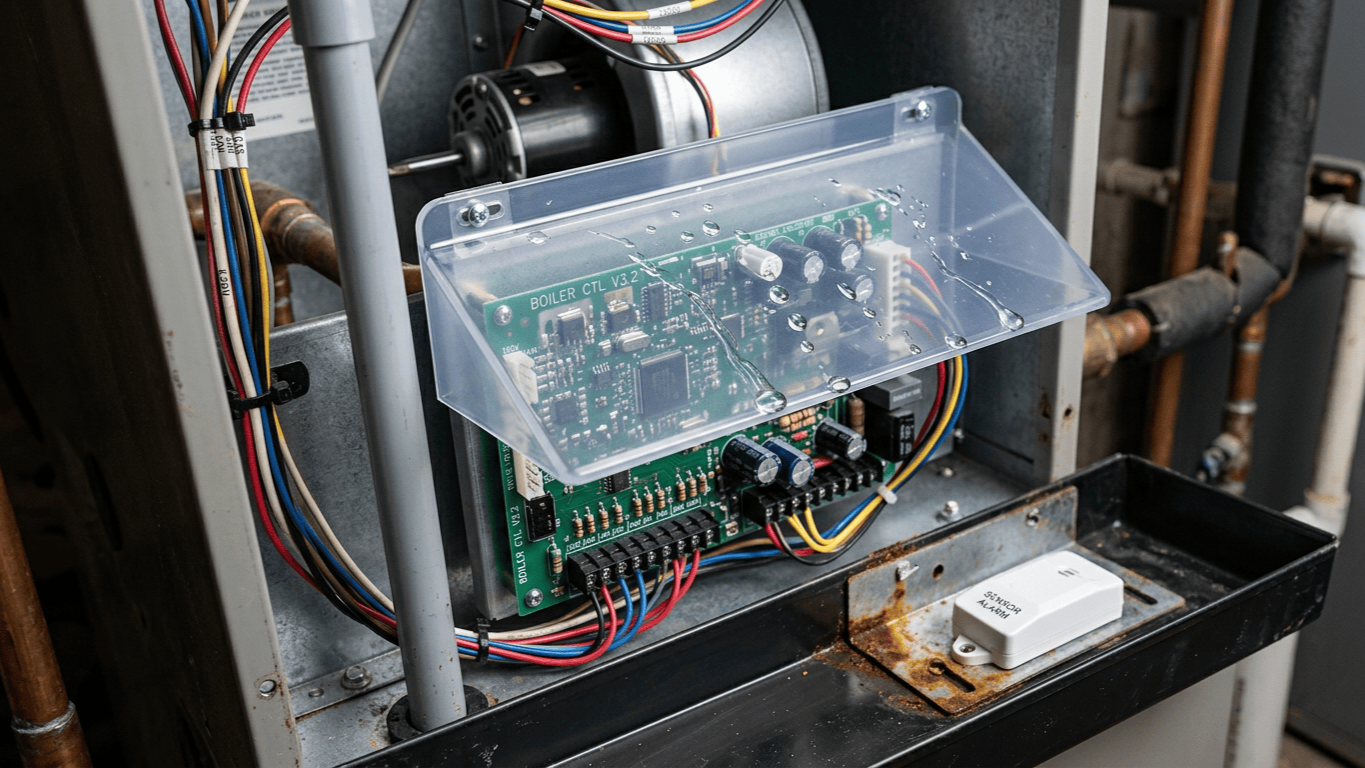
Using physical drip shields is a simple and effective way to protect your boards. A piece of sheet metal or rigid plastic positioned above the PCB deflects water away. While drip shields don't fix the underlying leak, they buy you valuable time before damage occurs.
You can easily fabricate these drip shields from materials found at any hardware store. The shield needs to extend several inches beyond the board's edges. Furthermore, it must angle the water toward a safe drainage point. If you are servicing a Worcester trap washer set, check that the surrounding area is dry.
Sealed enclosures offer better protection, but they create new challenges. Electronics generate significant heat. If you seal them too tightly, you will cook the components instead of drowning them. Always ensure adequate ventilation or use enclosures rated for the specific heat load your board produces.
Conformal Coating And Moisture Barriers
Applying a conformal coating protects the board itself from the elements. This is a clear protective layer that covers the entire PCB surface and creates a moisture barrier. Many manufacturers apply this conformal coating at the factory. You can also have boards professionally coated after installation for extra security.
However, conformal coating is not a magic solution. It protects against high humidity and minor condensation. It will not save a board that is completely submerged in water. Think of it as insurance rather than a substitute for proper drainage and condensate management.
Mounting location matters more than most installers realise. Control boards should sit in the driest part of the air handler. They should be as far from potential water sources as possible. If you are replacing a faulty Gledhill temperature sensor, take a moment to evaluate the mounting location.
Leak Detection And Early Warning Systems
Visual inspections catch most problems if you know what to look for. During your monthly checks, you should look for the following signs:
- Condensation on lines: This often indicates insulation failure or refrigerant leaks.
- Water stains: Check the air handler panels and the floor for any signs of runoff.
- Internal moisture: Look inside electrical compartments for any dampness or fogging.
- Visible corrosion: Inspect screws or brackets near the PCB for rust or mineral deposits.
Automated water detection sensors provide an extra layer of monitoring. These inexpensive devices sound an alarm when they contact water. You should place these water detection sensors in drain pans and near the PCB mounting area.
If a Baxi temperature sensor detects unusual thermal shifts, it could also be a sign of moisture affecting accuracy. The best water detection sensors integrate with building management systems. This is vital for remote locations where a leak could go unnoticed for days.
Maintenance Protocols That Actually Work
Your quarterly inspections should include a drain line flush and flow test. You should also clean the drain pan and apply treatment. Always perform a visual check of all refrigerant connections. This proactive approach is the core of preventing PCB water damage effectively.
Annual deep maintenance is also required for long-term reliability. This includes a refrigerant pressure test to detect slow leaks. You should also inspect the insulation on all refrigerant lines. If you are installing a Firebird plastic flue kit, ensure all seals are watertight.
On a recent service call, a technician noticed a tiny spot of rust on a mounting bracket. He ignored it, thinking it was just old age. Two months later, that "old age" turned out to be a slow drip from the coil above. The water eventually reached the main board, resulting in a £500 replacement that a simple drip shield could have prevented.
Emergency Response: When Water Reaches The Board
If water reaches the board, an immediate shutdown is non-negotiable. Do not try to see if it still works while it is wet. Power flowing through a wet board accelerates electrolytic corrosion exponentially. You must kill the power at the breaker immediately.
Remove the board from the air handler entirely. Leaving it in place exposes it to continued humidity. Rinse the board gently with distilled water. This removes contaminants without leaving mineral deposits. Then, you must let the board air-dry in a warm environment for at least 24 hours.
Inspect the board thoroughly before reinstalling it. Look for any signs of discolouration or damaged components. If you see green or white deposits, the board likely needs professional cleaning or a full replacement. Most importantly, you must fix the water source before powering the system back up.
The Economics Of Prevention
A typical PCB replacement is an expensive event. Preventing that failure requires very little investment. Quarterly drain maintenance takes about 15 minutes. Annual refrigerant checks take 30 minutes. Water detection sensors are a one-time cost of roughly £50.
The math is not complicated. An hour of preventive maintenance per year costs far less than a single board replacement. Yet, most systems do not receive this basic care until something fails. By implementing simple drip shields and proper condensate management, you protect your profit margins.
Long-term system design should also build water protection in from the start. Mount PCBs high in the air handler. Separate electrical compartments from areas that handle condensate. These small design choices extend the life of your equipment significantly.
Conclusion
Water damage to HVAC control boards is entirely preventable. The failures happen because systems do not receive basic maintenance and protection measures. Clear drain lines and functional safety switches eliminate the vast majority of water-related failures.
The control board is the brain of your HVAC system. Protecting it from water is not complicated or expensive. It just requires attention to the details that too many installations ignore. A simple drip shield or a water sensor can save you from an emergency replacement.
You do not need advanced technical knowledge to protect your electronics. You simply need a maintenance schedule and the discipline to follow through. The systems that run for 20 years without board failures are the ones that are properly maintained. If you need help selecting the right protection for your system, please speak to our team for expert advice.