

PTFE Tape Application: Plumbing Thread Sealing Best Practices
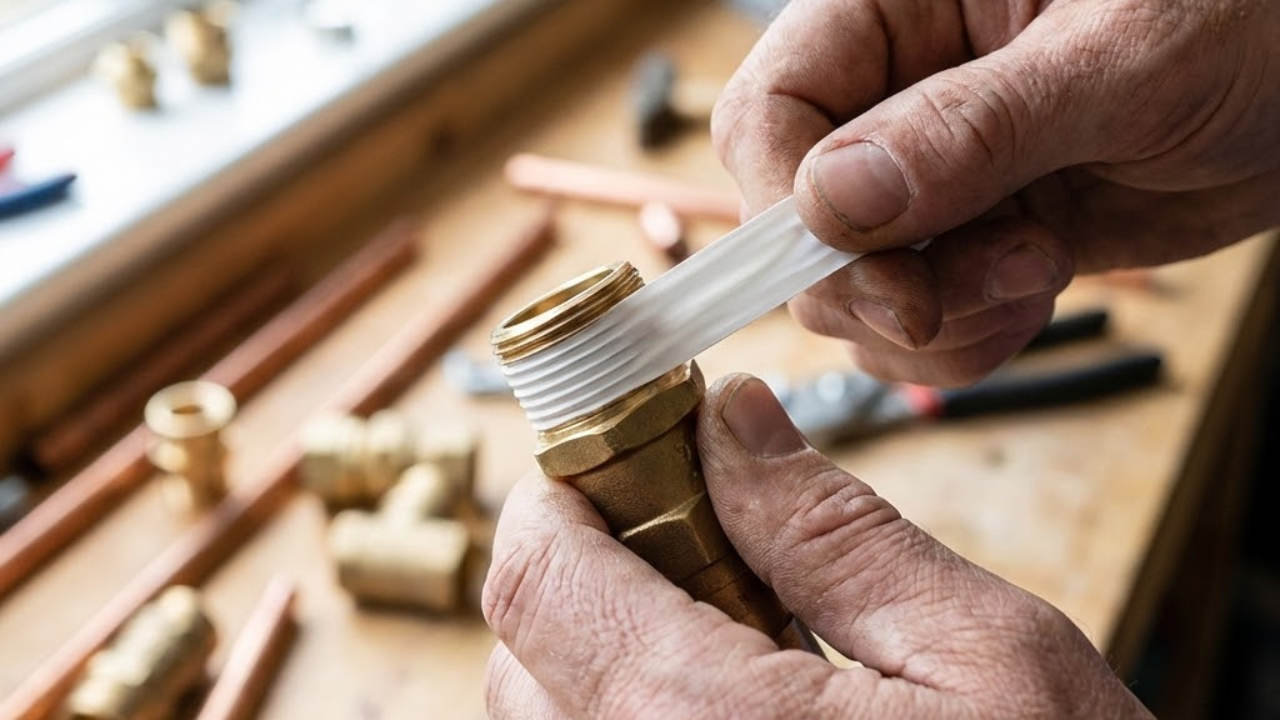
A dripping connection at 2am on a winter Saturday isn't just an inconvenience. It's a callback that costs you money, damages your reputation, and leaves a customer questioning whether they hired the right engineer. Nine times out of ten, the culprit isn't a faulty fitting or a manufacturing defect. It's improper PTFE tape application.
Thread sealing remains one of the most fundamental skills in plumbing and heating work, yet it's also one of the most commonly misapplied. The difference between a leak-free joint and a weeping connection often comes down to how you wrap that tape: the direction, the tension, the number of passes, and knowing when PTFE tape isn't the right choice at all.
Heating and Plumbing World supplies thousands of engineers with quality plumbing fittings and sealing materials, and we've seen firsthand how proper technique eliminates the majority of joint failures. This guide covers the practical fundamentals that separate reliable installations from problem jobs.
Understanding PTFE Tape Properties
Polytetrafluoroethylene tape (universally known as PTFE or plumber's tape) works through a combination of mechanical fill and chemical resistance. The material itself doesn't act as an adhesive. Instead, it fills the microscopic gaps between male and female threads, creating a barrier that prevents fluid or gas from finding a path through the connection.
Standard white PTFE tape has a density of approximately 0.2-0.3 g/cm³ and can withstand temperatures from -240°C to +260°C. That thermal range covers virtually every domestic and commercial heating application you'll encounter. The tape's chemical inertness means it won't degrade when exposed to most common fluids: water, glycol mixes, oils, and weak acids.
The tape's low friction coefficient (around 0.05-0.1) provides a secondary benefit: it reduces the torque required to tighten threaded connections. This matters more than you might think. Over-torquing brass fittings causes cracks that won't leak immediately but will fail months later when thermal cycling stresses the damaged material.
Think of PTFE tape as a gasket material that you custom-form to each specific thread profile. The threads cut into the tape as you tighten the joint, moulding it into the exact shape needed to seal that particular connection.
Selecting the Right PTFE Tape Type
Not all PTFE tape performs identically. Walk into any merchant and you'll see white tape, yellow tape, pink tape, and various thicknesses. Each serves specific applications, and using the wrong type increases failure risk.
Standard white PTFE tape (typically 12mm wide, 0.075mm thick) handles most water plumbing applications. It's rated for low-pressure water systems, radiator connections, and general heating pipework. This is your everyday tape for copper, brass, and mild steel threads in domestic installations.
Yellow BS 7786 gas-rated tape (usually thicker at 0.1mm or more) meets requirements for natural gas and LPG applications. The increased thickness provides better sealing on gas threads, which often have coarser profiles than water fittings. Never use standard white tape on gas connections. It's not about the colour, it's about the density and certification.
Pink or red PTFE tape indicates higher density formulations designed for larger diameter pipes or higher-pressure applications. Some manufacturers produce extra-thick variants (up to 0.25mm) specifically for industrial pipework or steam systems.
Thread pitch and diameter influence tape selection. Fine threads (like those on radiator valves or compression adaptors) need thinner tape applied with more wraps. Coarse threads (common on larger bore steel pipe) benefit from thicker tape with fewer passes.
A roll of quality tape costs £2-3 and lasts for dozens of connections. Cheap tape tears easily, has inconsistent thickness, and often lacks the tensile strength to wrap properly. It's false economy that leads to callbacks.
Proper Application Technique
Here's where most leaks originate. Not from using PTFE tape, but from wrapping it incorrectly. The tape must be applied in the clockwise wrapping direction matching thread engagement, so that tightening the joint pulls the tape into the threads rather than bunching it up or unwinding it.
Hold the male fitting in your left hand (reverse if you're left-handed) with the threads pointing away from you. The first wrap starts two threads back from the end. Never wrap the first thread, as this creates a lip that prevents full engagement and can tear off inside the joint.
Pull the tape clockwise around the threads when viewed from the end. This matches the direction you'll turn the fitting when tightening it into the female connection. If you wrap anti-clockwise, the action of screwing the fitting in will unwrap your careful work.
Apply moderate tension (enough to stretch the tape slightly, about 10-20% elongation) so it conforms to the thread profile, but not so much that it tears or becomes transparent. The tape should overlap by about half its width on each pass, creating a uniform layer that covers the threads completely.
Three to five wraps suffice for most applications. More isn't better. Excessive tape creates a hydraulic wedge effect that can crack female fittings or prevent threads from engaging properly. You should still see the thread profile through the tape. If you've created a white blob that obscures the threads completely, you've used too much.
After wrapping, smooth the tape down with your thumb, pressing it firmly into the thread valleys. This final step ensures the tape won't bunch or tear during assembly. Some engineers tear the tape cleanly; others prefer to fold it back on itself to create a neat finish. Both work. Consistency matters more than method.
Direction and Wrap Count Guidelines
The clockwise rule (when viewing the male thread end-on) applies to standard right-hand threads, which account for 99% of plumbing and heating connections. Left-hand threads exist on some speciality fittings (typically marked with an "LH" stamp) and require anti-clockwise wrapping.
Wrap count depends on thread condition and fitting type:
- New, clean threads on quality brass fittings: 3 wraps minimum, 4 for security
- Worn or damaged threads: 5-6 wraps to compensate for poor thread contact
- Stainless steel threads (which have lower friction): 4-5 wraps
- BSPT tapered thread applications: 4-5 wraps, ensuring complete coverage
- Parallel threads with sealing washers: PTFE tape isn't required. The washer provides the seal.
Radiator valve connections present a common scenario. The 1/2" BSP thread on a standard valve tail needs four wraps of standard white tape. Start the first wrap just behind the second thread from the end, and finish with the tape edge aligned with the final engaged thread. When you tighten the valve tail into the radiator, the tape compresses into the threads and creates a reliable seal.
On larger diameter connections (say, a 1" BSP fitting on a commercial cylinder) you might need five wraps simply because the greater thread length provides more potential leak paths. The principle remains identical: enough tape to fill the thread gaps without over-packing the joint.
Common Application Mistakes
Wrapping in the wrong direction tops the list of PTFE tape failures. Anti-clockwise wrapping (for right-hand threads) means the act of tightening the fitting unwinds your work. You'll feel the joint tighten normally, but the tape bunches at the entry point rather than bedding into the threads. It might not leak on initial pressure testing, but thermal cycling or vibration will eventually open a leak path.
Covering the first thread creates a rolled edge that prevents full thread engagement. The fitting stops short of its proper seating position, leaving fewer threads engaged and reducing joint strength. Worse, the rolled tape can shear off and travel into the system, potentially blocking strainers or damaging pump seals.
Over-application causes multiple problems. Excessive tape in a female brass fitting generates radial stress that can crack the fitting body. You won't see the crack until the joint fails weeks later. On parallel threads, too much tape prevents the sealing face from making proper contact, ironically causing the leak you're trying to prevent.
Under-application leaves gaps in thread coverage where fluid can migrate through the joint. Two wraps might look sufficient, but thread manufacturing tolerances mean microscopic gaps exist even on quality fittings. Three wraps minimum ensures complete coverage even with slight thread imperfections.
Using PTFE tape on compression fitting seal applications ranks as a persistent myth. The olive provides the seal on a compression joint. PTFE tape on the threads serves no purpose and can prevent proper compression of the olive. Similarly, push-fit connections rely on an internal grab ring and O-ring seal. Adding PTFE tape to the pipe end interferes with the O-ring and can cause leaks.
On a residential heating installation last winter, an apprentice wrapped PTFE tape onto the female threads of radiator valves across an entire house. The tape bunched up when the valve tails were tightened, preventing proper engagement. Every single joint wept within days of system commissioning. Complete re-work was required—a painful lesson about wrapping only male threads.
When PTFE Tape Isn't Appropriate
Certain connections require different sealing methods. Compression fittings on copper or plastic pipe use an olive (ferrule) that deforms under pressure to create a metal-to-metal seal. PTFE tape on the threads might help prevent corrosion, but it doesn't contribute to sealing and can give false torque readings that lead to under-tightening.
Flared fittings (common on gas and refrigeration work) seal at the flared face. The threads simply hold the connection together. PTFE tape here is unnecessary and potentially problematic. If tape fragments contaminate a refrigeration circuit, you're looking at a complete system flush or replacement.
BSP parallel threads with bonded seals (Dowty washers) seal at the washer, not the threads. The washer compresses between the male shoulder and female face to create a positive seal. PTFE tape on these threads serves no function.
Oxygen service connections must never use standard PTFE tape. Oxygen under pressure can cause organic materials to ignite. Specialist oxygen-rated PTFE tape exists, but many oxygen systems use metal-to-metal seals or specialist compounds instead. If you're working on medical gas or welding oxygen systems, verify the correct sealing method before proceeding.
Potable water connections in some jurisdictions require WRAS-approved or NSF-certified tape. Standard PTFE tape is generally acceptable, but check local water authority requirements. Some specifications mandate specific products for drinking water applications.
Danfoss valves, for example, include models with pre-fitted seals that don't require additional PTFE tape on certain connections. Always check manufacturer instructions. Some modern fittings incorporate sealing technology that makes tape redundant or even counterproductive.
PTFE Tape vs. Thread Sealant Compounds
Thread sealant paste (often called jointing compound or pipe dope) offers an alternative to PTFE tape. These paste compounds typically contain PTFE particles suspended in a carrier medium, along with fillers that help seal larger gaps or imperfect threads.
Paste sealants excel in several scenarios:
- Large diameter threads (over 2") where tape application becomes unwieldy
- Damaged or worn threads that need gap-filling beyond tape's capability
- Vibration-prone connections where tape might work loose over time
- Tapered threads on cast iron or steel pipe where the paste's gap-filling properties help compensate for rough thread surfaces
The paste stays in place during fitting assembly, whereas tape can bunch or tear if you need to reposition a fitting. For applications like connecting a large circulator pump where precise angular alignment matters, paste lets you adjust the fitting position without compromising the seal.
However, paste has drawbacks. It's messier to apply, can contaminate system water if used excessively, and makes future disassembly more difficult. Paste also has temperature limitations. Some compounds degrade above 100°C, making them unsuitable for high-temperature heating systems.
Combining PTFE tape and paste provides belt-and-braces sealing for critical connections. Apply tape first using standard technique, then brush a thin layer of paste over the taped threads. This approach suits high-pressure applications or connections you absolutely cannot allow to fail, though if you've specified and installed the system correctly, it shouldn't be necessary for routine work.
For most heating and plumbing applications, PTFE tape alone provides reliable sealing when applied correctly. It's clean, easy to use, and makes future maintenance simpler. Save the paste for situations where tape's limitations become apparent.
Thread Preparation and Cleaning
Perfect PTFE tape application can't compensate for dirty or damaged threads. Before wrapping any connection, inspect the threads carefully. Look for crossed threads, burrs, corrosion, or damage from previous over-tightening.
Clean threads with a wire brush or cloth to remove old jointing compound, corrosion, or debris. Even a thin film of oil or cutting fluid from manufacturing can reduce tape adhesion and allow it to slip during assembly. White spirit or degreaser works well for removing stubborn residues. Just ensure the threads are completely dry before applying tape.
Damaged threads need addressing before you reach for the tape. Minor burrs can be cleaned up with a fine file or thread chaser. Crossed threads or significant damage mean the fitting needs replacing. PTFE tape fills microscopic gaps, not millimetre-scale thread damage.
On new copper pipe that you've cut and threaded on site, remove all cutting oil and metal particles. These contaminants will travel into the system if you don't clean them off. A quick wipe with a cloth dampened with white spirit takes seconds and prevents future problems.
The female thread also deserves attention. Look inside with a torch to check for debris, old PTFE tape fragments, or damage. A pipe cleaner or small brush helps remove debris from female threads. If you're reusing a fitting, ensure all old tape is removed. Layering new tape over old creates an inconsistent seal.
Testing and Verification
Proper testing confirms your PTFE tape application has created a leak-free joint. Visual inspection during tightening provides the first check. You should see the tape compress evenly into the threads without bunching at the entry point or tearing.
Pressure testing remains the definitive verification method. For heating systems, this typically means testing to 1.5 times the maximum operating pressure for at least 30 minutes. A system designed for 3 bar operating pressure should hold 4.5 bar without pressure drop during the test period.
Watch for weeping joints during pressure testing. A slow drip indicates insufficient tape or improper application. Don't simply add more pressure to "seat" a weeping joint. This can mask a problem that'll reappear during operation. Instead, drain down, disassemble the joint, and rewrap with correct technique.
Thermal cycling reveals joints that pass initial pressure testing but fail under operating conditions. After pressure testing, run the system through several heating cycles. Thermal expansion and contraction stress every joint. Properly sealed connections handle this without leaking.
For gas installations, pressure testing must follow Gas Safe requirements. This typically involves testing at 20 mbar for 2 minutes minimum, with permissible pressure drop specified by regulations. Yellow gas-rated PTFE tape meeting BS 7786 is mandatory for these applications.
Grundfos pumps commonly used in heating systems operate at various pressures depending on application. A correctly sealed pump connection should show no sign of moisture around the union after system commissioning and thermal cycling.
System-Specific Considerations
Heating systems present unique challenges for thread sealing. The combination of elevated temperatures (up to 85°C in domestic systems, higher in commercial applications) and pressure cycling as the system heats and cools stresses every joint. PTFE tape's thermal stability handles these conditions well, but application technique becomes critical.
Radiator valve connections experience frequent temperature changes as thermostatic valves cycle on and off. Four wraps of standard PTFE tape on the valve tail thread provides reliable sealing. Don't be tempted to use excessive tape here. Radiator bodies are relatively thin brass that can crack under excessive radial stress.
Sealed system filling loops and pressure relief valve connections need particular attention. These safety-critical components must seal perfectly. A weeping pressure relief valve will drip constantly, but more importantly, it indicates the valve may not function correctly in an over-pressure situation.
Unvented cylinder connections operate at mains pressure (typically 2-4 bar) and elevated temperatures. Thread sealing here follows standard PTFE tape technique, but testing must be thorough. Gledhill cylinders include various connection sizes and types. Always verify which connections require PTFE tape and which use bonded seals or other sealing methods.
Gas connections require yellow tape and must be tested according to Gas Safe requirements. The tape's increased thickness compensates for the coarser thread pitch common on gas fittings. Never use water-rated white tape on gas installations. It's not about the colour, it's about meeting the BS 7786 standard.
Potable water connections generally use standard white PTFE tape, but check for local water authority requirements regarding approved products. Some authorities maintain lists of WRAS-approved materials for drinking water contact.
Storage and Handling
PTFE tape has an indefinite shelf life when stored properly. Keep rolls in their packaging away from direct sunlight and excessive heat. The tape itself won't degrade, but the cardboard core can absorb moisture if stored in damp conditions, making the tape difficult to unroll smoothly.
Carry multiple rolls on site: standard white for water connections, yellow for gas work, and perhaps a thicker variant for larger diameter fittings. A full roll costs less than the fuel to return to the merchant because you ran out mid-job.
Partial rolls can become contaminated with dust or debris that prevents proper adhesion. If a roll has been sitting in your toolbag for months, discard the outer layer before use. Clean tape adheres better and reduces the risk of introducing contaminants into the system.
Some engineers prefer tape dispensers that protect the roll and provide cleaner tearing. These cost a few pounds and can improve application speed, particularly if you're making numerous connections on a large installation.
Conclusion
PTFE tape application remains one of those fundamental skills that separates reliable installations from problem jobs. The material itself is remarkably effective. It's the application technique that determines success or failure.
Wrap in the correct direction. Start two threads back from the end. Use moderate tension with three to five passes. Smooth the tape down firmly. These simple steps prevent the vast majority of threaded joint leaks.
Know when PTFE tape isn't the answer. Compression fittings, flared connections, and parallel threads with bonded seals all require different approaches. Using tape where it doesn't belong causes as many problems as failing to use it where it's needed.
Thread sealing might seem like basic work, but it's basic work that must be done right every single time. A properly sealed joint lasts for decades without attention. A poorly sealed joint leaks, damages equipment, and destroys your professional reputation one callback at a time.
For quality PTFE tape and thread sealing materials, explore our comprehensive range. If you need technical advice on sealing challenging connections or specialist applications, reach out to our experts for expert guidance.