

Pump Model Details to Check Before Replacing a Noisy Circulator
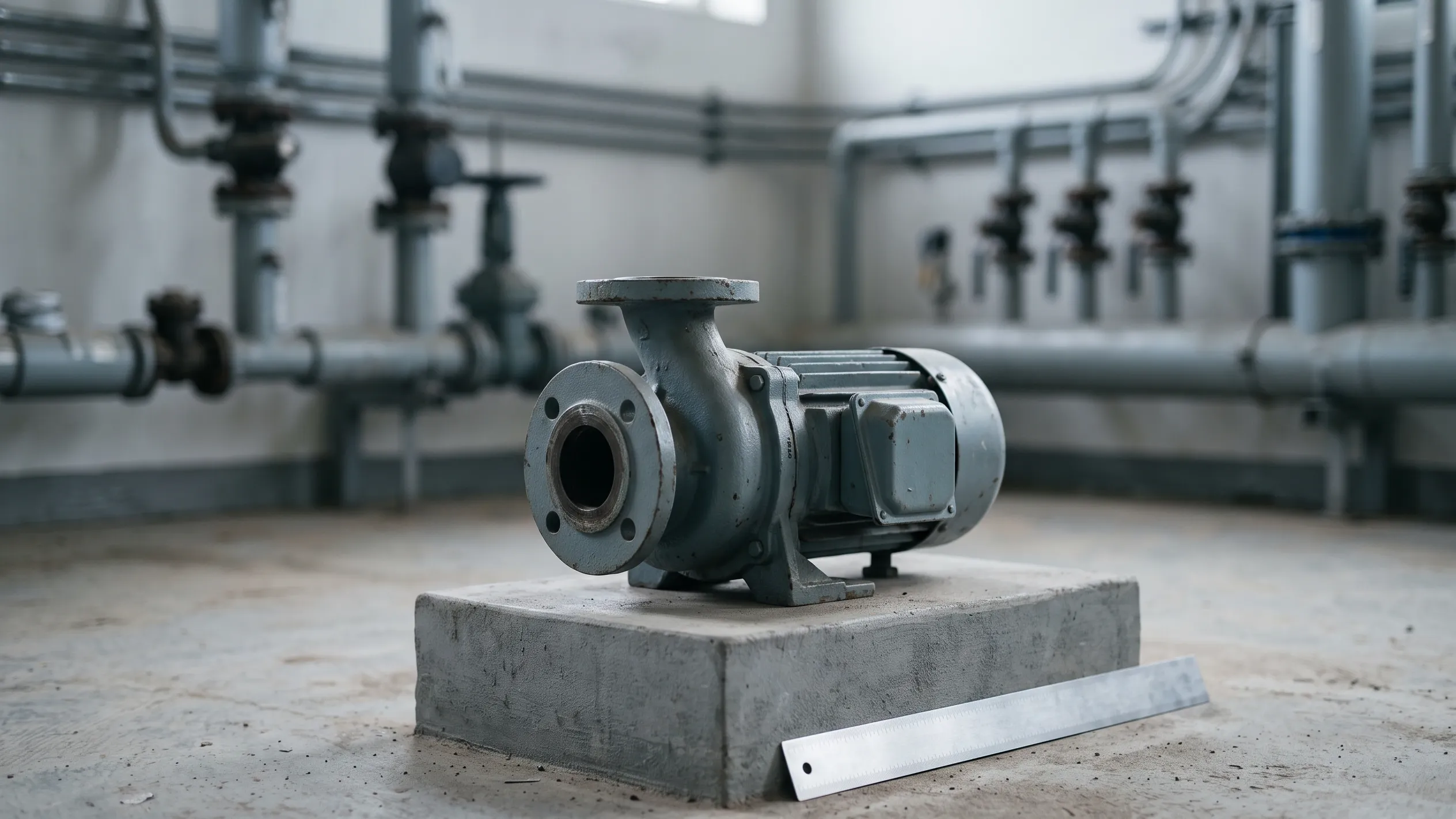
A noisy circulator needs an assessment before it needs an order. Once an installer has established that replacement is necessary, the buying question becomes specific: which complete pump or replacement assembly suits this circuit? A recording of the noise may help the investigation, but it cannot supply the connection dimensions, electrical requirements or operating duty needed to select the part.
Start with the existing pump's full identification and the installer's replacement specification. Keep those together rather than searching for a quieter model and working backwards from a photograph. The useful outcome is a clearly identified replacement, with any required accessories accounted for, not a promise that a different pump will silence an unresolved system fault.
Record the Whole Identity, Not Just the Brand
A brand name can cover many pumps with different connections, capacities and control arrangements. Copy the complete model designation and product number from accessible identification, preserving suffixes and spaces that separate the fields. Record the equipment location too, particularly where a building has several similar circulators serving different circuits. A photograph should show enough context to distinguish the pump as well as a readable close view of its identification.
Treat an earlier invoice as supporting information rather than proof that the installed pump is unchanged. The last purchase may have served another circuit or been replaced again. Where the invoice and equipment disagree, retain both references and resolve the difference before ordering. Silently choosing whichever number produces a search result can turn an identification problem into an incorrect delivery.
Do not scrape, peel or dismantle equipment to obtain a better photograph. If identification is concealed or cannot be read safely, ask the installer to establish it during the assessment. An incomplete reference is more useful when it is honestly marked incomplete than when missing characters are guessed. It also tells the supplier exactly which part of the enquiry still needs confirmation.
Separate Physical Fit from Hydraulic Duty
The distance between the pump's pipe connections matters when replacing an existing assembly, but it is only one dimension. The connection type, connection size, available clearance and permitted installation arrangement also need checking. A pump with a familiar overall shape may have different interfaces or need space that the existing installation does not provide. Compare the proposed unit's dimensional drawing with the assessed installation rather than measuring a photograph.
Threaded and flanged connections use different arrangements for joining a pump to the pipework. Confirm the connection type and mating dimensions from the product documentation rather than assuming that a matching nominal diameter establishes physical compatibility. Connection style is separate from motor construction, control requirements and hydraulic suitability.
For example, the MAGNA3 25-60 180 1x230V PN10 and MAGNA3 32-60 180 1x230V PN10 are separately identified products. The Grundfos MAGNA3 technical booklet explains the model designation: the first number identifies the nominal diameter of the inlet and outlet ports, while the second indicates maximum head in decimetres. Both examples have a 180 mm port-to-port length and a 60 dm maximum head, but their nominal port designations differ: DN25 for the first model and DN32 for the second. These DN figures identify nominal port diameter, not every physical detail needed to establish a compatible pipe connection. Check the manufacturer's dimensional and connection data against the existing installation before treating either model as a suitable replacement.
Hydraulic duty is a separate selection requirement. The installer needs the required flow and head at the operating condition, not just the largest figure associated with a pump range. A replacement that physically fits still needs to serve the circuit appropriately. Increasing the size because the old pump was noisy is not a purchasing shortcut; it changes the selection question and needs a corresponding technical assessment.
The same distinction applies when moving from an older fixed-speed unit to a different control arrangement. A compatible replacement may not reproduce the old controls exactly. What matters is the approved application and required operation, not whether a dial or display looks familiar. Keep the selected operating requirements with the order so that a change in appearance does not become an undocumented change in specification.
Identify the Circuit and the Fluid
Describe what the pump serves: for example, a space-heating circuit or a domestic hot-water return. Those descriptions help prevent a buyer from treating every small circulator as the same kind of product. The selected model's suitability must cover the actual fluid and operating conditions. A recommendation for another circuit in the building is not automatically transferable to this one.
Record the temperature and pressure requirements supplied by the installer, along with any relevant fluid treatment or mixture. Do not substitute a general statement such as "for heating" for the model's applicable limits. Equally, do not infer that a pump is unsuitable solely because of its casing shape. Construction, connection style and intended application are different characteristics and should be checked as such.
Match the Electrical and Control Requirements
Copy the specified supply voltage and phase, then establish how the pump is intended to be controlled. A matching supply rating does not prove that an external control signal, connection arrangement or required function is compatible. Those details belong to the selected pump and the system it will join. Where a replacement needs an accessory or a changed connection arrangement, identify that requirement before the order is approved.
The buyer's role is to preserve the confirmed specification, not to test the supply or interpret exposed wiring. The HSE electrical safety guidance explains the importance of electrical competence when working with electrical installations. Use existing accessible labels and documentation for the purchasing enquiry; leave electrical checks and installation to an appropriately competent person.
Avoid treating a capacitor reference, controller label or number on nearby equipment as the pump's product identity. These can be useful supporting records, but they refer to different components. Label photographs by what they show. A short set of correctly identified images is easier to use than a large collection in which nobody can tell which label belongs to which assembly.
Establish What the Replacement Includes
Confirm whether the order is for a complete circulator, a replacement head or another defined assembly. These are different purchasing scopes. A reference to a pump in conversation should not be allowed to stand for whichever component happens to be available. Retained components also need to be suitable for the agreed replacement; their presence on site does not establish compatibility.
Check required unions, seals, connectors and other accessories against the supplied contents for the exact product. An item not mentioned in the contents remains unresolved, rather than automatically included or automatically chargeable as an extra. Confirm any uncertain component against the product documentation before approving the order.
Record separately supplied accessories on their own order lines, with the relevant part numbers and quantities. This gives the person receiving the order a clear basis for checking the delivery without reconstructing the installer's decisions.
Hand Over One Agreed Replacement Specification
Before ordering, bring the identity, physical requirements, duty and controls together in one record. Mark each item as confirmed or awaiting clarification. If two references disagree, keep the enquiry open until the difference is resolved. Avoid allowing a delivery deadline to turn an unconfirmed alternative into an accepted replacement merely because it can be found quickly.
On receipt, compare the delivered identification with the approved order and check for obvious damage or missing confirmed items. Keep the packaging and purchase reference available if a discrepancy needs investigating. Installation and commissioning remain separate from this receiving check: the correct label on a carton cannot demonstrate how the pump performs once connected to the system.
Before the order is placed, the pump identity, connection details and operating requirements should all point to the same replacement. Treat any unresolved mismatch as a reason to pause the purchase, not as something to sort out after delivery.