

Quick Fixes for Burst Heating Pipes
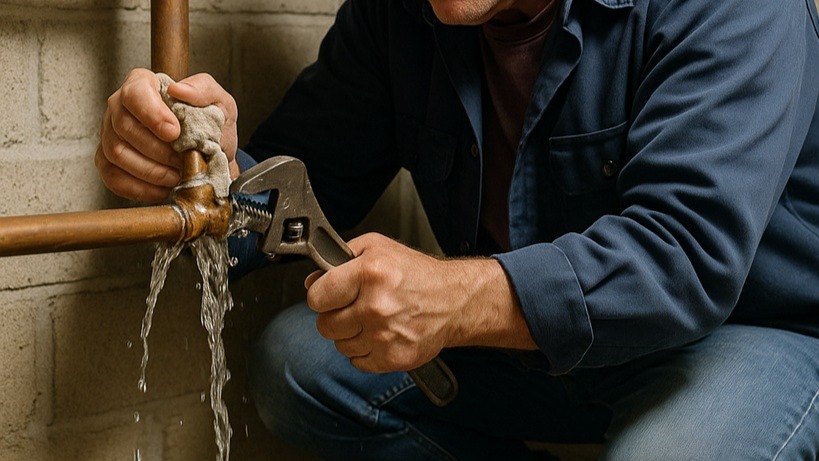
Hearing water gushing where it shouldn’t is every homeowner’s nightmare. One moment, the heating is humming away, the next you’re standing in a growing puddle with a pipe spraying across the floor. Quick action makes all the difference. Knowing how to isolate the leak and carry out a safe temporary fix can protect your home from expensive damage.
This practical guide explains exactly what to do during a plumbing emergency. You’ll learn the best ways to control leaks, how to apply an emergency pipe clamp, and how to carry out an effective burst heating pipe repair before professional help arrives.
Step One: Stop the Water Fast
The first rule in any water emergency is simple: stop the flow. Everything that follows depends on how quickly you isolate the supply.
Locate the Stopcock
Every property has a main stopcock, normally found under the kitchen sink, beside the water metre, or close to the downstairs bathroom. Turn it clockwise until the water stops. It sounds obvious, but many people only discover its location once their carpet is already soaked.
If the valve feels stiff, avoid forcing it. A small amount of lubricant, such as WD-40, on the spindle usually frees it. Keep a can in your toolkit; you can pick one up along with plumbing spares from the Halstead Spares range.
Tip: Make sure every household member knows where the stopcock is and how to operate it. A thirty-second delay can mean litres of water lost.
Separate the Heating Circuit
Some modern systems have individual isolation valves for the heating loop. Look for the silver braided hose near the boiler, known as the filling loop. Turn its valves clockwise to close them. This lets you stop the heating circuit while keeping the mains water available for sinks and toilets.
Containing the Leak: Four Proven Methods
Once the flow is isolated, your aim is to contain the damage until an engineer can complete a permanent burst heating pipe repair. These quick fixes are tried-and-tested field techniques, simple, safe, and highly effective.
1. The Emergency Pipe Clamp
An emergency pipe clamp is the most dependable way to stop a pressurised leak.
- Choose a clamp that matches your pipe diameter.
- Position the rubber insert over the split.
- Fit the clamp body around the pipe and tighten the screws evenly.
- Check for drips; adjust if necessary.
Strong, corrosion-resistant clamps are available from Polypipe fittings. Keeping one in your emergency kit can save you from a flood.
2. The Rubber Sleeve and Jubilee Clip
If you don’t have a clamp, a short piece of hose or inner tube can substitute in a pinch. Wrap it around the damaged area and tighten each end with Jubilee clips. Adjust until the water stops completely. It’s crude but surprisingly effective and buys enough time to organise professional repairs.
3. Two-Part Epoxy Putty
For small punctures or slow weeps, epoxy putty provides a reliable seal. Cut equal parts from each stick, knead them together, and press the mixture firmly over the leak. Extend the patch a few centimetres past the damage and let it cure for about fifteen minutes before repressurising.
It’s worth keeping a tube of waterproof epoxy among your emergency supplies. Look for options through Halstead Spares.
4. Self-Amalgamating Silicone Tape
This flexible tape bonds to itself, forming a waterproof sleeve. Stretch it as you wrap, overlap each layer by half its width, and press it down to remove air pockets. Within minutes, it creates a tight, rubber-like seal strong enough to withstand normal system pressure.
Assembling a Burst Pipe Emergency Kit
Preparation removes panic. A small box of essentials kept near the boiler or stopcock can turn a crisis into a routine task.
Include:
- Emergency pipe clamp – the first line of defence for major leaks.
- Rubber sleeve and Jubilee clips – a versatile back-up when a clamp isn’t handy.
- Epoxy putty – for sealing small cracks.
- Self-amalgamating tape – to wrap around awkward bends.
- Adjustable spanner and screwdriver – for fittings and clamp screws.
- Radiator bleed key – for repressurising later; available from Halstead Spares.
- Torch and gloves – because leaks never happen in bright daylight.
- Absorbent cloths or towels – to mop up and protect the flooring.
For expert product advice or part availability, you can always get in touch with the Heating and Plumbing World team.
Knowing When DIY Isn’t Enough
Temporary repairs are exactly that, temporary. Call a qualified engineer when:
- The burst is wider than five millimetres.
- The leak originates from a joint or valve.
- The pipe can’t be isolated safely.
- Freezing weather has caused multiple ruptures.
Gas Safe–registered professionals have the equipment to drain, cut, and re-joint the damaged section safely. Genuine replacement parts are available through Heating and Plumbing World, ensuring the job’s done properly the first time.
Restoring System Pressure
Once the pipe is patched or replaced, you’ll need to repressurise the heating circuit.
- Check that all radiator valves are closed.
- Open the boiler’s filling loop slowly until the gauge reads around 1.2 bar.
- Bleed each radiator, starting from the ground floor upwards.
- Recheck pressure and top up if necessary.
- Inspect the repaired area before turning the heating back on.
Keep a spare filling-loop washer from Halstead Spares handy; it prevents small leaks during refilling.
Preventing Future Bursts
A little prevention saves a lot of expense. Adopt these straightforward measures:
Insulate Exposed Pipework
Pipes in lofts, garages, and external walls freeze quickly in sub-zero weather. Fit foam sleeves from the Polypipe insulation range and secure them with cable ties. This single step prevents most winter bursts.
Schedule Regular System Servicing
Book a yearly service to keep the heating circuit in good health. Engineers should flush sludge, check pressure relief valves, and inspect seals. If a pump is worn, swap it for a genuine Grundfos model to maintain efficiency and reliability.
Monitor Boiler Pressure
Glance at the pressure gauge whenever you’re near the boiler. A steady drop often signals a slow leak. Early attention prevents a minor issue from becoming a major flood.
Upgrade Ageing Pipework
If your heating system is decades old, consider replacing vulnerable sections. New copper or plastic-composite pipes last longer and resist corrosion. You’ll find compatible connectors and adaptors under Fittings.
A Short Story from the Job
One winter evening, a call came from a homeowner in Manchester whose lounge had turned into a paddling pool. The culprit was a frozen pipe behind the skirting board that split as it thawed. The stopcock wouldn’t budge, so we used an emergency pipe clamp to control the flow before replacing the damaged section. Within two hours, heat was restored and the floor was drying.
It’s a textbook example of how speed, the right tools, and a cool head can turn a potential disaster into a simple repair.
Creating a Home Emergency Plan
Everyone in the property should know how to respond when a pipe bursts.
- Identify where the stopcock and boiler valves are.
- Keep the emergency kit in one accessible place.
- Save contact numbers for your engineer and the National Gas Emergency Service (0800 111 999).
- Review supplies yearly and replace used or expired items.
When the inevitable happens, these simple steps make the situation far less stressful.
From Crisis to Control
A burst pipe can seem overwhelming, but with practical knowledge and a few essential tools, it’s completely manageable.
Remember these key points:
- Act immediately, turn off the water first.
- Use the appropriate quick fix: emergency pipe clamp, sleeve, putty, or tape.
- Repressurise carefully once the leak is under control.
- Call professional engineers for serious damage or joint failures.
- Prevent future bursts with insulation, servicing, and pressure monitoring.
For dependable equipment, technical support, and genuine replacement parts, Heating and Plumbing World is the trusted partner for both homeowners and trade professionals. From Polypipe fittings and Halstead Spares epoxy to Grundfos circulation pumps, every product is chosen for quality and reliability.
When you need expert guidance or urgent supply assistance, you can contact the Heating and Plumbing World team directly for support at any time.