

Radiant Gas Fires vs Convector Fires: Heat Output Comparison
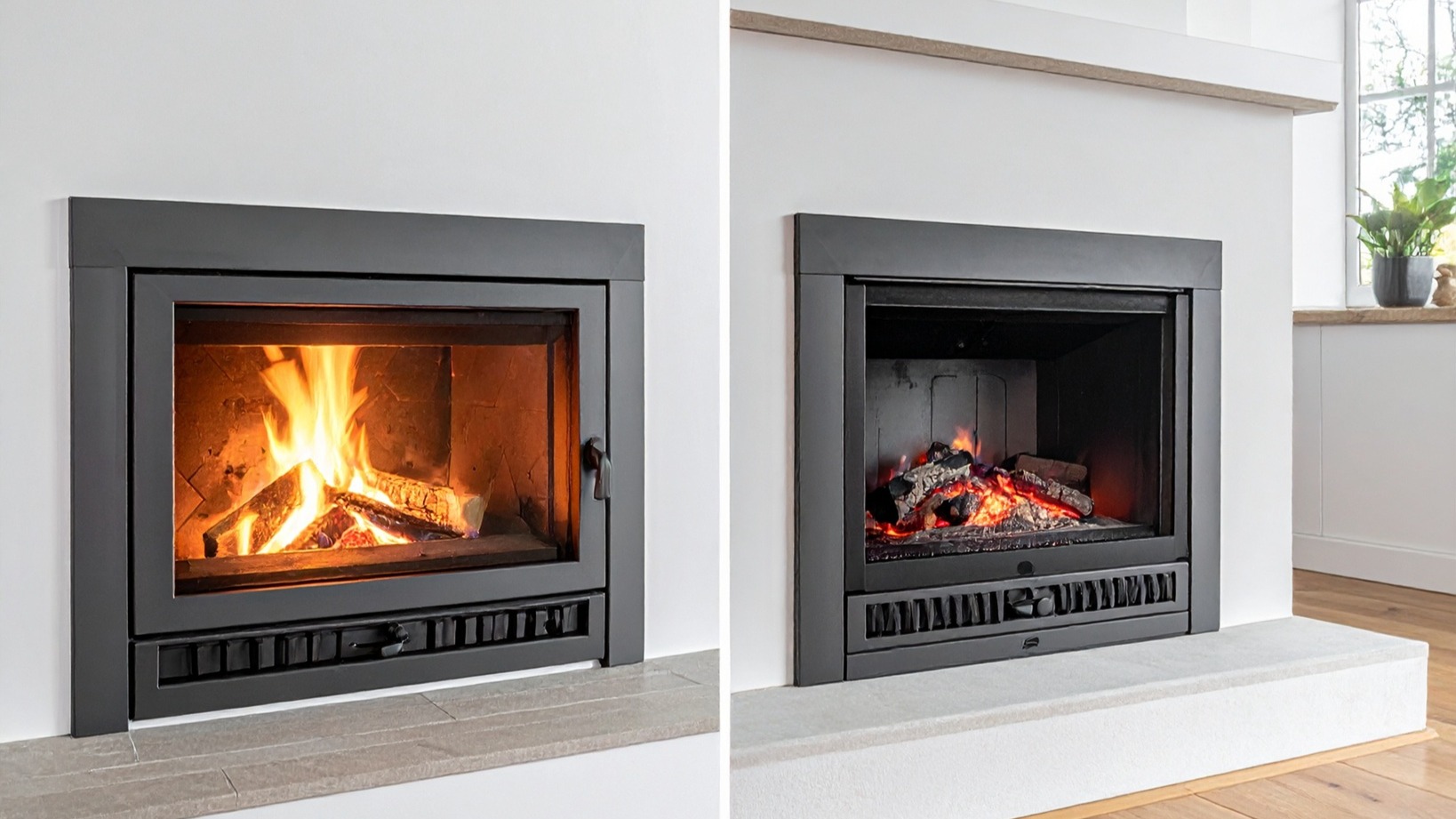
When you're standing in front of a gas fire display, trying to work out which type will actually warm your living room, the technical jargon can feel overwhelming. Radiant fires promise instant warmth, while convector models claim superior efficiency. Both statements contain truth, but understanding which suits your space requires looking beyond marketing claims at how each technology moves heat around a room.
The fundamental difference comes down to physics. Radiant fires emit infrared heat that travels in straight lines, warming objects and people directly in its path. Convection fires heat air, which then circulates through natural convection currents. This distinction affects everything from installation requirements to running costs, and explains why your neighbour might swear by their radiant fire while your sister insists her convector model is far superior.
How Radiant Gas Fires Deliver Heat
Radiant fires work on the same principle as standing in sunlight. The heat travels as electromagnetic waves through the air without warming it significantly, only releasing energy when it strikes a solid surface. Your skin, furniture, walls, and floor absorb this infrared radiation and convert it to heat.
This immediate warmth explains why radiant fires feel powerful the moment you ignite them. Within 30 seconds, you'll notice the difference if you're sitting within their direct line of sight. The ceramic plaques or fire clay radiants inside the appliance glow red or orange, reaching temperatures between 600°C and 900°C, depending on the model. This intense heat source projects outward in a cone-shaped pattern.
The catch? Radiant heat doesn't bend around corners or warm rooms you can't see from the fire. Step behind a sofa or into an adjoining hallway, and the temperature drops noticeably. For open-plan spaces where everyone congregates in one area, this proves less problematic than in homes with multiple connected rooms.
Modern radiant models from manufacturers like Andrews incorporate reflective panels behind the radiants, directing more heat forward into the room rather than losing it into the chimney or flue system. This design improvement has pushed efficiency ratings up considerably over older models, with some achieving 70-75% efficiency.
Understanding Convector Fire Technology
Convector fires take a completely different approach. Instead of projecting heat outward, they draw cool air in from floor level, pass it over a heat exchanger, and release the warmed air from vents at the top of the appliance. This creates a continuous circulation pattern as warm air rises, spreads across the ceiling, gradually cools, and sinks back down to be reheated.
The process takes longer to establish. You won't feel significant warmth for the first 5-10 minutes during the convection cycle, building momentum. However, once established, this circulation distributes heat more evenly throughout a room. The temperature difference between the area directly in front of the fire and the far corner becomes less pronounced than with radiant models.
Convector fires excel in enclosed rooms with standard ceiling heights (2.4m-2.7m). The rising warm air spreads effectively across the ceiling before cooling and descending. In rooms with very high ceilings or excessive air leakage, the warm air escapes before completing the circulation cycle, reducing effectiveness.
The heat exchanger design significantly impacts performance. High-quality units feature larger exchanger surfaces with optimised fin spacing, allowing more air contact with hot metal surfaces. Components from specialists like Danfoss demonstrate how precision engineering improves heat transfer rates without increasing gas consumption.
Measuring Actual Heat Output
Manufacturers rate both fire types in kilowatts (kW), typically ranging from 2kW for compact models to 7kW for large living room fires. These figures represent gross heat input, the total energy released by burning gas. The useful heat reaching your room tells a different story.
Radiant Fire Efficiency
Radiant fires convert roughly 60-75% of gas energy into radiant heat. A 4kW-rated radiant fire delivers approximately 2.4-3kW of usable warmth. The remaining energy escapes through the flue as hot combustion gases. Glass-fronted radiant fires (often called balanced flue models) can push efficiency higher by reducing air infiltration, but they sacrifice some radiant intensity because the glass absorbs and re-radiates heat differently than open fires.
Convector Fire Efficiency
Convector fires achieve 75-85% efficiency because they extract more heat from combustion gases before venting them. The heat exchanger captures energy that would otherwise escape up the flue. A 4kW convector fire might deliver 3-3.4kW of useful heat into your room. This efficiency advantage compounds over time, reducing gas consumption for the same perceived warmth.
The Perception Factor
The perception of warmth complicates direct comparisons in any radiant vs convector gas fire evaluation. Radiant heat feels more intense because it warms your skin directly, triggering temperature receptors. You might feel comfortable at 18°C with a radiant fire, whereas you need 20°C with a convector model to achieve the same sensation. This psychological factor affects thermostat settings and actual running costs.
Room Size and Layout Considerations
A 4kW radiant fire works brilliantly in a 20 square metre living room where the seating area faces the fire directly. The same fire struggles in a 35 square metre open-plan space because radiant heat intensity follows the inverse square law, doubling the distance quadruples the heat intensity. Furniture and people in the direct line receive plenty of warmth, while areas outside the radiant cone remain cool.
Convector fires suit larger rooms better because circulating air eventually reaches all corners. A 5kW convector model can comfortably heat 30-35 square metres in a well-insulated room. The circulation takes time, but the end result feels more uniform. You won't have family members fighting over the spot directly in front of the fire.
Room Shape Impact
Room shape matters considerably. Long, narrow rooms challenge both fire types. Radiant heat struggles to reach the far end effectively, during convection currents, taking longer to establish in elongated spaces. L-shaped or multi-zone layouts almost always favour convector models because circulating air eventually reaches areas outside the direct line of sight.
Ceiling Height Effects
Ceiling height affects convection performance dramatically. Standard 2.4m ceilings create ideal conditions for convection cycles. When ceilings reach 3.5m or higher, warm air rises and stays near the ceiling, never descending to occupied zones. Radiant fires maintain effectiveness regardless of ceiling height because the heat travels directly to people and objects below.
Installation Requirements and Constraints
Radiant fires need a conventional chimney or vertical flue system to exhaust combustion gases. The hot gases rise naturally through buoyancy, requiring minimal mechanical assistance. This makes them suitable for properties with existing chimneys, but challenging in modern homes without flue infrastructure.
Balanced flue radiant fires solve this problem by using a horizontal flue through an external wall, but they sacrifice some radiant intensity. The sealed glass front necessary for balanced flue operation creates a barrier between the radiants and the room, reducing the direct radiant effect.
Convector Fire Flexibility
Convector fires offer more installation flexibility. Many models work with balanced flue systems, allowing installation on any external wall without vertical flue requirements. The heat exchanger design means combustion gases exit at lower temperatures, making horizontal fluing more practical. This flexibility explains their popularity in apartments and new-build properties.
Both types require adequate air supply for combustion. Older properties with natural ventilation usually provide sufficient air infiltration. Modern airtight homes need dedicated air supply ducts or room-sealed appliances that draw combustion air from outside. Controls from manufacturers like EPH Controls help optimise combustion efficiency during maintenance of safety standards.
Running Costs and Efficiency in Practice
Gas consumption depends on both efficiency ratings and usage patterns. A 4kW radiant fire running at 70% efficiency consumes approximately 0.43 cubic metres of gas per hour at full output. At current UK gas prices (around 10p per kWh), that costs roughly 40p per hour.
A comparable 4kW convector fire at 80% efficiency consumes 0.38 cubic metres per hour, costing approximately 36p hourly. The 4p difference seems trivial until you multiply it across a heating season. Running the fire for four hours daily for six months (180 days) creates a £28.80 annual difference.
These calculations assume constant full output, which rarely reflects reality. Radiant fires often run at lower settings once the initial chill dissipates because their intense direct heat allows comfortable conditions at lower room temperatures. Convector fires typically maintain higher output longer because they're heating the entire air volume rather than just warming people directly.
Thermostatic Control Benefits
Thermostatic controls dramatically affect running costs. Modern fires with accurate thermostats cycle on and off to maintain set temperatures, reducing average gas consumption by 20-30% compared to manual operation. The investment in quality controls from specialists like Honeywell pays back through lower fuel bills within two to three years.
Maintenance and Longevity Factors
Radiant fires require annual servicing to maintain efficiency and safety. The ceramic radiants gradually deteriorate, developing cracks and losing reflective coating. Replacement typically becomes necessary every 5-7 years, costing £80-150 depending on the model. The burner assembly needs cleaning to prevent blocked ports, which create uneven flame patterns and incomplete combustion.
Convector fires need similar annual servicing, but the heat exchanger demands particular attention. Dust and debris accumulate on the fins, reducing heat transfer efficiency. A heavily soiled heat exchanger might lose 15-20% of its effectiveness before you notice reduced warmth. Professional cleaning during annual service restores performance.
The moving parts in convection fires, fans in some models, or simply the natural air circulation, mean less accumulation of combustion deposits on critical components compared to radiant fires. This often translates to longer intervals between major component replacements.
Both fire types benefit from proper flue maintenance. Blocked or deteriorating flues create dangerous combustion gas spillage and reduce efficiency. Annual flue inspections catch problems before they become hazardous, and cleaning removes soot deposits that restrict gas flow.
Which Fire Type Suits Your Needs
Choose a Radiant Fire When:
You want immediate warmth in a defined seating area, have an existing chimney or vertical flue, and spend time in one primary location within the room. They excel for occasional use, weekend evenings, chilly mornings, where instant heat matters more than whole-room temperature uniformity.
Radiant fires also suit rooms where you want the aesthetic of visible flames and glowing radiants. The visual appeal and crackling sounds (in some models) create an ambience that conventional fires can't match. For properties with period features or traditional décor, radiant fires often look more appropriate.
Select a Convector Fire When:
Heating larger or irregularly shaped rooms, lacking existing flue infrastructure, or needing consistent warmth throughout the space. They work better as primary heating sources for extended periods because the even heat distribution maintains comfort without hot and cold zones.
Convector fires suit modern, open-plan layouts where family members occupy different areas simultaneously. The circulating warmth reaches kitchen zones, dining areas, and living spaces more effectively than radiant heat. They also work better in homes with young children or pets who might approach too close to a radiant fire's intense heat source.
Making the Decision Work Long-Term
Whichever technology you choose, proper sizing determines success. Undersized fires run constantly at maximum output, wearing components prematurely without ever achieving comfortable temperatures. Oversized fires cycle on and off too frequently or force you to run them at minimum settings, where combustion efficiency suffers.
Calculate your room's heat loss properly before selecting output ratings. Well-insulated modern rooms need roughly 0.08kW per square metre. Older properties with solid walls and single glazing might need 0.15kW per square metre or more. A 25 square metre room in a 1930s semi-detached house probably needs a 4-5kW fire, whereas the same room in a new-build might only need 2-3kW.
System Integration
Consider how the fire integrates with your broader heating system. If you're using it to supplement central heating from a boiler served by Grundfos pumps, the gas fire might only need to provide top-up warmth during the coldest spells. This changes the calculation about which technology suits best.
The Final Assessment
Neither radiant nor convector fires universally outperform the other when comparing radiant vs convector fires. The "better" choice depends entirely on your specific circumstances, room layout, existing infrastructure, usage patterns, and personal preferences about heat delivery.
Radiant fires deliver focused, immediate warmth that feels powerful and creates visual appeal. They work beautifully in traditional settings with conventional flues, where people gather in defined seating areas. The lower efficiency matters less when usage remains occasional rather than continuous.
Convector fires distribute heat more evenly and efficiently, making them practical primary heat sources for larger or irregularly shaped spaces. The installation flexibility suits modern properties, with the steady, uniform warmth appealing to families who use rooms in varied ways throughout the day.
The heat output comparison ultimately reveals that both technologies can deliver similar total energy into a room, but they distribute that energy differently. Understanding these distribution patterns, rather than just comparing kilowatt ratings, leads to better decisions. Match the fire type to how you actually use your space, and either technology will serve you well for years.
When you're ready to make a decision, examining specific models and components from established manufacturers helps ensure quality and longevity. Whether you choose radiant or convector technology in your radiant vs convector gas fires comparison, selecting well-engineered products from heating specialists like Morco provides the foundation for reliable, comfortable warmth throughout the heating season. For comprehensive guidance on gas fire selection suited to your specific room layout and heating requirements, Heating and Plumbing World stocks both radiant and convector models from leading manufacturers. For technical advice on which fire type best matches your installation constraints and usage patterns, experienced heating advisors can provide personalised recommendations based on room dimensions, existing infrastructure, and efficiency priorities.