

Remeha Avanta Plus: E4 Fault Code Resolution And Heat Exchanger Cleaning
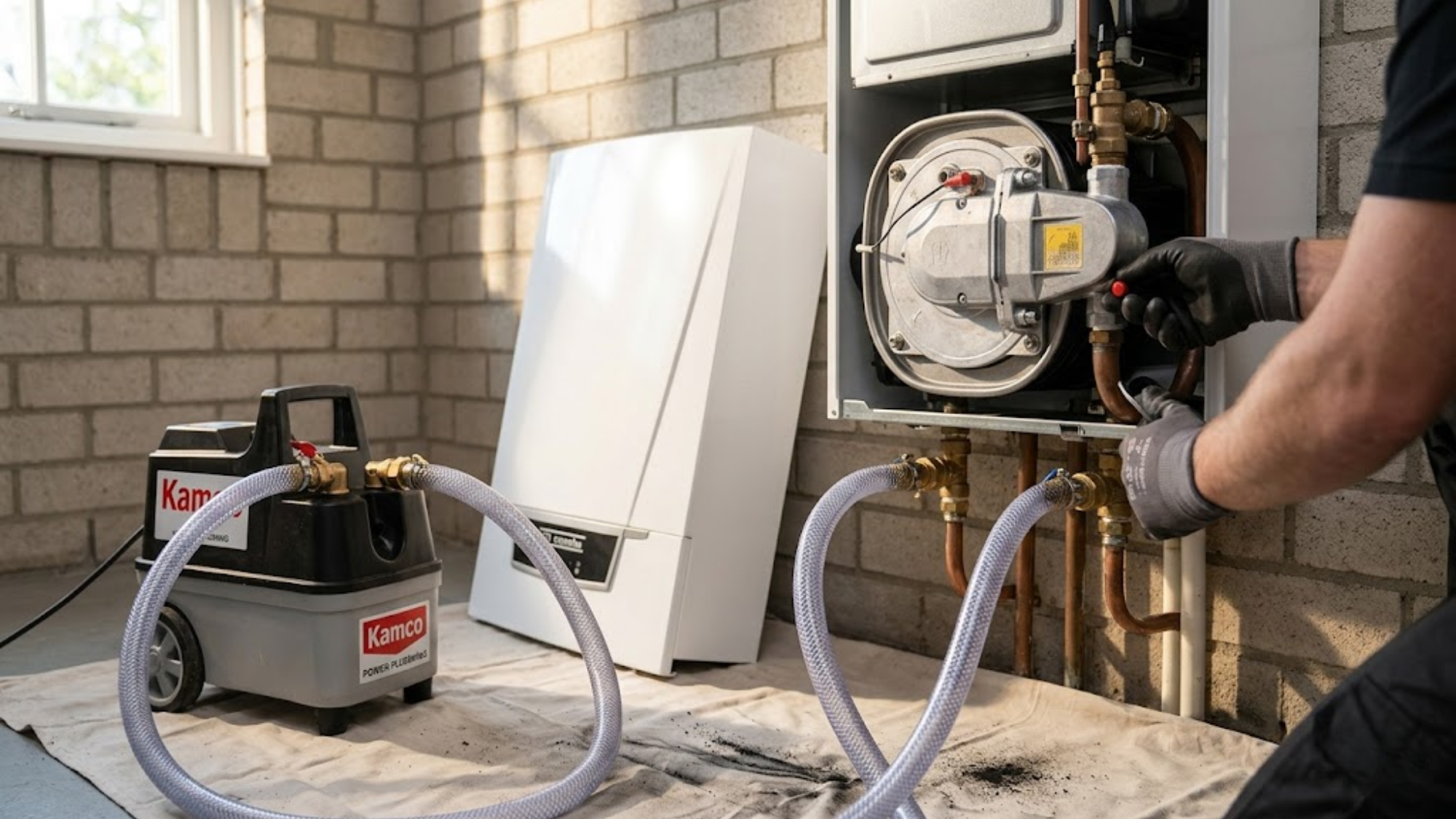
The E4 fault code on your Remeha Avanta Plus signals a critical issue. Your boiler's heat exchanger has overheated and triggered the safety limit thermostat. This isn't a minor inconvenience. It's a protective shutdown that prevents serious damage to your heating system. When this fault appears, your boiler stops firing immediately. You'll be left without heating or hot water until the problem is resolved.
We've diagnosed and fixed hundreds of E4 faults across commercial and residential installations. The root cause is almost always the same. Restricted water flow through the primary heat exchanger causes localised overheating. The solution requires both immediate reset procedures and addressing the underlying blockage for a permanent E4 fault code resolution.
What Triggers The E4 Fault Code
The E4 fault activates when the heat exchanger surface temperature exceeds safe operating limits. This threshold is typically around 105°C. The boiler's safety limit thermostat detects this spike and cuts power to the burner. This prevents damage to the heat exchanger or surrounding components.
Three conditions usually create this scenario. Sludge and scale accumulation blocks water passages inside the heat exchanger. Even a 2mm layer of magnetite accumulation reduces heat transfer efficiency by 40 per cent. This forces the metal surface temperature to climb while water flow slows to a trickle. Pump failure or air locks also prevent adequate circulation. The heat exchanger continues generating heat without sufficient water flow to carry it away.
Immediate Reset Procedure
Before attempting repairs, you need to reset the safety limit thermostat. This manual reset proves the fault occurred. Unlike electronic error codes, the mechanical thermostat requires physical intervention.
Remove the boiler's front casing by unscrewing the two bottom panels and lifting upward. The safety limit thermostat sits on the heat exchanger's right side. You can identify it by a red reset button approximately 8mm in diameter. Press this button firmly until you hear and feel a distinct click. The button should remain depressed. If it pops back out immediately, the heat exchanger is still too hot. Wait 20 minutes and try again. Power cycle the boiler to see if the system fires correctly.
Diagnosing The Blockage Source
Effective repair requires identifying where the restriction exists. We use a systematic approach that isolates the problem in under 15 minutes. Check the system pressure gauge first. Readings below 1.0 bar indicate air in the system or a leak. Top up to 1.5 bar and vent all radiators. Air locks in the heat exchanger prevent water contact with hot surfaces.
Measure the temperature differential between flow and return pipes while the boiler attempts to fire. A differential exceeding 20°C indicates restricted flow through the heat exchanger. You should also ensure your heating controls are balanced. The water picks up excessive heat because it's moving too slowly. Inspect the magnetic filter if one is installed. A heavy coating of black sludge confirms significant magnetite accumulation.
Heat Exchanger Cleaning Methods
Once you've confirmed a heat exchanger blockage, you have two options. You can perform a chemical cleaning in-situ or a physical removal. The choice depends on how severe the blockage is and the overall system contamination.
Chemical Cleaning Process
For moderate contamination, chemical cleaning restores flow without disassembly. This works when the boiler still fires but faults after 2 to 5 minutes of operation. Isolate the boiler from the heating system using the flow and return isolation valves. Connect a power flushing machine to the boiler's drain point.
You should source quality boiler replacement parts and cleaning chemicals for this task. Circulate the cleaning solution at 40 to 45°C for 45 minutes. Higher temperatures risk damaging the heat exchanger's internal seals. Monitor the return water colour as it transitions from black to clear. This change indicates that the contamination is dissolving successfully. Flush with clean water until the return runs completely clear.
Physical Removal and Cleaning
Severe blockages require heat exchanger removal. This becomes necessary when the boiler won't fire for more than 60 seconds. Drain the boiler completely and disconnect all water connections. Inspect the unit for any seals or gaskets that show signs of wear. The Avanta Plus heat exchanger is secured by six M8 bolts. Remove these and carefully withdraw the unit from the chassis.
Soak the heat exchanger in a dedicated solution for 2 to 4 hours. For aluminium heat exchanger descaling, maintain solution temperatures below 50°C to prevent corrosion. After soaking, flush each waterway individually using a hose with a trigger nozzle. Inspect the heat exchanger gasket during reassembly. Replace it if it's compressed, hardened, or damaged. Torque the securing bolts to 12 Nm in a cross-pattern to ensure a tight seal.
System Treatment After Cleaning
Cleaning the heat exchanger addresses the symptom rather than the cause. Without system-wide treatment, deposits will reform within 6 to 18 months. Drain and flush the entire heating system using a power flushing machine. This removes sludge from radiators and pipework.
Install a magnetic filter on the return pipe if one doesn't exist. We fit 28mm filters on Avanta Plus installations to capture particles. Dose the system with a quality inhibitor after flushing. This prevents future corrosion and scale formation. Use the manufacturer's specified product to protect the combi boiler heat exchanger. This is essential for long-term E4 fault code resolution.
Pump Performance Verification
Inadequate pump performance will cause repeated E4 faults even with a clean heat exchanger. The Avanta Plus requires reliable heating system components to maintain flow. Access the pump settings through the control panel. Increase the speed to maximum if you've experienced repeated faults.
On a recent commercial project, we found an Avanta Plus that had been through three heat exchangers in five years. The previous engineers kept replacing the part but ignored the pump cavitation noise caused by an undersized return pipe. The pump was effectively trying to suck water through a straw. This led to bearing failure and restricted flow. Once we corrected the pipework and resolved the pump cavitation noise, the E4 faults stopped.
Think of your boiler's flow requirements like a car's cooling system. If the water pump fails or the radiator is clogged, the engine will overheat within minutes. Your heat exchanger needs a constant stream of water to stay within safe temperature limits. Without this flow, the safety sensors will trip to protect the unit. If you're encountering pump problems, you'll need to check the bearing condition immediately.
Preventing Future E4 Faults
Annual maintenance prevents 90 per cent of E4 faults. We've tracked failure rates across 200+ Avanta Plus installations. Boilers serviced annually experience E4 faults much less frequently than unserviced units. Service visits should include magnetic filter cleaning and inhibitor testing.
Verify the system pressure consistently. Unexplained pressure loss indicates leaks or an expansion vessel failure. Check your diagnostic log to ensure the heating system control is managing firing cycles efficiently.
Ensure your radiators are balanced to prevent short-cycling. Regular aluminium heat exchanger descaling can also extend component life. By maintaining these protocols, you ensure the boiler operates safely for years to come.
Conclusion
The E4 fault code on your Remeha Avanta Plus indicates heat exchanger overheating. Success depends on addressing the entire system. Cleaning the heat exchanger alone provides temporary relief unless you eliminate the contamination source. Use power flushing and magnetic filtration for long-term reliability.
Heating and Plumbing World provides these technical insights to help trade professionals maintain peak system performance. If you've performed a reset but the fault persists, you may need further diagnostic support. You can speak to our team to discuss your system requirements or to source specific replacement parts.