

Restaurant and Kitchen Commercial Boiler Considerations
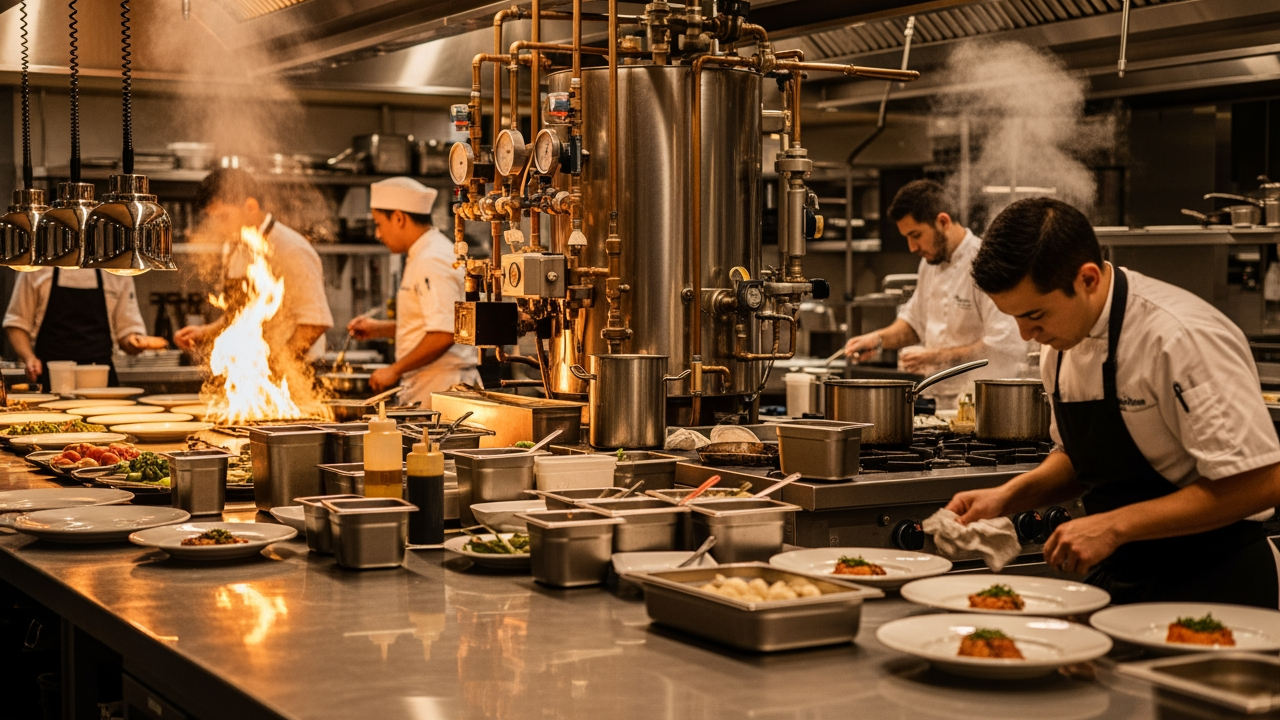
Commercial kitchens operate under pressure that few other businesses face. Equipment runs 12-16 hours daily. Steam tables, dishwashers, and heating systems demand constant hot water. A boiler failure during dinner service means lost revenue, disappointed customers, and potential food safety violations.
Restaurant operators have learned this lesson the expensive way. A 200-seat restaurant losing hot water at 6 PM on Saturday can forfeit £15,000-£20,000 in a single evening. The real cost includes reputation damage when word spreads on social media.
Why Restaurant Boiler Systems Face Unique Demands
Restaurant boiler systems work harder than standard commercial units. A typical office building uses hot water for restrooms and occasional cleaning. Restaurants need 180°F water for sanitising dishes, 140°F for handwashing stations, and consistent steam for cooking equipment.
Typical simultaneous demands:
- Three-compartment sinks cycling every 10 minutes
- Two dishwashers are processing 60 racks per hour
- Steam tables maintaining 165°F holding temperatures
- Prep sinks for continuous vegetable washing
This simultaneous demand can exceed 400,000 BTU/hour in a mid-size establishment. The boiler doesn't get gradual warm-up periods; it shifts from idle to maximum output in minutes.
Grease and moisture compound the stress. Kitchen environments expose boiler rooms to airborne grease particles that coat heat exchangers and reduce efficiency. Efficiency drops of 15-20% in poorly ventilated boiler rooms after just six months of operation aren't uncommon.
Sizing Requirements Beyond Standard Calculations
Standard boiler sizing formulas fail in restaurant applications. The typical calculation multiplies fixture units by recovery rates, but this misses how restaurants actually use hot water.
Commercial kitchen heating load breakdown:
- Base load: Continuous hot water for handwashing (roughly 40,000 BTU/hour)
- Dishwashing cycles: 120,000-180,000 BTU/hour during service
- Cooking equipment: 80,000-100,000 BTU/hour for steam tables and kettles
- Recovery buffer: 25% additional capacity for back-to-back cycles
Boilers should be specified at 1.3-1.5 times the calculated peak load for restaurants. This overhead prevents the temperature drops that trigger health code violations. When a health inspector tests your three-compartment sink and the water measures 168°F instead of the required 171°F, you're facing citations regardless of your explanation.
The commercial boiler components you select directly impact this reliability. Undersised heat exchangers or inadequate burner capacity creates a system that runs at maximum output constantly, accelerating wear and shortening service life from 20 years to 12-14 years.
Condensing vs Non-Condensing Units for Kitchen Applications
Condensing boilers extract additional heat from exhaust gases, achieving 90-96% efficiency compared to 80-84% for non-condensing units. The 10-12% efficiency gain translates to £2,000-£4,000 annual savings for a typical restaurant.
But condensing boilers require specific conditions to reach peak efficiency. They need return water temperatures below 130°F to trigger condensation. Restaurant applications often maintain higher return temperatures because of constant demand, reducing the efficiency advantage to 4-6%.
The acidic condensate created during operation requires proper drainage and neutralisation. Installations where contractors routed condensate to standard drains have caused pipe corrosion and expensive repairs within three years. Condensate neutraliser kits add £400-600 to installation costs but prevent £8,000-£12,000 in future drain repairs.
Non-condensing boilers cost £3,000-£5,000 less upfront and tolerate the thermal cycling restaurant operations create. For establishments running 14+ hours daily with minimal temperature variation, a quality non-condensing unit often delivers better total cost of ownership.
Redundancy and Backup Systems
Single-boiler systems create unacceptable risk for full-service restaurants. When your only boiler fails, you're immediately non-compliant with health codes requiring 171°F water for sanitising.
Dual-boiler configurations sized at 70% capacity each are recommended. During normal operation, both units run at partial load, extending service life and improving efficiency. If one fails, the remaining boiler handles 70% of peak demand, enough to maintain limited operations while you arrange emergency service.
A 200-seat restaurant might install two 300,000 BTU boilers instead of one 500,000 BTU unit. The additional cost runs £8,000-£12,000, but the risk mitigation justifies the investment. One Saturday night shutdown costs more than the price difference.
Lead-lag controls alternate which boiler handles primary duty, equalising wear across both units. This approach can extend total system life to 18-22 years compared to 15-17 years for a single overworked unit.
For restaurants operating on tight margins, a hybrid approach uses a properly sized primary boiler with a smaller backup unit (40-50% capacity). The backup handles enough load to maintain food safety and limited service during primary boiler failure. This configuration costs £4,000-£6,000 more than a single unit while providing essential redundancy.
Water Quality and Treatment Requirements
Restaurant boiler systems concentrate minerals and contaminants faster than other applications because of high water turnover. A busy kitchen can consume 800-1,200 gallons of hot water daily, requiring constant makeup water that introduces fresh minerals.
Hard water creates scale buildup on heat exchangers, reducing efficiency and eventually causing failure. Scale deposits of 1/8 inch can reduce heat transfer by 25%, forcing the boiler to work harder and consume more fuel.
Essential water treatment components:
- Sediment filtration: Removes particles above 5 microns
- Water softening: Reduces calcium and magnesium to below 5 grains per gallon
- Chemical treatment: Prevents corrosion and scale formation
Treatment system costs range from £1,200 for basic softening to £4,000 for comprehensive chemical feed systems. Monthly chemical costs add £40-£80, but this investment prevents £6,000-£10,000 in premature heat exchanger replacement.
Blowdown procedures remove concentrated minerals from the boiler. Restaurants should conduct bottom blowdown weekly and surface blowdown during low-demand periods. Automatic blowdown controls maintain optimal water chemistry without manual intervention, costing £800-£1,200 but ensuring consistent water quality.
Venting and Combustion Air Considerations
Boiler rooms in restaurants face contaminated air that affects combustion efficiency. Grease particles, cleaning chemical vapours, and high humidity all impact burner performance.
Direct vent systems pull combustion air from outside rather than the boiler room. This approach costs £600-£1,200 more during installation but prevents the efficiency losses and maintenance issues caused by contaminated combustion air.
Boilers using kitchen air for combustion have required burner cleaning every 3-4 months instead of the typical 12-month interval. The labour cost for quarterly cleaning (£200-£300 per visit) exceeds the upfront cost of proper venting within two years.
Vent sizing requires careful calculation in commercial kitchen heating applications. The high runtime hours and potential for back-to-back peak loads mean standard residential venting tables don't apply. Commercial-grade stainless steel venting rated for continuous operation at maximum temperature is essential.
Common venting errors:
- Under-sized vent pipe causing excessive backpressure
- Insufficient slope in condensing system vents (minimum 1/4 inch per foot)
- Shared venting between multiple appliances without proper engineering
- Inadequate termination clearance from air intakes
These errors create safety hazards and efficiency losses. Proper venting design adds £1,500-£3,000 to installation costs but ensures reliable operation and code compliance.
Controls and Integration with Kitchen Systems
Modern restaurant boiler systems need sophisticated controls that respond to varying demand patterns. Simple aquastat controls can't handle the rapid load changes restaurants create.
Modulating burners adjust firing rate from 20% to 100% based on actual demand. This capability reduces fuel consumption by 15-20% compared to single-stage burners that run at full capacity regardless of load. The efficiency gains generate £1,800-£2,800 annual savings for typical restaurants.
Outdoor reset controls adjust water temperature based on weather conditions. During summer, when space heating isn't needed, the system reduces boiler temperature to the minimum required for sanitising and dishwashing. This simple adjustment cuts summer fuel costs by 25-35%.
Integration with building management systems allows remote monitoring and automated alerts. When boiler temperature drops below setpoint or pressure anomalies occur, the system notifies maintenance staff before customers notice problems. These systems cost £2,000-£4,000 but prevent the catastrophic failures that create emergency service calls and lost revenue.
For multi-location restaurant groups, centralised monitoring provides live performance data across all sites. Operators can track fuel consumption, runtime hours, and efficiency metrics for 15-20 locations from a single dashboard. This visibility identifies underperforming units and optimises maintenance scheduling.
Maintenance Schedules for Maximum Uptime
Restaurant boiler systems need more frequent maintenance than standard commercial units. The combination of high runtime, rapid cycling, and contaminated environments accelerates wear.
Recommended maintenance schedule:
Monthly Tasks
- Visual inspection for leaks and corrosion
- Verify temperature and pressure readings
- Check safety controls and limit switches
- Inspect venting for obstructions
Quarterly Tasks
- Clean burner assembly and flame sensor
- Test low-water cutoff operation
- Inspect and clean heat exchanger
- Verify water treatment system operation
Annual Tasks
- Complete combustion analysis and tuning
- Inspect all gaskets and seals
- Test all safety controls under load
- Flush heat exchanger and check for scale
This schedule costs £1,200-£2,000 annually in service contracts, but it extends boiler life and prevents failures during peak business periods. Restaurants skipping maintenance face 3-4 times higher emergency repair costs and significantly reduced equipment lifespan.
Keep detailed maintenance logs documenting all service work, water treatment results, and efficiency testing. These records prove invaluable when troubleshooting problems and demonstrate due diligence to health inspectors and insurance companies.
Common Failure Points and Prevention
Certain components fail more frequently in restaurant applications because of the demanding operating conditions.
Flame sensors corrode from contaminated combustion air, causing nuisance shutdowns. Quarterly cleaning prevents 80% of flame sensor failures. Replacement sensors cost £120-£180, while emergency service calls for sensor issues run £350-£500.
Circulator pumps wear faster because of continuous operation. Restaurant boiler circulators typically need replacement every 5-7 years compared to 10-12 years in office buildings. Installing high-quality pumps with sealed bearings adds £200-£300 upfront but doubles service life.
Pressure relief valves weep and fail because of frequent thermal expansion cycles. Annual testing catches failing valves before they create flooding or pressure problems. Replacement costs £150-£250 versus £2,000-£4,000 for water damage from a failed valve.
Heat exchanger leaks develop when scale buildup creates hot spots and thermal stress. Proper water treatment and annual cleaning prevents 90% of premature heat exchanger failures. Heat exchanger replacement costs £3,000-£6,000 and requires 2-3 days downtime.
Gas valve failures occur when debris from piping installation contaminates the valve mechanism. Installing a gas line sediment trap during initial setup prevents most valve problems. Gas valves cost £400-£800 to replace, plus £500-£700 in labour.
Energy Efficiency and Operating Cost Management
Fuel costs represent the largest ongoing expense for commercial kitchen heating systems. A typical 200-seat restaurant spends £8,000-£15,000 annually on boiler fuel, making efficiency improvements highly valuable.
Reducing boiler temperature during low-demand periods cuts fuel consumption without affecting operations. Dropping from 180°F to 160°F during overnight hours saves 12-15% of fuel during those periods. Programmable controls automate these adjustments, ensuring optimal efficiency without manual intervention.
Insulating all hot water piping reduces standby losses by 20-30%. Uninsulated pipes in a typical restaurant waste £800-£1,200 annually in heat loss. Proper pipe insulation costs £600-£1,000 but pays back within 12 months.
Regular combustion testing and tuning maintain peak efficiency. Boilers drift out of adjustment over time, losing 3-5% efficiency annually without tuning. Annual combustion analysis costs £200-£350 but recovers £600-£1,000 in reduced fuel costs.
Installing heat recovery systems captures waste heat from boiler exhaust or refrigeration condensers. A heat recovery unit can preheat makeup water, reducing boiler load by 15-20%. These systems cost £4,000-£8,000 but generate £1,200-£2,000 annual savings in high-volume operations.
Restaurant boiler systems demand more than standard commercial specifications. The combination of peak loads, continuous operation, and challenging environmental conditions requires careful equipment selection, proper sizing, and rigorous maintenance.
Investing in appropriate capacity, quality components, and preventive maintenance prevents the costly failures that shut down operations during peak revenue periods. A properly designed system costs 15-20% more upfront than minimum-spec installations but delivers lower operating costs, longer service life, and the reliability restaurant operations require.
The restaurants that succeed long-term treat their boiler systems as critical infrastructure deserving the same attention as kitchen equipment. When you're serving 400 covers on a Saturday night, your boiler isn't just heating water, it's protecting your revenue, reputation, and health code compliance. Choose and maintain your system accordingly.
Heating and Plumbing World stocks commercial heating solutions from trusted manufacturers, including Grundfos circulators, Honeywell controls, and Danfoss valves. For expert guidance on selecting the right heating system for your commercial kitchen, get in touch with the technical team.