

Retrofit Secondary Circulation: Adding Pumps To Existing Hot Water Systems
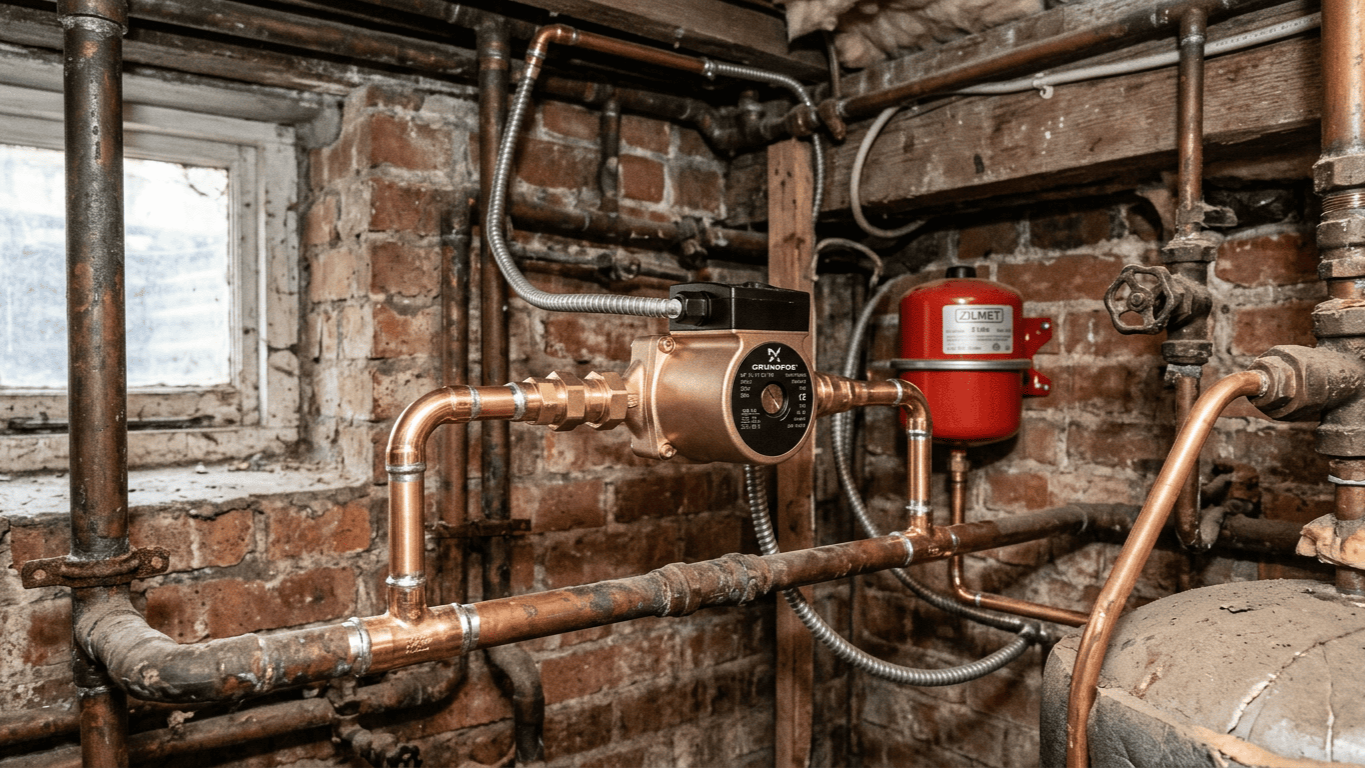
You're probably reading this because someone's complaining about lukewarm taps in a building that's been running fine for years. Or, maybe you've inherited a property where tenants are wasting thousands of litres a week waiting for hot water. Either way, you are looking at a retrofit secondary circulation project. You need to add pumps to an existing hot water setup that was never designed for one.
Think of a building without circulation like a long driveway on a snowy morning. Every time you want to leave, you have to spend five minutes clearing the snow before you can actually drive away. A retrofit secondary circulation system is like having a heated driveway. The path is always clear, meaning hot water is ready to move the moment you turn the tap.
I've done this retrofit dozens of times across commercial buildings and multi-storey residential blocks. The good news is that it is absolutely doable. The water savings alone often justify the investment within two years. However, the bad news is that it isn't as simple as bolting a pump onto your existing pipework.
Why Buildings Need Secondary Circulation Retrofits
Most older buildings were designed with a simple hot water system. A central heater or boiler pushes hot water through pipes to taps. When someone turns on a tap, they must wait for the cold water sitting in the pipes to clear. In a large building with 50 metres of pipework, that means minutes of running water down the drain.
At trade heating supplies, we often see contractors looking for solutions to this exact problem. A retrofit secondary circulation system solves this by continuously moving hot water through a loop. This keeps hot water available at every tap instantly. A dedicated return line brings cooled water back to the heater to be reheated.
Buildings typically need a retrofit secondary circulation solution when water waste becomes a financial burden. It is also vital for Legionella risk management, as maintaining water temperatures prevents bacteria growth. A typical commercial building might waste 300 litres daily per floor without it. Consequently, this adds up to massive utility costs over a single year.
Assessing Your Existing System
Before you price a single pump, you must understand the existing infrastructure. I've seen contractors quote jobs based on assumptions only to discover the system can't support the plan. Start by checking the heat source capacity. Your boiler needs enough power to handle the additional load of keeping a circulation loop hot.
You must also map the existing pipework to plan your return line installation. You need to know the pipe sizes, materials, and routing. Copper systems are straightforward, but galvanised steel might need replacement if it is corroded. Always walk the building to identify the furthest fixture and the longest pipe runs.
Check for available space in ceiling voids or plant rooms. Pumps and controls need somewhere to live. If you are upgrading to a high-pressure system, verify if a Kingspan 150-litre unvented cylinder is a viable addition. There is always a spatial solution if you are willing to look.
Choosing The Right Pump Configuration
The pump is the heart of your project. Selecting the wrong one results in either inadequate flow or a noisy system. Single-speed pumps are the traditional choice because they are simple and reliable. However, they consume power 24/7, even when nobody is using the water.
For a modern variable-speed pump retrofit, you should look for high-efficiency models. These pumps adjust their output based on demand or return temperatures. They can cut running costs by up to 60% in most buildings. These ECM circulation pumps are particularly quiet, which is vital for residential blocks.
In critical applications such as hospitals, we often use dual-pump setups for redundancy. One pump runs while the other sits on standby. For a standard variable-speed pump retrofit, I usually install a temperature sensor on the return line. This allows the system to modulate based on real-time heat loss.
Return Line Installation Options
This is where retrofit projects get tricky. Purpose-built systems have a dedicated return line running parallel to the supply. Your existing building probably doesn't have this. Your first option is a new return line installation, which is the gold standard for performance.
A new return line installation requires running new pipework throughout the building. This is feasible in commercial buildings with accessible ceiling voids. However, in residential buildings with finished ceilings, it can be a nightmare. Furthermore, you might consider point-of-use circulation loops to reduce disruption.
These point-of-use circulation loops serve specific areas rather than the whole building. This reduces installation complexity and allows for staged implementation. I don't recommend using the cold water line as a return, as it creates thermal discomfort at cold taps. This practice often leads to lukewarm water at sinks where it should be cold.
Balancing Valves And Temperature Control
Once you've got water moving, you must ensure it circulates evenly. Without proper balancing, some areas will have scalding water while others stay lukewarm. Balancing valves restrict flow in shorter pipe runs to force water through the longer runs.
Install these valves on each branch of the loop, typically on the return side. Start with all valves fully open. Then, progressively close valves on shorter runs while monitoring temperatures. This process takes patience, but skipping it leads to constant tenant complaints.
Thermostatic mixing valves (TMVs) are also essential for safety. Hot water circulates at 60°C to prevent Legionella, but that's dangerously hot at the tap. If you're using a Zilmet Hy-Pro expansion vessel to manage pressure, ensure your TMVs are also rated for the system's maximum delivery.
On a recent commercial project, an apprentice tried to balance a 10-storey loop in just thirty minutes. He left the lower floors wide open, which meant the pump never had enough pressure to reach the top floor. We spent two days on-site correcting the flow, which cost the company more than the actual pump installation.
Pump Placement And Mounting
Pumps can theoretically go anywhere in the loop. However, practical considerations usually dictate placement near the heat source on the return line. Mounting on the return means the pump handles slightly cooler water. This extends the life of the seals and bearings significantly.
Mount your ECM circulation pumps horizontally with the motor shaft level. While vertical mounting is possible, it shortens the lifespan of the unit. Ensure you have isolation valves on both sides of the pump. This allows you to service the unit without draining the entire building.
Vibration isolation is another factor that installers often overlook. A pump bolted directly to pipework transmits humming noises throughout the building. Use flexible connectors and rubber isolators to keep the building quiet. This is the difference between a satisfied occupant and a noise complaint.
Controls And Automation
The simplest systems run the pump continuously on a basic timer. This works, but it wastes significant energy overnight. A more efficient approach involves building management system integration. This allows for remote monitoring and scheduling based on actual building occupancy.
If a full building management system integration isn't in the budget, an aquastat is a great middle ground. This simple control triggers the pump based on return pipe temperature. Modern ECM circulation pumps often have these controls built directly into the pump head.
You should also consider adding a flow switch as a safety backup. If the flow drops below a minimum rate, the switch can trigger an alarm. This prevents equipment damage if a major leak occurs. If you need a reliable control interface, consider adding a wireless combi pack for local monitoring.
Insulation And Heat Loss Management
A poorly insulated circulation system wastes more energy than it saves water. Every metre of uninsulated pipe radiates heat into the building structure. This forces your boiler to work much harder than necessary. I usually specify 25mm closed-cell foam for all circulation pipework.
The cost of insulation is trivial compared to the long-term energy savings. You should pay special attention to pipe sections in unheated basements or roof voids. Valves and fittings also need pre-formed insulation jackets to prevent heat from escaping.
Proper insulation ensures your retrofit secondary circulation project makes economic sense. A poorly insulated 100-metre loop can lose 4kW of heat continuously. That adds up to roughly £15 in daily energy costs. High-quality insulation cuts this loss by up to 70%.
Common Retrofit Challenges And Solutions
Air locks often plague retrofit systems because existing pipework wasn't designed for continuous flow. Air accumulates at high points, blocking the water and creating noise. You must install automatic air vents at all high points to keep the system clear.
Corrosion and sediment in old pipes can also block new ECM circulation pumps within weeks. Always flush the system thoroughly before installing new equipment. I recommend adding a strainer before the pump to catch any loose debris. Furthermore, you might utilize point-of-use circulation loops to bypass corroded sections in larger layouts.
If your system has high pressure, check your Worcester boiler expansion vessel to ensure it is functioning correctly. Noise complaints usually stem from high water velocity in undersized pipes. Reducing the pump speed or increasing the pipe size usually solves the problem.
Cost Considerations And Payback
The price of a retrofit secondary circulation project varies based on building size and access. A small building with ten units might cost between £3,000 and £8,000. Large commercial buildings with over 50 units can see costs exceed £50,000 if significant pipework is required.
Payback calculations must account for both water savings and energy costs. A typical 30-unit residential building might save 15,000 litres of water monthly. This usually covers the extra energy costs and provides a net saving within a few years.
Tenant satisfaction is another major factor in the value of the project. Buildings with instant hot water command a premium in the rental market. If you are planning a large-scale upgrade, installing a Tribune HE pre-plumbed cylinder can further improve system efficiency.
Conclusion
Retrofitting secondary circulation transforms the occupant experience in buildings with long pipe runs. When done properly, it saves thousands of litres of water and improves daily comfort. The keys to success are a thorough initial assessment and the selection of high-quality components.
Avoid cutting corners on balancing or insulation, as this leads to an expensive system that doesn't deliver results. Start with accurate measurements rather than guesswork to ensure your pump sizing is correct. This ensures your retrofit secondary circulation remains efficient for decades.
If you get the installation right, you'll wonder why the building didn't have it years ago. Minimal waste and near-instant hot water make the investment worthwhile for any property manager. If you need help specifying the right equipment for your next project, contact our technical team for professional advice.