

Scale Prevention in Commercial Water Heaters
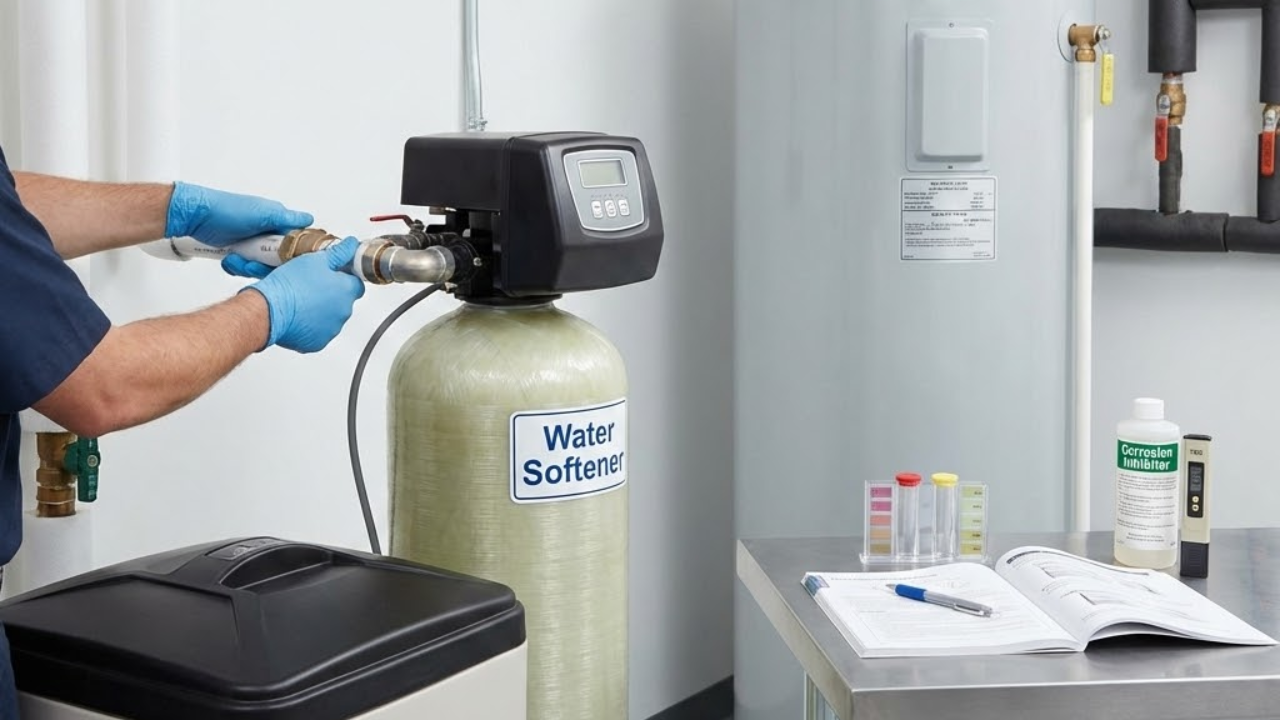
Commercial water heaters work hard, harder than most building services equipment. They're expected to deliver consistent hot water on demand, often for hundreds of users daily, while operating in conditions that accelerate wear and tear. The biggest silent killer? Limescale.
Scale buildup doesn't announce itself with alarms or warning lights. It creeps in gradually, coating heat exchangers, narrowing pipe diameters, and forcing your heating system to work exponentially harder to achieve the same output. Left unchecked, it'll shorten equipment lifespan by years, spike energy bills by 20-40%, and eventually cause catastrophic failure during peak demand. Usually on the coldest day of the year when you can least afford downtime.
For facilities managers, specifying engineers, and maintenance teams responsible for commercial hot water systems, understanding scale prevention isn't just about protecting equipment. It's about maintaining system efficiency, controlling operational costs, and avoiding the reputational damage of cold showers in a hotel or failed handwashing stations in a food production facility.
Heating and Plumbing World supplies comprehensive water treatment solutions for commercial installations.
Why Scale Forms in Commercial Water Systems
Limescale is calcium carbonate precipitate. A chalky, rock-hard deposit that forms when hard water is heated. The chemistry is straightforward: water contains dissolved minerals, primarily calcium and magnesium bicarbonates. When you heat this water above approximately 60°C, these minerals become less soluble and precipitate out as solid scale.
In a domestic setting, this might mean a furred-up kettle element. In a commercial water heater handling thousands of litres daily, it means millimetre-thick deposits coating every internal surface that touches heated water through heat exchanger scale deposits.
The rate of scale formation depends on three factors:
Water hardness: Water hardness measurement in parts per million (ppm) of calcium carbonate or degrees of hardness determines scale risk. UK water hardness varies dramatically. London and the South East commonly exceed 300 ppm (very hard), while Scotland and Wales often sit below 100 ppm (soft to moderately soft).
Operating temperature: Scale formation accelerates exponentially above 60°C. A commercial water heater maintaining 70-80°C will scale far faster than one running at 55°C.
Flow characteristics: Turbulent flow and high-velocity areas create more nucleation sites where scale crystals can form and attach.
Think of scale like cholesterol in arteries. A thin layer causes minor restriction. But as it builds, it narrows the passage, increases resistance, and forces the heart (or in this case, the boiler) to work harder to push the same volume through.
The Real Cost of Scale in Commercial Heating
Scale isn't just an annoyance. It's a profit killer. Here's what happens when scale takes hold in a commercial water heating system:
Energy efficiency plummets. Just 1mm of scale on a heat exchanger surface reduces heat transfer efficiency by approximately 7-10%. At 3mm (common in untreated hard water areas after 12-18 months) you're losing 20-25% efficiency. That means your boiler burns 20-25% more gas to deliver the same hot water output. On a commercial system consuming £15,000 annually in fuel, that's £3,000-£3,750 wasted.
Component failure accelerates. Heat exchanger scale deposits create hot spots on surfaces because they insulate the metal from the water it's meant to heat. These localised temperature spikes cause metal fatigue, stress cracking, and eventual perforation. We've seen heat exchangers fail in under three years in hard water areas with no scale prevention. Equipment designed for 15-20 year service life.
System capacity drops. Scale narrows pipe internal diameters and reduces flow rates through heat exchangers. A 200-litre commercial cylinder that once recovered in 45 minutes might take 90 minutes with heavy scaling. During peak demand periods (breakfast service in a hotel, shift change in a factory) you simply run out of hot water.
Maintenance costs spike. Descaling a commercial water heater isn't a quick job. It typically requires system shutdown, chemical descaling treatments, flushing, and often component replacement. Budget £800-£2,500 per intervention depending on system size, plus the cost of downtime.
On a recent hotel installation, the facilities team had delayed descaling for two years despite visible efficiency drops. When the heat exchanger finally failed during the Easter weekend, replacement took three days. The hotel lost £12,000 in comp upgrades and refunds for guests without hot water. A £600 annual descaling programme would've prevented it entirely.
Understanding Your Water Hardness Profile
Before specifying any scale prevention strategy, you need to know what you're dealing with. Water hardness varies not just regionally but sometimes street-by-street, depending on local geology and water source.
UK water hardness classifications (as calcium carbonate):
- Soft: 0-100 ppm
- Moderately soft: 100-150 ppm
- Slightly hard: 150-200 ppm
- Moderately hard: 200-250 ppm
- Hard: 250-300 ppm
- Very hard: 300+ ppm
Your local water supplier publishes hardness data by postcode. This is your starting point. But for critical commercial installations, commission a proper water analysis. Accurate water hardness measurement through laboratory testing will give you precise calcium, magnesium, iron, and silica levels, plus pH and total dissolved solids (TDS). This data allows accurate sizing of treatment equipment.
For context: a commercial kitchen in Hertfordshire running on 350 ppm water will face entirely different scaling challenges than an identical facility in Glasgow on 80 ppm water. The former needs aggressive scale prevention; the latter might need none at all.
Proven Scale Prevention Technologies
There's no single "best" solution for scale prevention. The right approach depends on water hardness, system size, operating temperatures, maintenance capabilities, and budget. Here are the proven technologies, with honest assessments of where each works.
Water Softeners (Ion Exchange)
How they work: Water passes through a resin bed that exchanges calcium and magnesium ions (which cause scale) for sodium ions (which don't) through water softener ion exchange. When the resin is exhausted, it regenerates using salt brine.
Where they excel: This is the gold standard for hard and very hard water (250+ ppm). Water softener ion exchange removes the minerals that cause scale through resin bed technology. They don't inhibit or alter scale formation, they eliminate the cause entirely. For commercial water heaters in hard water areas, properly sized softeners virtually eliminate scale.
Limitations: They require space for the softener unit and brine tank, regular salt replenishment, and periodic maintenance. Softened water contains elevated sodium, which may require consideration in food production or where water is consumed. Regeneration uses significant water, typically 50-100 litres per cycle.
Sizing considerations: Commercial softeners are sized based on peak flow rate and total hardness removal capacity between regenerations. A 200-litre commercial water heater serving a 20-room hotel might need a 20-litre softener regenerating every 2-3 days. Undersizing is the most common mistake. During regeneration, the softener is offline, so you need capacity to handle peak demand or a twin-tank system for continuous operation.
Brands and integration: Grundfos offers integrated dosing and treatment systems that work alongside their commercial pumps, while specialist water treatment suppliers provide standalone softeners sized for commercial heating applications.
Scale Inhibitors (Chemical Dosing)
How they work: Polyphosphate or silicate-based chemicals are dosed into the water supply through polyphosphate chemical dosing. These don't remove hardness minerals but alter their crystal structure, preventing them from forming hard scale. Instead, they remain in suspension or form soft sludge that can be flushed out.
Where they excel: Moderate hardness (150-250 ppm) where full softening isn't justified by cost or space constraints. They're particularly effective in systems with good circulation and regular blowdown. Chemical dosing is also useful as a supplementary treatment in partially softened systems.
Limitations: Effectiveness drops significantly above 300 ppm hardness. They require regular monitoring and replenishment of chemical reservoirs. Overdosing can cause issues with water quality; underdosing provides inadequate protection. They don't prevent scale formation entirely. They slow it.
Application in commercial systems: A commercial kitchen in a moderately hard water area might use polyphosphate chemical dosing on the water heater feed. Combined with regular system flushing, this can extend maintenance intervals from annually to every 2-3 years.
Magnetic and Electronic Scale Inhibitors
How they claim to work: These devices use magnetic fields or electronic signals to alter the physical properties of hardness minerals, theoretically preventing them from forming hard scale.
The honest assessment: Evidence of effectiveness is mixed and heavily debated in the industry. Some users report reduced scaling; others see no difference. Independent testing shows variable results depending on water chemistry, flow rates, and system configuration.
Where they might help: As a low-cost, low-maintenance option in slightly hard to moderately hard water (150-200 ppm) where space and budget prevent proper softening. They require no chemicals, no power (magnetic types), and no maintenance.
Where they'll disappoint: Very hard water (300+ ppm), high-temperature systems (above 70°C), or critical applications where scale prevention must be guaranteed. Don't rely on these as the sole protection for expensive commercial water heating equipment in hard water areas.
Reverse Osmosis and Filtration
How they work: RO systems force water through semi-permeable membranes that remove dissolved minerals, producing nearly pure water. Filtration systems remove particulates and some dissolved solids.
Where they excel: Specialist applications requiring ultra-pure water: laboratory equipment, steam generators, or high-efficiency condensing boilers where even minor scaling affects performance. RO also removes other contaminants beyond hardness minerals.
Limitations: Expensive to install and operate. RO systems waste 3-5 litres of water for every litre of treated water produced. They require pre-filtration, regular membrane replacement, and professional maintenance. For standard commercial water heating, they're usually overkill.
Specifying Scale Prevention for New Installations
When you're designing a new commercial hot water system, scale prevention should be integrated from day one. Not retrofitted after the first breakdown. Here's the specification process following BSRIA BG 29/2020 guidance:
Step 1: Get accurate water analysis data. Don't rely on regional averages. Commission a laboratory analysis or obtain detailed data from your water supplier for the specific site address.
Step 2: Calculate total system volume and flow rates. You need to know peak hot water demand, storage volume, and recovery rates. This determines the sizing of any treatment equipment.
Step 3: Match technology to water hardness and system type:
- Below 150 ppm: Consider no treatment, or low-cost inhibitors if operating above 65°C continuously
- 150-250 ppm: Chemical dosing or compact softener, depending on system size and maintenance capabilities
- 250-350 ppm: Water softener sized for continuous operation, possibly with chemical dosing as backup
- Above 350 ppm: Twin-tank softener system for uninterrupted operation, with regular maintenance schedule
Step 4: Design for maintenance access. Water softeners need salt replenishment and occasional resin replacement. Chemical dosers need refilling. Ensure treatment equipment is accessible and that isolation valves allow servicing without full system shutdown.
Step 5: Specify monitoring and alarms. Commercial softeners should include hardness monitors on the outlet to confirm effective operation. Chemical dosing systems need low-level alarms. These simple additions flag problems before scale formation begins.
Retrofitting Scale Prevention to Existing Systems
You've inherited a commercial water heater with visible scale damage, declining efficiency, or frequent breakdowns. Here's the remediation approach:
Assess current scale damage. Before installing treatment equipment, establish the baseline. A borescope inspection of the heat exchanger and cylinder internals reveals scale thickness and distribution. This tells you whether you need descaling before treatment, or if scale is light enough that treatment alone will gradually dissolve it.
Descale if necessary. Heavy scale (3mm+) should be chemically descaled before installing prevention equipment. Specialist descaling chemicals (typically phosphoric or citric acid-based) are circulated through the system to dissolve deposits. This requires system shutdown, usually 4-8 hours for complete treatment and flushing.
After descaling, the system is vulnerable to rapid re-scaling because all the nucleation sites are exposed. This is when you must install prevention equipment immediately. Within days, not weeks.
Install appropriately sized treatment. Retrofitting usually means working within space constraints. If a full softener installation isn't feasible, consider:
- Compact under-counter softeners for smaller commercial systems (up to 100 litres storage)
- Inline chemical dosing as an interim solution while planning for proper softening
- Point-of-use treatment on the most critical or expensive equipment, even if the whole system can't be treated immediately
Establish a monitoring regime. Post-installation, monitor system efficiency (gas consumption per litre of hot water), recovery times, and outlet water hardness monthly for the first six months. This confirms treatment effectiveness and allows optimisation.
Maintenance Strategies That Actually Work
Scale prevention equipment only works if it's maintained. Here's what a realistic commercial maintenance schedule looks like:
Water Softeners
- Weekly: Check salt level, top up if below one-quarter full
- Monthly: Test outlet water hardness with a simple test kit. Should read 0-50 ppm. If higher, regeneration frequency needs adjustment
- Quarterly: Inspect brine tank for salt bridging (hard crust preventing proper regeneration). Break up any bridges
- Annually: Professional service including resin bed cleaning, control valve inspection, and regeneration cycle verification
Chemical Dosing Systems
- Weekly: Check chemical reservoir level, refill as needed
- Monthly: Verify dosing rate by measuring chemical consumption against water throughput
- Quarterly: Inspect dosing pump for wear, clean filters, check calibration
- Annually: Replace dosing pump seals and recalibrate
The Water Heater Itself
- Quarterly: Check anode rod condition (sacrificial anodes protect cylinder internals from corrosion. They're consumed over time and need replacement every 1-3 years depending on water chemistry)
- Six-monthly: Drain and flush sediment from the bottom of storage cylinders. Even with perfect scale prevention, some sediment accumulates
- Annually: Professional inspection including heat exchanger examination, temperature and pressure relief valve testing, and combustion analysis
For facilities with multiple commercial water heaters (hotels, hospitals, industrial sites) consider a water treatment service contract. Specialist companies provide regular monitoring, chemical supply, and maintenance, often more cost-effectively than in-house management.
Integration with Modern Heating Controls
Modern commercial water heaters increasingly feature smart controls and system integration. Scale prevention should work with these systems, not against them.
Honeywell and EPH Controls offer building management system (BMS) integration for commercial heating. When your scale prevention equipment communicates with the BMS, you gain:
- Automated alerts when water softener regeneration fails or chemical dosing reservoirs run low
- Performance tracking correlating water treatment status with system efficiency metrics
- Predictive maintenance scheduling based on actual water throughput rather than arbitrary time intervals
For example, a hotel with BMS-integrated water treatment can automatically adjust water heater operating temperatures based on treated water hardness. If the softener fails and hardness spikes, the system temporarily reduces operating temperature to slow scale formation until maintenance arrives.
The Economic Case for Scale Prevention
Let's put actual numbers to scale prevention for a typical commercial installation: a 300-litre commercial water heater serving a 30-room hotel, operating in a hard water area (300 ppm).
Without scale prevention:
- Annual gas consumption: £4,200
- Scale-related efficiency loss (20% after 18 months): +£840/year additional fuel
- Heat exchanger replacement (every 4-5 years): £2,800 amortised = £600/year
- Emergency descaling and repairs: £400/year average
- Total annual cost impact: £1,840
With properly sized water softener:
- Equipment cost: £2,500 installed
- Annual maintenance (salt, servicing): £180
- Annual cost impact: £180 (after year 1)
Payback period: 1.4 years. From year two onwards, you're saving £1,660 annually. Over a 15-year equipment lifespan, that's nearly £25,000 saved, plus the avoided downtime and reputational damage from hot water failures.
The economics become even more compelling for larger systems or multiple water heaters. A commercial kitchen with three water heaters might see payback in under a year.
Selecting Equipment and Suppliers
When specifying scale prevention equipment for commercial installations, you're making a 10-15 year commitment. Choose carefully.
For water softeners, look for:
- Commercial-grade construction with corrosion-resistant tanks and valves
- Control systems with battery backup (power cuts shouldn't mean loss of settings)
- Capacity sizing that accounts for peak demand, not just average consumption
- Availability of spare parts and local service support
For chemical dosing systems, prioritise:
- Adjustable dosing rates for seasonal water chemistry variation
- Transparent reservoirs so staff can see chemical levels at a glance
- Fail-safe design where pump failure doesn't allow untreated water through
Brands worth considering: Grundfos manufactures dosing systems designed specifically for integration with commercial heating, while Danfoss offers controls and sensors that work across water treatment applications.
For the water heaters themselves, Andrews and Gledhill produce commercial cylinders designed for treated water systems, with appropriate materials and coatings that maximise lifespan when scale prevention is properly implemented.
Common Mistakes and How to Avoid Them
After seeing dozens of commercial water heating installations, certain mistakes appear repeatedly:
Undersizing treatment equipment. A softener sized for average daily consumption will be offline regenerating during peak demand periods. Size for peak flow rate, or install twin-tank systems for continuous operation.
Installing treatment but never monitoring it. A water softener that's run out of salt or a chemical doser with an empty reservoir provides zero protection. Simple weekly checks prevent this.
Treating only part of the system. If you soften the cold feed to a water heater but leave the heating circuit untreated, you've protected one component while others scale up. Consider whole-system treatment or accept that untreated areas need more frequent maintenance.
Ignoring water chemistry changes. Water hardness isn't constant. It varies seasonally and when water suppliers change sources. Annual water testing ensures your treatment remains effective.
Delaying descaling before treatment installation. Installing a softener on a heavily scaled system doesn't remove existing scale. Descale first, then prevent recurrence.
Regulatory and Compliance Considerations
Commercial water heating systems must comply with several UK regulations that intersect with scale prevention:
Water Supply (Water Fittings) Regulations 1999 require that any water treatment equipment doesn't contaminate the water supply. Water softeners and chemical dosers must be properly installed with backflow prevention and comply with WRAS approval.
Building Regulations Part G addresses water efficiency. While scale prevention isn't explicitly mandated, maintaining efficient water heating aligns with energy conservation requirements.
Legionella control under HSE L8 guidance requires stored hot water to be maintained at 60°C minimum. Scale buildup makes this temperature maintenance more difficult and energy-intensive. Effective scale prevention supports compliance with temperature control requirements.
Insurance and warranty requirements often specify that commercial water heating equipment receives regular maintenance and water treatment. Failure to provide documented scale prevention can void warranties and complicate insurance claims after scale-related failures.
Conclusion
Scale prevention in commercial water heaters isn't optional in hard water areas. It's essential infrastructure that protects capital equipment, maintains efficiency, and prevents costly failures. The initial investment in proper water treatment pays for itself within 1-3 years through reduced energy costs, extended equipment life, and avoided emergency repairs.
The key is matching treatment technology to your specific water hardness, system size, and operational requirements. For hard water (250+ ppm), water softeners provide the most reliable protection. For moderate hardness (150-250 ppm), chemical dosing offers cost-effective prevention. Below 150 ppm, you might not need treatment at all.
Whichever approach you choose, implementation matters as much as specification. Properly sized equipment, regular maintenance, and continuous monitoring ensure your scale prevention system actually prevents scale rather than becoming another piece of neglected plant room equipment.
For commercial water heating installations, Heating and Plumbing World stocks water treatment equipment from leading manufacturers, along with the commercial cylinders, controls, and components designed to work with treated water systems. For technical guidance on specifying scale prevention for your specific application, contact us to discuss your water quality challenges and treatment options.