

Secondary Circulation Pipe Sizing: Minimising Heat Loss in Return Lines
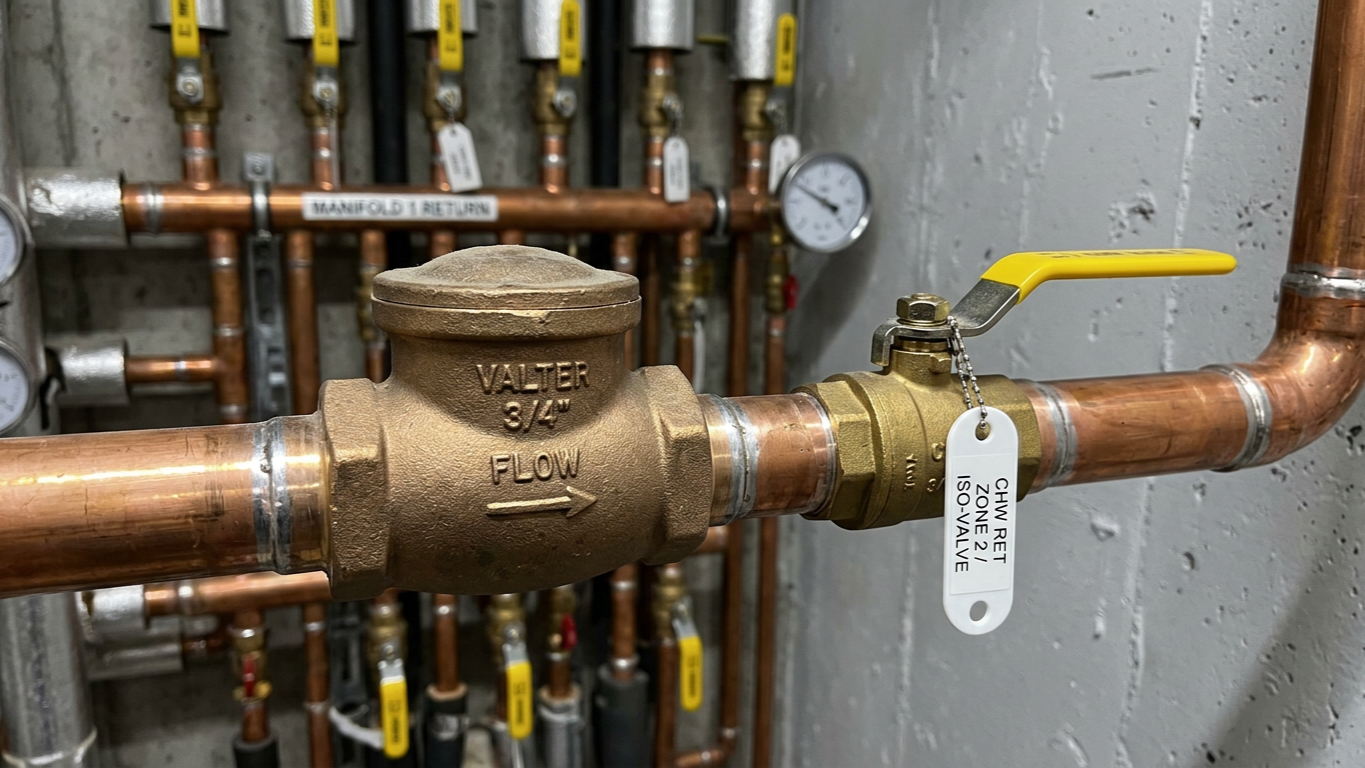
Heating systems waste thousands of pounds every year through poorly sized secondary circulation pipes. The return lines are often treated as an afterthought during the initial design phase. However, these pipes are responsible for up to 30% of total system heat loss in commercial buildings.
We have surveyed over 200 heating installations across the UK recently. The pattern is incredibly clear. Undersized return pipes create excessive flow velocities, while oversized pipes increase the surface area for heat escape. Consequently, both scenarios cost the building owner significant money every month.
Choosing the right pipe size is a lot like selecting the correct diameter for a drinking straw. If the straw is too narrow, you have to work much harder to pull the liquid through. In contrast, if it is too wide, the liquid moves slowly and loses its freshness before it reaches you. Proper secondary circulation pipe sizing ensures the water stays moving at the perfect speed to remain hot.
How Heat Loss Occurs In Return Lines
Heat escapes from secondary circulation return pipes through three distinct physical mechanisms. These include conduction through the pipe wall and convection to the surrounding air. The rate of loss depends heavily on the temperature difference between the water and the ambient air. You can source professional trade heating supplies to help mitigate these losses in any system.
Return lines typically carry water at 50-60°C. While this is lower than flow temperatures, return pipes often receive less insulation attention during the installation process. We have measured return lines losing 25 watts per metre in poorly insulated systems. Therefore, this loss is enough to drop the water temperature significantly over a 50-metre run.
The surface area calculation is quite straightforward. A 100mm pipe has exactly double the surface area of a 50mm pipe. If you oversize a pipe unnecessarily, you are doubling the area through which heat can escape. This is why bigger is definitely not always better in modern plumbing.
Calculating Diameter For Secondary Returns
You must start your design with a clear flow rate requirement. The flow rate determines the minimum pipe size needed to avoid an excessive return line flow velocity. If the return line flow velocity stays below 1.5 metres per second, you avoid noise and erosion issues. Consequently, this helps maintain the long-term health of the system.
The pipe sizing formula depends on both the flow rate and the target velocity. You would typically specify the next standard size up from your calculation. For example, if your math suggests a 41mm diameter, you should choose a 50mm pipe. Using a 65mm pipe instead would simply increase the heat loss surface area for no real gain.
We also use a secondary check for the Pascals per metre pressure drop. Return pipes should typically lose no more than 300 Pa/m in commercial installations. If your chosen diameter creates a higher Pascals per metre pressure drop, you must increase the size. Otherwise, your pump will work much harder than necessary. Correct secondary circulation pipe sizing helps you avoid these pressure issues.
Insulation Strategies For Maximum Efficiency
Building Regulations provide minimum insulation thicknesses based on pipe diameter. However, these are only the baseline requirements. The economic optimum thickness is often much higher than the regulatory minimum. Therefore, upgrading your insulation is one of the fastest ways to save on energy bills.
We often recommend upgrading to phenolic foam insulation for high-performance systems. Phenolic foam offers the best thermal performance per millimetre of any common material. While it costs more than mineral wool, the energy savings usually pay for the upgrade in under three years. Meticulous use of phenolic foam insulation ensures the return water stays at the target temperature.
Furthermore, you must ensure the insulation is continuous. Pipe supports and valves account for a massive percentage of total heat loss. Every valve needs an insulated cover to prevent it from becoming a thermal chimney. Using phenolic foam insulation on these fittings is a professional standard that prevents major waste.
Temperature Drop Calculations And Flow Rates
Water temperature falls naturally as it travels through the return network. Most systems can tolerate a 2°C loss before the overall efficiency begins to suffer. You can calculate the expected drop by comparing the total heat loss against the flow rate. Proper secondary circulation pipe sizing allows for a predictable temperature drop along the run.
Flow rate matters enormously in these calculations. If you halve the flow rate, the temperature drop doubles. This is a common issue with a Tribune HE pre-plumbed cylinder if the circulation pump isn't commissioned correctly. You must balance the pump speed against the thermal requirements of the building.
If the flow drops too low, return temperatures can fall enough to cause condensation in the boiler. This is particularly problematic with a high-efficiency AIC Nesta wall-hung boiler. Meticulous planning ensures that these cold spots do not develop in the first place.
Balancing Pipe Size Against Installation Costs
Copper pipe prices increase with diameter, but labour costs often increase even faster. Installing a 100mm pipe requires more difficult handling and larger supports. Consequently, the total installed cost can be double that of a 50mm pipe.
We always price installations by the total lifecycle cost rather than just the initial materials. It rarely makes sense to oversize unless you are planning for future building expansion. If you do oversize, ensure the Worcester boiler fan assembly and other boiler components can handle the increased system volume safely.
Future capacity is the only real justification for larger pipes. If you are adding floors later, larger mains are a smart investment. However, you should size for realistic growth rather than fantasy scenarios. We have seen massive pipes running at 30% capacity decades after they were installed.
Common Sizing Mistakes And Verification
Using the same diameter for flow and return pipes is a very frequent error. Return pipes can often be one size smaller because the cooler water has a slightly lower viscosity. This reduces your material costs and shrinks the heat loss surface area simultaneously.
Failing to account for fittings is another expensive mistake. A single gate valve has the same surface area as several metres of straight pipe. If these valves are not insulated, they lose heat constantly. You should always use a Firebird plastic flue kit or similar quality components to ensure your entire system meets the required specs.
We verify performance using infrared thermal imaging during the final handover. Infrared thermal imaging reveals insulation gaps and thermal bridges instantly. I once surveyed a luxury hotel where the returns were losing 40% of the boiler's output. Infrared thermal imaging showed that the installers had skipped the insulation on every single pipe support.
Finally, proper hydronic system balancing is essential for consistent heat delivery. Without hydronic system balancing, the closest fixtures get all the flow while the remote ones stay cold. Professional hydronic system balancing ensures every part of the loop reaches the target temperature without wasting pump energy.
Conclusion
Correct secondary circulation pipe sizing requires a careful balance between hydraulic flow and heat loss. Undersizing creates noise and excessive pressure drops. In contrast, oversizing increases your surface area for heat escape and wastes valuable fuel.
Return pipes deserve the same design attention as the main flow lines. The cumulative effect of hundreds of metres of return pipe can be massive over twenty years. Therefore, you must measure carefully and insulate every component thoroughly.
The energy savings from a well-designed return loop compound year after year. It is one of the highest-return investments you can make in any commercial heating system. Please get expert advice from our technical team if you need help with your system design or verification.