

Secondary Circulation Zone Isolation: Check Valve Placement Strategies
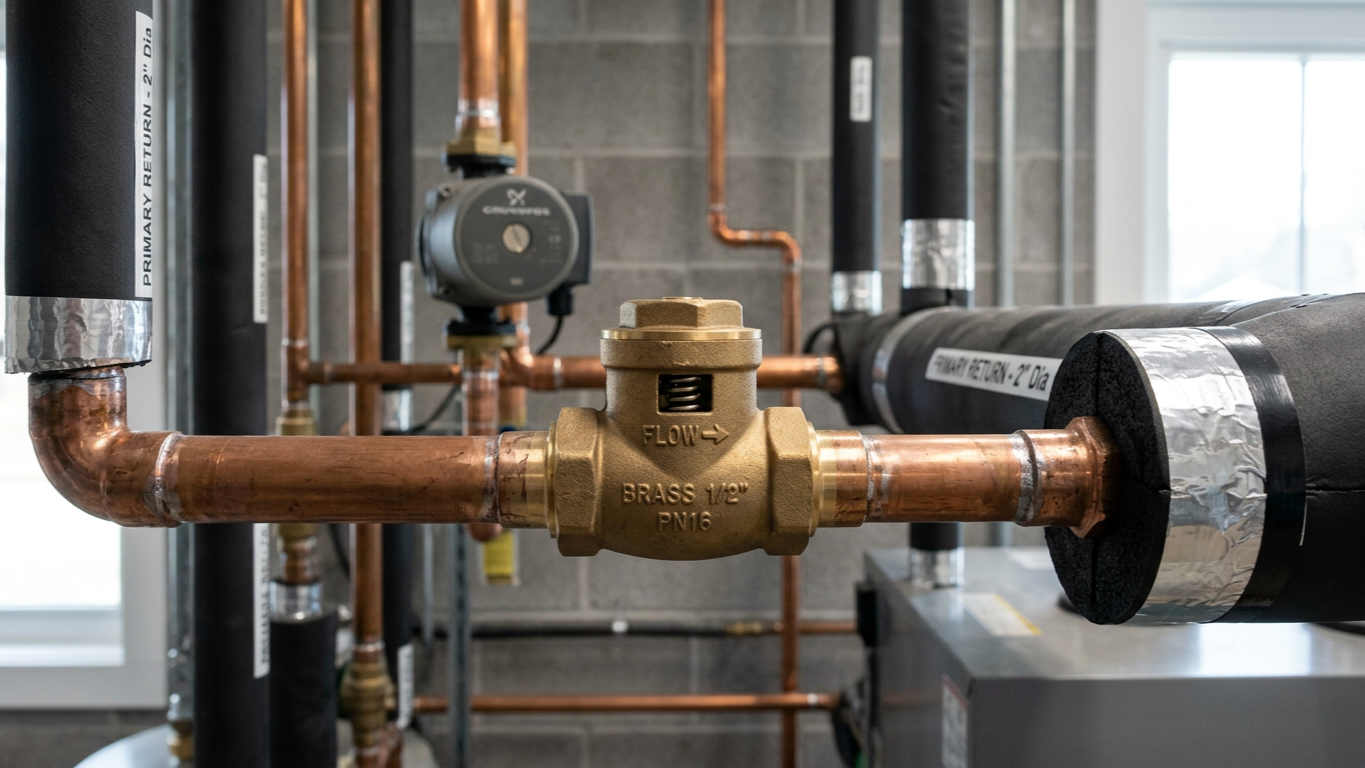
Hydronic heating systems operate on a beautifully simple principle where hot water flows exactly where it is needed, delivers its heat, and returns to the boiler to be reheated. But there is a massive underlying problem with this assumption. Water absolutely does not always behave the way you want it to. Without proper isolation between multiple circulation zones, you will inevitably experience reverse flow, severe heat bleed, and zones that never quite reach temperature while other areas overheat aggressively.
We have seen countless commercial and domestic systems where secondary loops interfere violently with each other simply because someone skipped the isolation components or placed them incorrectly. The result is always the same, bringing endless comfort complaints, massively wasted energy, and expensive service calls that could have been avoided entirely with proper valve placement during the initial installation.
Check valves act exactly like strict one-way traffic lights at a complex intersection. Without them, traffic flows backward down one-way streets, causing absolute gridlock and chaos. They reliably allow flow in the intended direction whilst completely preventing the backflow that undermines zone control. But placement matters far more than most installers realise. Put a flow control component in the wrong spot, and you have just created a massive mechanical restriction that kills your primary flow or completely fails to prevent the reverse circulation you were desperately trying to stop.
Why Secondary Zones Need Strict Isolation
Secondary circulation loops branch directly off from your primary distribution system to serve specific areas or distinct thermal loads. Each zone typically possesses its own dedicated circulator pump meticulously sized for that particular circuit's exact flow requirements.
The true engineering challenge emerges when multiple secondary zones connect to the exact same primary loop. Without proper secondary circulation zone isolation, the natural differential pressures between zones create completely unintended flow paths. A zone that is absolutely not calling for heat can still receive hot water pushed backward through its piping by the residual pressure from an adjacent active zone.
This frustrating phenomenon is known as ghost flow or thermal migration. It wastes immense amounts of energy and creates highly erratic temperature control problems. We have measured commercial systems losing up to twenty percent of their total efficiency purely from inadequate isolation, despite the installer using premium pipework insulation throughout the building. That is highly expensive heat you are paying to generate but entirely failing to deliver where it is actually needed.
Primary Versus Secondary Circulation Systems
Before diving into complex valve placement, you absolutely must understand the specific system architecture you are working with on site. Primary-only systems use a single circulator to aggressively push water through all zones simultaneously. Zone valves intelligently open and close to dictate which specific areas receive flow.
Primary-secondary systems use a massive main circulator for the primary loop and entirely separate circulators for each independent secondary zone. The primary loop reliably maintains constant circulation whilst the secondary pumps run only when their specific zones call for heat.
Sophisticated variable primary flow systems adjust the main circulator speed dynamically based on the aggregate demand from all active zones. These complex variable primary flow systems require incredibly careful valve placement because the pressure differentials constantly fluctuate as different zones cycle on and off throughout the day. When specifying replacement heating pumps for these dynamic setups, ensuring the pump head can easily overcome the mechanical resistance of your isolation hardware is absolutely paramount.
Check Valve Placement For Optimal Zone Isolation
The fundamental golden rule of hydronic separation is to install check valves strictly on the return side of each secondary zone, directly before it physically reconnects to the primary return header.
This specific location serves two highly critical purposes. Firstly, it prevents reverse flow completely when the zone is inactive but other adjacent zones are heavily running. Secondly, it allows the zone's dedicated circulator to build full operational pressure when active without fighting blindly against the immense backpressure of the primary loop.
Never install check valves on the supply side of any secondary zones. This mistake creates a brutal pressure trap. When the zone circulator starts, it must simultaneously overcome both the valve's mechanical resistance and the full static pressure of the primary loop. Flow rates suffer terribly, and integrating intelligent central heating components danfoss will not fix a circuit that is physically starved of water.
Multiple Zones On Shared Headers
When several secondary zones connect directly to common supply and return headers, meticulous valve placement becomes even more critical to system stability. Each zone demands its own dedicated check valve, but you must also mathematically consider the cumulative pressure drop occurring through all valves operating simultaneously.
We highly recommend specifying spring-loaded check valves rather than traditional swing checks for these specific multi-zone applications. Premium spring-loaded check valves possess significantly lower resistance and respond much faster to sudden flow reversals.
Sourcing reliable components through Heating and Plumbing World ensures you secure precision-engineered valves that will not flutter in smaller zone circuits, preventing the frustrating noise and premature mechanical wear associated with cheap hardware. Install these valves at least ten pipe diameters downstream from any elbows or tees that create turbulence, ensuring the internal disc seats flawlessly every single time.
Handling Thermal Expansion And Pressure Surges
Check valves inherently create solid, impenetrable barriers to reverse flow, which means they also completely block natural thermal expansion from travelling backwards through inactive zones. This trapped thermal expansion must safely go somewhere.
In closed-loop systems, your expansion tank handles this perfectly, but only if it is properly sized for the absolute total system volume including all isolated zones. Properly executing an expansion vessel installation requires calculating the total water content with all zones entirely filled, not just the primary loop.
We have diagnosed countless systems where undersized expansion tanks caused relief valves to weep endlessly because the check valves prevented the expansion from distributing evenly throughout the piping network. Installing a properly sized heating system expansion vessel with a 15 percent safety margin totally eliminates this dangerous pressure buildup.
Check Valve Selection Criteria
Not all directional flow valves perform equally in modern hydronic applications. Proper selection depends heavily on pipe size, total flow rate, and maximum system pressures.
Silent check valves featuring spring-loaded discs work exceptionally well for residential and light commercial systems. They operate quietly and boast an incredibly low cracking pressure highly suitable for small domestic circulators. Avoid brass construction entirely in systems using aggressive glycol mixtures, as the internal valve seats will deteriorate rapidly over time.
Dual-plate designs handle vastly higher flows with significantly less pressure drop than single-disc designs. Use these heavy-duty units for larger secondary zones where a high cracking pressure would otherwise restrict the primary flow significantly. Always verify the valve's maximum operating temperature exceeds your system design temperature by at least twenty degrees to guarantee an adequate safety margin.
Testing Zone Isolation After Installation
Proper valve placement means absolutely nothing if the internal components do not actually prevent reverse flow. You must rigorously test your secondary circulation zone isolation before fully commissioning the system and handing it over to the client.
Bring the system up to full operating temperature with all zones completely satisfied and not calling for heat. Monitor the supply temperatures at each zone whilst actively triggering only one zone at a time. If the inactive zones show a sudden temperature rise, you have reverse flow getting past the isolation components.
On a recent commissioning job at a luxury boutique hotel, the entire ground floor heating loop failed to reach temperature despite the primary boiler running flat out. The original installer had fitted heavy swing checks on a low-flow secondary circuit. The circulator simply couldn't overcome the massive resistance, essentially deadheading the pump completely. Swapping them out for lightweight components restored full flow within twenty minutes.
Common Mistakes That Undermine Isolation
The biggest critical error we encounter involves installing check valves but failing entirely to provide adequate circulator pressure to overcome their inherent mechanical resistance. A valve requiring heavy pressure to open will severely restrict flow if your circulator only generates a minimal total head.
Match your valve's cracking pressure directly to your circulator's maximum capabilities. Residential zones typically need valves with exceptionally low resistance. Commercial systems equipped with much larger circulators can handle slightly higher resistance comfortably.
Do not install check valves in series unless you have specifically calculated the severe cumulative pressure drop. We have diagnosed systems where paranoid installers placed check valves at both the supply and return of each zone for perceived extra protection. The disastrous result was completely inadequate flow because the circulators couldn't overcome the double restriction.
Balancing Isolation With System Flexibility
Aggressive secondary circulation zone isolation drastically improves thermal control but can occasionally create unique operational challenges. Completely independent zones equipped with dedicated circulators and check valves require far more complex controls and incredibly precise flow balancing.
Consider adding small bypass circuits on larger secondary zones located in highly vulnerable areas. A small bypass line fitted with a manual balancing valve around the check valve allows minimal flow for emergency freeze protection whilst actively maintaining strict isolation during normal daily operation.
Integrating a reliable temperature control system with automated bypass valves offers brilliant automated protection. We frequently specify these for distinct zones located in unconditioned spaces or massive commercial buildings operating with highly variable seasonal occupancy.
Conclusion
Perfecting your secondary circulation zone isolation through precise check valve placement aggressively prevents reverse flow, completely eliminates frustrating thermal migration, and flawlessly maintains independent control of every single heating zone.
The strategy is highly straightforward. Install premium components exclusively on the return side of each secondary zone, just before the reconnection to the primary return. This vital location prevents backflow whilst freely allowing zone circulators to build full operational pressure for proper flow rates. Select valves with a very low cracking pressure that your circulators can easily overcome without labouring.
Test your zone isolation rigorously after installation by monitoring temperatures and flows in inactive zones. Even tiny amounts of reverse flow accumulate rapidly into massive efficiency losses across multiple zones. The time spent verifying proper isolation during commissioning reliably prevents years of comfort complaints. If you need assistance selecting the correct radiator valves or isolation hardware for a complex project, speak to our team today for expert technical sizing advice.