

Septic Tanks and Sewage Treatment Plants for Rural Homes
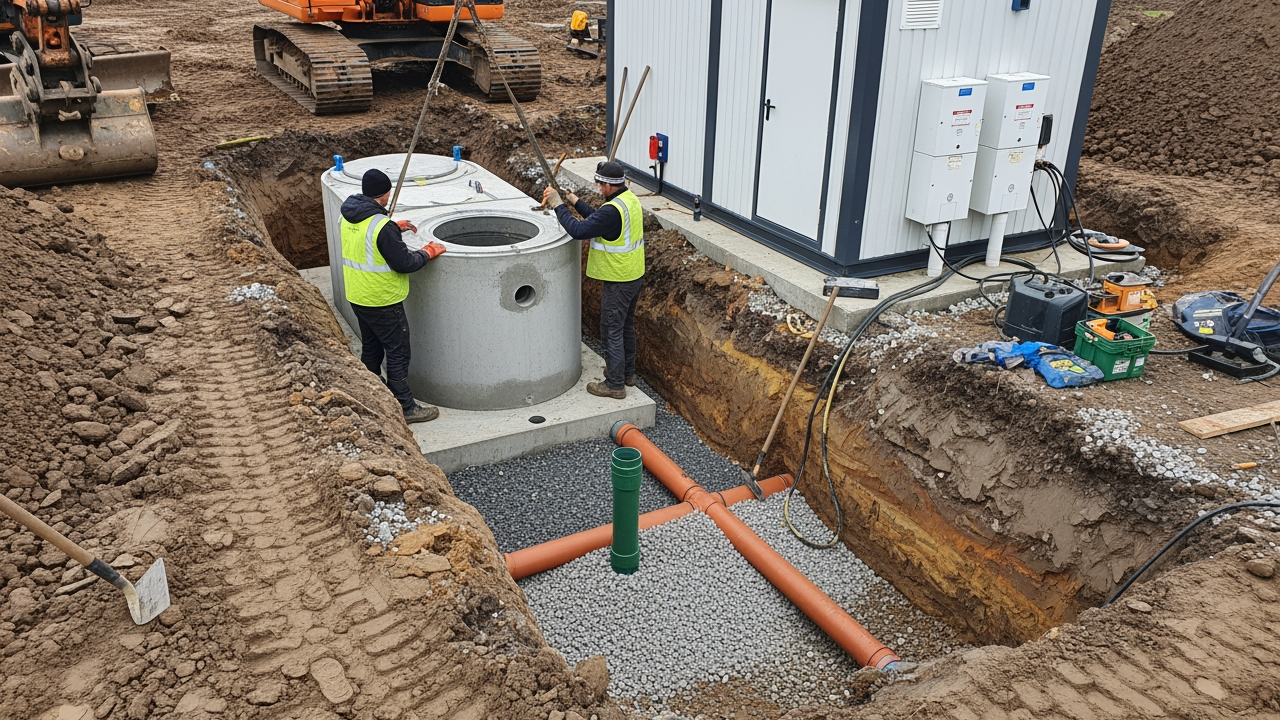
Rural properties without access to mains sewerage need their own waste management systems. For most homeowners, this means choosing between a septic tank and a sewage treatment plant. Experience across hundreds of rural properties shows the choice affects everything from initial costs to environmental compliance and long-term maintenance schedules.
The distinction matters more than most people realise. A septic tank provides basic waste separation, whilst a sewage treatment plant actively processes sewage to produce cleaner effluent. Your property's soil type, water table depth, and local regulations determine which system works and which one regulators will approve.
How Septic Tanks Actually Work
A septic tank stores wastewater from your home and separates it into three layers. Solids sink to the bottom as sludge, fats and oils float to the top as scum, and the middle layer of partially clarified water (effluent) flows out to a drainage field.
The process is entirely passive. Anaerobic bacteria break down organic matter inside the sealed tank, but this biological action is slow and incomplete. The effluent leaving a septic tank rural installation still contains significant levels of bacteria, nutrients, and suspended solids, typically 200-300mg/L of biological oxygen demand (BOD).
This partially treated water moves through perforated pipes into a drainage field (also called a soakaway or leach field). Here, soil bacteria complete the treatment process as effluent percolates through layers of gravel and earth. The drainage field does the heavy lifting in a septic system.
Most septic tanks hold 2,700-3,800 litres for a typical three-bedroom home. Sludge accumulates at roughly 40-60 litres per person annually, which means you'll need to empty every 12-18 months, depending on household size and water usage.
When Septic Tanks Stop Working
Septic systems fail when the soil can't absorb or treat effluent fast enough. This pattern repeats consistently: the tank functions fine, but the drainage field becomes saturated or clogged.
Clay soils pose the biggest challenge. With percolation rates slower than 100 seconds per 25mm (measured through standard percolation tests), clay simply can't handle the daily effluent volume from a typical household. You'll notice pooling water, soggy ground, or sewage odours around the drainage field.
High water tables create similar problems. If groundwater sits within one metre of your drainage pipes, effluent has nowhere to go. The system backs up, and you're left with sewage surfacing in your garden or, worse, backing up into your home.
Environmental regulations have tightened considerably. Properties near watercourses, in groundwater protection zones, or within 50 metres of wells often can't use standard septic tanks. The effluent quality simply isn't good enough to prevent contamination risks.
How Sewage Treatment Plants Differ
A sewage treatment plant actively processes waste through multiple treatment stages. Unlike the passive separation in a septic tank, these systems use aerobic bacteria, mechanical components, and controlled environments to break down sewage more completely.
The process starts similarly; solids settle in a primary chamber. But then effluent moves to an aeration chamber where pumps or blowers inject air. This oxygen-rich environment supports aerobic bacteria that consume organic matter far more efficiently than anaerobic bacteria in septic tanks.
After aeration, water flows to a settlement chamber where remaining solids separate out. Some systems include additional filtration or UV disinfection stages. The final effluent achieves BOD levels of 20mg/L or lower, roughly 90% cleaner than septic tank discharge.
This cleaner output opens up options. You can discharge to a much smaller drainage field, directly to a watercourse (with appropriate permits), or even use the treated water for garden irrigation in some configurations. Quality pumping solutions from Grundfos ensure reliable effluent circulation and aeration in modern treatment plants.
The Real Cost Comparison
Septic tanks cost £2,800-£4,500 installed for a standard domestic system, including the tank and basic drainage field. Concrete tanks last 30-40 years with minimal maintenance beyond regular emptying at £150-250 per visit.
Sewage treatment plants start at £4,500-£7,000 for entry-level models and reach £8,000-£12,000 for premium systems with advanced features. Installation adds £1,500-£3,000, depending on site conditions and connection complexity.
The ongoing costs tell a different story. Treatment plants need electricity, typically 50-80 kWh monthly, adding £15-25 to your power bill. Annual servicing runs £150-£300 and isn't optional; it's usually a regulatory requirement. Air pumps, blowers, and control panels eventually need replacement at £300-£800 per component.
Over 20 years, a septic tank costs roughly £8,000-£10,000 total (installation plus maintenance). A sewage treatment plant reaches £18,000-£25,000 when you include purchase, installation, electricity, servicing, and component replacements.
But this calculation ignores the critical factor: whether your property can actually use a septic tank. If soil conditions or regulations rule out septic systems, the treatment plant isn't more expensive; it's the only option.
Choosing the Right System for Your Property
Start with a percolation test. Dig a 300mm square hole, 300mm deep, below the proposed drainage field level. Fill it with water and let it drain completely. Refill to 300mm depth and time how long it takes to drop 25mm.
Results between 12 and 100 seconds indicate suitable drainage. Below 12 seconds, soil drains too quickly (often sandy or gravelly) and won't treat effluent adequately. Above 100 seconds, drainage is too slow for a standard septic system.
Check your water table by digging test pits during the wettest season, typically February-March in the UK. You need at least one metre of unsaturated soil beneath your drainage field year-round. If groundwater appears higher than this, septic tanks won't work reliably.
Measure distances to sensitive features. Most regulations require septic tanks to be at least 50 metres from water sources, 15 metres from buildings, and 2 metres from boundary lines. Treatment plants often have reduced setback distances, sometimes 10 metres from water sources, because of their cleaner discharge.
Contact your local environmental health department before finalising plans. They'll specify requirements for your location, including discharge consents, groundwater protection measures, and system sizing based on household occupancy.
Installation Requirements That Actually Matter
The drainage field size determines system success more than tank choice. Standard guidance calls for 50 metres of drainage pipe per bedroom (treating each bedroom as one person), but soil conditions override this rule.
In light, well-drained soil, you might manage with 30-40 metres per bedroom. Heavy clay soils need 60-80 metres per bedroom or more. Properties exist where clay conditions made septic systems completely unviable; no amount of drainage field would work.
Drainage pipes sit in trenches 600-900mm deep, on 300mm of gravel, with 50-150mm of gravel covering. Space trenches at least 2 metres apart to prevent cross-contamination between runs. The pipes need a slight fall (1:200) but not so much that effluent races through without adequate soil contact time.
Treatment plants need an electrical supply, a dedicated circuit from your consumer unit, protected by an RCD. The control panel typically sits indoors or in a weatherproof housing near the tank. Budget £400-£800 for electrical work if you're more than 20 metres from your distribution board. EPH Controls offers compatible monitoring and control solutions for modern treatment systems.
Access matters for both systems. Emptying tankers need to get within 30 metres of your tank with their hoses. If access is difficult, you'll pay premium rates or need to install a more accessible inspection chamber. Plan for this during installation, not when you're dealing with an emergency callout.
Maintenance Schedules That Prevent Problems
Septic tanks need pumping every 12-18 months for a family of four. Stretch this to 24 months, and you risk solids entering the drainage field, which causes irreversible clogging. Entire drainage fields require replacement, at £3,000-£5,000, when homeowners skip routine emptying.
Check your tank annually, even if you're not due for pumping. Look for cracks, check that the inlet and outlet baffles are intact, and verify that the access cover seals properly. These simple inspections catch problems before they become expensive failures.
Treatment plants need professional servicing every 6-12 months. The technician checks air pumps, cleans filters, tests effluent quality, and removes accumulated sludge. This isn't optional maintenance; it's required to maintain your discharge consent and system warranty.
Between services, check your treatment plant monthly. Listen for unusual noises from the air pump, watch for alarm indicators on the control panel, and inspect the final effluent chamber. Cloudy or foul-smelling discharge indicates treatment problems that need immediate attention.
Both systems benefit from careful water use. Spread laundry loads throughout the week rather than doing five loads on Saturday. Fix dripping taps and running toilets promptly. Excessive water flow overwhelms treatment processes and flushes solids through before they're properly broken down.
What You Can't Put Down the Drain
Harsh chemicals kill the bacteria that make both systems work. Avoid pouring bleach, paint, solvents, or strong cleaners down drains in large quantities. Standard household cleaning products normally won't cause problems, but don't use your toilet as a chemical disposal point.
Fats, oils, and grease (FOG) cause more septic system failures than any other factor. They solidify in pipes and tanks, form impermeable layers that block drainage, and resist bacterial breakdown. Scrape plates into the bin before washing, and never pour cooking oil down the sink.
Non-biodegradable items block systems and damage pumps. This includes wet wipes (even "flushable" ones), sanitary products, cotton buds, dental floss, and cat litter. The only things that should go down your toilet are human waste and toilet paper.
Pharmaceuticals and antibiotics pass through treatment systems largely unchanged and contaminate groundwater. Don't flush unused medications; return them to a pharmacy for proper disposal.
Modern Alternatives Worth Considering
Packaged treatment plants have evolved significantly. Modern models use rotating biological contactors (RBCs), submerged aerated filters (SAFs), or sequencing batch reactors (SBRs) that achieve consistently high treatment standards with lower maintenance than older designs.
RBC systems rotate partially submerged discs through wastewater, providing surfaces for bacterial growth and gentle aeration. They're mechanically simple, just a motor and disc assembly, which means fewer components to fail. RBC plants commonly run 10-15 years between major component replacements.
SAF systems pump air through submerged filter media, creating an environment where bacteria colonise the media surfaces. They handle variable loading well and recover quickly from periods of non-use, making them suitable for holiday homes or properties with fluctuating occupancy. Lowara pump systems provide reliable air delivery for these installations.
Reed bed systems offer a low-tech alternative that combines septic tank primary treatment with natural wetland processes. Effluent flows through gravel beds planted with reeds, where plant roots and associated bacteria remove pollutants. They need significant space (15-20m² per person) but require minimal maintenance and no electricity once established.
Regulations You Need to Follow
Since 2015, all domestic sewage discharges in England require either connection to mains sewerage or registration of an exempt discharge (for compliant systems) or an environmental permit (for systems discharging to surface water or with higher environmental risk).
General binding rules cover most standard septic tanks and small treatment plants. Your system must be at least 50 metres from water sources, properly maintained, and cause no pollution. You must register your system with the Environment Agency, though there's no fee for exempt discharges.
Treatment plants discharging to watercourses need environmental permits. Applications cost £150-£600 depending on complexity, and the Environment Agency sets specific effluent quality standards your system must meet. You'll need annual water quality testing to demonstrate compliance.
Scotland, Wales, and Northern Ireland have similar but distinct regulatory frameworks. Contact SEPA, Natural Resources Wales, or NIEA, respectively for guidance specific to your location.
Building regulations require professional design for all new systems. Your design must account for soil conditions, groundwater levels, and site constraints. Most local authorities require building control approval before installation begins.
Making the Decision
Choose a septic tank when your property has suitable soil drainage, adequate space for a drainage field, and no environmental constraints. They're simpler, cheaper, and proven technology that works reliably with proper maintenance.
Select a sewage treatment plant when soil conditions limit drainage field options, you're near sensitive water features, or local regulations require higher treatment standards. The extra cost buys cleaner discharge and often smaller land requirements.
For properties with marginal soil conditions, percolation rates near the 100-second threshold, consider a treatment plant even if a septic tank might technically work. The improved effluent quality provides a safety margin against future regulatory changes and reduces environmental risk.
Get quotes from at least three installers who'll assess your property and evaluate conditions firsthand. Avoid quotes based purely on phone descriptions, soil conditions, water tables, and access constraints vary dramatically even between neighbouring properties.
For comprehensive support with rural sewage solutions, Heating and Plumbing World supplies everything from Kingspan storage tanks to Gledhill cylinders and specialised plumbing fittings for off-mains installations. Expert guidance available, get in touch for technical advice on system specifications and component selection.
Final Considerations for Rural Properties
The choice between septic tanks and sewage treatment plants depends primarily on your property's physical characteristics and regulatory environment, not just initial budget considerations. Septic tanks offer a cost-effective, low-maintenance solution for septic tank rural properties with suitable soil drainage and adequate space, typically costing £8,000-£10,000 over 20 years. Treatment plants cost roughly double that amount when including electricity, servicing, and component replacements, but they're essential for properties with poor drainage, high water tables, or proximity to protected water sources.
Start by conducting proper site assessment, percolation tests, water table checks, and regulatory consultations, before committing to either system. The £200-£400 spent on professional site evaluation prevents expensive mistakes and ensures your chosen system will actually work long-term. Both technologies function reliably when properly specified, installed, and maintained, but neither will overcome fundamental site limitations. Match the system to your property's conditions rather than trying to force your preferred option into an unsuitable location, and you'll avoid the costly failures seen repeatedly across rural installations.