

Slimline Cylinders For Tight Spaces: Gledhill Slim Range Review
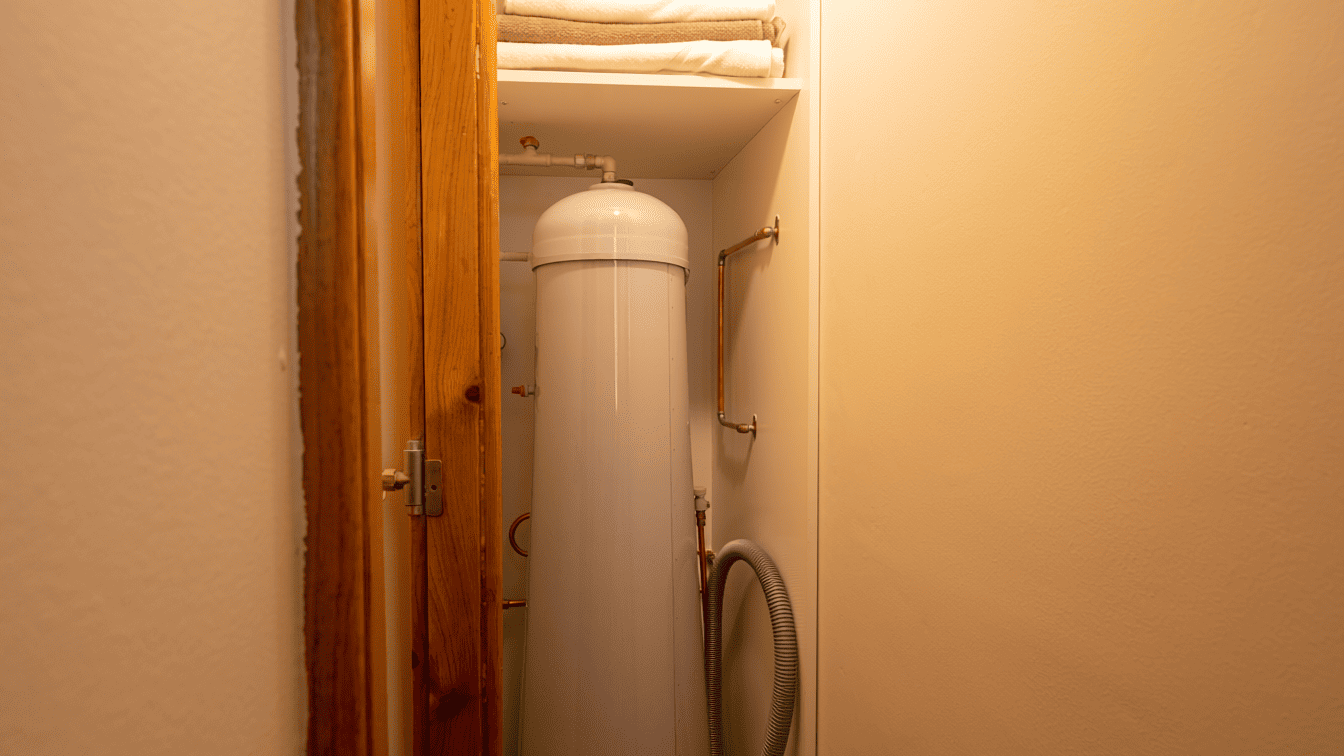
Fitting a hot water cylinder into a narrow airing cupboard or a cramped plant room is not just a minor inconvenience. It is a strict design constraint that can entirely derail an expensive project if you do not plan ahead properly. Slimline hot water cylinders solve this exact problem by heavily reducing the physical footprint without compromising on storage capacity, making them the absolute go-to choice for complex refurbishments, flats, and commercial installations where physical space is at a total premium.
Think of it exactly like the difference between parking a heavy transit van and a compact hatchback. Both will eventually get you where you need to go, but one fits into incredibly tight spots without the crushing stress.
The Gledhill range has become a highly reliable option for heating engineers and plumbers working continuously in these restricted spaces. These units aggressively deliver the same hot water performance as standard models but with a significantly narrower diameter, allowing them to squeeze smoothly into locations where a conventional cylinder simply will not fit. Whether you are working on a Victorian terrace conversion or a modern apartment block, understanding how these units perform can save you from highly costly callbacks.
Why Space Matters In Cylinder Selection
Standard hot water storage units typically measure around 450 to 550mm in diameter. That is completely fine if you have a highly generous airing cupboard or a dedicated commercial plant room. But in many real-world residential installations, you are constantly dealing with awkward alcoves, narrow hallways, or shallow cupboards designed decades before modern, high-pressure heating systems became the norm.
Using slimline hot water cylinders aggressively reduces the diameter to around 400mm or less, making it significantly easier to manoeuvre the heavy unit through standard doorways and fit it safely into highly restricted spaces. This prevents installers from having to demolish and rebuild structural timber frames just to facilitate an upgrade.
When sourcing your infrastructure from Heating and Plumbing World, you gain immediate access to these specialised compact units, ensuring your challenging project doesn't stall due to frustrating dimensional constraints.
Gledhill Slim Range: What Is On Offer
The Gledhill Slim Range is engineered specifically for complex installations where width is the absolute limiting factor, but the domestic hot water demand remains heavily high. The range reliably includes both direct and indirect models, with capacities typically scaling from 90 litres right up to 210 litres to accommodate different household sizes.
While a standard premium hot water cylinder demands generous floor space for a safe installation, these compact alternatives provide total operational flexibility without sacrificing essential thermal performance.
These units feature a highly durable vitreous enamel lining which actively protects the internal steel vessel from aggressive corrosion, extending the operational lifespan significantly. Furthermore, they are available with highly efficient coil options for seamless compatibility with modern heat pumps or conventional gas boilers. The factory-applied foam insulation actively guarantees that these narrow models easily meet strict current energy efficiency standards.
When To Specify A Slimline Cylinder
Not every single job needs a slimline unit. If you have the space, a standard unit is often the more cost-effective choice. However, in older properties, airing cupboards were often built tightly under sloping staircases or tucked into shallow eaves. A standard unit simply will not fit without major structural work, which is rarely practical for the client's budget.
A few years back, a colleague was working on a Victorian terrace conversion in London. The upstairs flat had a tiny airing cupboard tucked under the eaves. The original architectural plan called for a standard 150-litre cylinder, but the cupboard was barely 450mm wide. Switching immediately to the Gledhill Slim Range solved the problem instantly. The narrower diameter meant the unit could be safely manoeuvred through the doorway, giving the client the exact capacity they desperately needed without compromising on their living space.
When squeezing these compact units into incredibly awkward plant rooms, remember to aggressively allocate sufficient wall space for the mandatory external expansion vessel required for safe, fully compliant unvented operation.
Performance Considerations And Heat-Up Times
Reducing the diameter of a cylinder does not magically reduce the massive amount of hot water your client actually needs. The immediate physical trade-off is that slimline hot water cylinders must be substantially taller than their standard counterparts to maintain the exact same volume capacity.
These compact units generally heat up slightly faster than standard models because the narrower diameter means the internal heat exchanger coil is much more tightly packed within the water column. This heavily improves recovery times, which is particularly useful in high-demand scenarios like large busy families.
Balancing the rest of the property with precise radiator temperature control ensures the primary boiler isn't wasting critical thermal energy on space heating while the cylinder is actively attempting a rapid recovery cycle.
Installation Tips For Slimline Cylinders
Installing these compact units is not fundamentally different from installing standard ones, but there are a few strict considerations that will make the job far smoother. You must heavily ensure there is enough vertical clearance for the cylinder itself, plus any necessary safety fittings or zone valves mounted securely on top.
You must carefully account for the absolute height of the immersion heater boss if one is fitted securely to the upper dome of the tank. Leaving inadequate room directly above the immersion heater boss makes future electrical replacement completely impossible without physically draining and disconnecting the entire unit from the pipework.
Because the pipework routing is often highly restricted in these cramped cupboards, wrapping the lines carefully in premium pipework insulation guarantees that you minimise immediate thermal heat loss before the hot water even reaches the distribution network.
Comparing The Gledhill Slim Range To Alternatives
This specific manufacturer isn't the only brand offering compact units to the UK market. When comparing options, many installers also look closely at Telford slimline cylinders due to their exceptionally strong build quality and highly generous structural warranties.
While premium Telford slimline cylinders offer excellent performance, the widespread trade availability of the Gledhill models often makes them the most convenient choice for highly time-sensitive turnaround jobs where rapid procurement is absolutely critical. Furthermore, the robust vitreous enamel lining provides excellent baseline protection against hard water scaling compared to cheaper bare-metal alternatives found in budget ranges.
When upgrading a small property equipped with an intelligent heating control app, these compact storage units integrate flawlessly, responding instantly to remote scheduling commands transmitted from the modern smart thermostat network.
Common Pitfalls To Avoid During Installation
It is incredibly easy to focus solely on the severely reduced diameter and completely forget that the cylinder is substantially taller. Always physically measure the full height, explicitly including the uppermost valves and the protruding immersion heater boss, before firmly committing your client to a specific slimline model.
If the property suffers from exceptionally aggressive water chemistry, a standard vitreous enamel lining might not last quite as long as a highly premium duplex stainless steel model. You must carefully consider the local water conditions and actively advise the client on the best material choice accordingly.
Never skip fitting the mandatory safety valves just because the airing cupboard is cramped. Building Control will aggressively fail the inspection if the discharge pipework is incorrectly routed due to spatial laziness.
Cost, Availability, And Maintenance
Compact units are generally slightly more expensive than standard models of the exact same capacity, typically adding ten to twenty percent to the overall upfront cost. This accurately reflects the far more complex manufacturing process required to roll and weld narrower pressure vessels. However, the cost difference is almost always completely justified by the massive space savings and the avoidance of expensive structural alterations.
Just like Telford slimline cylinders, the Gledhill Slim Range strictly requires rigid regular maintenance to ensure optimal long-term performance. Annual checks should actively include inspecting the heating element, testing the mechanical thermostats, and checking thoroughly for any minor signs of weeping corrosion around the primary seals.
In heavy hard water areas, you should strongly consider fitting a magnetic scale inhibitor to permanently prevent aggressive limescale build-up from rapidly destroying the internal components.
Conclusion
Slimline hot water cylinders are absolutely not a compromise. They are a highly practical, heavily engineered solution for complex installations where physical space is extremely tight and standard units simply will not fit through the door.
They brilliantly deliver reliable recovery performance, highly solid build quality, and the essential flexibility required to suit a massive range of challenging domestic and light commercial applications. Whether you are retrofitting a historic terrace, working on a complex apartment conversion, or squeezing a cylinder into a tiny plant room, a compact model will make the job vastly easier and keep your client perfectly happy.
Always remember to account for the extra vertical height, plan your pipework routing meticulously, and never skimp on insulation or mandatory safety components. For more detailed information on sourcing these compact units or specifying compatible safety hardware, please contact our support team today for expert technical advice tailored specifically to your upcoming project.