

Smart Radiator Valves: Are They Worth It?
Every engineer has seen it: the house where one room is a sauna while another stays stubbornly cold, despite the heating being on full blast. Or the classic case of pumping heat into a spare room that nobody has used for months. Standard radiator controls give you some adjustment, but getting true room-by-room efficiency is a constant battle of tweaking and balancing.
This is where smart radiator valves, or smart TRVs, come into the picture. These bits of kit promise pinpoint control over individual radiators, all from a smartphone. But they come with a bigger price tag than the traditional plastic heads. The real question for any homeowner or installer is whether the investment is worth it. Do the benefits, especially the potential for radiator valve energy savings, stack up against the cost?
What Exactly Are Smart Radiator Valves?
To understand their value, you need to know how they differ from the standard TRVs found on most UK radiators.
Think of a standard TRV as a simple mechanical switch. It has a capsule of wax inside that expands as the room warms up. When it gets warm enough, the wax pushes a pin to close the valve, stopping the flow of hot water. It’s simple, effective, but not very clever. It works on its own and has no idea what the main thermostat or any other radiator is doing.
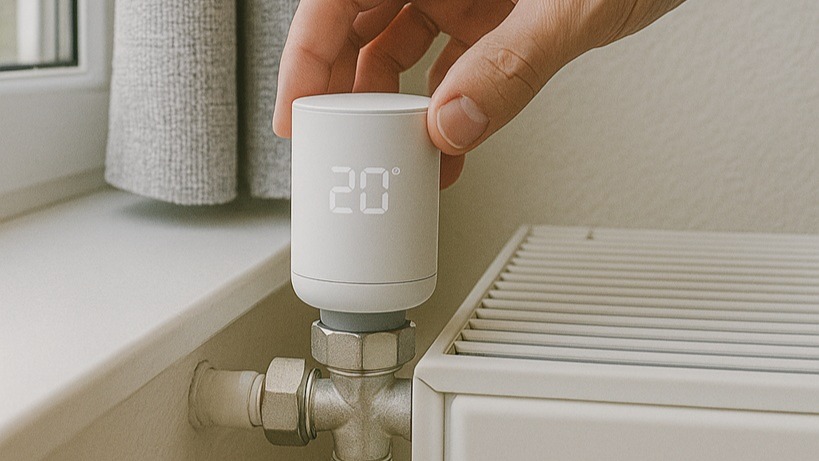
Smart radiator valves replace these mechanical heads. Inside, they have a small motor, a digital temperature sensor, and a wireless chip. They are far more precise.
This smart technology unlocks a level of control that standard TRVs can't touch. You can set exact temperatures in degrees, create unique schedules for every room, and adjust any radiator from anywhere with an app. Most importantly, they work as part of a coordinated system, usually communicating with a central smart thermostat or a dedicated internet bridge from the same brand, like Danfoss or Honeywell.
How Do They Control The Heat?
The smarts translate into practical, room-specific control. The core function is room-by-room scheduling. You can tell the system to heat the living room in the evening, the bedrooms just before you wake up, and keep the home office warm only during working hours. The spare room can be left on a low frost-protection setting until you have guests.
Because you set precise temperature targets, you avoid overheating rooms. A smart valve will shut off the radiator the moment it hits 20°C, even if the main thermostat is still telling the boiler to run for another room that heats up more slowly. This is a level of fine-tuning that a basic system can't manage.
The Big Draw: Radiator Valve Energy Savings
This is the main reason people consider the upgrade. The savings come from one simple principle: not heating empty spaces.
I remember a job in a large, draughty Victorian house. The client complained of huge bills and a constant battle with hot and cold spots. The kids’ rooms would be roasting, while his study felt like a fridge. We fitted a full system of smart radiator valves. Two months later, he called to say his smart meter was showing a noticeable drop in daily gas usage. He’d completely shut off the heating to the unused guest room and was only warming the study when he was actually in it. That’s where you see genuine radiator valve energy savings.
By targeting the heat precisely where it’s needed, you stop wasting fuel. Preventing individual rooms from overheating also contributes, as does the ability to run the system at slightly lower overall temperatures while maintaining comfort. While manufacturer claims of 30% savings are optimistic, a noticeable reduction is very achievable in the right property.
Beyond Savings: Comfort and Convenience
While cost is a key factor, the other benefits are just as compelling. The biggest is a massive boost in comfort. Those annoying temperature imbalances disappear. You get consistent, comfortable heat exactly where you want it, when you want it.
The convenience of adjusting any room's temperature from your phone is another major plus. There’s no more traipsing around the house twisting valve heads. Most systems also link up with Alexa or Google Assistant, so you can just say, "Hey Google, set the bedroom to 18 degrees."
The Downsides: Cost and Complexity
It’s not all positive. The main hurdle is the upfront investment. Smart valves are significantly more expensive than standard TRVs, and equipping a whole house can run into several hundred pounds.
You also need a compatible smart thermostat or hub from the same brand, which adds to the initial cost. And don't forget the batteries. The valves are battery-powered, and while they usually last a year or two, they will eventually need replacing. Physically fitting them is often easy, but setting up the schedules for every room in the app can be time-consuming at first.
The Verdict: Are They Worth It For You?
There’s no single answer here. It comes down to the property and the user.
Smart radiator valves make the most sense in larger homes with more rooms, where the potential for wasted heat is greater. They are a brilliant solution for houses with uneven heating or for families with very different schedules and room usage patterns. If you are focused on cutting energy waste and value precise control, they are likely a sound investment.
However, in a small, well-insulated flat where the heating is already quite balanced, the savings might not be enough to justify the high initial cost. The key is to weigh the upfront expense against the long-term benefits of comfort and potential radiator valve energy savings. A pragmatic approach is often to start small, fitting them in a few key rooms first and adding more later.
The foundation of any efficient system is reliable hardware. Smart controls are only as good as the boiler, pumps like those from Grundfos, and radiators they manage. You can explore a full range of smart heating systems and controls from leading brands like Honeywell at Heating and Plumbing World. If you need advice on compatibility or choosing the right setup, please get in touch.