

Soakaways and Drainage Fields: When They're Required
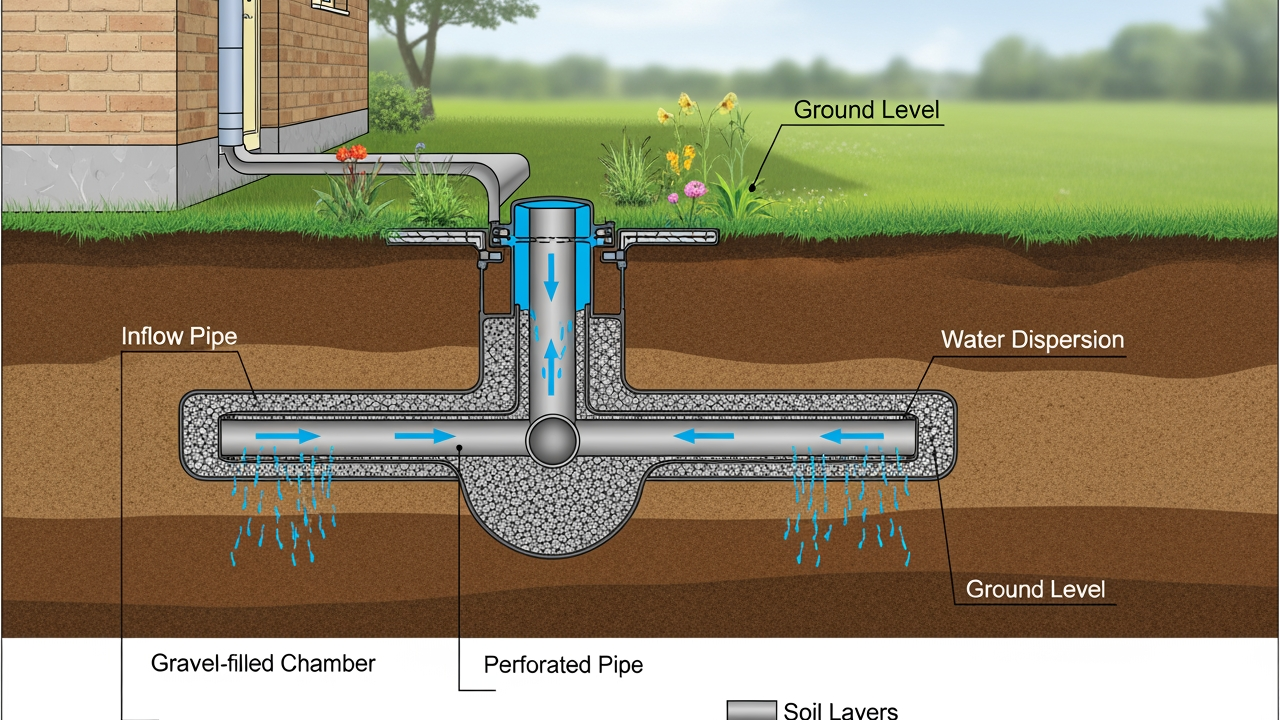
Property owners across the UK encounter a persistent challenge: buildings located beyond main sewer system reach or local regulations preventing direct connections. The solution requires either a soakaway or drainage field, but selecting the wrong system or botching the installation results in waterlogged gardens, failed inspections, and expensive remediation work.
What Soakaways and Drainage Fields Actually Do
A soakaway handles surface water and greywater by allowing it to percolate into the surrounding soil. Rainwater from roofs, patios, and driveways flows into a chamber filled with aggregate or plastic crates, where it gradually disperses into the ground.
Drainage fields serve a different purpose. They treat effluent from septic tanks by distributing partially treated wastewater through perforated pipes buried in trenches. Aerobic bacteria in the soil complete the treatment process before the water reaches groundwater levels.
The distinction matters because regulations treat them differently. Install a soakaway where you need a drainage field, and you'll contaminate groundwater. Use a drainage field for surface water, and you've over-engineered an expensive system that won't drain properly.
When Building Regulations Require a Soakaway
New builds and extensions trigger soakaway requirements UK standards when you increase the property's impermeable area. Adding a conservatory, garage, or driveway means more rainwater that can't soak naturally into the ground.
Building Control typically requires a soakaway when:
- You create more than 30m² of new hard surfacing
- The property sits outside the public sewer catchment area
- Local drainage infrastructure can't handle additional surface water
- The site sits in a flood risk zone where controlled drainage is mandatory
Percolation rates determine viability. Soil must drain between 12 seconds and 2 minutes per 25mm of water depth. Faster drainage suggests unstable ground; slower rates mean the soil can't handle the volume.
Properties in clay-heavy areas often fail soakaway viability tests entirely. The soil fails percolation testing, forcing owners to explore alternative drainage solutions like attenuation tanks or connections to watercourses.
Drainage Field Requirements for Septic Systems
Properties without mains sewerage need septic tanks, and since 2020, all septic systems must include drainage fields. The old practice of discharging directly to ditches or streams became illegal under the General Binding Rules.
The Environment Agency mandates drainage fields when:
- Your property uses a septic tank or sewage treatment plant
- You're replacing a non-compliant system
- You're installing a new off-mains sewerage system
- Your existing soakaway serves foul water (it must be upgraded)
Sizing depends on occupancy and soil type. A three-bedroom house typically needs 45-60m of drainage pipe distributed across multiple trenches. Properties with poor drainage soil require larger systems, sometimes double the standard size.
The system must sit at least 50 metres from any water source and 10 metres from watercourses. These setback distances protect groundwater from contamination, but they also mean many smaller plots can't accommodate compliant drainage fields.
Soil Conditions That Make or Break Your System
Percolation testing determines everything. Dig a 300mm square hole to the proposed drainage depth, fill it with water, and measure how long 25mm of water takes to drain. Repeat this test at multiple locations across the proposed drainage area.
Ideal soils include:
- Sandy loam: drains in 15-30 seconds per 25mm
- Light clay mixtures: 30-90 seconds per 25mm
- Medium clay: 90-120 seconds per 25mm
Heavy clay, solid rock, and high water tables kill projects. Clay soils with percolation rates exceeding 120 seconds can't support conventional drainage fields. The effluent has nowhere to go, backing up into the septic tank and eventually into the property.
Sites where the water table sits just 1.5 metres below ground level present significant challenges. Standard drainage fields need at least 1 metre of unsaturated soil beneath the pipes, making these locations unsuitable without expensive engineered solutions.
Seasonal variation affects performance. A site that percolates well in summer might flood in winter when the water table rises. Test during the wettest months to get realistic results.
Size Calculations That Actually Work
Soakaway volume depends on the impermeable area and local rainfall data. The standard formula multiplies the roof/paving area by the storm return period (typically 1 in 100 years) and rainfall intensity.
- 100m² roof area needs roughly 2.5-3m³ soakaway capacity
- Add 30% for climate change allowances
- Include a safety margin for blocked pipes or reduced percolation over time
Drainage field sizing follows different rules. Calculate the population equivalent (PE) based on bedrooms: typically 2 PE for the first bedroom, 1 PE for each additional bedroom. A four-bedroom house equals 5 PE.
Each PE requires 9-12 metres of drainage pipe in good soil conditions. Poor drainage soil doubles or triples this requirement. The trenches must be 600-900mm wide, with pipes surrounded by clean gravel and separated by at least 2 metres.
Installing undersized systems creates immediate problems. The ground becomes saturated, sewage surfaces in the garden, and the local authority issues enforcement notices requiring complete system replacement.
Common Installation Mistakes That Cause Failure
Insufficient depth tops the list. Drainage pipes must sit 450-900mm below ground level, deep enough to prevent freezing but shallow enough for aerobic bacteria to treat the effluent. Installing pipes too deeply means anaerobic conditions and incomplete treatment.
Wrong aggregate choice destroys percolation rates. Use clean, angular gravel (20-40mm) that creates void spaces for water flow. Round pea gravel compacts under load, reducing the effective drainage volume by up to 40%. Quality pipe fittings and connections prevent leaks that compromise system performance.
Missing geotextile membranes allow soil particles to infiltrate the system. Over 5-10 years, the aggregate voids fill with silt, reducing percolation capacity until the system fails completely. Quality geotextile adds £200-300 to installation costs but extends system life by decades.
Inadequate distribution boxes create uneven flow between drainage trenches. The first trench receives most of the effluent, while others remain dry, overwhelming the soil's treatment capacity in one area. Properly designed distribution boxes ensure equal flow to all trenches.
Failed systems often reveal that installers skipped percolation tests entirely, assuming the soil would drain adequately. These systems failed within months, requiring complete excavation and reinstallation at costs exceeding £15,000.
Alternatives When Standard Systems Won't Work
Mound systems build drainage fields above ground level when the water table sits too high or soil percolates too slowly. Imported sand creates the necessary depth of unsaturated soil, though these systems cost 50-70% more than conventional drainage fields.
Constructed wetlands use reed beds to treat septic tank effluent through natural biological processes. They require significant space (roughly 5m² per person) but work in clay soils where drainage fields fail. The reeds transpire water, reducing the volume that must percolate into the ground.
Sewage treatment plants with discharge consents allow direct release to watercourses after treatment. They cost £3,000-7,000 installed but eliminate drainage field requirements entirely. The Environment Agency requires annual emptying and maintenance records, adding ongoing costs. Grundfos pumps often integrate with these systems to manage effluent distribution and maintain consistent flow rates.
Attenuation tanks store surface water temporarily, releasing it slowly to prevent overwhelming drainage systems. They work where soakaways and drainage fields prove impossible, but connection to public sewers remains feasible. The tank buffers peak flows, releasing water at rates the sewer system can handle.
Maintenance Requirements You Can't Ignore
Septic tanks need emptying every 12 months. Solid waste accumulates at the bottom, and without removal, sludge carries into the drainage field. This clogs the pipes and surrounding gravel, requiring complete system replacement within 3-5 years.
Drainage field inspection chambers allow you to check flow distribution and identify blockages before they cause failures. Check them annually; if water backs up or flows unevenly between trenches, you've caught a problem early.
Soakaways require less maintenance but still need attention. Remove debris from inlet chambers twice yearly, especially after autumn leaf fall. Blocked inlets force water to overflow rather than drain properly, defeating the system's purpose.
Keep vehicles off drainage areas. Driving over soakaways or drainage fields compacts the soil, crushing pipes and reducing percolation capacity. Systems fail completely after homeowners use drainage field areas for parking.
Regular maintenance costs £150-300 annually for inspections and septic tank emptying. Neglecting maintenance leads to system failures costing £8,000-15,000 to rectify, a poor return for skipping a few hundred pounds of annual upkeep.
Planning Permission and Building Control
Building Control approval is mandatory for new soakaways and drainage fields. Submit calculations proving adequate capacity, percolation test results, and site plans showing setback distances from boundaries and water sources.
Essential documentation includes:
- Percolation test results from multiple locations
- Soil investigation reports
- Drainage calculations showing system sizing
- Site plans with a 50-metre radius from water sources marked
- Details of septic tank capacity and design
Environment Agency permits apply when you're installing sewage treatment plants with direct discharge. The permit costs £350-600 and requires annual compliance reports demonstrating the system meets discharge standards.
Planning permission becomes necessary if your drainage system affects neighbouring properties, sits in conservation areas, or requires significant earthworks. A mound system visible above ground level typically needs planning consent.
Processing times run 6-8 weeks for standard applications. Complex sites with contamination risks or proximity to water sources take 12-16 weeks. Factor these timelines into project schedules; you can't install systems before approval.
Cost Expectations for Different Systems
Basic soakaways for surface water cost £800-2,500, depending on capacity. A system handling a typical house roof (100-150m²) with standard plastic crates runs £1,200-1,800 including excavation and materials.
Full drainage field installation breaks down as:
- Percolation testing: £300-500
- Septic tank: £800-1,500
- Drainage pipework and aggregate: £2,000-3,000
- Excavation and installation: £2,000-3,000
Difficult sites with poor drainage soil or high water tables push costs to £12,000-18,000. Mound systems, constructed wetlands, or sewage treatment plants add 50-100% to standard installation costs.
Replacement costs exceed new installations by 30-40% because you're excavating failed systems before installing new ones. This explains why proper design and installation matter; cutting corners on a £6,000 system leads to £10,000+ remediation costs within a decade.
For quality components and professional installation support, Heating and Plumbing World stocks drainage solutions from trusted manufacturers, including Polypipe plastic piping systems, Kingspan storage solutions, and Altecnic expansion vessels for pressure management in closed systems. Need guidance on system specifications? Get in touch for technical support from experienced drainage specialists.
Final Considerations
Soakaways and drainage fields solve different problems and face different regulatory requirements. Soakaways handle surface water where direct drainage isn't feasible, while drainage fields treat septic tank effluent in areas without mains sewerage. The 2020 regulatory changes mean any property with a septic tank must include a compliant drainage field, and direct discharge to ditches or streams is no longer legal.
Success depends entirely on soil conditions. Percolation testing determines whether your site can support these systems, and skipping this step guarantees expensive failures. Clay soils, high water tables, and sites near water sources often require alternative solutions like sewage treatment plants or constructed wetlands.
Proper sizing, quality installation, and regular maintenance determine system longevity. Undersized systems fail quickly, poor installation practices reduce effective capacity, and neglected maintenance turns minor issues into complete system replacements. The difference between a drainage field lasting 20+ years versus failing within five years comes down to following established design principles and maintaining the system properly.
When your property needs off-mains drainage, invest in thorough site investigation, professional design, and quality installation. The upfront costs pale against remediation expenses when systems fail, and you'll avoid the disruption of excavating your garden to replace a failed drainage field.