

System Boilers vs Heat-Only Boilers: Which Suits Your Home?
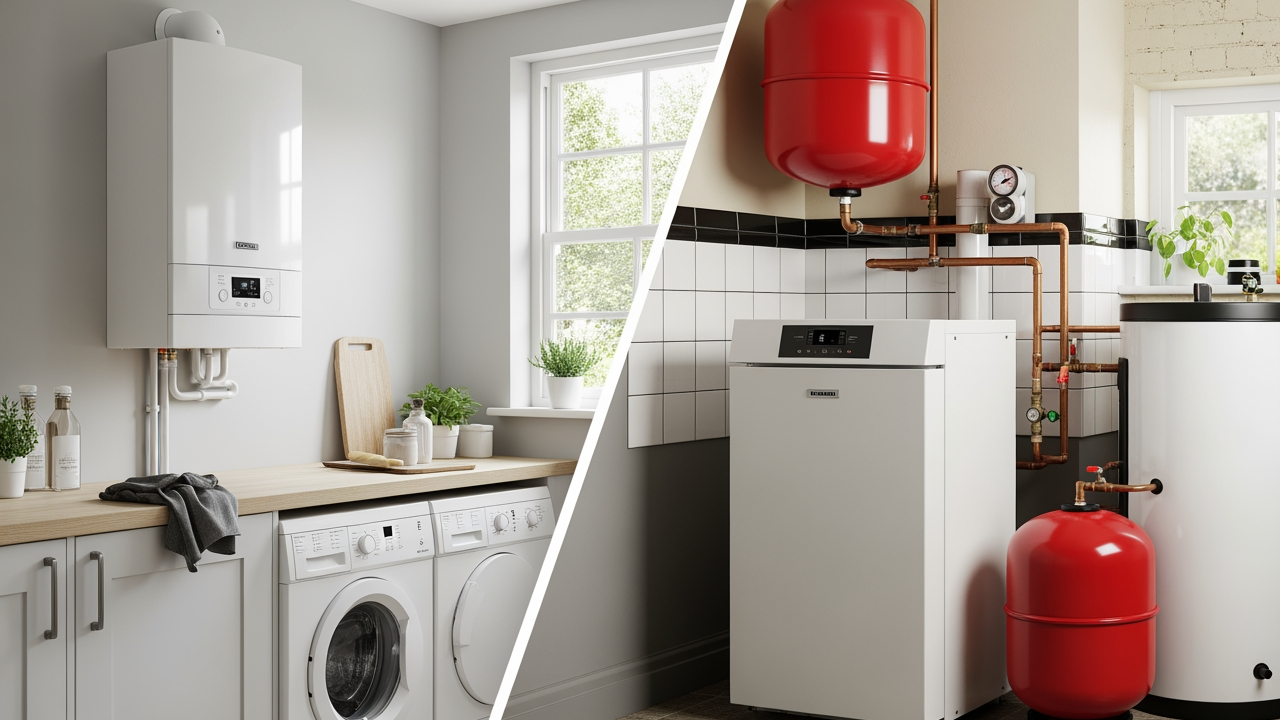
Choosing between a system boiler and a heat-only boiler affects your home's heating efficiency, installation costs, and long-term maintenance for years to come. Both systems heat your radiators and provide hot water, but they work differently and suit different property types.
What Makes System Boilers Different
System boilers store most heating components inside the unit itself. The expansion vessel, pump, and pressure relief valve come built-in, which means fewer separate parts to install around your home. You'll still need a hot water cylinder, typically installed in an airing cupboard, but the system requires no cold water tank in your loft.
When you turn on a hot tap, the boiler heats water and stores it in the cylinder until needed. This setup delivers hot water to multiple taps simultaneously without pressure drops - useful for homes with two or more bathrooms where several people might shower at different times.
The sealed system operates under mains pressure, giving you a stronger shower flow without requiring a separate pump. Installation takes less time because installers don't need to fit cold water tanks or connect as many external components.
How Heat-Only Boilers Work
Heat-only boilers (also called regular, conventional, or traditional boilers) require more space and components. You'll need a cold water storage tank in your loft, a hot water cylinder, and an expansion tank to handle water volume changes as the system heats up.
The cold water tank feeds the boiler, which heats water and sends it to your cylinder for storage. This gravity-fed system has worked reliably in UK homes for decades, particularly in older properties where the heating infrastructure already exists.
These boilers excel in homes with low mains water pressure. Because they don't rely on mains pressure to function, they deliver consistent hot water even in areas where supply pressure fluctuates. Properties in rural locations or older urban areas with ageing water infrastructure often benefit from this independence.
Space Requirements Tell You Which System Fits
System boilers need significantly less space. Without cold water or expansion tanks in your loft, you gain storage room or can convert the loft space more easily. The boiler unit itself and the hot water cylinder are your only major components.
Heat-only boilers require: Loft space for a cold water tank (typically 227 litres), Room for an expansion tank (smaller, around 18 litres), Airing cupboard space for a hot water cylinder, and Wall space for the boiler unit
If you're working with limited space or planning a loft conversion, a system boiler removes the obstacle of tank storage. Properties with already-fitted tanks and existing infrastructure might find heat-only boilers more cost-effective to replace like-for-like.
Installation Costs Vary by Your Current Setup
Installing a system boiler in a property that previously had a heat-only system costs £2,500-£4,000 on average. This includes removing old tanks, fitting the new boiler, installing a cylinder if needed, and updating controls. The work typically takes 2-3 days.
Replacing an existing heat-only boiler with another heat-only model costs £2,000-£3,500 when you're using the same cylinder and tank locations. Installation time drops to 1-2 days because the infrastructure already exists.
Converting from a heat-only to a system boiler saves money if you're simultaneously doing loft work. Removing tanks during a conversion project costs less than doing it separately later. We've completed installations where homeowners saved £600-£800 by coordinating boiler upgrades with loft conversions.
The reverse conversion - system to heat-only - rarely makes financial sense unless you're dealing with persistent low mains pressure issues that other solutions can't fix.
Running Costs Depend on How You Use Hot Water
System boilers cost slightly more to run if you regularly reheat stored water you don't use. The cylinder loses heat over time, and the boiler cycles on to maintain the temperature. Well-insulated cylinders reduce this loss, but it still exceeds the efficiency of heating water only when needed.
Heat-only boilers face the same storage losses. Neither system offers the on-demand efficiency of combination boilers, but both outperform combis when multiple people need hot water simultaneously.
A four-person household using 150 litres of hot water daily will see similar running costs between both systems - typically £450-£550 annually for water heating alone. The boiler's efficiency rating (look for 92%+ ErP A-rated models) affects costs more than whether you choose system or heat-only. Quality Gledhill and Kingspan cylinders with superior insulation help minimise heat loss in either configuration.
Homes that use hot water in concentrated periods (morning and evening) benefit from both systems' ability to heat large volumes during off-peak electricity times if you have Economy 7 tariffs.
Water Pressure Determines Which System Performs Better
System boilers need a minimum mains pressure of 1.0 bar to function properly, with 1.5 bar or higher recommended for optimal performance. Check your mains pressure before committing - turn off all taps and appliances, then read your pressure gauge. If you don't have one, a plumber can measure the flow rate in litres per minute.
Low mains pressure causes: Weak shower pressure, Slow-filling baths, reduced flow when multiple taps run, Boiler errors and shutdowns
Heat-only boilers solve low-pressure problems because they create their own pressure through gravity and the elevation difference between your cold water tank and outlets. A tank positioned 2 metres above your shower head provides approximately 0.2 bar pressure - enough for acceptable flow.
We've installed heat-only boilers in Victorian terraces and rural cottages where mains pressure barely reaches 0.8 bar. These properties couldn't support system boilers without expensive pressure pumps or mains upgrades costing £1,000-£2,000.
Maintenance Requirements Differ Slightly
System boilers contain more components within the unit, which means servicing addresses most parts in one location. Annual services cost £80-£120 and take 45-60 minutes. The sealed system rarely needs topping up - perhaps once every 2-3 years unless you have leaks.
Heat-only boilers require checking tanks, ball valves, and overflow pipes during annual services. Total service time runs 60-90 minutes, costing £90-£130. You'll need to monitor cold water tank levels occasionally and ensure loft insulation doesn't block tank access or freeze pipes in winter.
Both systems need similar cylinder maintenance - checking the immersion heater, pressure relief valve, and insulation condition. Cylinder replacements (needed every 15-25 years) cost £400-£800 for either system.
The sealed system in system boilers eliminates the limescale buildup and corrosion that open-vented heat-only systems can experience in hard water areas. This extends component life by 3-5 years on average.
Compatibility With Renewable Technology
System boilers integrate more easily with solar thermal panels. The sealed system and built-in controls accommodate pre-heated water from solar collectors without extensive modifications. Adding solar thermal to a system boiler costs £3,000-£5,000 for panels and integration work.
Heat-only boilers also work with solar thermal, but may need additional controls and modifications to the venting system. Expect to pay £500-£800 more for integration compared to system boilers.
Both systems pair with heat pumps for hybrid setups, though this requires significant investment (£7,000-£12,000). The existing cylinder and radiators work with heat pumps, but you'll likely need larger radiators to compensate for lower flow temperatures.
Neither system works with smart heating controls as seamlessly as modern combination boilers, but you can add zone controls, smart thermostats, and scheduling. Budget £200-£400 for comprehensive smart controls compatible with stored hot water systems. Honeywell and EPH Controls offer programmers and thermostats designed specifically for cylinder-based heating systems.
Which Properties Suit Each System
System boilers work best for: Homes with 2+ bathrooms and multiple occupants, Properties with good mains pressure (1.5+ bar), New builds or homes with limited loft space, Properties planning loft conversions, Homes in hard water areas (sealed system reduces limescale)
Heat-only boilers work best for: Older properties with existing tanks and infrastructure, Homes with low mains pressure, Large properties with high hot water demand, Rural locations with unreliable mains supply, Listed buildings where maintaining traditional systems matters
A three-bedroom semi with two bathrooms and mains pressure of 2.0 bar benefits from a system boiler's simplicity and space-saving design. A four-bedroom Victorian house with 0.9 bar mains pressure needs a heat-only boiler to deliver reliable hot water without expensive mains upgrades.
Making the Decision for Your Home
Test your mains pressure first - this single factor eliminates half your options if pressure falls below 1.0 bar. Contact your water supplier for flow rate data if you're uncertain. Properties with adequate pressure gain flexibility to choose based on space and budget.
Calculate your hot water needs by counting bathrooms, occupants, and usage patterns. Homes where three or more people shower within an hour need the storage capacity that both systems provide. Single occupants or couples with staggered schedules might consider whether a combination boiler serves them better, though that's outside this boiler types comparison.
Consider your property's age and existing infrastructure. Replacing like-for-like usually costs less than converting between systems. The £800-£1,500 you save on installation might outweigh the minor efficiency or convenience differences between system and heat-only boilers.
Understanding Your Boiler Options
System boilers suit most modern homes with adequate mains pressure, offering space savings and simpler installation. Heat-only boilers remain the practical choice for properties with low mains pressure, existing tank infrastructure, or specific requirements that gravity-fed systems address better.
Your mains pressure measurement determines which system works reliably in your property. Properties with 1.5+ bar pressure gain the space and installation advantages of system boilers. Those with sub-1.0 bar pressure need heat-only boilers to avoid performance problems and expensive pressure solutions.
Both systems deliver stored hot water to multiple outlets simultaneously - their core strength over combination boilers. Installation costs vary by £500-£1,000 depending on whether you're converting between systems or replacing like-for-like. Running costs differ minimally when you compare similarly efficient models with well-insulated cylinders.
Check your mains pressure, assess your available space, and get quotes for both options based on your existing setup. The right choice depends more on your property's specific conditions than on which system theoretically performs better. Quality circulation pumps from manufacturers like Grundfos ensure optimal performance in either system type.
For comprehensive ranges of system boilers, heat-only boilers, and compatible components, Heating and Plumbing World stocks leading brands including Andrews water heaters and Danfoss controls. Should you need expert advice on selecting the right boiler type for your property, get in touch with our technical team.