

The Environmental Impact of Traditional Boilers
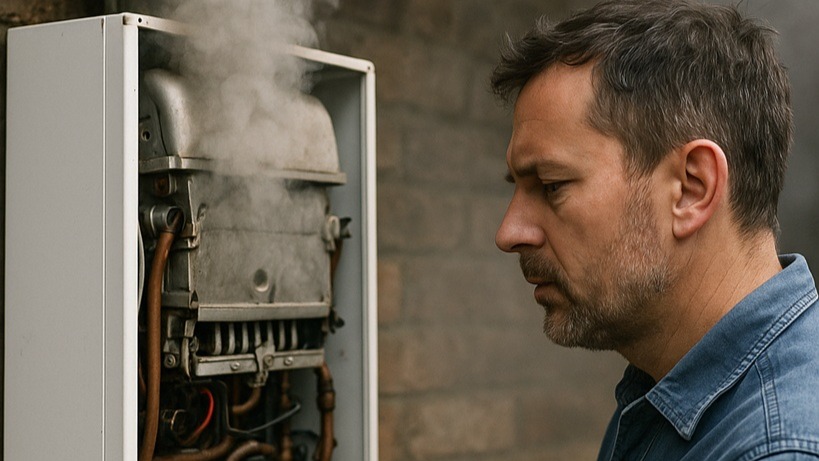
Heating is something most of us take for granted. It’s only when an old boiler fails or fuel bills jump that people start wondering how efficient their system really is. For decades, traditional boilers have been the backbone of heating across Britain, keeping homes, schools, and offices warm through every winter. Yet their long-standing presence hides a growing problem: traditional boiler emissions are a major contributor to climate change and poor air quality.
In engineering terms, the environmental impact of boilers is straightforward; every time fossil fuel is burned, it releases gases that affect both the climate and local air. But in practical terms, it’s about more than numbers. It’s about how we design, install, and maintain heating systems that meet comfort needs without adding to the planet’s burden.
The Enduring Role of Traditional Boilers
Traditional gas, oil, and LPG boilers are familiar pieces of kit. They’re simple to maintain and easy to repair, which is why so many are still in service. Many households depend on them because they “just work”. But while they’ve proved reliable, their efficiency rarely matches that of modern systems.
An older non-condensing boiler may operate at around 60–70% efficiency. That means for every pound spent on fuel, roughly a third is wasted as hot exhaust gas escaping up the flue. When multiplied across millions of properties, this inefficiency becomes a nationwide problem.
Engineers see it daily: equipment that’s still running but well past its best. Components wear, combustion quality drops, and fuel bills creep higher each year. Spare parts can be sourced from suppliers like Halstead Spares, but at some point, the economics stop making sense. The plant may still function, but its emissions and fuel waste continue to rise.
What Traditional Boiler Emissions Contain
Every combustion-based boiler releases by-products. With traditional boiler emissions, the main culprits are carbon dioxide (CO₂), nitrogen oxides (NOₓ), and unburned hydrocarbons.
- CO₂ results from burning any carbon-based fuel. It’s the primary greenhouse gas driving global warming.
- NOₓ forms under high combustion temperatures and contributes to acid rain and urban smog.
- Trace particulates may also escape, particularly in older oil-fired systems.
A typical gas boiler used in a three-bedroom home can release around two and a half tonnes of CO₂ each year. For a small commercial property with several boilers, those emissions multiply quickly. When you consider that heating makes up roughly a third of the UK’s total energy use, the scale of the environmental impact of boilers becomes clear.
A Moment on Site
A few winters back, I was called to a small care home with a pair of cast-iron boilers dating from the 1990s. They were solid units, but running constantly, gulping gas even on mild days. After a simple combustion test and flow check, the numbers spoke for themselves; each boiler was operating at just 64% efficiency.
We replaced them with high-efficiency condensing models, fitted new Grundfos pumps, and added weather-compensating controls. Within the first billing cycle, gas use had dropped by nearly 30%. The new system ran quieter, steadier, and with far less carbon output.
That installation reminded everyone involved that upgrading heating isn’t just about comfort, it’s about environmental responsibility. The difference in emissions was equivalent to taking several cars off the road.
The Wider Impact: More Than Just Carbon
While CO₂ dominates climate discussions, the environmental impact of boilers stretches further. Nitrogen oxides and other combustion by-products degrade local air quality, particularly in built-up areas. When you see haze hanging over a city on a still winter’s day, heating systems are part of that picture.
Older appliances also tend to cycle inefficiently, producing short bursts of incomplete combustion. The result is more fuel burned per unit of heat and greater wear on key components. It’s not unusual to find systems that are still mechanically sound but environmentally obsolete.
Every poorly tuned flame adds a little to the collective problem. For engineers, the task is balancing performance, safety, and sustainability, ensuring every system burns as cleanly as it can.
The Financial and Practical Cost of Inefficiency
Beyond the environmental factors, inefficiency costs real money. Fuel waste, unbalanced circuits, and outdated controls all push running expenses higher. Customers often assume a working boiler must be an efficient one, but that’s rarely true.
Poorly insulated pipework, scale build-up, and ageing pumps cause energy losses across the system. A boiler running below specification may still meet the heat demand but will do so by consuming far more fuel than necessary.
Fitting efficient circulators and modern controls makes a dramatic difference. Products from Honeywell or Danfoss allow better modulation, precise temperature control, and reduced on–off cycling. It’s a straightforward way to cut both emissions and costs without overhauling an entire plant room.
Cleaner Alternatives and Upgrades
Reducing traditional boiler emissions doesn’t mean everyone must switch overnight to renewable heat. The industry offers a spectrum of options, from incremental upgrades to full system redesigns. Each approach can significantly reduce the environmental impact of boilers when applied correctly.
Air-Source and Ground-Source Heat Pumps
Heat pumps are now a mainstream option for residential and commercial projects alike. They don’t burn fuel; they move existing heat from air, ground, or water. For every unit of electricity used, they can produce three or four units of heat output.
They work best with low-temperature systems such as underfloor heating or large radiators. When paired with efficient Grundfos pumps and Danfoss controls, their performance is exceptional.
Installing a heat pump is a significant project, but once complete, emissions can fall by more than 70% compared with gas. Combined with renewable electricity, they bring heating close to net-zero operation.
Biomass Boilers
For larger properties, rural buildings, or off-grid sites, biomass boilers provide a renewable option that uses wood pellets, chips, or logs. These fuels are considered carbon-neutral since the CO₂ released in combustion equals what the trees absorbed during growth.
Modern biomass systems, coupled with Stuart Turner pumps for consistent circulation, are clean, efficient, and fully compliant with emissions regulations. They do, however, require careful design for fuel storage, ash handling, and flue routing.
When properly maintained, biomass heating can reduce lifecycle emissions dramatically while offering dependable performance.
Solar Thermal Heating
Another effective measure is solar thermal technology. Collectors mounted on the roof use sunlight to preheat water before it enters the system. This reduces boiler run time and fuel use, particularly through spring and summer.
Even on cloudy days, high-quality vacuum-tube collectors capture diffuse solar energy. When integrated with a Kingspan cylinder and Polypipe plumbing components, the system provides reliable hot water support.
It’s a straightforward way to lessen reliance on fossil fuels without changing the main heating plant immediately.
High-Efficiency Condensing Boilers
If the property or budget doesn’t allow for renewables, a condensing boiler remains a practical route to lower emissions. These boilers reclaim heat from the flue gases, pushing efficiency beyond 90%.
When installed with a modulating Honeywell control and balanced using Grundfos pumps, fuel use drops noticeably. Condensing technology is now standard on all new boilers, but many buildings still rely on pre-2005 models that waste energy daily.
Swapping an old boiler for a condensing model is one of the fastest and simplest ways to reduce the environmental impact of boilers in existing buildings.
The Analogy: Boilers and Car Engines
A good way to explain efficiency to clients is to compare a heating system to a car. A traditional non-condensing boiler is like an old diesel estate, solid, dependable, but heavy on fuel and smoke. A condensing boiler, meanwhile, is closer to a hybrid car that reuses its waste energy to travel further per litre.
The latest heat pumps resemble electric vehicles: quiet, efficient, and capable of running with near-zero local emissions. The destination is the same, warmth and comfort, but the journey becomes cleaner and more efficient with every upgrade.
How to Plan a Transition
Switching to cleaner heating isn’t a one-size-fits-all process. Every property, from terraced homes to commercial sites, has its own needs and constraints. The best results come from clear planning and careful design.
Step 1 – Assessment
Begin with an on-site survey. Check insulation levels, room sizes, and the heat distribution system. Identify where existing plants can be reused or upgraded.
Step 2 – Specification
Choose the right equipment based on the site. Some properties suit hybrid systems where a condensing boiler supports a small heat pump. Others may benefit from solar preheating or biomass.
Step 3 – Design and Control
Use high-efficiency pumps and responsive controls to optimise flow and temperature. The combination of Grundfos and Danfoss products offers flexible solutions for most applications.
Step 4 – Installation and Commissioning
Work with qualified Gas Safe or MCS-accredited installers to ensure the system meets all safety and performance standards.
Step 5 – Maintenance and Monitoring
Even efficient systems lose performance without upkeep. Servicing, correct water treatment, and using quality spares from Halstead Spares keep emissions and costs low.
Every small improvement, balancing a circuit, adjusting a flow rate, upgrading a control, adds up to measurable environmental savings.
The Measurable Difference
A typical non-condensing gas boiler can produce more than 30 tonnes of CO₂ over a decade. A condensing version reduces that to around 22 tonnes. Replacing it with an air-source heat pump brings emissions down to roughly 8 tonnes for the same energy output.
That’s a 70% reduction in carbon, achieved simply by changing how heat is generated. Multiply that across thousands of buildings, and the potential savings become enormous.
As Heating and Plumbing World expands its product range, engineers and facility managers have access to an ever-growing list of low-carbon solutions, all designed to cut traditional boiler emissions while maintaining reliability and performance.
A Changing Industry
Heating and plumbing professionals are at the centre of the UK’s path to net zero. The next generation of systems will combine different technologies, boilers, heat pumps, smart controls, and renewable heat sources into flexible hybrid setups.
The skills needed are evolving, but the core principle remains the same: efficient heat, delivered safely. Every engineer who understands the environmental impact of boilers plays a part in shaping a cleaner industry.
From fitting Grundfos energy-saving circulators to specifying Kingspan cylinders designed for renewables, each installation contributes to national progress toward carbon reduction.
Heating for the Future
The age of wasteful boilers and thick exhaust smoke is coming to an end. The systems replacing them are quieter, smarter, and vastly more efficient. Reducing traditional boiler emissions isn’t just about meeting regulations; it’s about professional pride, sound engineering, and protecting the world we all live in.
Every upgrade, however small, pushes the industry forward. Whether you’re replacing a single boiler, fitting a new Honeywell controller, or designing a complete heat pump installation, the goal is the same: sustainable comfort that lasts.
Now is the moment to modernise, for our clients, for the industry, and for the climate.