

Timer Controls For DHW Circulation: Reducing Running Costs
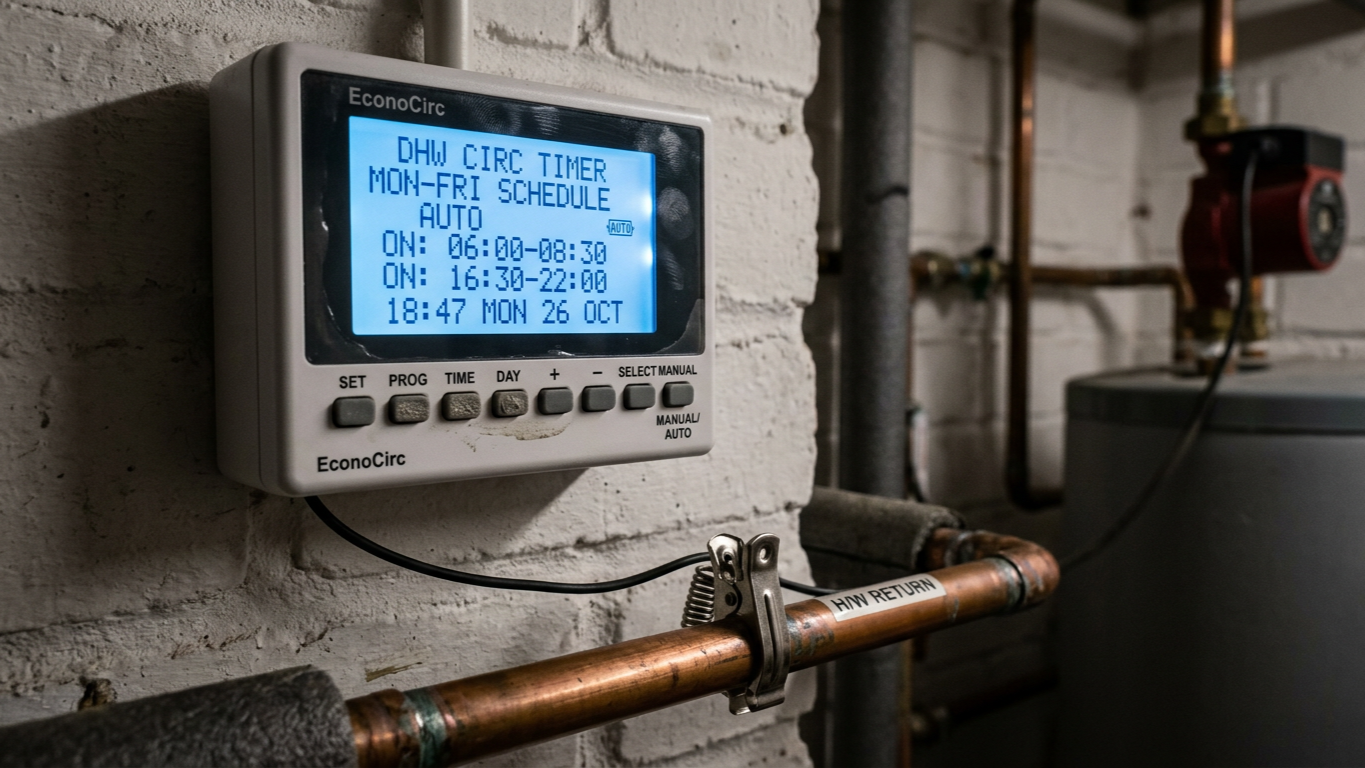
Most commercial buildings waste thousands of pounds every year. They keep hot water circulating through pipes when nobody is even in the building. We often walk into plant rooms at midnight on a Sunday and find pumps running at full speed. It is essentially like leaving your car engine running in the driveway all weekend just because you might need to drive on Monday.
The fix for this waste is not complicated at all. Using timer controls for dhw circulation can cut running costs by nearly 60% in typical office or retail settings. Yet, many facilities still operate on continuous schedules that were set up years ago and never questioned. Modern systems allow for much tighter control over when and how your water moves.
Leaving your hot water circulating 24/7 is like leaving a garden hose running on your lawn all night long. It might keep the grass green, but most of that water is just sinking into the ground and wasting your money. Proper timer controls for dhw circulation ensure you only use energy when the building is actually active.
Why Continuous Circulation Costs More Than You Think
A typical circulation pump in a mid-sized office building draws significant power. When you calculate the cost of running that pump 168 hours a week, the numbers get scary very quickly. However, the direct electricity used by the pump is only one part of the problem. Heating and Plumbing World offers a range of high-efficiency components that can help reduce this baseline waste.
The real expense comes from constant heat loss throughout the building. Every metre of pipe loses heat continuously when water is moving through it. Even if the building only needs 500 litres of hot water a day, the boiler might be heating enough to warm 2,000 litres. This happens because the system is constantly fighting the environment to keep the loop hot.
Furthermore, these systems often use a wireless combi pack or similar controls that may not be optimised for circulation. This results in the boiler working three times harder than necessary. Consequently, your fuel bills stack up fast without anyone noticing the inefficiency.
How Timer Controls Actually Work
Modern timer controls for dhw circulation range from simple mechanical clocks to smart integrated systems. The core principle remains the same across all models. You simply match the pump operation to the building's actual demand patterns rather than letting it run forever.
The most effective setups we install always feature a reliable return pipe sensor. A return pipe sensor triggers the pump only when the water temperature in the loop drops below a specific set point. This ensures hot water reaches the taps quickly without the pump spinning for hours on end.
Furthermore, using a return pipe sensor prevents the system from running when the pipes are already at the target temperature. You might also integrate a Worcester flue gas limit sensor to monitor secondary thermal data. These small electronic components turn a "dumb" system into a highly responsive and efficient thermal network.
Setting Up Effective Time Schedules
Creating a good schedule requires you to understand exactly when people use the facilities. You should never make assumptions about when people "should" be in the office. Start by mapping out arrival times for cleaners, security, and staff. This data allows you to build a schedule that provides comfort without the expensive waste.
A critical part of any schedule is the morning pre-heat period. The system needs time to bring the entire loop up to temperature before the first staff member arrives. We usually recommend a morning pre-heat period of at least 30 to 60 minutes. This prevents complaints about cold water at the start of the day.
I once visited a high-end gym where the manager was bragging about his new energy-saving timers. However, he had set the morning pre-heat period far too short. By 6 am, the first wave of heavy lifters was stepping into cold showers. His front desk was flooded with angry complaints before I had even finished my first coffee!
Balancing Legionella Risk With Energy Savings
You cannot discuss timing without addressing water safety. This is where many DIY energy-saving attempts fail, often with dangerous results. The HSE L8 guidance is very clear about how water systems must be managed to prevent bacterial growth. You must follow HSE L8 guidance to ensure your building remains safe for its occupants.
To stay compliant, you should maintain your storage temperature at 60°C minimum. Furthermore, every system needs a regular thermal disinfection protocol. A thermal disinfection protocol involves raising the temperature throughout the loop to kill off any lurking bacteria. This usually happens during a weekly purge cycle.
Running a thermal disinfection protocol is a non-negotiable safety step. If your timer controls for dhw circulation do not support these safety cycles, you may be creating a major health hazard. Always cross-reference your settings with the latest HSE L8 guidance before you finalise any schedule changes.
Advanced System Integration And Performance
Advanced facilities often benefit from occupancy sensor integration. This allows the pump to respond in real-time to people entering specific zones like kitchens or washrooms. Using occupancy sensor integration is the ultimate way to eliminate "ghost" circulation in quiet areas of a building.
Furthermore, a RF wireless combi pack 4 can provide the flexible connectivity needed for these smart setups. Occupancy sensor integration works particularly well in buildings with variable schedules, such as conference centres or community halls. It ensures you only pay for the heat that your visitors actually use.
You should monitor your results monthly for at least the first six months. Track your electricity bills and look for the expected drop in consumption. If you notice any unexpected spikes, check your sensors and overrides immediately. Consistent monitoring is the only way to prove your investment is actually paying off.
When Controls Are Not The Best Solution
Timer controls are brilliant, but they are not a "fix-all" for every plumbing problem. If your pipes have zero insulation, the heat loss will be so high that no timer can save you. You should always insulate your pipework thoroughly before you worry about smart electronic gadgets.
Additionally, oversized pumps will waste energy regardless of when they are running. A pump that is too big for the building will consume excessive power and move water too fast. This increases wear and tear and drives up your bills. Sometimes, a simple pump replacement delivers better results than a complex timing strategy.
Finally, very small systems often do not justify the cost of advanced timers. If your circulation loop is under 30 metres, the annual savings might only be a few pounds. In these cases, focus on basic maintenance and high-quality insulation instead. It is all about finding the right balance for your specific facility.
Conclusion
Installing timer controls for dhw circulation is one of the fastest ways to improve a building's efficiency. The combination of less pump runtime and lower heat loss can cut your costs by half. Most of these systems pay for themselves within just a few months of operation.
The key to success is matching the schedule to the actual building use while keeping safety in mind. Never sacrifice a proper thermal disinfection protocol just to save a few pennies on the electric bill. A safe system is always more cost-effective than a hazardous one in the long run.
If you are currently running your pumps 24/7, you are almost certainly throwing money away every single night. The technology to fix this is affordable and easy to install for any competent engineer. Please contact our technical team today if you need help choosing the right controls for your project.