

Troubleshooting a Noisy Central Heating Pump
A noisy central heating pump doesn't just grate on your nerves; it is often the first audible sign that something is wrong with your system. Whether it's a low hum, a grinding rattle, or a high-pitched whine, that sound tells you the pump is working harder than it should. Understanding why a noisy central heating pump develops these symptoms is the first step toward restoring system efficiency and quiet operation.
Over the years, we've traced pump noise to everything from simple air locks to worn bearings and scale build-up choking the impeller. Most pump noise is fixable without a full replacement, provided you diagnose it correctly and act before the problem escalates. Acting early prevents a complete failure that could leave a property without heat during the coldest months.
Think of your heating pump like the heartbeat of your home. If a heart has to pump harder because of a blockage or a valve issue, the strain becomes audible. Similarly, when your pump encounters resistance or air, it complains through vibration and sound. Listening to the "pulse" of your system helps you catch minor issues before they become expensive repairs.
Why Central Heating Pumps Make Noise
Central heating pumps are designed to run quietly. When you hear noise, it is because something is interfering with the normal flow of water through the impeller or the internal components are wearing out. The most common culprits include trapped air, incorrect speeds, and internal sludge.
Each of these issues has a distinct sound profile. Air creates a gurgling or bubbling sound as the pump tries to move water mixed with gas. A rhythmic knocking or grinding often suggests mechanical wear. By working through the diagnostics methodically, you can identify the root cause without unnecessary guesswork. If the system is older, you may also need to check your heating pumps to ensure the hardware is still sized correctly for the current building demand.
Bleeding Air From The Pump And System
Air is the single most common cause of a noisy central heating pump. When air enters the system, it collects in high points and inside the pump body. The pump then tries to circulate a mix of water and air, which creates turbulence and generates a characteristic whooshing noise.
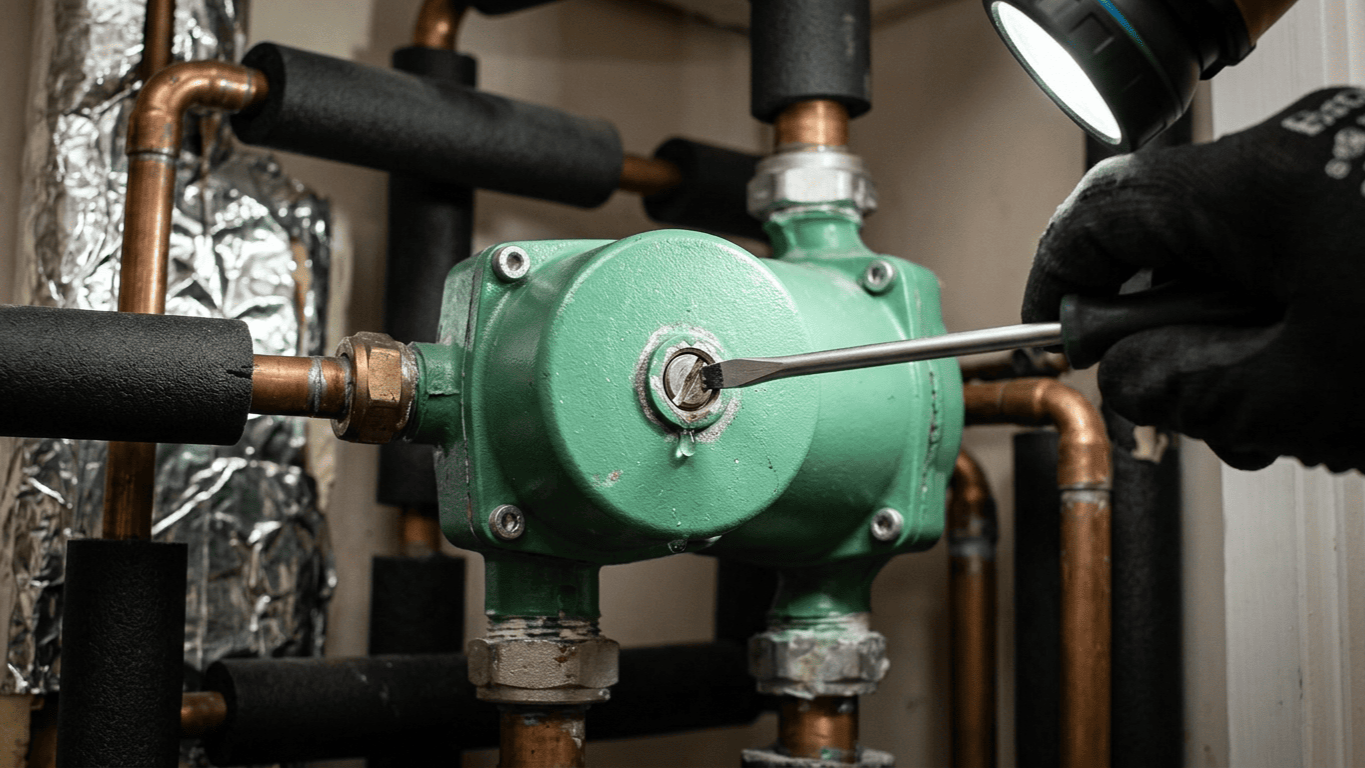
Start by checking the system pressure to ensure it hasn't dropped below 1 bar. Next, bleed the pump itself. Most modern circulators have a bleed screw in the centre of the front casing. With the pump running, carefully loosen the screw until you hear air escaping. Once water starts to dribble out, tighten it back up. In systems with persistent air problems, fitting an automatic air vent at the highest point in the circuit is highly effective. An automatic air vent allows gases to escape continuously without manual intervention.
Checking And Adjusting Pump Speed Settings
Many installers leave pumps set to maximum speed during commissioning, assuming more flow always equals better performance. In reality, an overspeed pump creates excessive velocity and noise. You will know the pump speed setting is correct when the radiators heat evenly and the valves operate without whistling.
If your pump is making noise, try dropping the pump speed setting by one increment and monitor the system. Conversely, if the speed is set too low, you might encounter cavitation. This occurs when the pump cannot maintain sufficient pressure and small vapour bubbles collapse inside the impeller, creating a rattling sound similar to gravel. Adjusting the pump speed setting to balance these two extremes is essential for quiet operation. Heating and Plumbing World provides the technical manuals needed to verify the correct flow rates for most leading models.
Inspecting For Worn Bearings And Mechanical Failure
If the noise is a high-pitched squeal or grinding, you are likely dealing with worn bearings. This is common in pumps that are over eight years old or those that have suffered from poor water quality. To test for wear, switch off the power and try to wiggle the shaft by hand. If there is noticeable play, the unit is reaching the end of its life.
Another sign of failure is a leaking shaft seal. A failed shaft seal allows system water to enter the electrical housing or drip from the bottom of the casing, often leaving a tell-tale trail of limescale or rust. If you spot moisture near the motor, it is vital to source boiler spares or a replacement pump immediately to avoid an electrical short. A hot pump casing after just 20 minutes of operation also indicates internal friction from a failing shaft seal or bearing.
Flushing Out Debris And Sludge
Central heating systems accumulate magnetite over time, especially in older installations without a magnetic filter. This black sludge can clog the pump impeller and force the motor to work harder. If your system water is dark when you bleed a radiator, sludge is likely present.
The best fix is to use a high-quality chemical cleanser to mobilise the debris before a full system flush. Adding a chemical cleanser for a week of normal operation helps break down the magnetite so it can be drained away. After flushing, always check the expansion vessel pre-charge and add inhibitor to prevent the sludge from returning. This maintenance cycle protects the pump and improves the overall thermal transfer of the radiators.
Checking Mounting And Pipework Support
Sometimes the pump itself is fine; it is the installation that is amplifying the noise. A pump bolted directly to a solid wall without isolation will transmit vibration throughout the structure. You might hear it in adjacent rooms or even through the ceiling.
Place your hand gently on the pump body while it is running. If you feel significant vibration, check your pipe clips. All pipework within one metre of the pump should be securely clipped to the wall or floor. Using high-quality radiator valves can also reduce the transmission of noise through the emitters themselves. In multi-storey buildings, adding acoustic pipe insulation around the pump can reduce noise transmission significantly.
When To Replace The Pump
Not every noisy pump can be saved. If you have bled the system, adjusted the speed, and flushed out debris but the noise persists, it is time to consider an upgrade. Modern water circulation pump models are far more efficient than units from a decade ago.
Replacing an old unit with a modern variable-speed model can cut electricity consumption by 80% while running whisper-quiet. These pumps use electronically commutated motors that adjust speed automatically to match demand. You can further enhance this efficiency by installing modern heating controls that communicate directly with the pump to optimise flow.
On a recent project, a homeowner was losing sleep due to a "thumping" sound every time the heating kicked in. The pump was mounted on a hollow partition wall and was deadheading against closed valves. By upgrading to a variable-speed unit and adding a bypass, the noise vanished instantly. It highlights how modern technology solves legacy installation problems.
Conclusion
A noisy central heating pump is rarely just an annoyance; it is a diagnostic clue pointing to air, incorrect settings, or mechanical wear. By working through the checks outlined here, you will identify the root cause and restore efficient operation.
In most cases, the fix is straightforward. However, if your pump has reached the end of its service life, upgrading to a modern model will improve performance and cut running costs for years to come.
If you are unsure about the best replacement for your system, please reach out to our experts for technical support grounded in real-world experience.