

TRV vs Manual Radiator Valves: Energy Savings Comparison
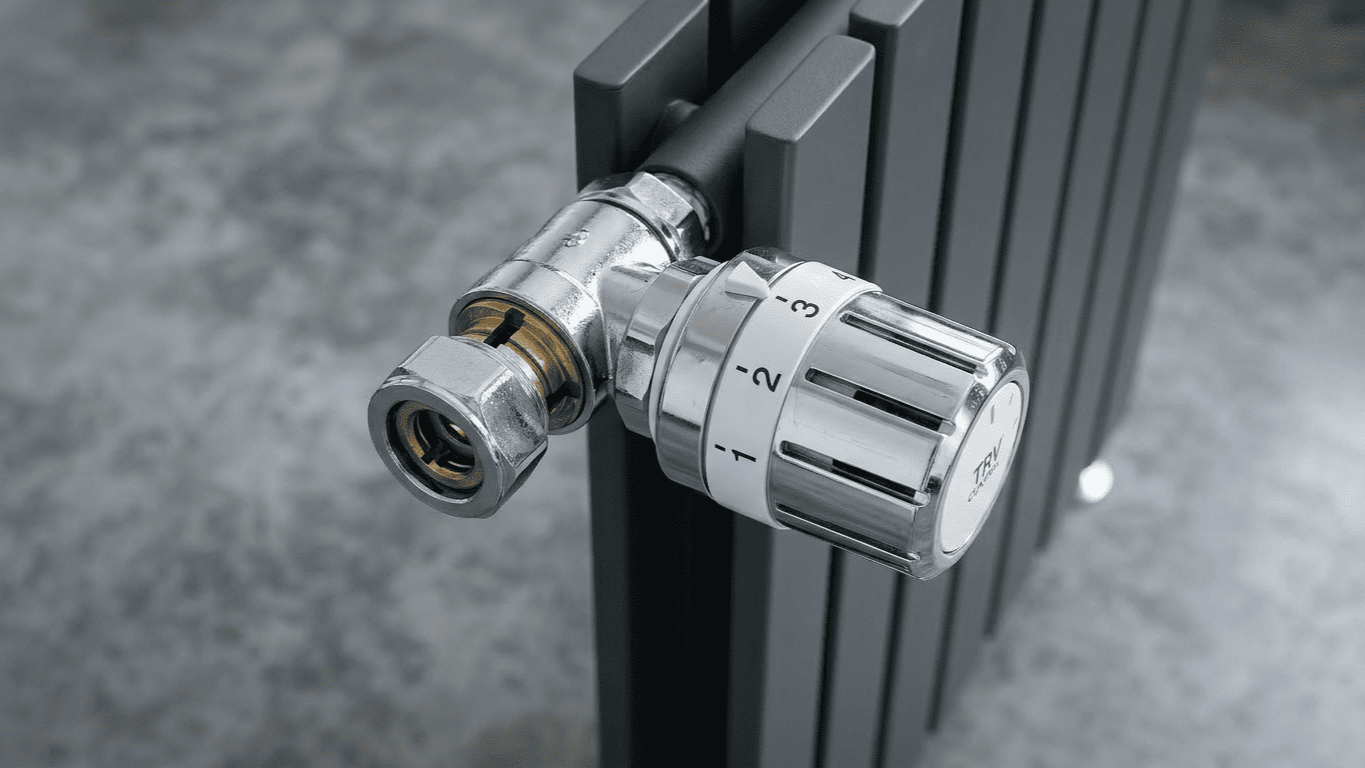
Heating accounts for roughly 60% of a typical UK home's energy bill, and in commercial buildings, that figure can climb even higher. Yet many properties still rely on basic manual radiator valves. These are simple on/off controls: simple regulators that offer no real temperature regulation. The difference between running a heating system with TRV vs Manual Radiator Valves isn't just about comfort. It's about measurable energy savings, reduced carbon emissions, and better system performance.
TRVs automatically adjust the flow of hot water through radiators based on room temperature. They close down when a space reaches the desired warmth and open up when it cools. Manual valves, by contrast, require someone to physically turn them up or down; most people don't bother. The result is that rooms overheat, energy gets wasted, and boilers cycle unnecessarily.
Think of a TRV like the cruise control on your car. Just as cruise control handles the throttle to maintain a steady speed on a hilly road, a TRV handles the heat output for each room automatically. It ensures you only use the exact amount of energy needed to maintain your target temperature.
How Manual Radiator Valves Work
Manual units are straightforward mechanical devices. Turn the handle clockwise, and you reduce the flow of hot water into the radiator. Turn it anti-clockwise, and you increase flow. They don't measure temperature or respond to changes in the room; they're purely flow restrictors.
In practice, most occupants set manual radiator valves to a comfortable position and leave them there. If the room gets too warm, they might crack open a window rather than adjust the valve. If it's too cold, they turn up the boiler thermostat, which heats the entire property rather than just the room that needs it.
This lack of automatic control creates two problems. First, rooms overheat, wasting energy and making spaces uncomfortable. Second, the boiler runs longer than necessary because there's no feedback loop telling it when individual rooms have reached temperature. The system operates in a binary mode, where either all radiators are on, or they're all off.
However, manual radiator valves do have their place. They're reliable, cheap, and almost impossible to break. In plant rooms or commercial spaces where constant heat output is required, a manual balancing valve, used in conjunction with lockshields, allows engineers to set precise flow rates across a system. But for occupied spaces where temperatures fluctuate throughout the day, they're inefficient.
How TRVs Work And Why They Save Energy
A thermostatic valve combines a flow control valve with a temperature-sensitive element, usually a wax-element thermostat or a liquid-filled sensor. As the room warms up, the element expands and pushes a pin into the valve body, restricting flow. As the room cools, the element contracts, allowing more hot water through.
This happens automatically, without any input from the occupant. Set a thermostatic radiator valves to position 3, and it'll maintain that temperature regardless of what's happening elsewhere in the building. If sunlight raises the room temperature, the valve closes down. If someone opens a door and lets in cold air, it opens up again.
The energy savings come from three mechanisms: reduced overheating, independent zone control, and lower boiler runtime. In a typical scenario, installing these valves in a three-bedroom house with a combi boiler can reduce annual gas consumption by 400-600 kWh. At current energy prices, that's a saving of £30 to £50 per year per property.
Energy Savings: What The Data Shows
The Energy Saving Trust estimates that fitting TRVs to all radiators can save around £75 per year in a typical gas-heated home. Research from the Building Research Establishment (BRE) suggests energy reductions of 15-25% are achievable when these central heating components are installed and used correctly.
Actual savings depend on building insulation, occupancy patterns, and boiler type. Modulating condensing boilers work more efficiently with TRVs because they can reduce output in response to lower demand. User behaviour also plays a role; if occupants set TRVs to maximum and leave them there, savings disappear.
On a recent project in a large Victorian house, an engineer found the top floor was always freezing while the ground floor was like a sauna. By replacing the old manual radiator valves with high-quality thermostatic heads, the heat was balanced across all three floors. The homeowner's gas bill dropped by 22% in the first winter, and the "sauna" effect was completely eliminated.
Installation And Compatibility Considerations
Fitting TRVs isn't complicated, but it does require some thought. You can't just screw one onto any radiator and expect it to work. The valve body needs to be compatible with the radiator's connection type, and the head needs to be positioned correctly, away from heat sources or curtains that might interfere with its sensor.
Don't fit a TRV in the same room as the main thermostat, as this creates a control conflict. The thermostat should be in the primary living space, and that radiator should have a manual or lockshield valve only. For better temperature distribution, install central heating radiators that are properly sized for the heat loss of each specific room.
In older systems with single-pipe radiator circuits, a manual radiator valves setup is often left in place because TRVs can disrupt the constant flow rate these systems require. If you're working on a single-pipe system, you'll need bypass valves or differential pressure controllers to prevent issues.
TRV Types And Performance Differences
Not all thermostatic valves are created equal. The basic wax-element thermostat is cheap and reliable, but it responds slowly to temperature changes, sometimes taking 20-30 minutes to fully close. That lag can allow a few degrees of overshoot, which wastes energy.
A liquid-filled trv sensor reacts faster because liquids expand more quickly than wax. They're slightly more expensive, but the improved response time can deliver an extra 5% to 10% in energy savings compared to wax types. These are ideal for rooms where temperatures fluctuate rapidly, such as kitchens.
An electronic radiator valve takes things further. These use battery-powered actuators and digital temperature sensors, allowing for programmable schedules and remote control. Some models even have open window detection, which shuts off the radiator if it senses a sudden drop in temperature.
When Manual Valves Still Make Sense
Despite the clear energy advantages of TRVs, there are situations where manual valves are the better choice. In plant rooms, a manual balancing valve allows precise flow adjustment during commissioning, and they don't drift over time like thermostatic models can.
In very small properties, the savings from TRVs might not justify the cost. If there's only one or two radiators and the occupant is home most of the time, simple manual control can be adequate. Manual valves are also more robust in harsh environments. Heating and Plumbing World provides various durable options for such settings where precision sensors aren't required.
Combining TRVs With Smart Controls
The next step beyond basic thermostatic control is integration with smart heating systems. Many smart trv models allow wireless communication with a central hub, giving occupants room-by-room control via a smartphone app.
This takes the energy savings further. You can set schedules for each room, reduce temperatures when you're away, and even use geofencing to warm the house as you approach. Independent trials suggest that smart radiators can deliver total heating energy reductions of 30% to 35% compared to a basic manual setup.
For commercial properties, the case is even stronger. Building managers can centrally control temperatures, monitor performance, and identify radiators that aren't working correctly. The data logging features alone can justify the investment by helping diagnose system faults before they become expensive problems.
Maintenance And Long-Term Performance
Thermostatic mechanisms generally last 10 to 15 years before the internal components drift. If you don't cycle the valves occasionally, the pins can seize during the summer months. This is a common issue that causes a room to stay cold even when the heating is on full blast.
Annual maintenance for these systems should include cycling every TRV from fully open to fully closed to prevent seizure. You should also check that heads are correctly positioned and not obstructed by heavy furniture. If you're using digital versions, remember to replace the batteries every one to two years to maintain control.
Conclusion
The energy savings from TRV vs Manual Radiator Valves are real and measurable. In typical domestic properties, you can expect a 15% to 25% reduction in heating energy use. In commercial buildings, the potential is even greater, particularly when thermostatic control is combined with smart integration and proper system commissioning.
Manual radiator valves still have their place in plant rooms and harsh environments, but for the majority of heating systems, TRVs are a straightforward, cost-effective upgrade. The payback period is reasonable, and the comfort benefits are immediate.
If you're looking to improve the efficiency of your system, fitting thermostatic controls should be at the top of your list. Please contact our support team for expert advice on selecting the most compatible radiator valves for your project.