

Understanding Rainwater Harvesting Pumps and Filtration Kits
Rainwater harvesting has evolved dramatically over the past decade. It's no longer just about putting a cheap plastic butt under a downpipe for the garden. Modern rainwater harvesting pumps and comprehensive filtration kits turn free rainfall into a highly reliable domestic resource. By capturing and cleaning precipitation, you drastically reduce your reliance on expensive mains water for toilet flushing and washing machines.
When you install these systems correctly, you build incredible resilience into the property. You must carefully design the entire journey of the water, from the roof gutter right down to the final toilet cistern. This requires a strict understanding of mechanical filtration, tank turbulence, and fluid dynamics. You must understand exactly how these specific components work together to build a flawless, highly efficient water reclamation network.
The Logic of Capturing Rainwater
Think of a rainwater harvesting setup exactly like a personal savings account. You catch the deposits when the weather is good, filter out the bad currency, and spend it locally on your high-demand utilities. It prevents valuable, highly processed drinking water from being wasted on mundane tasks. When you organise your plumbing this way, you take absolute control of your daily consumption patterns.
The primary goal is dedicated utility supply, as toilets and washing machines require zero potable water. Heating and Plumbing World provides commercial-grade components designed specifically to build these resilient networks. You're building a parallel plumbing circuit that safely operates alongside your standard mains supply. Every pipe, filter, and valve has a specific, designated job to keep the water clear and safe.
Core Components of Initial Filtration
But what happens when autumn leaves and roof moss block the gutters? This is exactly why you need dedicated filtration kits installed before the water ever reaches the main underground holding tank. If organic matter enters the storage vessel and rots, the water will stagnate, turn highly acidic, and smell terrible. You must physically intercept this debris before it ruins your entire captured supply.
To achieve this, you install a primary mechanical filter on the main downpipe run. You must use robust water pipe systems to route the roof runoff efficiently into this primary cleaning chamber. The pipe sizing here is critical, as undersized pipes will simply overflow during a heavy summer downpour.
How Centrifugal Separation Works
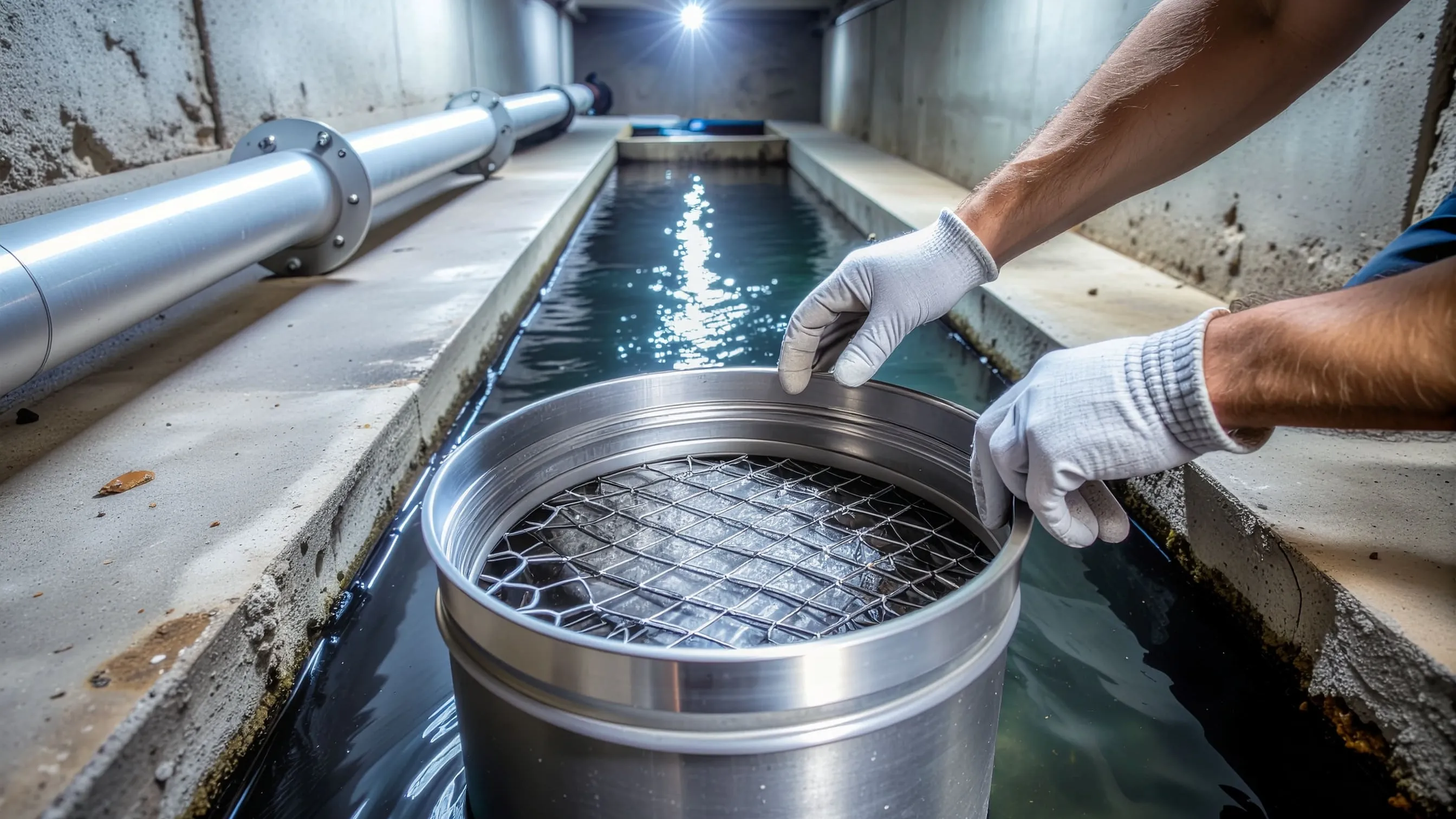
The absolute best defence against tank fouling is a highly engineered vortex fine filter. This brilliant device uses natural centrifugal force to throw the incoming water against a cylindrical stainless steel mesh. The clean water passes smoothly through the mesh and flows into the storage tank. Meanwhile, the heavy debris falls straight down the middle and washes away directly to the storm drain.
A quality vortex fine filter requires zero electricity and is virtually maintenance-free. It uses the physical kinetic energy of the falling rain to clean itself continuously. You only need to pull the stainless steel insert out twice a year to give it a quick scrub with a wire brush. It's a brilliant, highly efficient way to guarantee only pristine water enters your holding tank.
Managing Physical Tank Turbulence
Once the filtered water enters the tank, you must carefully manage its physical entry speed. You absolutely need a calmed inlet pipe installed at the very base of the storage vessel. Without it, incoming water crashes down violently and stirs up the microscopic sediment layer resting on the bottom of the tank. If you stir up that anaerobic sludge, the water quality drops instantly.
The calmed inlet pipe physically reverses the flow of the incoming water, directing it upwards in a gentle, U-shaped pattern. This ensures the stored water remains perfectly still and crystal clear, even during a torrential storm. You can assemble this internal drop pipe arrangement very quickly using a reliable push fit joint. Managing this physical turbulence is a strict requirement for a professional installation.
Sizing Your Extraction Hardware
Moving that stored water back into the property requires highly accurate mathematical sizing. You can't just guess the capacity of your rainwater harvesting pumps, or you risk massive pressure drops across the property. You must calculate the total vertical lift required and the maximum simultaneous demand of all the connected outlets.
On a recent rural barn conversion, the original contractor installed a tiny surface suction pump for a four-bathroom property. Whenever two toilets flushed simultaneously, the pump screamed loudly, and the flow completely dropped off. We had to swap it out and specify a high-capacity submersible unit, which instantly solved the pressure starvation. Properly installing water pump hardware means anticipating the absolute maximum load the system will face.
Submersible vs Surface Equipment
When specifying the extraction method, submersible units are almost always the preferred choice for modern residential sites. Because they sit silently underwater, they don't take up valuable, noisy floor space in the utility room. They also push the water up rather than trying to suck it out, which is a far more efficient use of electrical energy.
Inside the tank, the pump utilises a floating extraction hose. This extracts water from exactly fifteen centimetres below the surface, which is where the water is at its absolute cleanest. This prevents any floating pollen or heavy bottom sediment from entering the main water supply pump network. It's a very similar principle to protecting a booster shower pump from pulling in hard water scale.
Automated Control and Mains Backup
A highly reliable submersible pump controller is the technical brain of your entire harvesting operation. It monitors the precise water levels inside the underground tank using a pressure transducer. If the tank runs completely dry during a severe summer drought, the controller automatically switches the system over to the mains water backup.
This intelligent submersible pump controller ensures the property never actually experiences a water shortage. However, you must integrate this safely using the correct push fit plumbing fittings and comply strictly with the Water Supply Regulations 1999. You're legally required to install a Type AB air gap on the mains top-up line to absolutely prevent any cross-contamination.
Conclusion
Proper technical specification is the absolute key to building a successful water reclamation system. High-quality filtration kits protect the stored water quality, while accurately sized rainwater harvesting pumps deliver consistent, highly reliable pressure. You actively lower your daily utility costs while doing something genuinely beneficial for the local environment and the municipal grid.
Never attempt to guess the required flow rates or vertical lift calculations. A poorly specified system will constantly short-cycle and eventually burn out the pump motor. Always consult the technical data sheets before finalising your pipe runs and component choices. Please reach out to our experts if you need help selecting the perfect, fully compliant hardware for your specific site.